
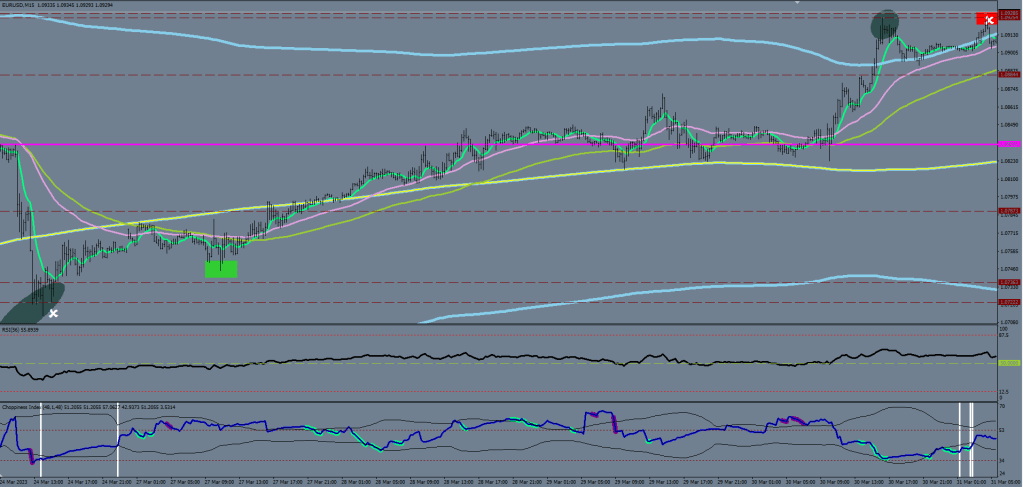
Is it possible to use energy levels to confirm that a high / low is in / very near?
I certainly seem to think so. White verticals.
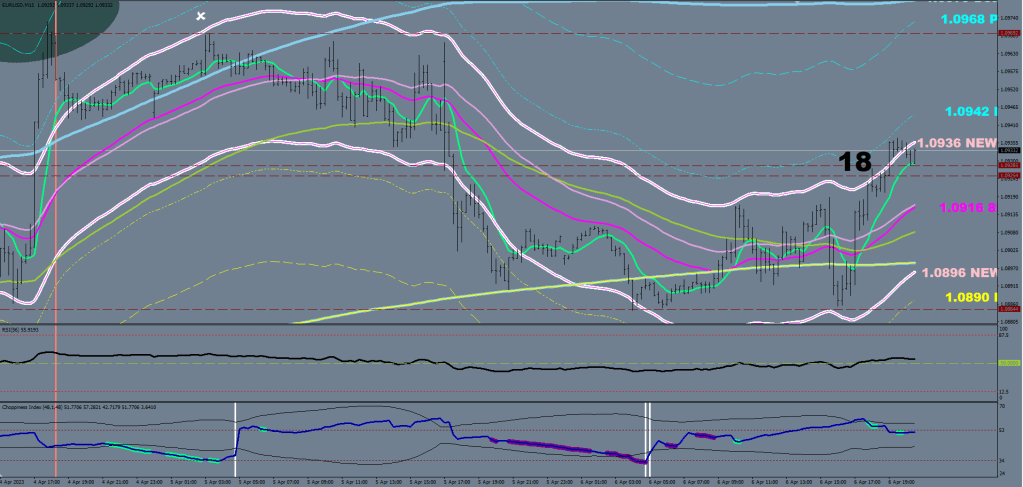

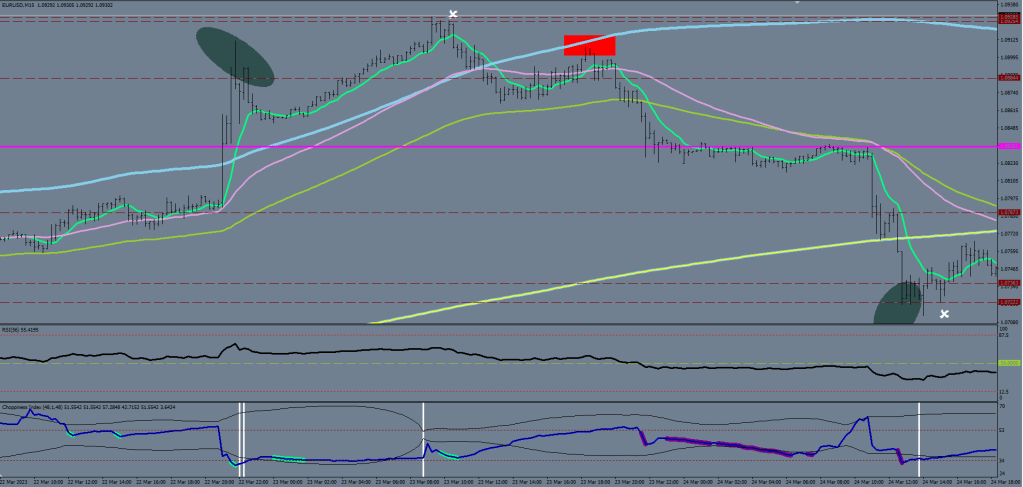
The 3 expressions:
(ExtMapBuffer[i]>ExtMapBuffer[i+1]+4 && ExtMapBuffer[i+1]<StdDevLoBuffer[i+1]+5)
      || (ExtMapBuffer[i+1]<StdDevLoBuffer[i+1] && ExtMapBuffer[i+2]<StdDevLoBuffer[i+2] && ExtMapBuffer[i+3]<StdDevLoBuffer[i+3] && ExtMapBuffer[i+4]<StdDevLoBuffer[i+4] && ExtMapBuffer[i+5]<StdDevLoBuffer[i+5] && ExtMapBuffer[i]<35 && StdDevLoBuffer[i]<38)
      || (ExtMapBuffer[i]>ExtMapBuffer[i+1]+2 && ExtMapBuffer[i+1]<StdDevLoBuffer[i+1] && StdDevLoBuffer[i]>44)
extern int ChoppinessPeriod=48; // Number of bars to evaluation CI
extern int SmoothingPeriod=1; // Number of bars to apply SMA
extern int StdDevPeriod=48; // Number of bars to evaluate Standard Deviation of the CI
for (int i=MaxCalcBars; i>=0; i--)
{
IntMapBuffer[i] = ChoppinessIndex(ChoppinessPeriod,i);
bufferTemp1 = 0;
for(int j=0; j<SmoothingPeriod; j++) { z=i+j; bufferTemp1 += IntMapBuffer[z]; }
ExtMapBuffer[i] = bufferTemp1 / SmoothingPeriod;
IntStdDevBuffer[i] = StdDev(i,StdDevPeriod);
bufferTemp1 = 0;
bufferTemp2 = 0;
for(int n=0; n<StdDevPeriod; n++)
{
z=i+n;
if (StdDevFollowPrice)
{
bufferTemp1 += ExtMapBuffer[z];
bufferTemp2 += ExtMapBuffer[z];
}
else
{
bufferTemp1 += 50;
bufferTemp2 += 50;
}
bufferTemp1 += IntStdDevBuffer[i]*2;
bufferTemp2 -= IntStdDevBuffer[i]*2;
}
StdDevHiBuffer[i] = bufferTemp1 / StdDevPeriod;
StdDevLoBuffer[i] = bufferTemp2 / StdDevPeriod;
}Credits to David Moser for adding STD bands to the plots.


 ForexFore - Internals, indicators, algorithmic trading