
The Der Wish market model (Axel S V1.4) is becoming a precision tool as well.
The Red and Green F-s received a counter logic that includes time out resets. The difficulty was the spread out bunch to synchronize whilst finding a fresh start I used a 100-sample stagnation.
I was not conscious that I found everything I would ever need to find the turns in 2021. It took 3 more years and these recent updates.
The idea of a Full Discharge was an innocent idea of mine, rooted in nobody’s works. The idea of the “Safety” goes back to 2017ish rooting in the concept of “Embedding”.
Full Discharge up
i>0 && ((Low[i]<AxelU[i] || Low[i+1]<AxelU[i+1])  && Close[i]>AxelU[i] && (Close[i+1]<AxelU[i+1] || Close[i+2]<AxelU[i+2]) && High[i-1]<High[i])
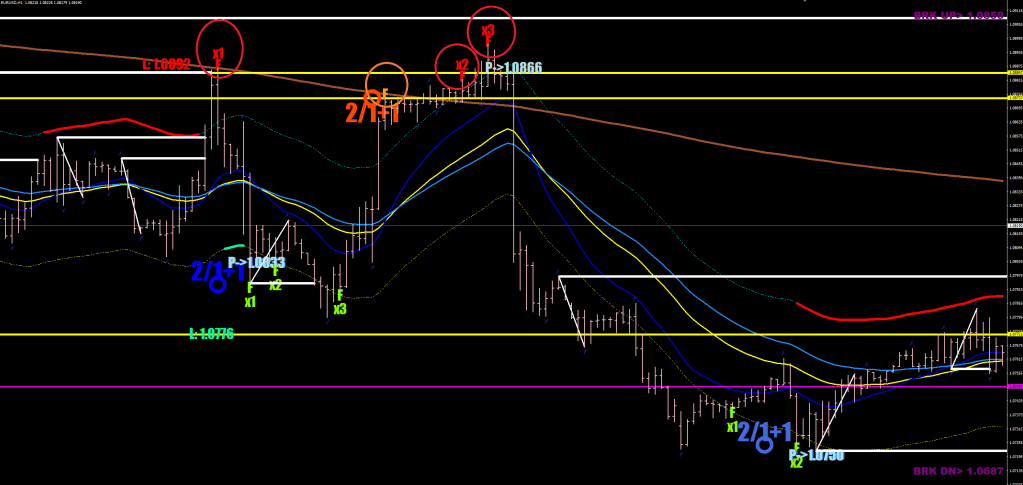
Sell side pictures

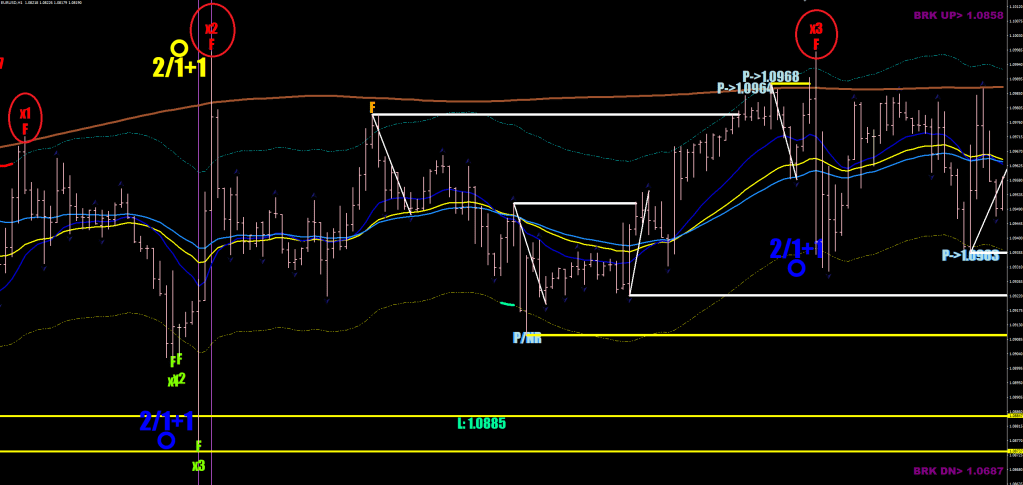
With the following one some discression had to be used:
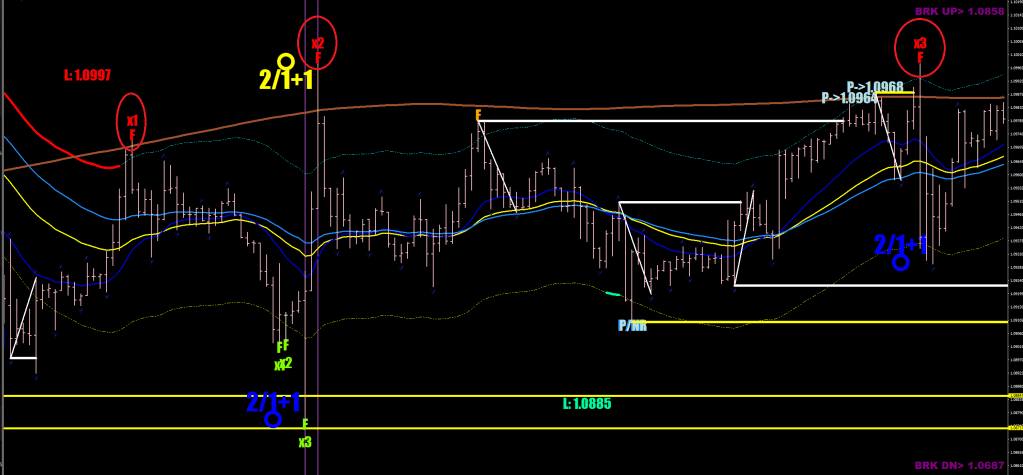
Current picture below
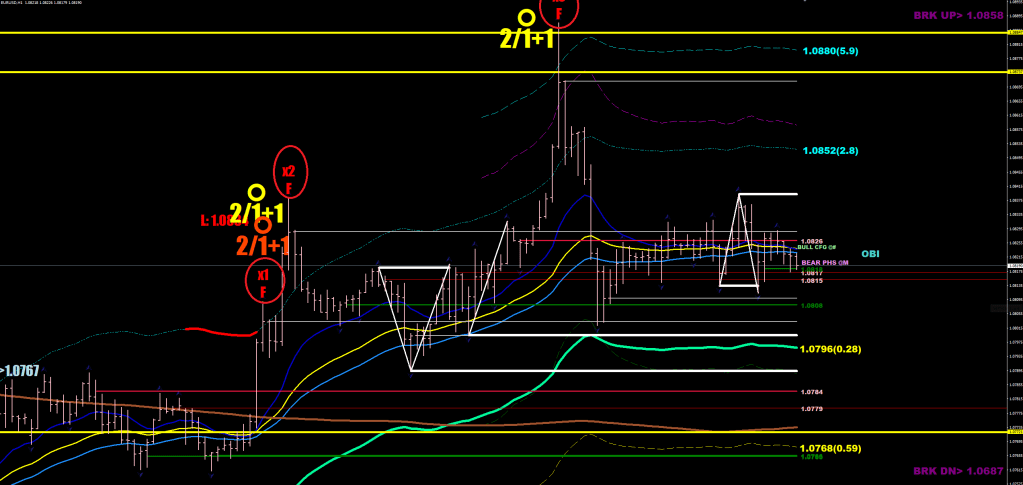
Full Discharge Down
i>0 && (High[i]>AxelL[i]&& Close[i]<AxelL[i]+50*Point
          && (Close[i+1]>AxelL[i+1] || Close[i+2]>AxelL[i+2]) && Low[i-1]>Low[i])
          || (Low[i]<AxelL2[i]) && Close[i]>AxelL[i]+100*Point)
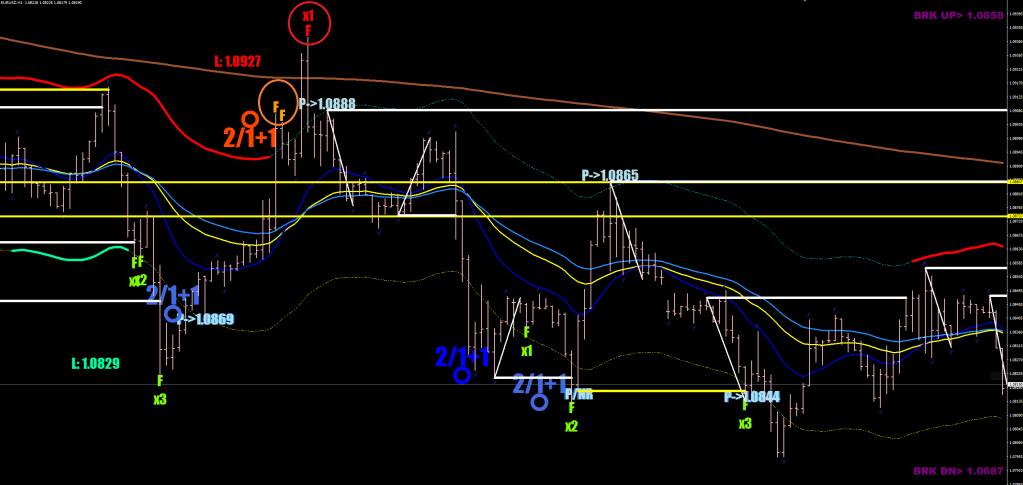
Buy side pictures
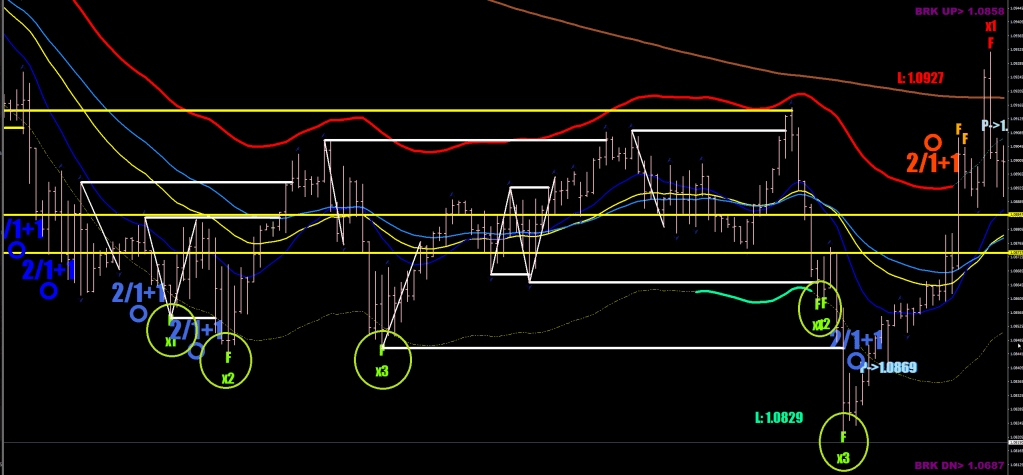
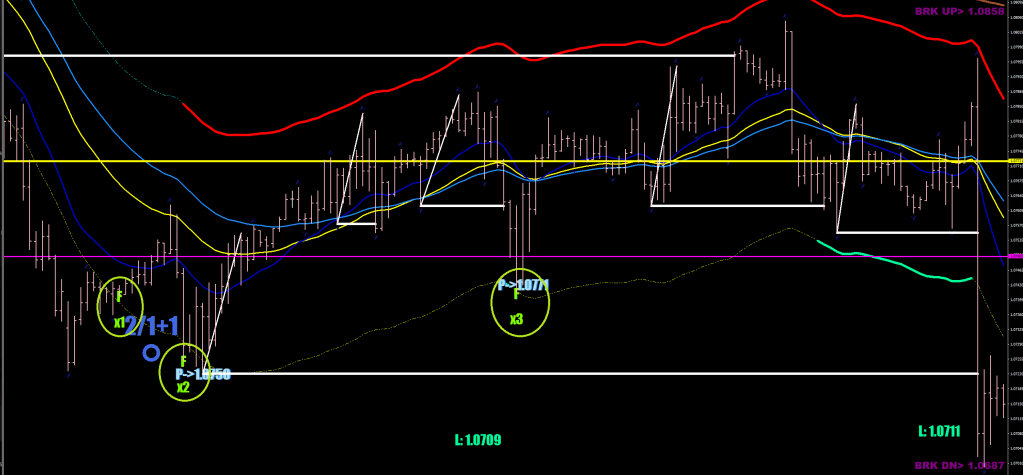
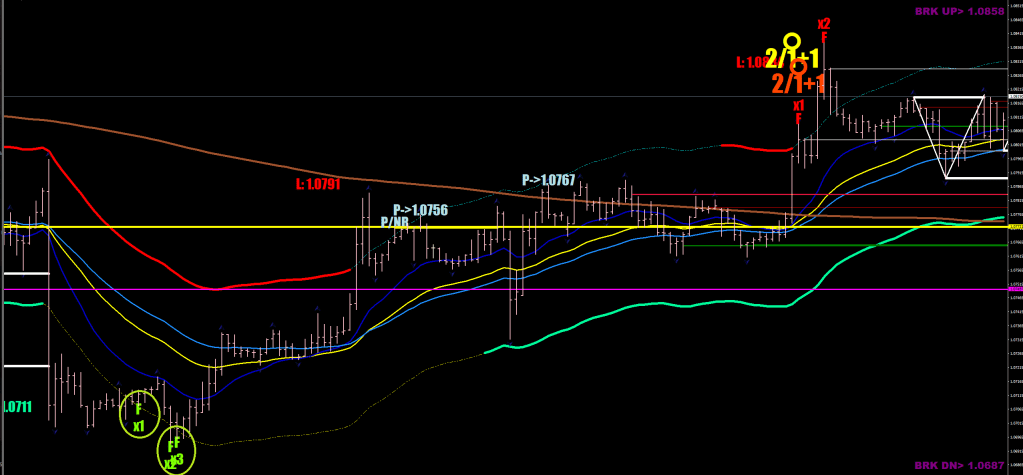
You could add additional rules such as wait for x2 to print before going aggressive, x3 could receive a small beat (i.e. down below), and do not forget to plot the S-356 (in Sienna).
I spoke about the difference of a triple F batch and the triple F spread in the previous entry.
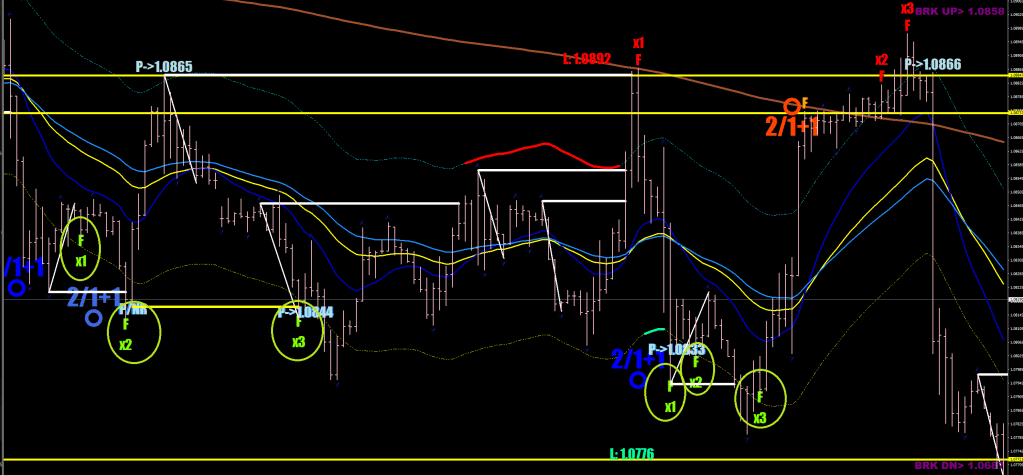
The P/NRs are escalated Partial Discharge plots.
The price for a V1.4 is $49

 ForexFore - Internals, indicators, algorithmic trading