
The first principle of trading is yield to the wind.
When the market stalls, the likelihood of which direction it will start rolling again depends on how close it is to the 200-hour low versus the 200-hour high (8.3 days).
This is the cornerstone of sequential trading, and, surprise, trading is sequential.
Your 3 main lines are the 400-sample high & low (30-minute chart) and their average.
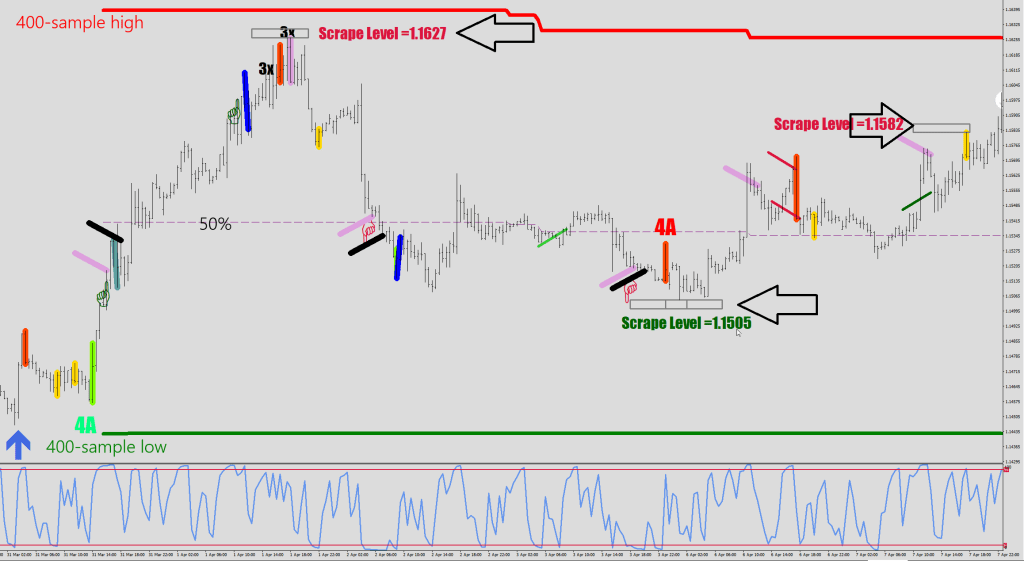
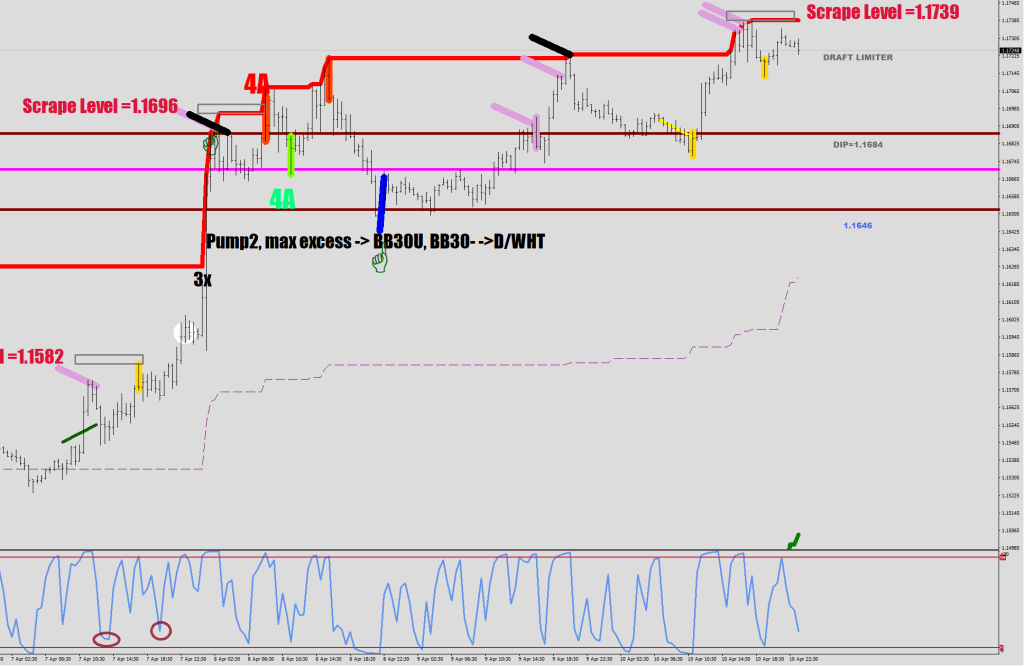
The market is drawing up scrape boxes (money flow extremes) around the 50% line until it finally breaks one of these boxes.
Since that broken scrape level, there were two more of those boxes made (violated & broke the first).
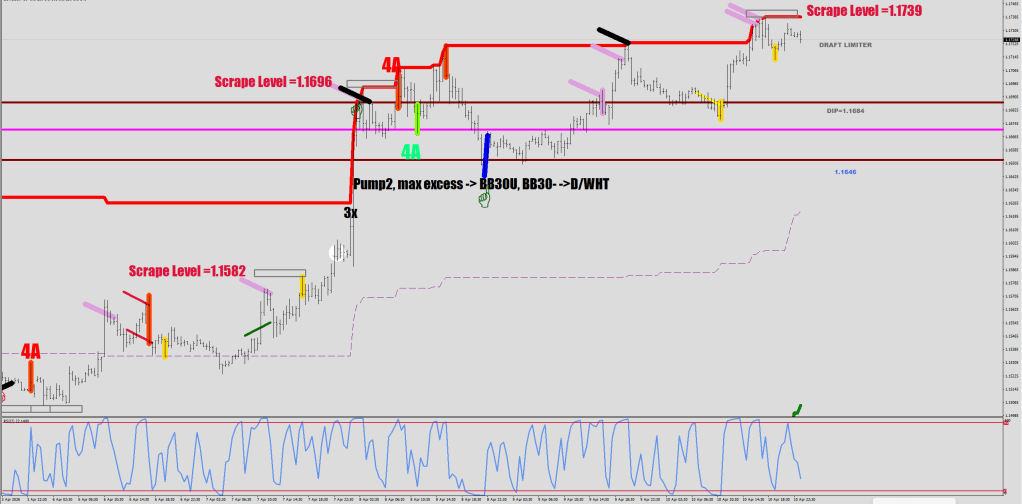
If I had to guess, this second one would remain intact for a while, but of course, I cannot know for sure.
The way I typically monitor for the double pump entry is the price returning inside the glowing green E-32 on the hourly.
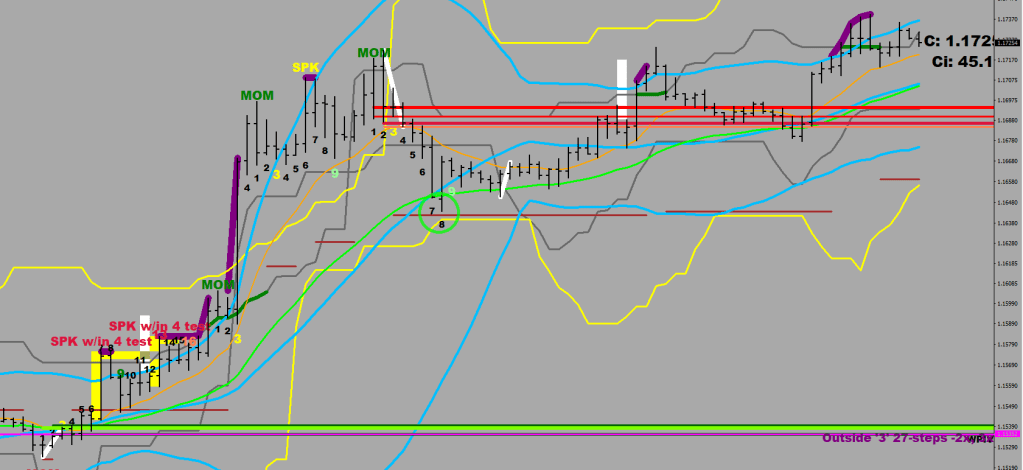
What I can do to figure out a stall against the wind is monitor momentum, thanks to my Market Type indicator.
Without getting lost in the measuring leg and divergent leg explanations, look at my lovely lady humps.
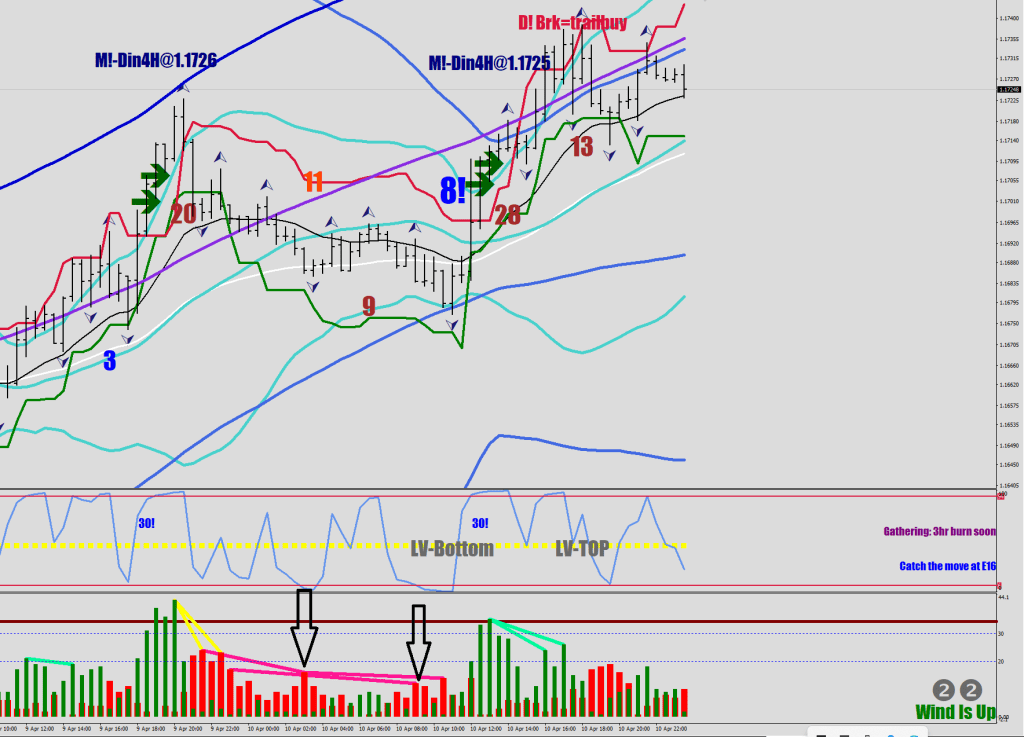
The two black arrows down show the first and the second momentum tapers against the wind, bringing the momentum close to zero. Your accumulation zone was 6 pips wide below the second arrow-candle’s low.
There was also the 8! print in big blue, which was meant to draw further attention to the lack of momentum, ideal-length selling terminal tail to the downside.
Whilst the tapers in a trending move get broken in the direction of the wind, with the current move down, we have not yet seen a single taper (there was no measuring leg yet). I would only make a bet with the wind after the suggested double taper.
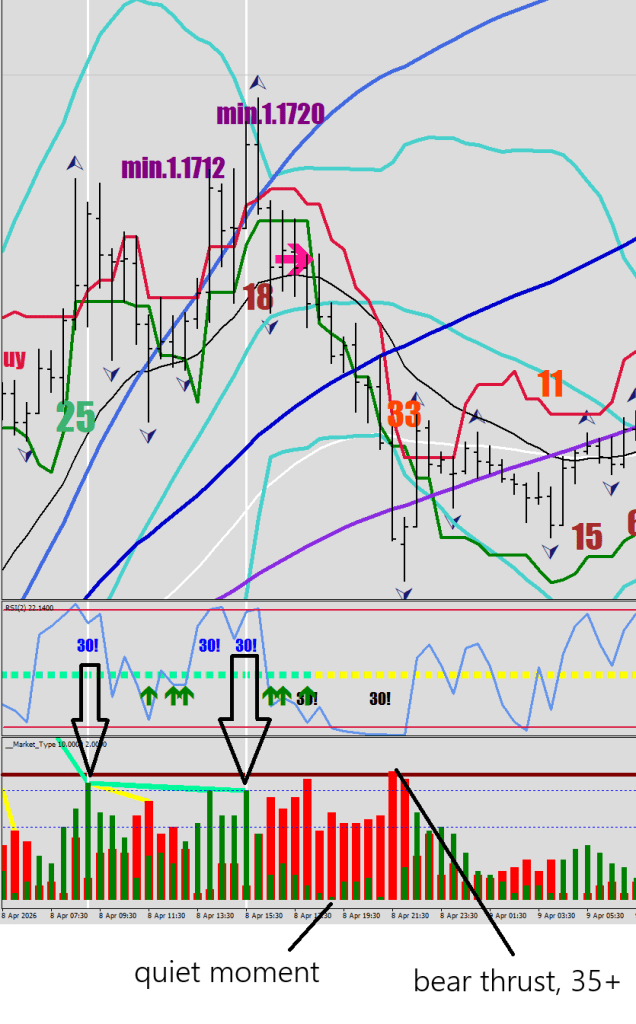
As a bonus, I show you another possible outcome, a V bottom. After the second green taper (and an overrun tip (1-2 pips extra), we have that), the bears have to show up with a 30+ print (we don’t have that yet), there would be quite a moment when the bull spasm reaches an extreme, and then a V bottom print would mean a 35+ print on the Market Type. That would be the second possible way to reinstate the trend.
The least likely outcome would be that the bears never manage a measuring leg, and this thing ends up breaking to the upside after like 48 hours.
An example of a bull buying taper-up would be on the RSI2, a low print below 15 followed by another reaching below 30, but above 20.
As it turns out, I have a disco audience.
Like I said, I am famous for abusing Prince.
 ForexFore - Internals, indicators, algorithmic trading