What else would I be doing with this much time on my hands if not filtering?
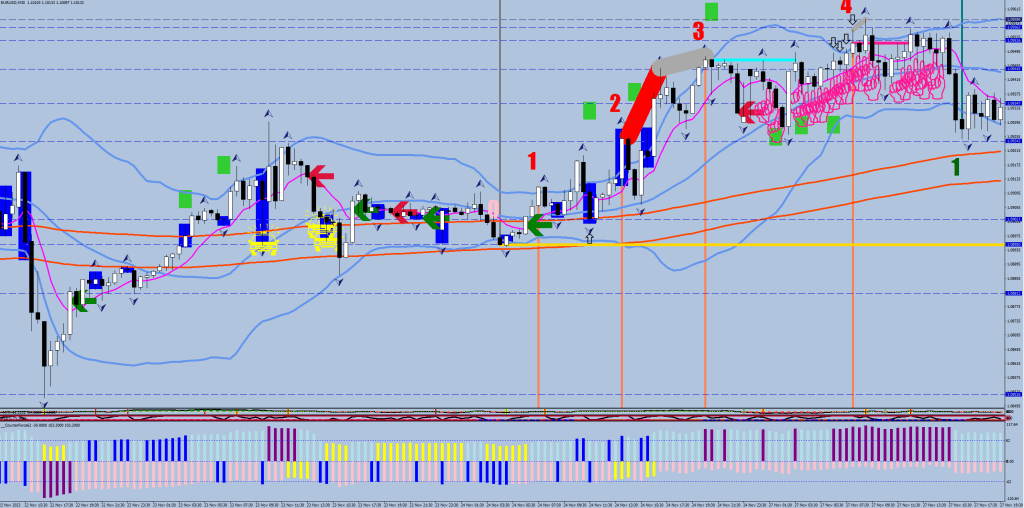
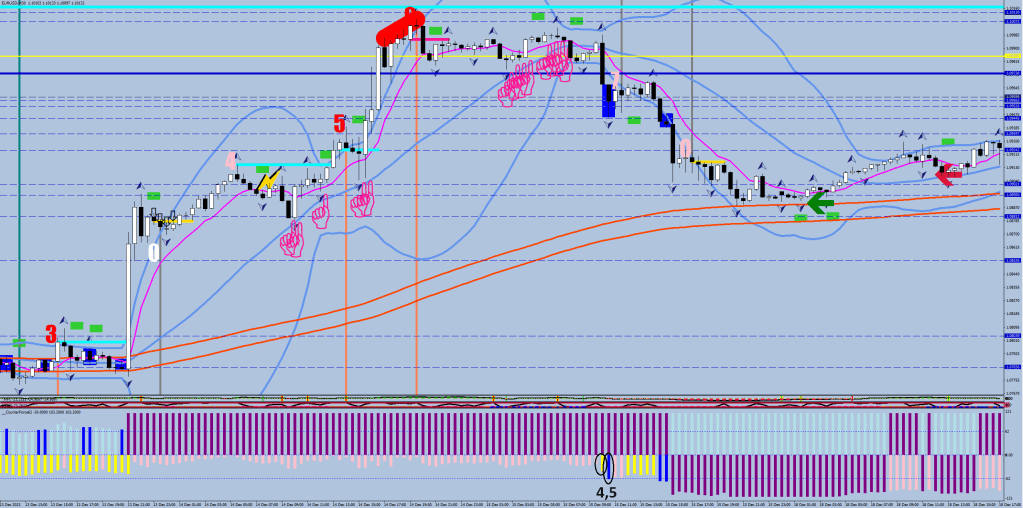
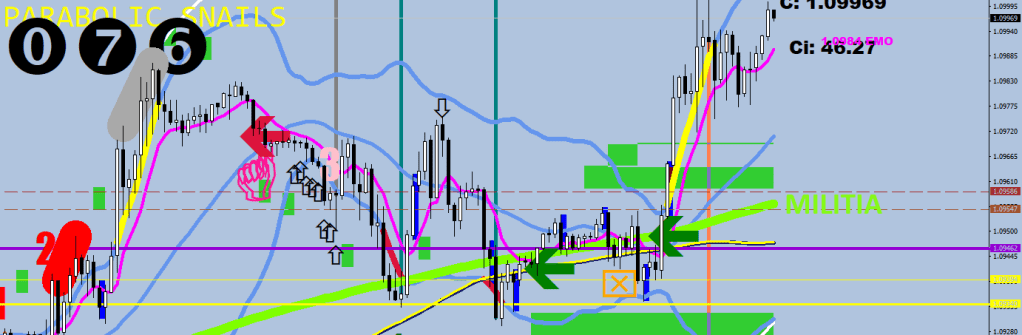
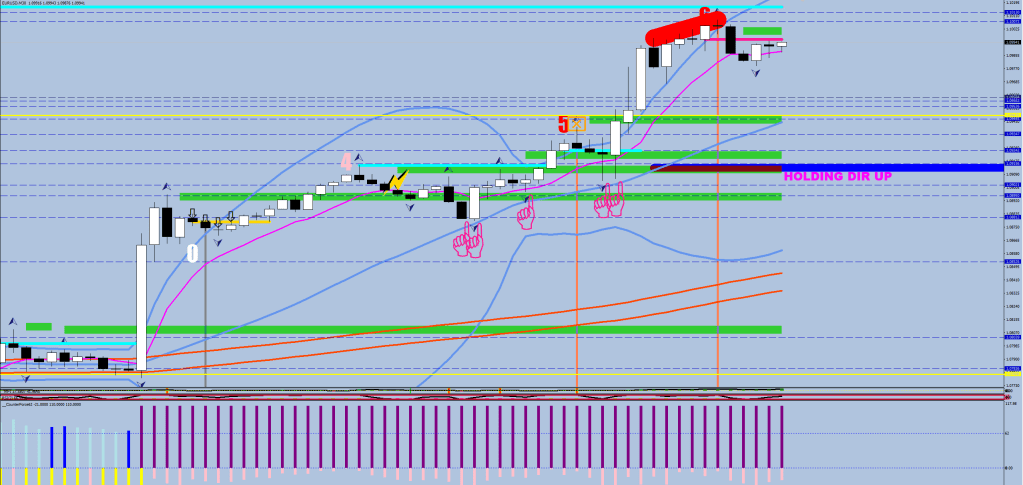
The orange stripes are the call buttons. Can be exact, but if not they are in the ballpark based on 2 oscillators and a bit of play around the 240 sample Bollinger. Add on for the Bouncer. Beam me down, Scotty.
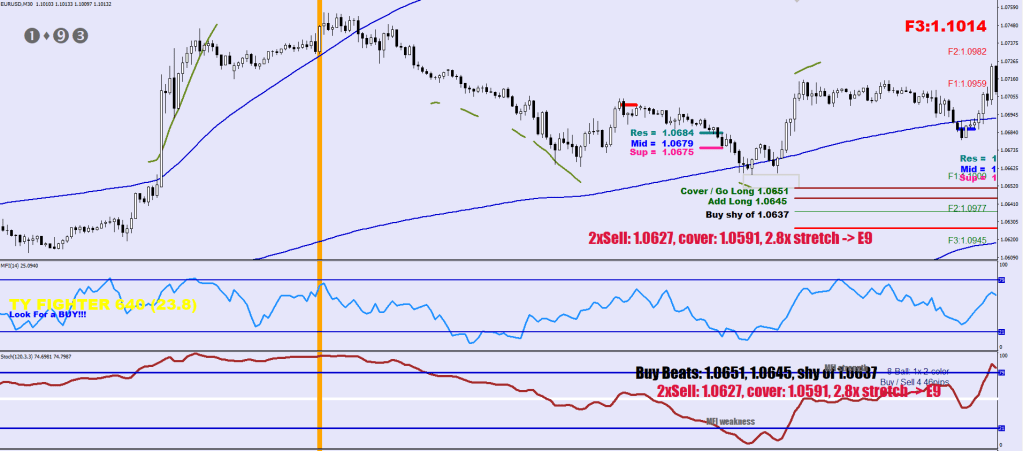
Now, more about the distance is the importance of the stretch from the most important mean.
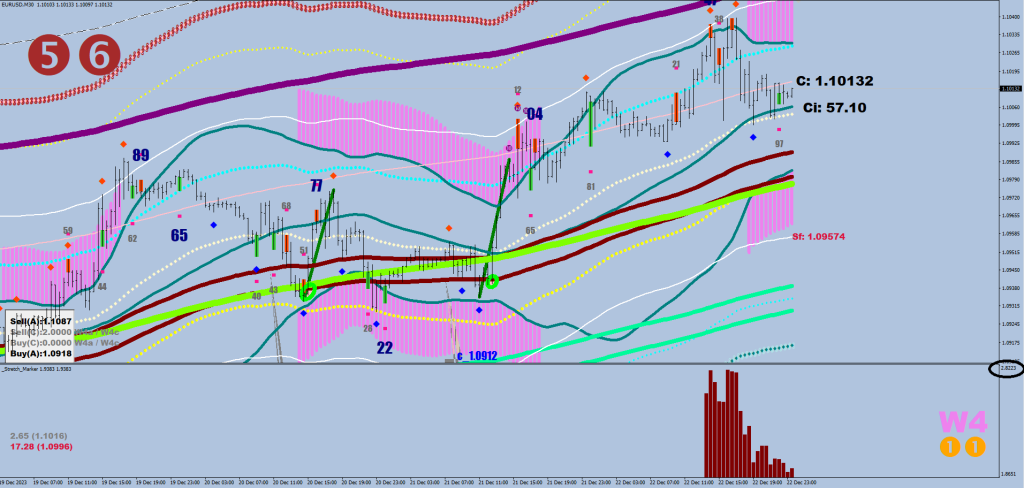
Yea, that number measured by the Stretch Marker. Since this chart is always buried away, and that 2.8x stretch is a very important clue for a reversal taking place, I had to transplant this info some way.
It is only the last print, but at least it is there with a DeepPink highlight as a reminder on a main chart now.
Thems be the tools for going in to war this coming year. I added the following to the Bouncer.
deletetxt1(“Vignetta”);
int twodigits = MathAbs((High[0]-iMA(NULL,0,414,0,MODE_EMA, PRICE_HIGH,0))/FMax*10000)*100; if (Close[0]<iMA(symbol,0,414,0,MODE_EMA,PRICE_MEDIAN,0)) MathAbs((iMA(NULL,0,414,0,MODE_EMA, PRICE_LOW,0)-Low[0])/FMax*10000)*100;
int hundreds = round(twodigits/100); twodigits = twodigits-hundreds*100;
int tens = round(twodigits/10); int ones = twodigits-tens*10;
string shundreds, stens, sones;
switch(hundreds) { case 1: shundreds=CharToStr(140); break; case 2: shundreds=CharToStr(141); break; case 3: shundreds=CharToStr(142); break; case 4: shundreds=CharToStr(143); break; case 5: shundreds=CharToStr(144); break; case 6: shundreds=CharToStr(145); break; case 7: shundreds=CharToStr(146); break; case 8: shundreds=CharToStr(147); break; case 9: shundreds=CharToStr(148); break; default: shundreds=CharToStr(139); break; }
switch(tens) { case 1: stens=CharToStr(140); break; case 2: stens=CharToStr(141); break; case 3: stens=CharToStr(142); break; case 4: stens=CharToStr(143); break; case 5: stens=CharToStr(144); break; case 6: stens=CharToStr(145); break; case 7: stens=CharToStr(146); break; case 8: stens=CharToStr(147); break; case 9: stens=CharToStr(148); break; default: stens=CharToStr(139); break; }
switch(ones) { case 1: sones=CharToStr(140); break; case 2: sones=CharToStr(141); break; case 3: sones=CharToStr(142); break; case 4: sones=CharToStr(143); break; case 5: sones=CharToStr(144); break; case 6: sones=CharToStr(145); break; case 7: sones=CharToStr(146); break; case 8: sones=CharToStr(147); break; case 9: sones=CharToStr(148); break; default: sones=CharToStr(139); break; }
if (Period()==30) E16[i]=iMA(NULL,0,32,0,MODE_EMA, PRICE_MEDIAN,i); else E16[i]=iMA(NULL,0,16,0,MODE_EMA, PRICE_MEDIAN,i);
if (Period()==60) E32L[i]=iMA(NULL,0,32,0,MODE_EMA, PRICE_MEDIAN,i); else E32L[i]=iMA(NULL,0,32*2,0,MODE_EMA, PRICE_MEDIAN,i);
e16d1[i]=E16[i]+450*Point;
e16d2[i]=E16[i]-450*Point;
if (iMA(NULL,60,67,0,MODE_EMA, PRICE_HIGH,0)>iMA(NULL,60,207,0,MODE_EMA, PRICE_HIGH,0)) e16d4[i]=e16d2[i]; if (iMA(NULL,60,67,0,MODE_EMA, PRICE_HIGH,0)<iMA(NULL,60,207,0,MODE_EMA, PRICE_HIGH,0)) e16d3[i]=e16d1[i];
So, to answer the question, who’s-where-the-why-what, here are the clues.
The enemy at the Guard Rails is militia. Shotguns for size.
The second line of defense is the municipals in the E207 trench (orange + addes white highlights). They roll with cannons.
Not a financial advice of course, just trying to prop up my own reaction time.
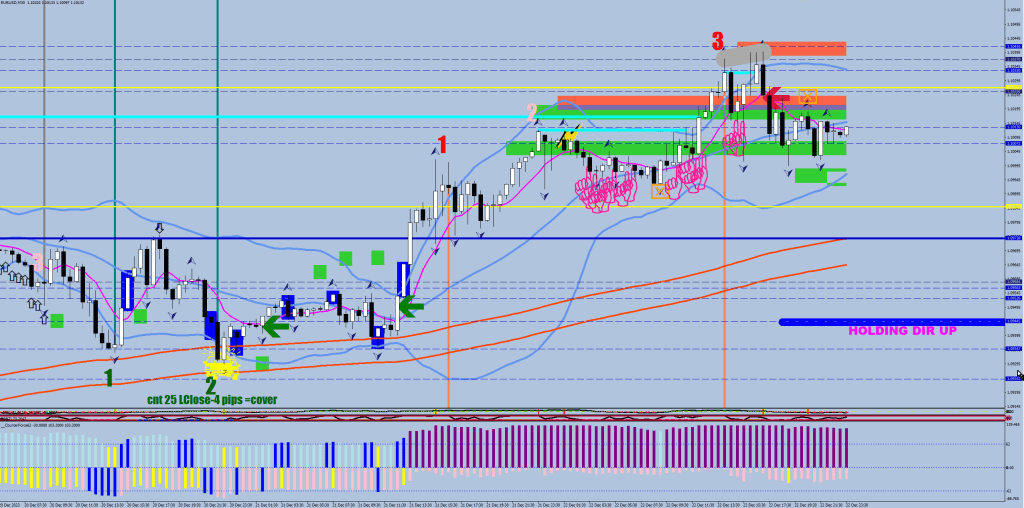
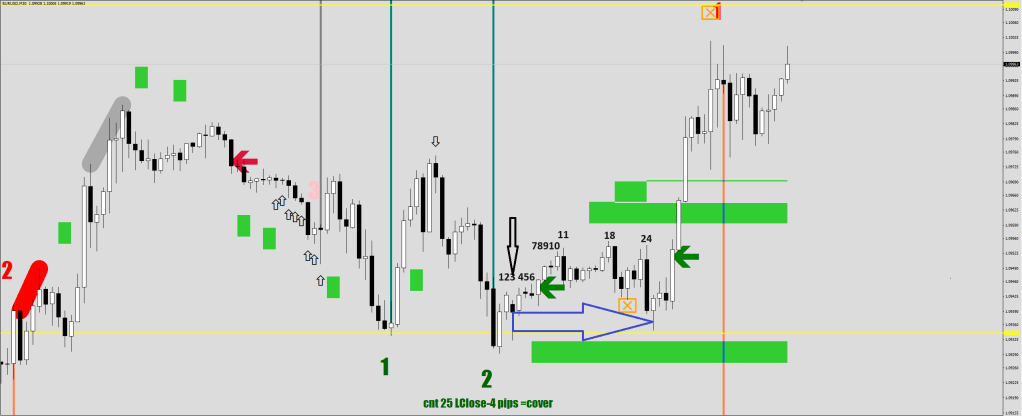
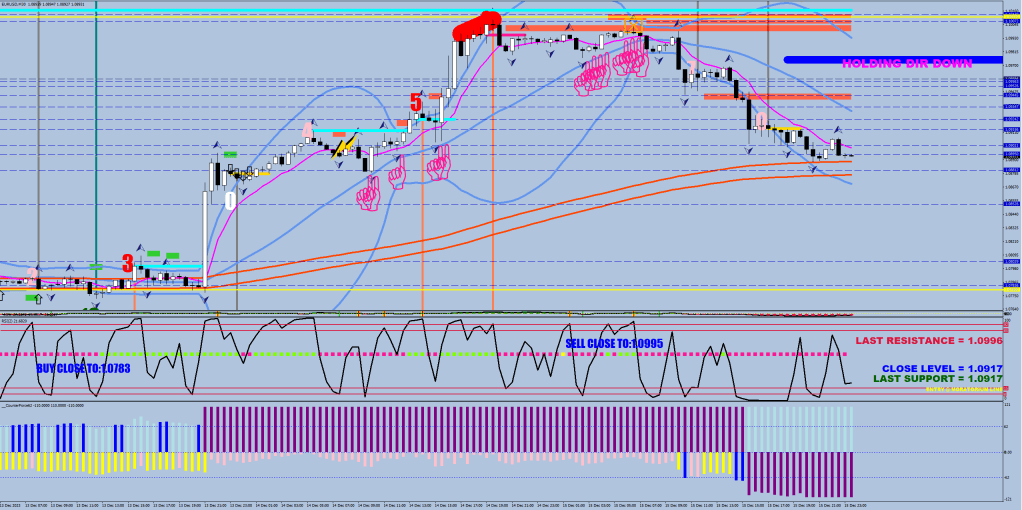
You’re gonna get a kick out of this. Only works on the downside. I plot “count 25, the lowest close minus 4 pips is the cover level” when the second progression low is made. Need to disregard the first couple of candles.
The close, 1.09394 (black arrow) suggested a buy at 1.09354. The actual low was 1.09353.
The overhead supply is at arm’s length. A spinner printed. Going lower and coming back up they might throw some kerosine on the fire at the mid point.
A self proclaimed “institute” is getting extra loud again. If you listen in on one of your 60k priced courses – I shit you not – this is what you get under “idea generation”. Ford is coming out with new Mustang. They like to buy leather seats with it. By call options on a random leather factory.
You would also have to surrender more than half of your profits, because they like to live for free lavishly (Singapore ain’t cheap), and also inside info costs money. We’re talking ex Goldman Sachs here.
Those are the edges at your disposal. Making up fairy tales or going full blown criminal.
Now, with Forex you can have an edge by accurately classifying the market type based on the counter directional volatility (see CounterForce).
One thing you definitely don’t want to do is chasing a parabolic market when the daily max consolidation level is keep on moving away from you.
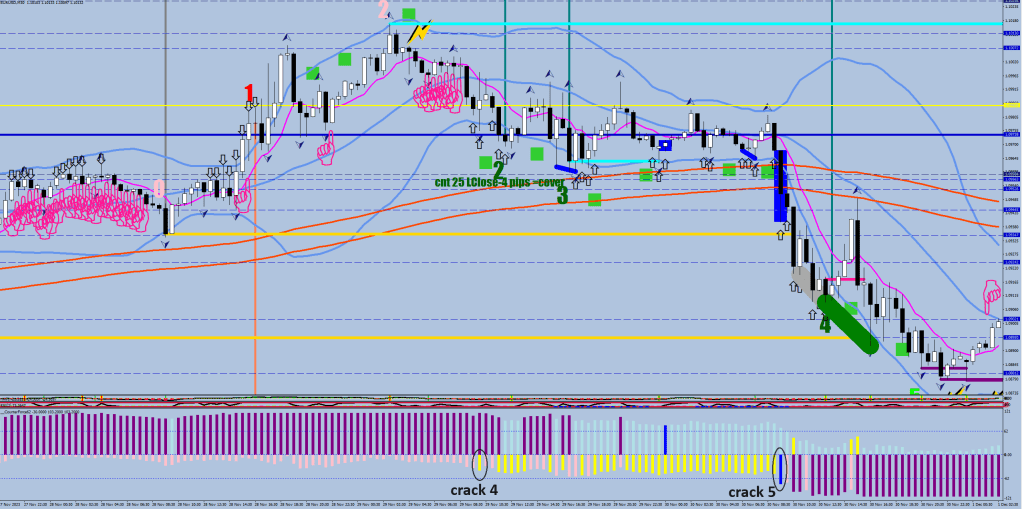
After the 3 cracks of the one side muted volatility, it is unsafe even thinking about a continuation.
Notice how the previous parabolic run only managed to find footing in this low volume environment only after 120-pips of a break, an RSI2 reversal divergence and all returns into the Bollinger were dragged out regressions not triggering the start of a downside progression count and nullifying the upside count the second time around.
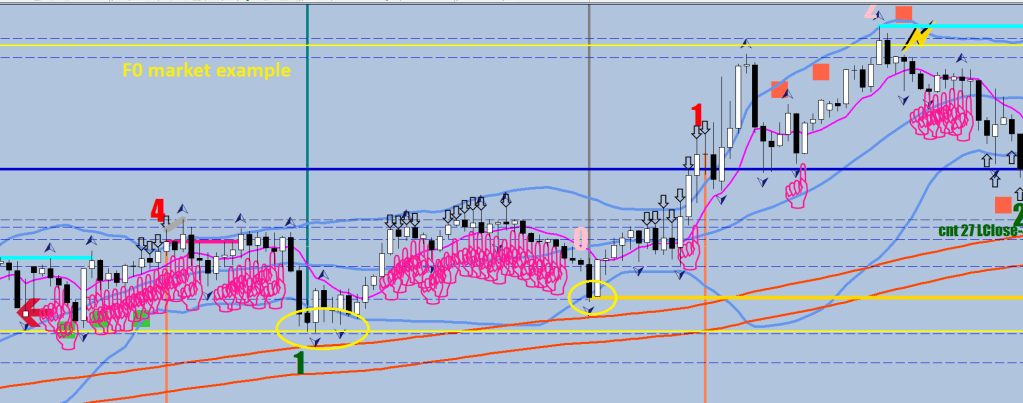
Yes, there’s such thing as an F0 market, where the counter dir vol does not reach 40 pips, still it manages to get ouside the BB – this is not it, for this was right after another parabolic phase.
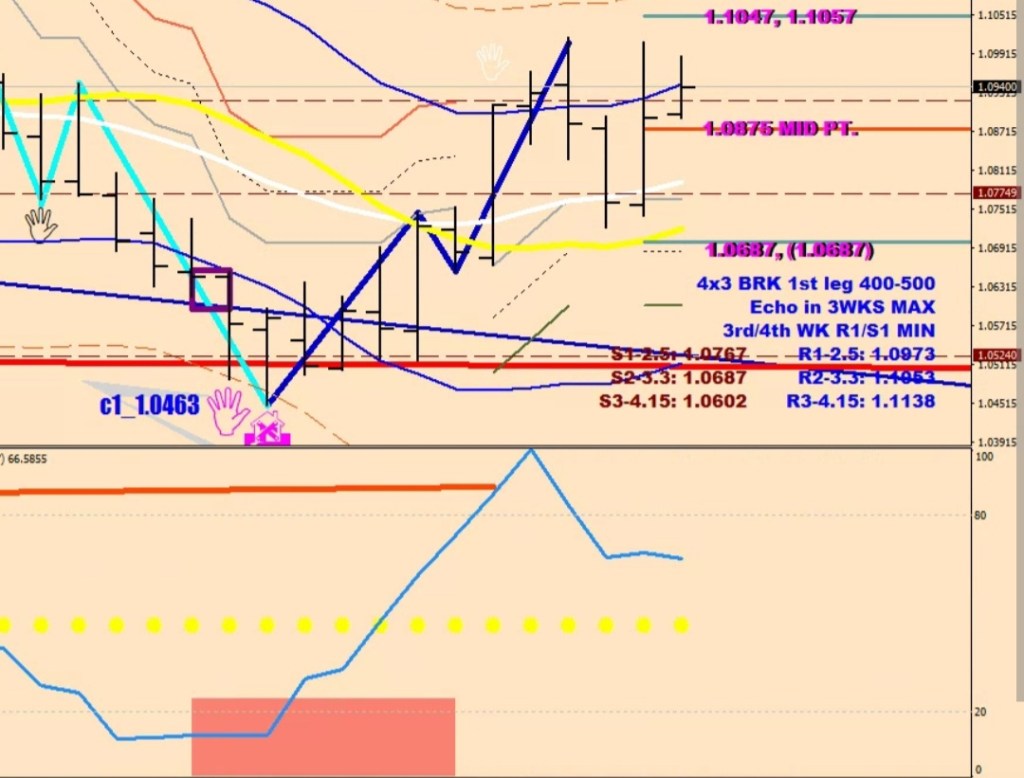
To answer the question of “are you in a push” without getting enegy measurements involved, the breach (and a decisive close outside) of the weekly 14-sample window envelope and 50% larger range than the previous week are good telltales.
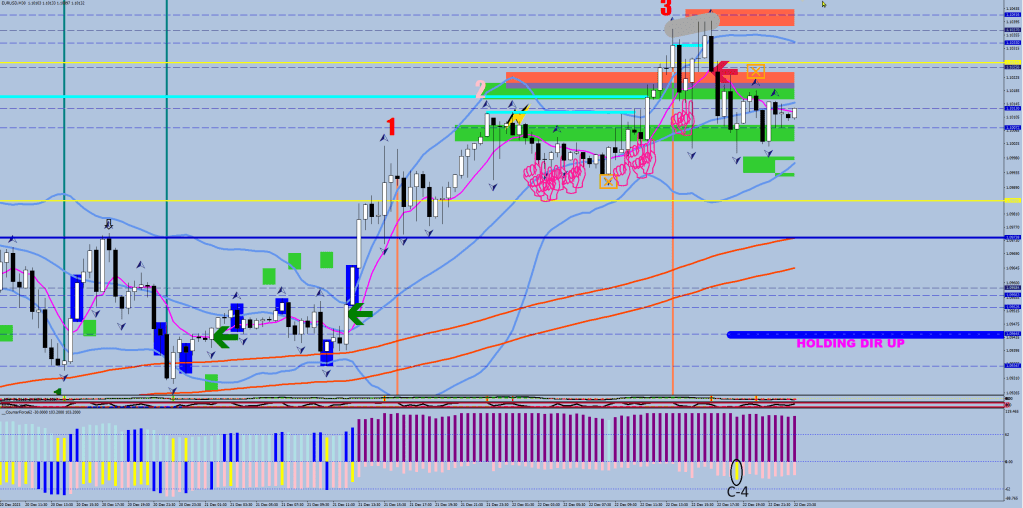
Weekly R1 is 1.0973. White hand = fake push, did not manage to close outside far enough.
by the Silver Backed Gorilla in the big belly of Piano Falls.
So what did the fox say?
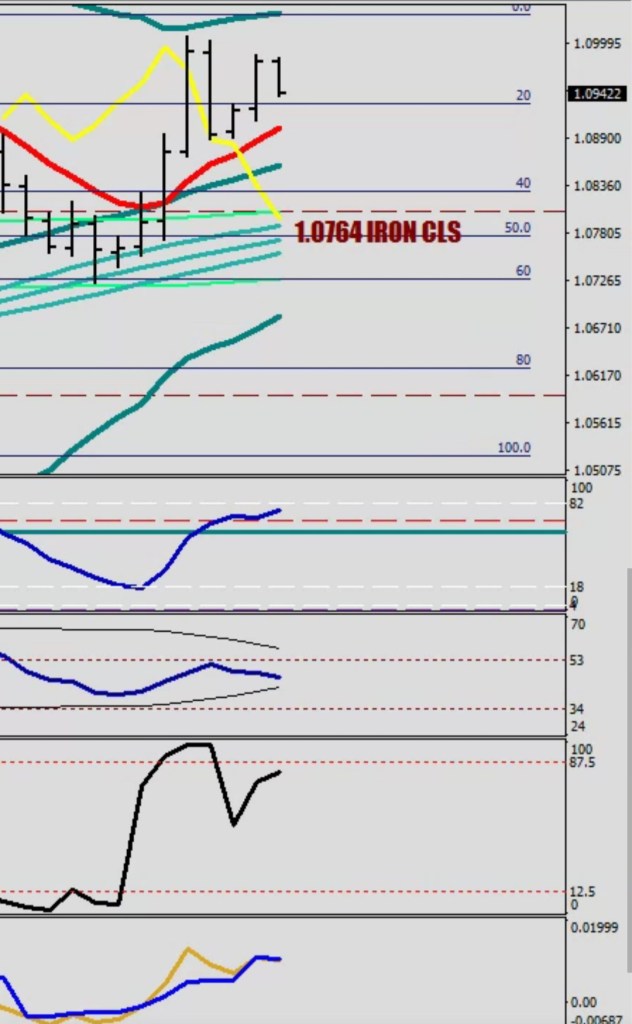
I said the opex close would be around the close that was made on the 30th of November.
How did I know that?
The current movement is about gaining strength for the next wave structure. You don’t always want to target this line, but after the end of an impulse structure it is your one and only clue.
The yellow line is the 12-sample close shifted. The brown number is day 11, so it is a projection for the following day to close at for maximum boost.
A volatility whip is a fast way of recharging energy. A slow cascade might take twice as long, but wave 1 would not start without energy packed on. This needs 4-5 more days of sideways movement to play back the 12-sample energy above 53, but a 59+ read would bring more guarantees for the next leg (Wave) making it to the Volatility Bracket. Yes, the volatiliy whip is a quick consolidation.
Sure, if only Elliott Wave had an A-B correction as an option, hmmm…
This brings up a valid point. When does it ever happrn that Wave1 gets opened in the same direction as Wave 5 was on the daily? Not very often. 1 out of 10 perhaps. Look at the lower green band, how much closer it is now! Tagging the low would also mean a touch down on it.
It’s the animal distilled in me.
It’s the edible cookies in me.
Can’t find the Joilena version of this on YouTube. Look for it on SoundCloud>
Also, the future does not have to look like it’s 1983 again.
I just added the plot to the Bands routine.
#property copyright "Bands by Macdulio, (c) 2021" #property link "http://www.forexfore.blog" #property description "Bands by Macdulio" #property description "You don't defy the first day" #property description "Passing through God."
So I made that signal that was supposed to tell me about the parabolic move setting up.
To my credit I also pointed out the 3 signs of the parabolic move reversing and that there would be no stops on the way down either.
My first thinking was having to add more filters, like a Bollinger width. But there was nothing wrong with the signal. See how only upto 2 back to back approaches are present at the beginning and there a sequences of 4 applying pressure at the end (at which point the Bears are 2/3 of the way there by having made the first two cracks)? The signal is perfect, the thinking needed to be adjusted.
I also said that Wave 1 down would be confirmed by price hitting the lower Bollinger Band. Now with this brutal approach of the other end I am all but certain of this happening.
Schmucks like Pippoletto can infuse all of their misguided bias to you, just pease stop asking money for it.
& this Elliott fixation that you have to label up every move when a Volatility Whip or an XX Energy consolidation isn’t part of any wave structure is a complete crap.
Greetings from Paracetaluma
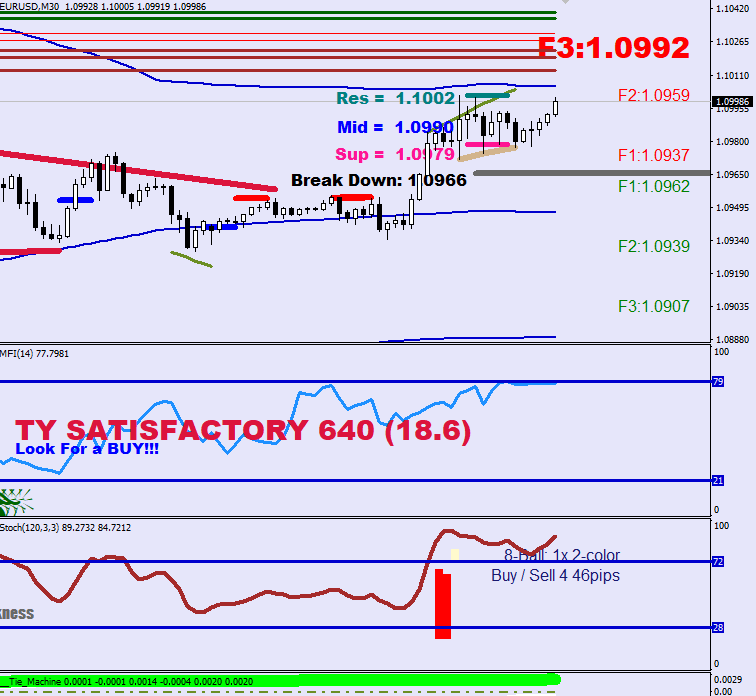
The Money flow is extremely negative now, so a reflexive bounce of 46 pips would make sense here.
It would be a shame calling myself a Parabolic Snail and not understanding the F -1 environment.
The main characteristic of the F minus 1 is the complete lack of counter directional volatility, not even an F1 pullback (40 pips) and the 30 min S-30 goes untouched by the fractals. Also the progression count would likely be above 3 at this point, a rally does not start in parabolic mode, it shifts gears to reach it. There is no telling what such market can do, but there would have to be 3 breaks occurring before a full revesal. One: coming back inside the 30 sample Bollinger, Two: closing below the 8-EMO, Three: closing below the S-30.
Finally there’s a money flow extreme, so a revesal zone would likely be printed soon (3.5 hours more).
This is now too close to the prior high not to make an attempt on it.
The good news is that once the parabolic move is over, the other direction would be able to fluorish from then on.
Where did this go parabolic? When they went aggressive on reversing price before a 40-pip dip and before getting to the S-30.
To answer my own question about this move down and back up, if it was a volatility whip, I say klaro.
Higher high, yes. A volatility whip is not a Wave 3. Energy is on the rise while price is rising. That’s not the direction of the push. Wave 1 would be called upon the next move hitting the daily 30 BB’s bottom rail.
Clearly the higher the better for Christmas opex premium confiscation tomorrow.
I think the next week you’re going to see the opposite of this candle with high volume churn down.
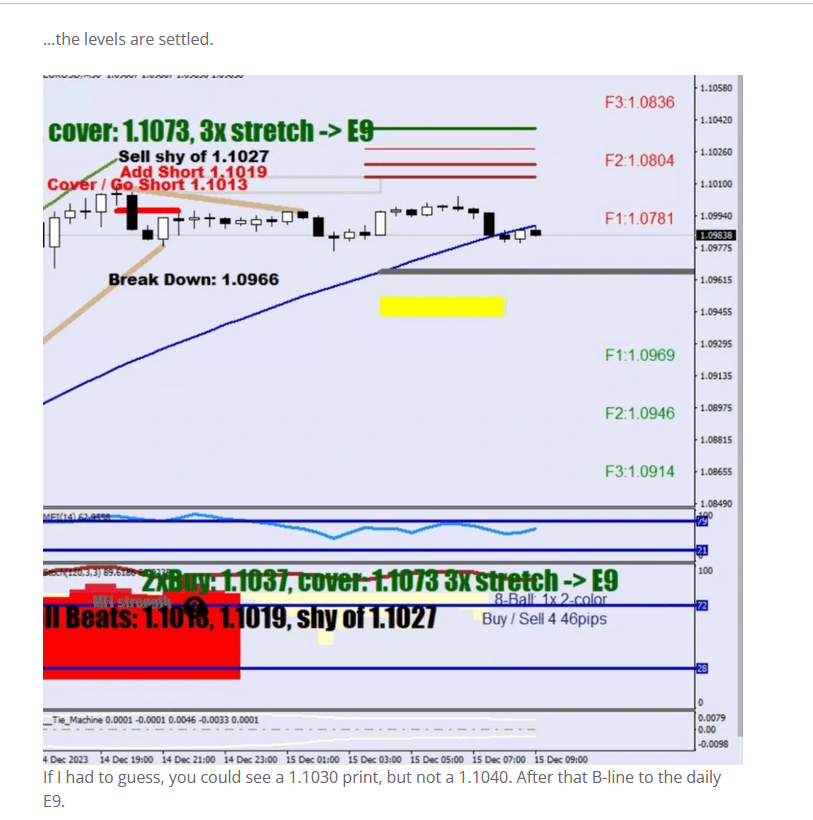
…the levels are settled.
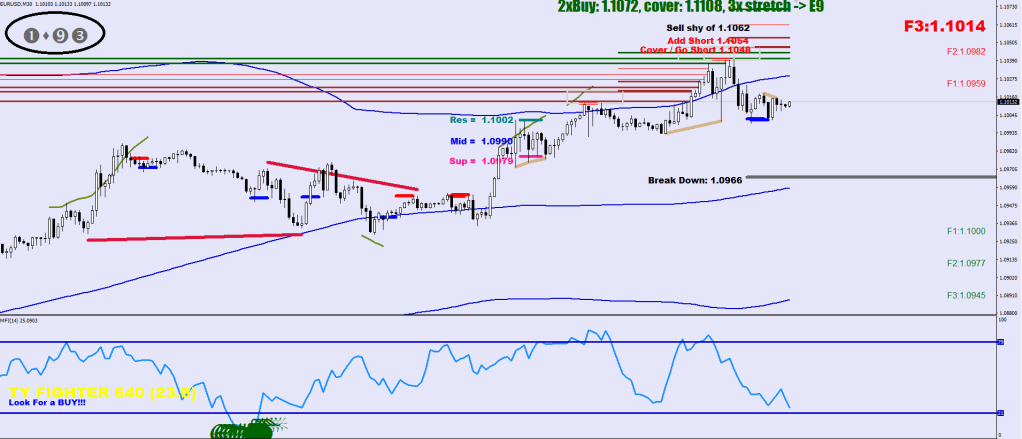
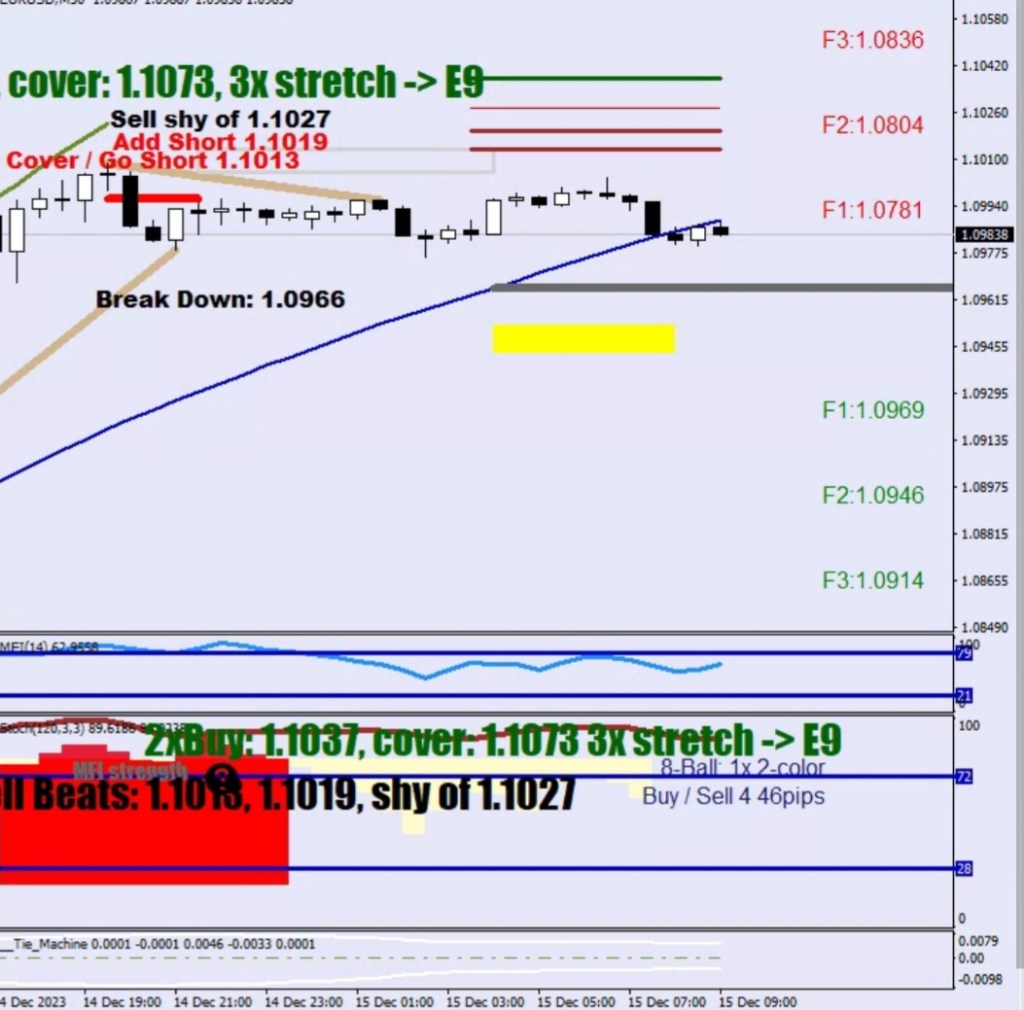
If I had to guess, you could see a 1.1030 print, but not a 1.1040. After that B-line to the daily E9.




















 ForexFore - Internals, indicators, algorithmic trading