
One step on the Eur/USD is 27 pips with the aid of the wind, and 17 pips against it. The wind, as I have been saying, is coming from the Titis line, which is the 200-hour median. Since it is a modern hand dryer, it has a HEPA filter, of course. We’ll come back to this.
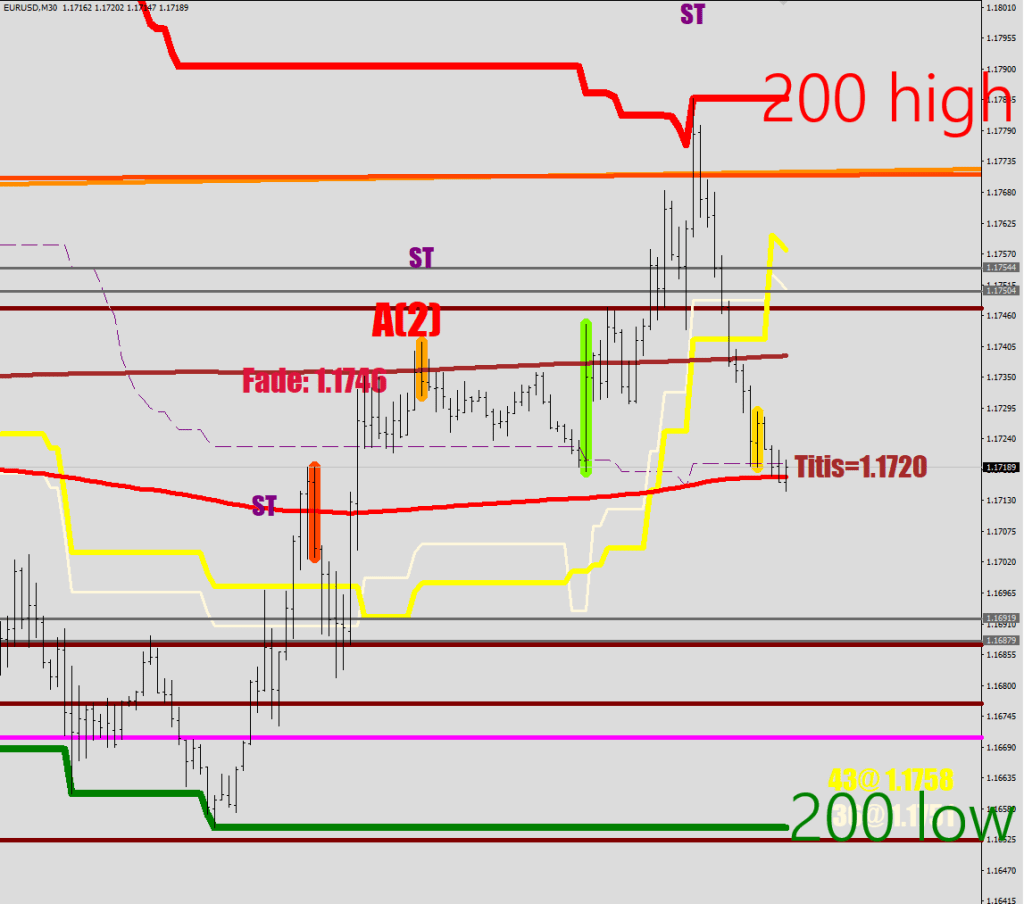
The first thing we’re gonna do is write the program for ST#3.
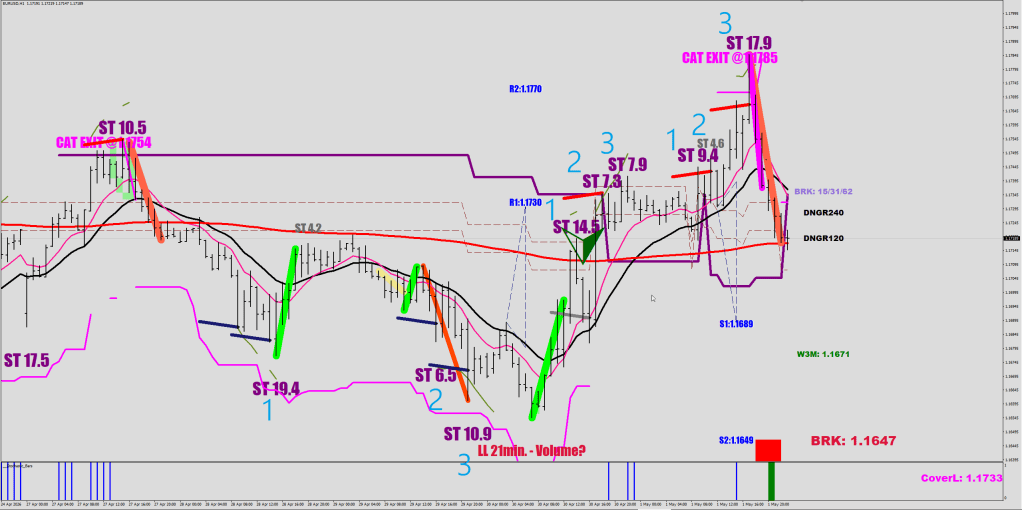
Stall 3: end of a leg or entire trend. The Stalls you filter for on the Hourly chart only.
What next:
STEP #1: Must rule out a double pump. The way you do this is by measuring the move back from the ST#3 print and paying attention to time. A move that is greater than 28 pips has triggered a reversal. A move that has not reached 28 pips in 10 hours is a full correction (the price managed to get outside the 30BB on the 30-minute), and a new 3x ST count is on. When hour six is still closing outside the 16-EMA (Black) that’s a telltale that the Bollinger is too wide, the volatility has to come in first, and this is how you end up with a Beat beyond the ST#3 print.
The continuation:
The no volatility correction (double pump) is likely going to clip/dip beyond the E-24 on the hourly. MUST overhedge for 3 more stalls (TGT fresh taper’s high + 27 – squirt).
The turn:
If an SOB prints (28+ pips pullback, usually within 6 hours), then you MUST fade the beat of the ST#3 print with overhedge or a fresh counter-directional position 6-16 pips out (yellow rectangle (0-6 pips)).
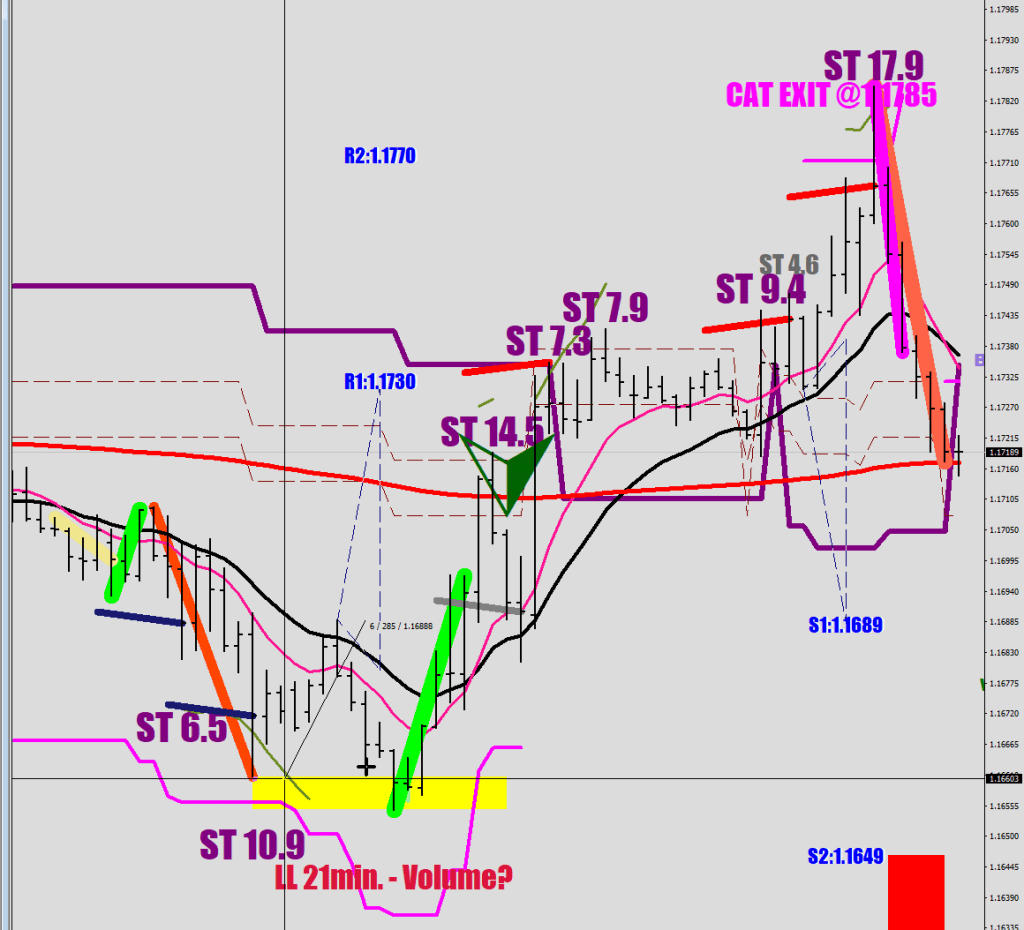
The main takeaway is that after ST#3, in the next 6 hours, it will be decided if the reversal is on or not.
Since we had a full reversal taking place, you should be betting on a fresh count to the downside. Outside the Hourly E-16 may be a good place to short (currently at 1.1736), but knowing what you know now, 17+36= 51 is an extra heavy short if it gets granted.
With an ST#1 or ST2, there are 2 main types of correction.
1. a liquidity break (V) against the HePa for up to 80 pips (64 is a sweet spot).
2. or double taper + small overrun for a lower volatility pullback
During the 3xST sequence, you would typically get one 36-pip break.
Also, for a proper count before a reversal, you would kind of like to see the 3rd Stall print with a close back number above 10 or if not, at least the second one above 10. These are the numbers I write after the ST-s.
High[i+1]>iMA(symbol,0,16,0,MODE_EMA,PRICE_MEDIAN,i+1) && iHigh(symbol,0,i+1)>=iHigh(symbol,0,iHighest(symbol,0,MODE_HIGH,9,i+2)-0*Point) && Close[i]<Close[i+1] ){ ObjectCreate("Dalton"+DoubleToStr(i), OBJ_TEXT, 0, Time[i+1], High[i+1]+80*Point); ObjectSetText("Dalton"+DoubleToStr(i), "ST "+DoubleToStr(NormalizeDouble((High[i+1]-Close[i+1])*10000,1),1), 32, "Impact", Purple); if (Low[i+2]<iMA(symbol,0,16,0,MODE_EMA,PRICE_MEDIAN,i+2)-40*Point || High[i+1]-Close[i+1]<48*Point ) ObjectSetText("Dalton"+DoubleToStr(i), "ST "+DoubleToStr(NormalizeDouble((High[i+1]-Close[i+1])*10000,1),1), 22, "Impact", DimGray); starterup[i+1]=true; }
Now it’s just the 27-pip step confirmation left.
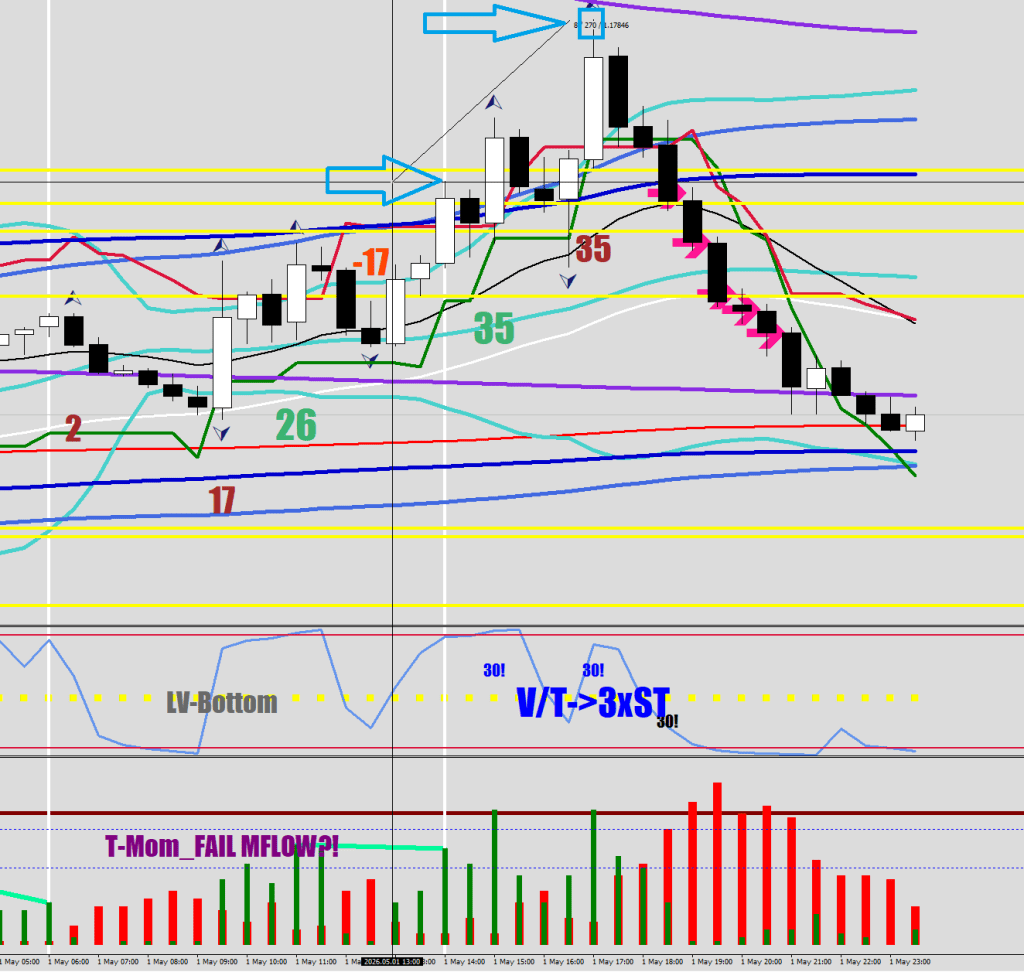
Thanks to the market type indicator I made, now you have a tool to figure out the reversal level with the wind up to 3 hours ahead of the actual print.
I believe this analogue synth song isn’t any worse than Era’s Ameno or most of Enigma’s works, and at the same time, it puts up a little competition to Jan Blomqvist. But I am biased and unknown.
The voice in this one is Sting with a stuffy nose. The other day, I got a Phil Collins, too.

