
Sweet…

Sweet…
◔ω◔
Systematic trading is trading based on a set of rules.
Maybe, Perhaps, Yes
Are you undecided? Apparently Humans cannot make decisions without emotions. But what if you are an emotional ship-wreck?
The real quantum computer is the human dwelling on making a decision. No use for “maybe / I don’t know” in systematic trading the answer always has to be decidedly binary.

୧༼ಠ益ಠ༽︻╦╤─
Dr. Doxey’s Elixir
Since all systematic trading has to be able to call turns correctly, you could say that the basis is more or less always divergences.

I first touched upon the Stochastic Bars theme in 2017 on my old blog. The time frame did not crystalize until now, all optimization was done with lower time frames, and the ultimate filter ended up being the shadow lines of the Axel S pair (10 pips out from them).
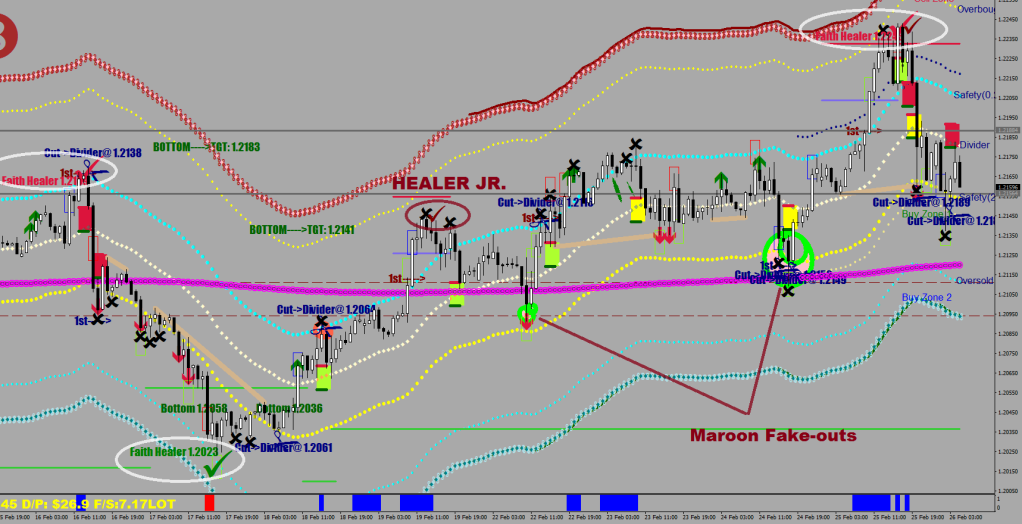
In recent history this was the only signal that came early (whatever you do, the market couldn’t stop falling ooh-oooh):

Otherwise, the system of Faith Healers and Maroon Fake-outs seems pretty systematic.
̿ ̿ ̿’̿’\̵͇̿̿\з=(•_•)=ε/̵͇̿̿/’̿’̿ ̿
̿̿ ̿̿ ̿̿\̵͇̿̿=(•̃●̮̮̃)۶
Qualify
Find things that repeat. Sort out what is what.


(◦′ᆺ‵◦)
Thy Fighter
I’m only including the fact that the distance from the last 4-h consolidation mean mattered yet again, an the armada of X-Wings was the perfect spot to make a quick kill back to the overbought neckline before the whole situation escalated to have an excuse to include the Existential Troopers clip from Auralnauts.
Also, if you look at the Extra deep correction call on the bottom (which not only did not get all the way down to the oversold, but fell shy from even the sound barrier), the “golden ticket” (lending the plot’s color) had a target of 0.45-0.49. This is a code for somewhere around the dashed blue line (E-16 stretch band aka 0.47).



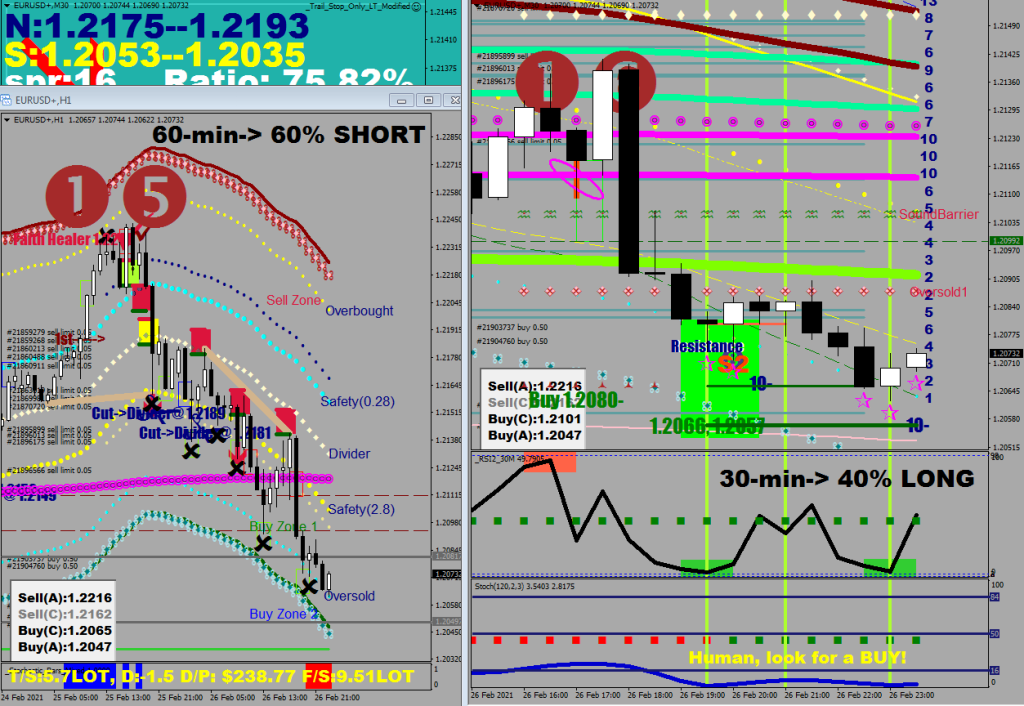

That’s the name I would give my Stochastic Bars Mixed routine after receiving all the upgrades.
See my free Axel S. routine for a starting home kit.
In that article I spoke of how the market trends: by swapping the E-32 to one of the 28-pip displacements.
In this article I want to show how a cascade ends. The start is a send function of the Safety Axel, below it is the yellow dots.
Ignore the label, and try to spot the taper: when the distance between the spike low and the Axel S. becomes less than 11 pips, that is were and when tomorrow ends.
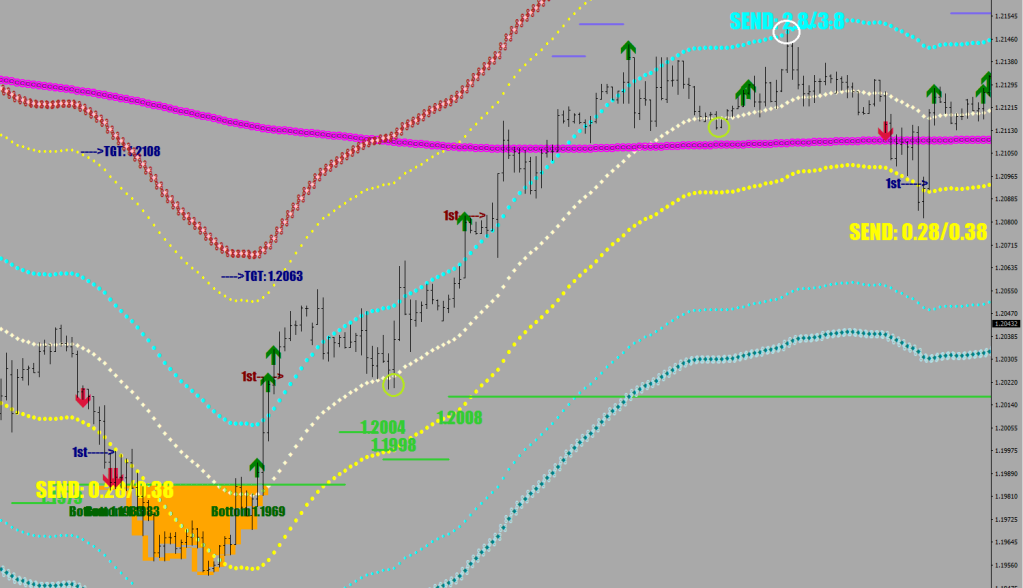
See, this is about convenience, so Seven-Eleven is the answer. The switch off around the E-32 is 7 pips, the outer Axels are 11. These are the basis of the arrows btw.
In a sideways market there are send functions playing pong. The shadow lines are 10 pips further, coming in at 38 pips from the E-32.
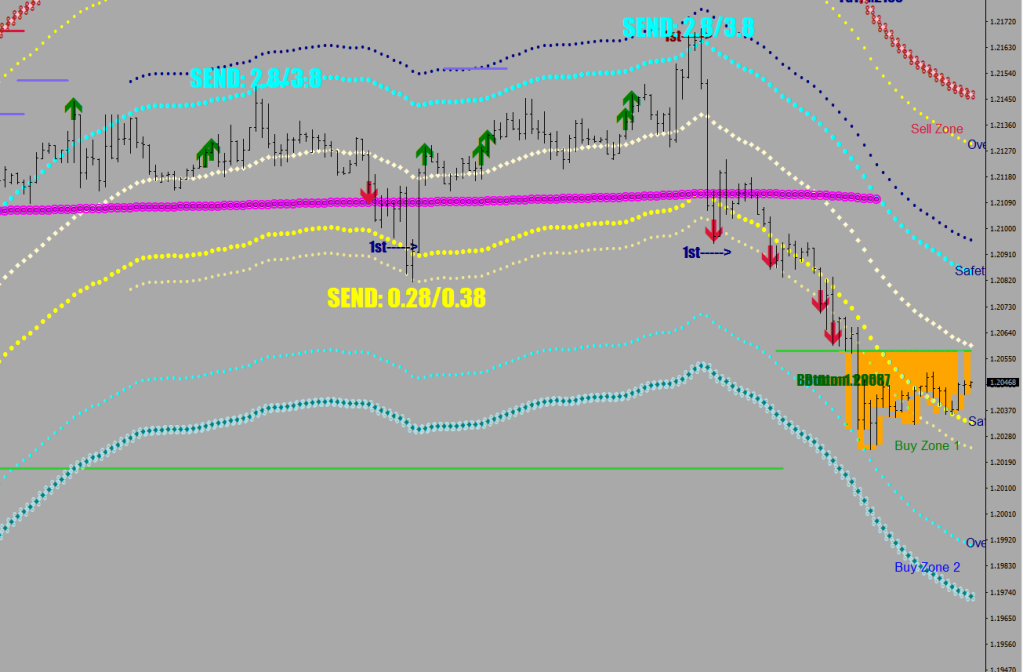
We just had another cascade down when the 3.8 Safety Shadow line got violated. There was a Taper that could have brought on a Send function, but hasn’t. The cascade continues until we see a serving from E-32 returned by the Safety line or the E-32 fails to hold 7 pips out.
With the system mentioned on this page the turning points for life investments become crystal clear.
…
The Scissors of Tapper Harley

…
…
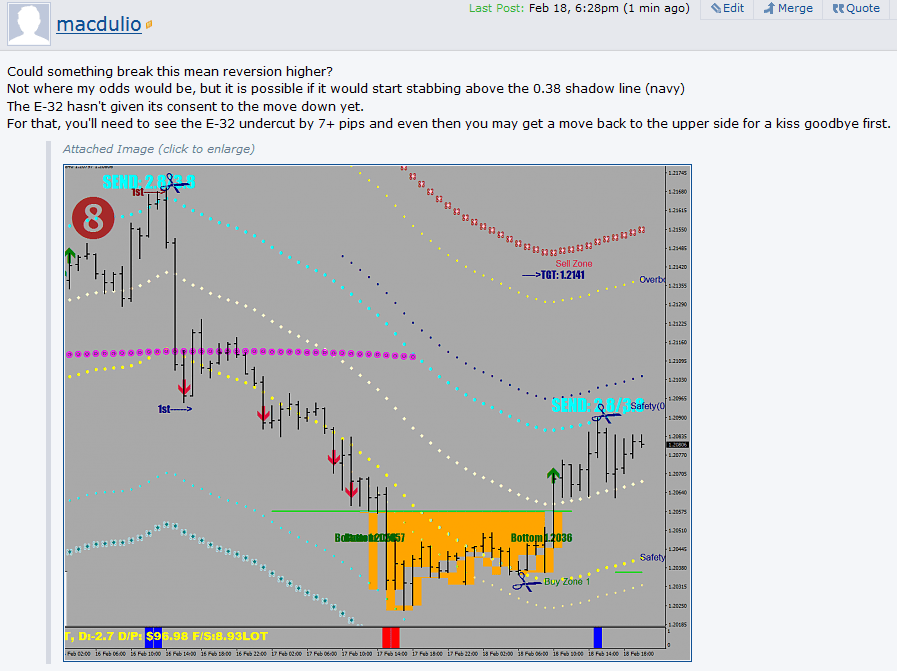
Why not be true to the origin of the indicator and find the heads? X for strike, check mark for qualified spike high / low.

About automating these signals:
The check marks are good entry points, but they are rare, 1H delay is suggested and price may move against you up to 36 pips.
The scissors are a weak signal, they require the current high to be lower or the current low to be higher, so there may be fake outs, and they are only guaranteed to take price back to the E-32 which may be as close as 26 pips.
The SEND signals are real time, and you may end up losing them after exceeding a travel length of 12 pips. Delay is suggested therefore and the 36 pips tolerance from the entry also applies here.
In relation to my Doctrine of the Forex Day Trader article
When I say precision in trading, what do you think of?
1-minute charts? Precisely drawn trendlines?
In high precision scalping none of those have any use.
You will need the following things:
and I would suggest a well composed trail stop to be added to this list.
See, scalping is a counter directional trade until the counter direction becomes the new direction.
Drawing lines and expecting a turn within a handful of pips is gambling.
Spotting range extension candles and defying them 2-pips out for a quick gain is precision scalping.
Knowing the instrument is important. The flcutuation size of the EUR/USD is 32 pips. When it is on mute in one direction, the movements would seldom exceed half of that size. Factoring in that you may not get a good fill, may not get the last pip both on the entry and the exit, you can realistically aim for only 8 pips and consider anything beyond an extra.
Therefore, you need a trail stop that would lock in say a 2-pips protective stop loss upon going into 8-pips of gain.
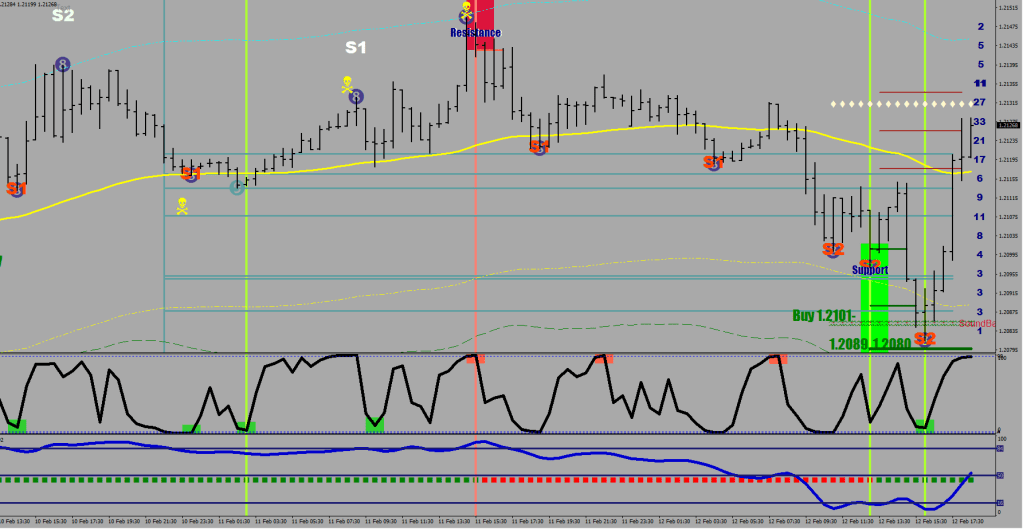
We take the turn that occurred with the human logic switching from green to red. Now red is the new holding direction.
We start paying attention to volatility changes.
We notice the muting on the upside becoming the theme.
We measure these counter-moves.

You also measure the length of the clean breaks.

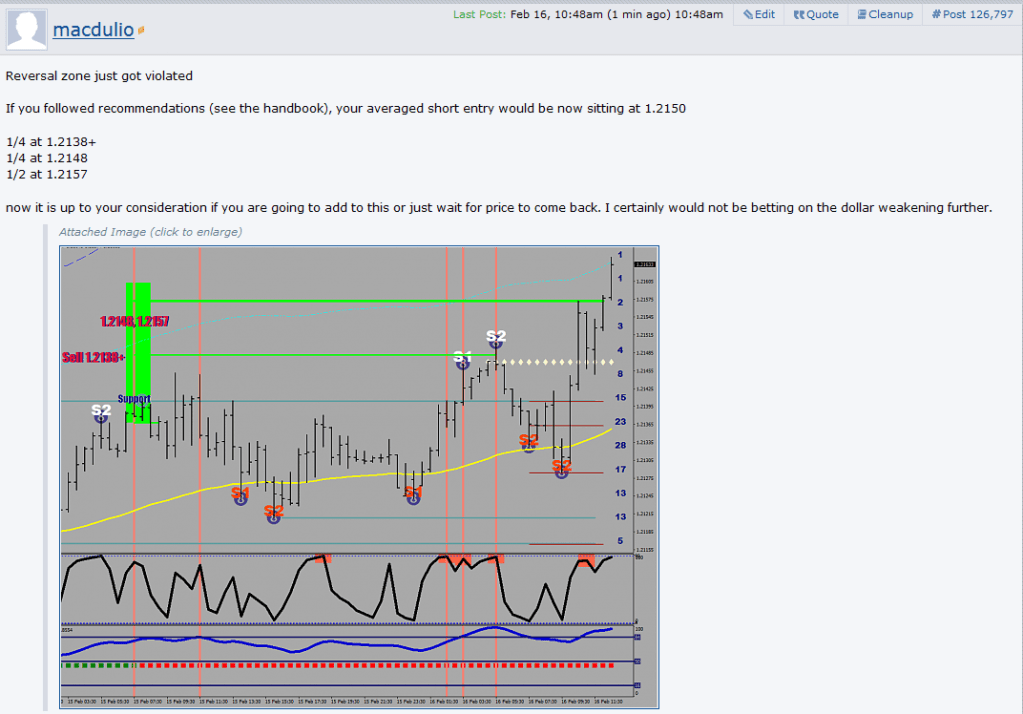
Say you have some short holdings, but just woke up and feel like you missed out on the prime continuation entries (first image, RSI2 boxes), but you want to make money for the day.
Your first long entry for the scalp would be after the second 28-pips long leg printed. Right after the top of the hour when this length was made, you place a pending order with good size at a 2-pips beat. The counter move coming out of it caps out at around 13.4 pips.
You let your trail stop lock in the 2 pips protective stop first by using the right code (i.e. 0.2 for long, 2.0 for short) and then sit and measure getting close to the lowest upside volatility value gets approached and you cut the trade somewhere near that – or at least try to. You could also use the target price as a code, 2.0 for longs and 0.2 for shorts, so that the protective trail stop could be made idle (when the order becomes CODEless, other trail stop functions may take over and start ratcheting the trail stop further that may not always be beneficial.)
It goes without saying that you should not try to scalp the same level again.
Now, as for scalp 2 – you already have the makings of a turn as evident on the 30-minute chart by the two S2 prints and on the hourly chart by the plots placed under the “scorching”.
Shooting, Scorching, Crash. That’s final.

Your entry was again 2-pips below the hourly low that qualified for exceeding your measured 28-pips length. You could use the 2-pips lock in protective stop loss, and this time whilst being conscious of the crash happening, you start aiming for the nearest resistance level: the pink zone was made qualified again by a volatility breach on the way down.
Difficult? Yes. It is a profession.

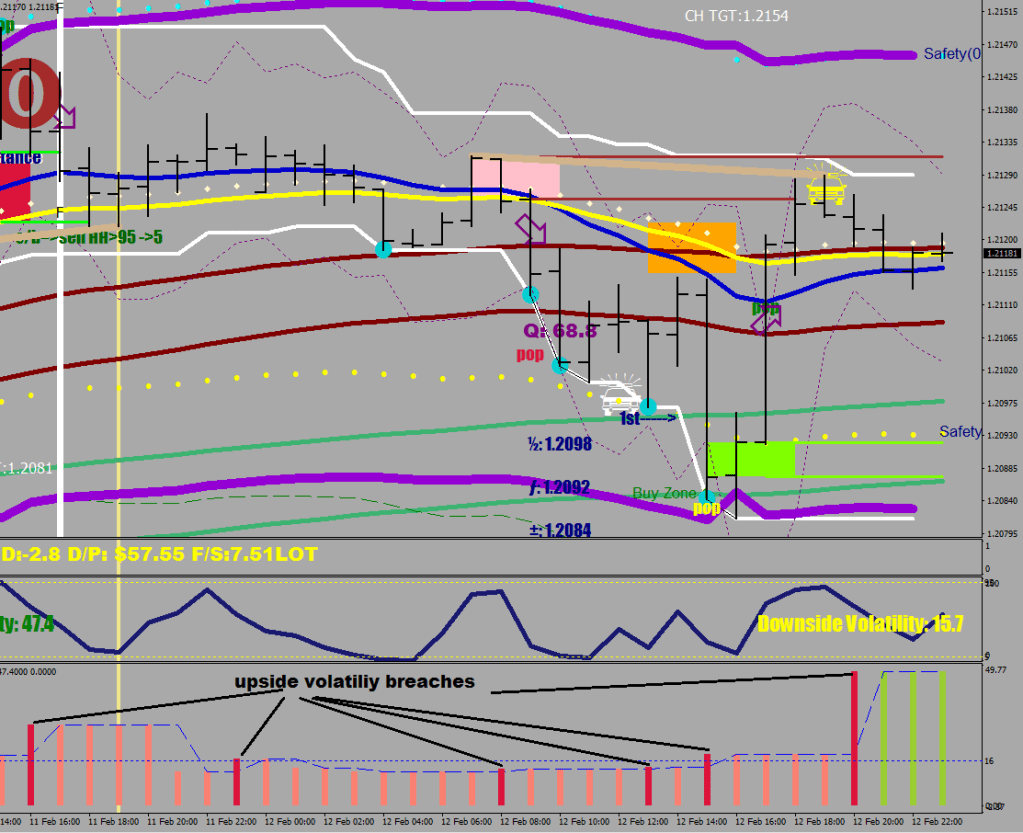
…let’s make it fluent, see what we can get…

This is how I could picture a scalper – advisor:
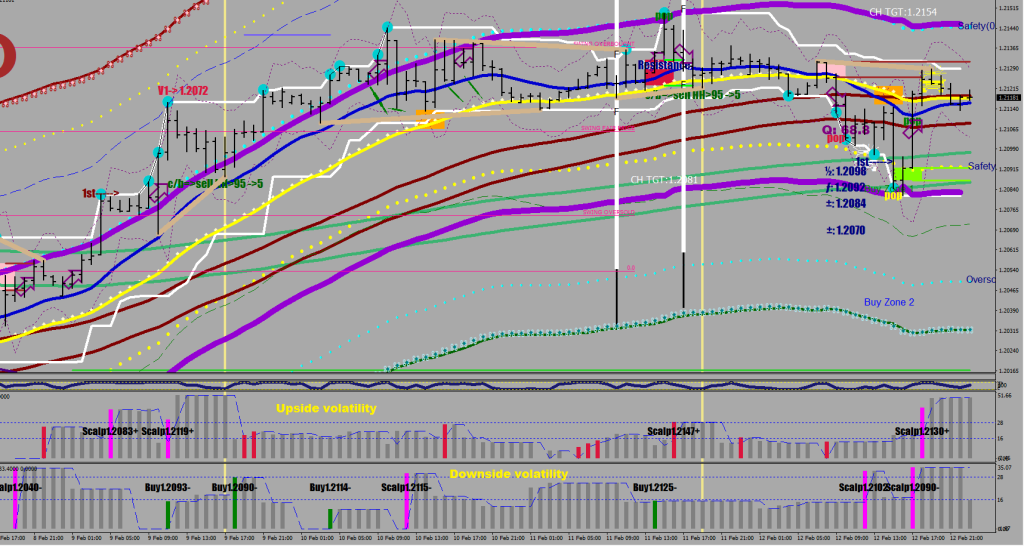

This was the block you were supposed to buy:

My actual trail stop – decided not to modify

Naked and Filled Volatility Breach Scalp & Buy Lines

Ta-Da…

The purpose of this indicator is to be able to find turning points in time and or within a predetermined distance.
The indicator itself is using RSI2 reversal divergences on the 30M time frame. It is sensitive and insensitive enough to be the best for the job. (For RSI2 continuation divergences I would use the hourly.)
Besides the sensitivity there is a chronological order of events that prepares the turn itself.
The Chronology
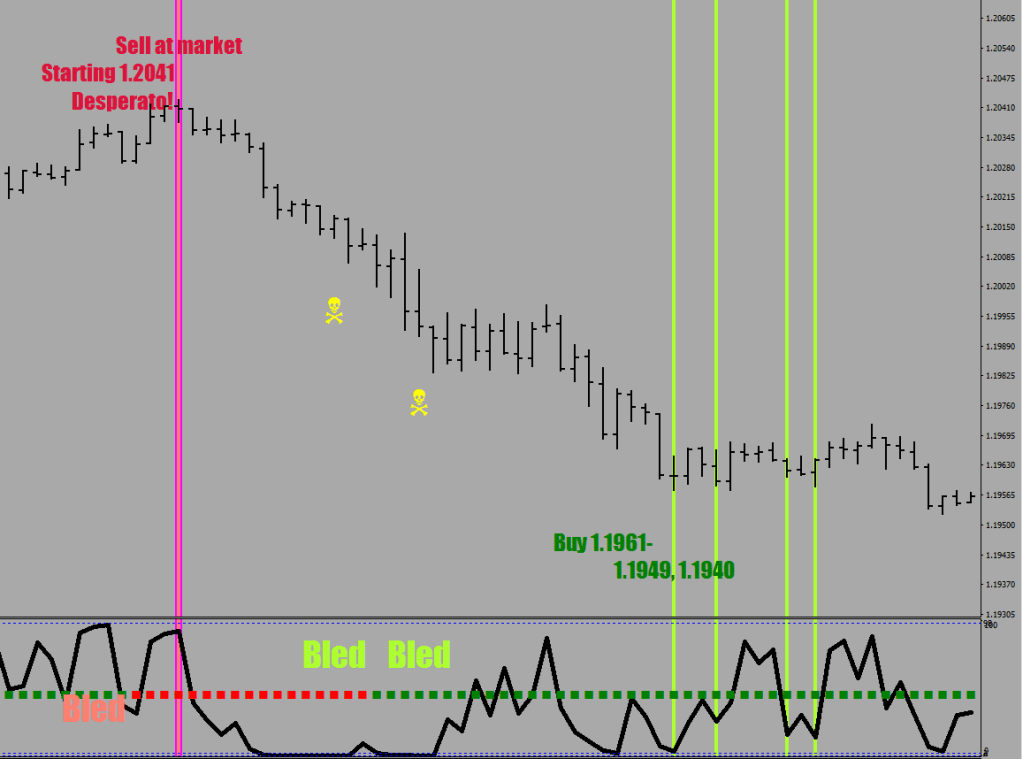
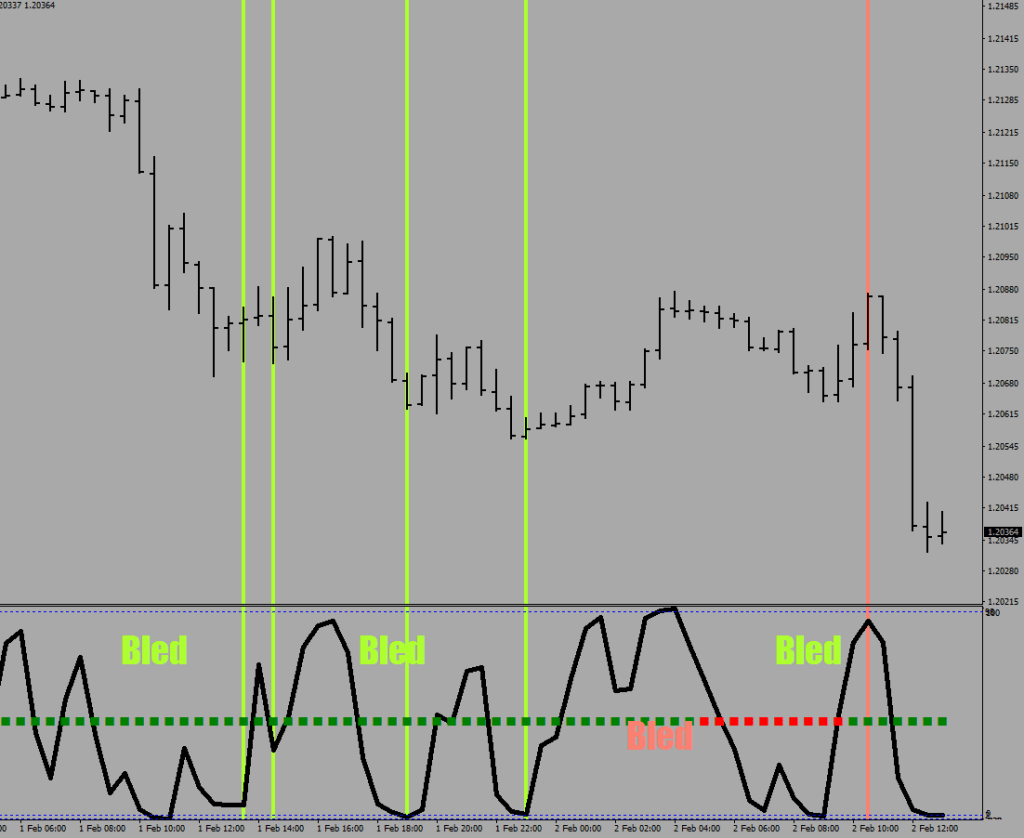
Before we are looking for a reversal divergence, there has to be blood, the market has to have bled. There is of course red blood and green blood depending on who bled out: the bulls or the bears.

The Drive / Thrust or Drive / Crash or Bleeding / Turning are exchangeable ideas about the market’s personality.
2. The divergence
All vertical lines are the ending points of reversal divergences.
The vertical line determines a point in time when the divergence took place if the next 30 minutes starts with absolutely no kick back / recoil. These lines get a magenta accent to draw attention to the urgency: you have to go in in the opposite direction at market ASAP. “El Desperato” stands for a desperate action, and similarly on the receiving end the turn would likely come with a sense of urgency.
The first vertical line with a new color determines a turning range. This range usually starts from the close of the marked candle and expands to 17 pips beyond the outside edge of the same candle.
I suggest scaling in in the area covered by the shown numbers, for instance after calculating your trading size based on your equity, you may want to go in with
Yes, you may get as many as 4, even 5 reversal divergences in a row, but what matters is the zone defined by the firs one & you would seldom see anything further than 20 pips from that candle.
3. Filters
a) skull and bones / pirate’s peak
Things don’t always go to plan, why would they?
There are a number of conditions that can throw things off.
One such finding is the skull and bones ︵‿ toxic strength. Breaking the pirate’s peak is a continuation in the charge. If you go back to the first image, you will see an example where the pirate’s peak was not exceeded.
This condition is being utilized to increase the displacement of the range and also to pass out on a reversal call due to close proximity in time to a pirate’s peak charge.
b) flip the bird

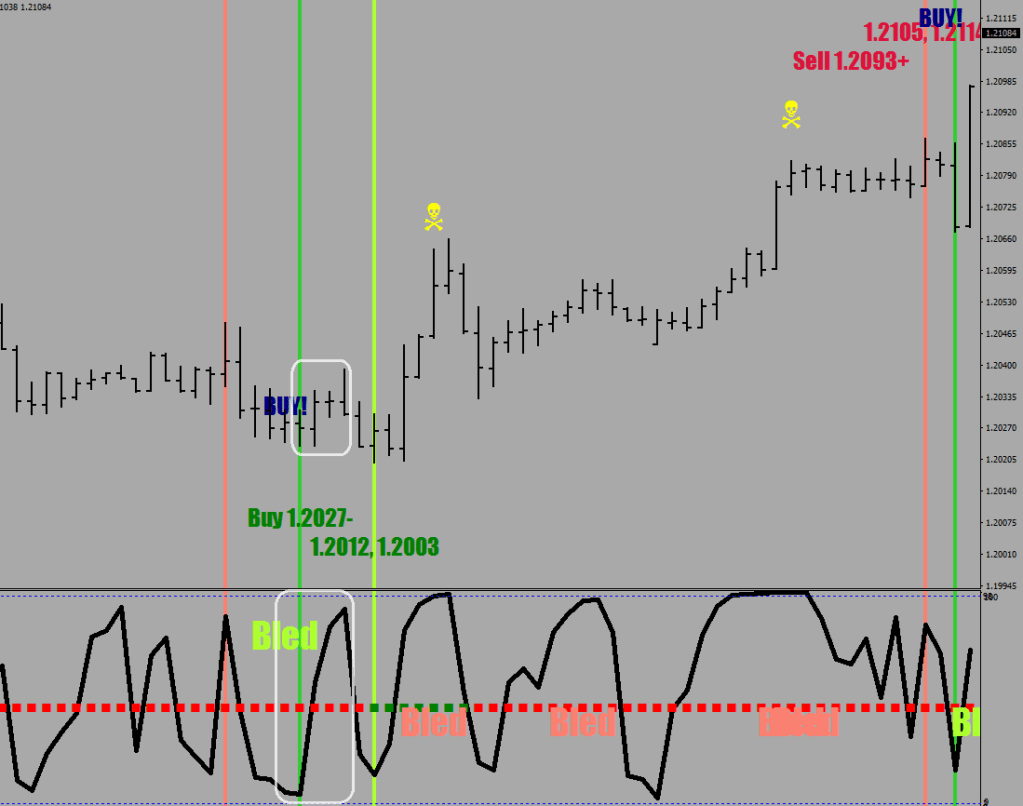
The flip the bird can only be identified after the sequence has printed: it has to be a 2-hour sequence (4 candles long), end on a high note and the starting RSI reading has to be between 5 and 20.
On the example above you can see some recoil on the next candle which is an opportunity to get in on a promising continuation: the bleeding logic gets a null, so a full bleeding + divergence has to occur before the market gets done.
Below is another exemplar but in this case the recoil itself set a reversal divergence first.
4. Other features
Here’s where Mike gets a little Massey.
I lifted some features for the sense of direction and limits.
The diamonds are the girl’s best friend and they represent the last 4-hour consolidation mean.
The overbought and oversold are 64 pips away (2x 32 = fluctuation size of EUR/USD).
The sound barriers are closer by 20 pips, and they would limit some attempts in the wrong direction. Wave ones tend to fail here / before hitting the overbought / oversold.
The 1x fade is a one time fade (20 pips into the overbought/oversold) like its name says, and almost any move can be faded for a move back to the overbought / oversold neckline for a good scalp.

Sorry for all this, but old rabbits don’t die. They explode. I should know, my great-grandfather used to have a rabbit farm.
In closing I would like to mention to use this indicator in combination with Axel S. and 99-Lines for more love and understanding.
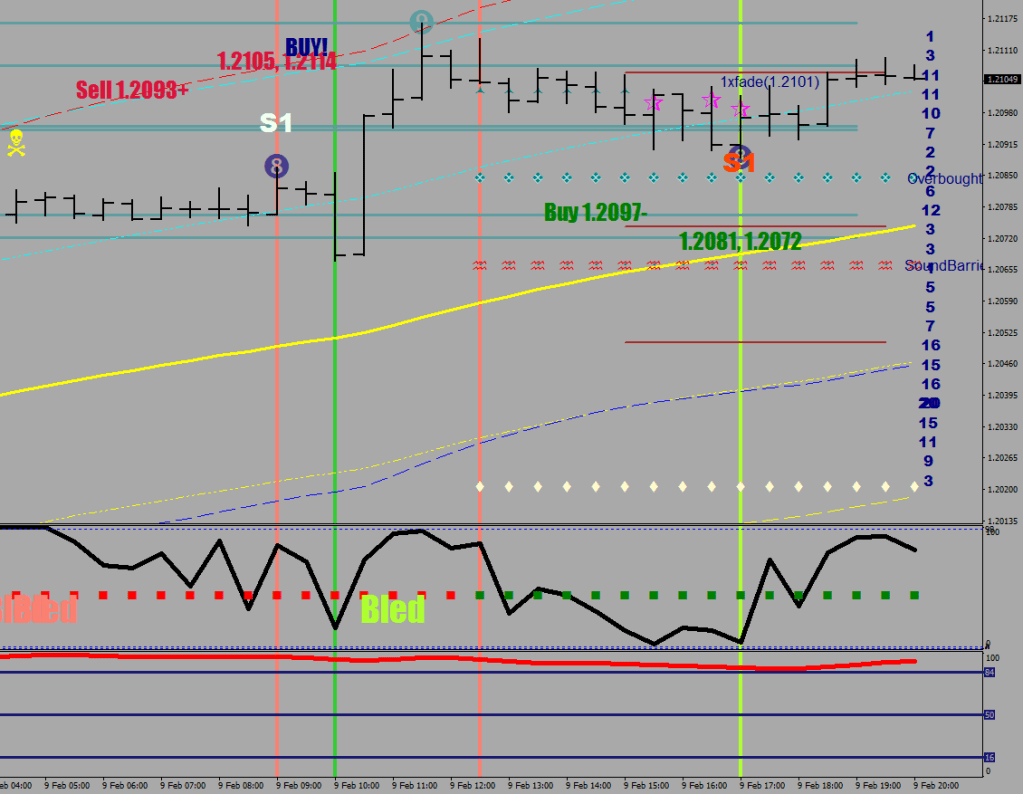
The Crack Ho on the bottom is the sister of the 60 min 60 sample Stoch D, here it is 120.
…
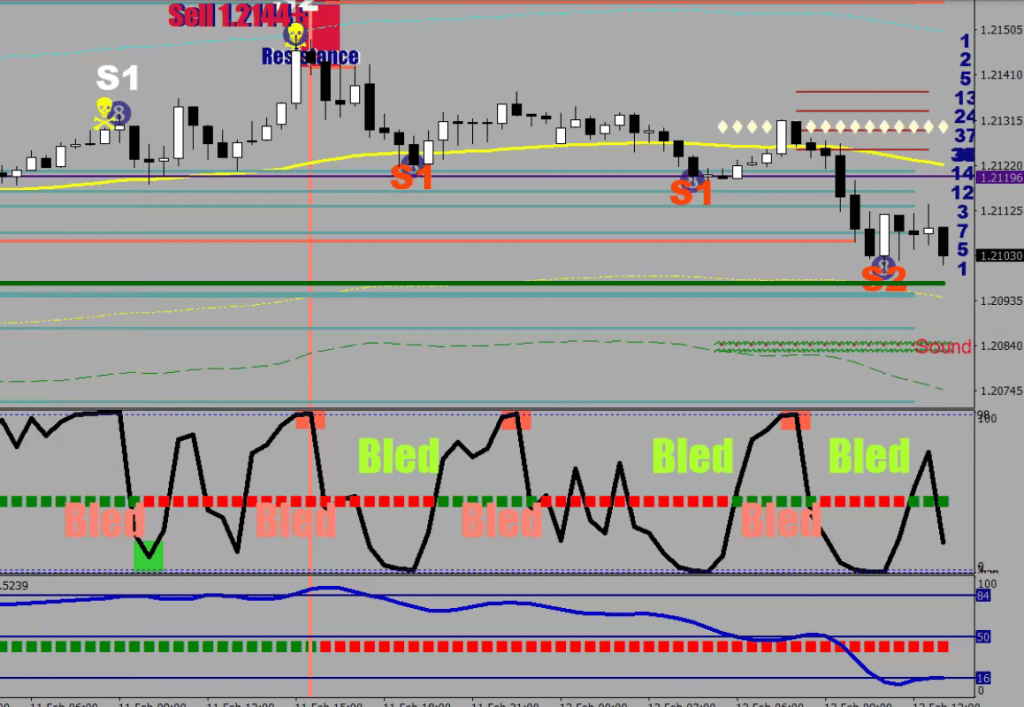
New experimental feature plotting the turning blocks

…
Human logic as the second row conclusion
…
An idea on how you can plot approximate support and resistance levels based on the presence of larger step-downs.

Picture shows with lighting highlights the brown support lines based on the last 2 day’s profile (96x 30 mins) where the stepdifference was greater than 6.
It may be worth placing more permanent lines over those levels for over time the sample would cease including those areas.
Use it as a helper with preparing for the day.
double start=iOpen(symbol,30,market_profile_length);
double step = FSize*10*Point/8;
    for (i=market_profile_length; i>=0; i--)
      for (j=30; j>=0; j--) {
         if (High[i]>start+j*step && Low[i]<start+j*step) mpu[j]++;
         if (High[i]>start-j*step && Low[i]<start-j*step) mpd[j]++;
   }

  for (i=30; i>=0; i--) {
      if (mpu[i]>0) { ObjectCreate("Qxt 7"+DoubleToStr(i), OBJ_TEXT, 0, Time[0], start+i*step+.0002);
                     ObjectSetText("Qxt 7"+DoubleToStr(i), "       "+IntegerToString(NormalizeDouble(mpu[i],4),1), 12, "Arial Black", indicator_color3);

                        if (MathAbs(mpu[i]-mpu[i+1])>stepdifference){
                                    ObjectCreate(0,"Qxt5_1"+DoubleToStr(i),OBJ_TREND,0,Time[10],start+i*step+.0002-17*Point,Time[1],start+i*step+.0002-17*Point);
                                    ObjectSetInteger(0,"Qxt5_1"+DoubleToStr(i),OBJPROP_RAY_RIGHT,false);
                                    ObjectSet("Qxt5_1"+DoubleToStr(i),OBJPROP_COLOR,Brown);
                                    ObjectSet("Qxt5_1"+DoubleToStr(i),OBJPROP_WIDTH, 2);}

                     }
      if (mpd[i]>0) { ObjectCreate("Qxt 9"+DoubleToStr(i), OBJ_TEXT, 0, Time[0], start-i*step+.0002);
                     ObjectSetText("Qxt 9"+DoubleToStr(i), "      "+IntegerToString(NormalizeDouble(mpd[i],4),1), 12, "Arial Black", indicator_color3);

                             if (MathAbs(mpd[i]-mpd[i+1])>stepdifference){
                                    ObjectCreate(0,"Qxt5_1"+DoubleToStr(i),OBJ_TREND,0,Time[10],start-i*step+.0002-34*Point,Time[1],start-i*step+.0002-34*Point);
                                    ObjectSetInteger(0,"Qxt5_1"+DoubleToStr(i),OBJPROP_RAY_RIGHT,false);
                                    ObjectSet("Qxt5_1"+DoubleToStr(i),OBJPROP_COLOR,Brown);
                                    ObjectSet("Qxt5_1"+DoubleToStr(i),OBJPROP_WIDTH, 2);}

                     }
       }
(Taken from the MQL4 Code, “99-Lines”)

So I have a lot of connections on LinkedIn, so I get all kinds of “statements” shuffled in to the digest.
There are things I immediately hit the unfollow button on, these are the obvious scams. You know, mostly cell phone screen shots with no obvious duration shown, just a piece meal with a REAL flag Photoshopped over.
Do I keep the connections? I let them look at what I am doing and give them a chance to do the right thing. I only delete the aggressive jerk types and the total frauds.
I’ve been trading for a long time to know what is realistic / attainable.
Today I saw a “Managed Accounts” list with I believe 10-12 different accounts and just a percentage for “gains” in an excel chart.
Scammiest thing ever. I wanted to immediately unfollow, but then after losing the post altogether I felt regret for not taking a screen shot.
There are a number of things to talk about here.
One single percentage is totally meaningless: is that increase on the balance or the equity (for these two things rarely are equal)? Was there any capital injection for instance to avoid a margin call? This would raise the balance too, you know.
I myself trade like a fund. It is not impossible to trade 10 different accounts and have all trades settled by the end of the day. These accounts would not be called managed accounts, but rather traded accounts.
If you manage an account, that means that you are using means of protection other than stop losses. Most likely hedging infrequently.
In my video titled “Yie Are Kung-Fu /30 K Profit Factor?!” I show both a monthly Balance and an Equity statement.
When you are managing an account, you always have a net position size which is either positive and negative, and seldom are without any holdings at all. You would be rolling in and out of longs and shorts, and would have an exposure on balance.
Sure, money making is the ultimate goal, just like when you are day-trading, but your objectives would multiply – you would want to:
All off numbers can be attributed any sense in the light of an examined period. There are mere changes towards an ideal state that may never be accomplished.
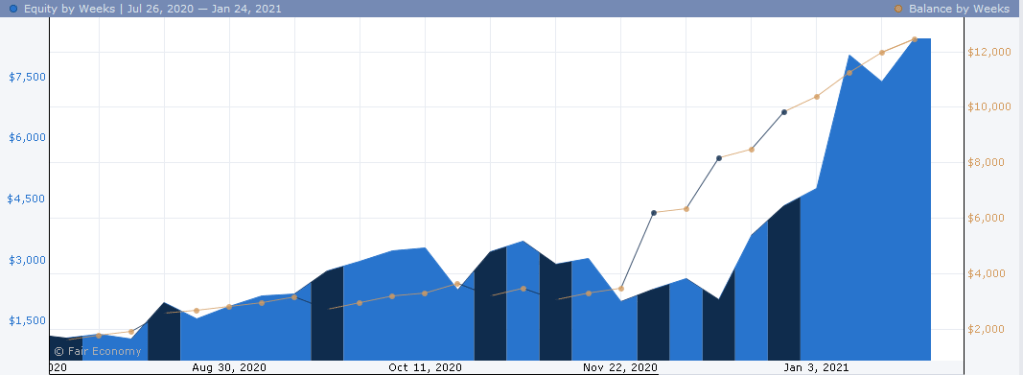
So, let’s pull up the statement from the end of January, we’re curious about the holdings and the equity here.
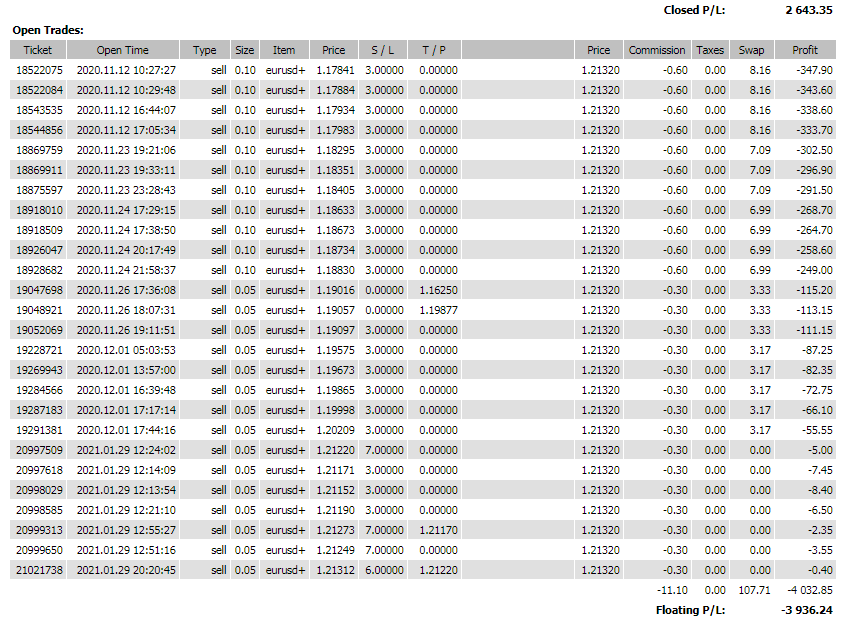
If you add up the short positions held, it was 1.85 lots. Since my calculated Trading Size was 4.5 lots, you can see that the account was not heavily burdened, and the Equity/Balance Ratio speaks of 32% draw down with the nominal value expressed as Floating.
This Friday has a lot more to go, but for the sake of this article, I do a “one week later comparison” with its current state.
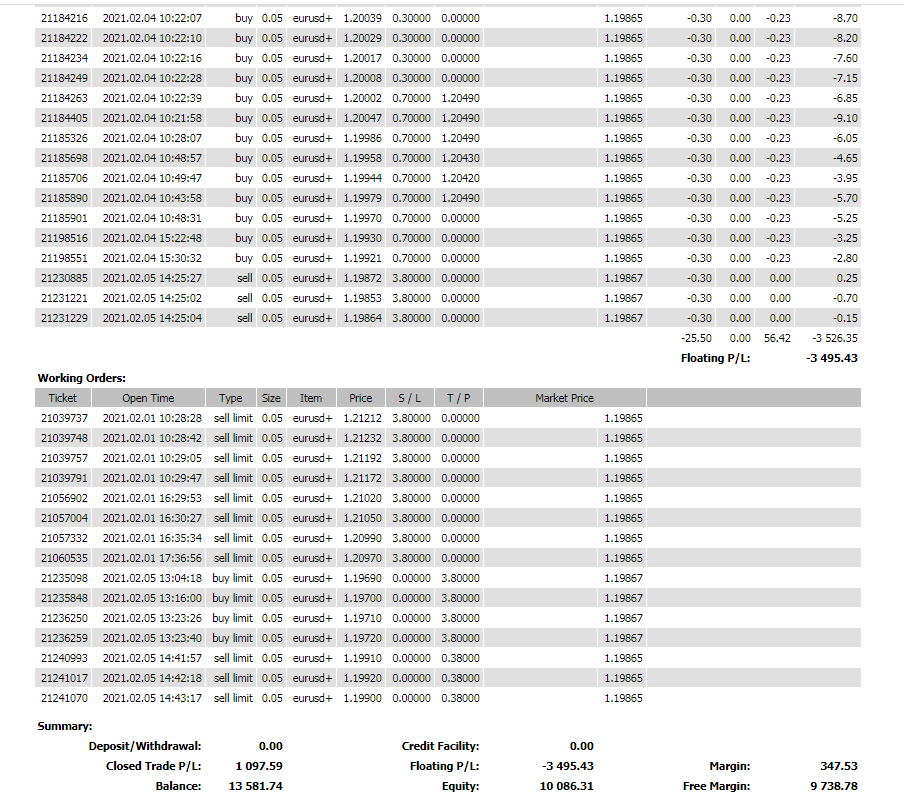
For the current week the following things can be said:
and we are not even discussing margin percentages at this point.
As you can see, one single percentage number would not paint any realistic picture, not even the shade of it.
Fund management is all about realizing when market changes occur and making beneficial alterations.
This is why it is worth celebrating when an indicator weakness gets corrected to be able to more accurately interpret in the future to bring about better bottom line numbers.
For instance, a reversal divergence wasn’t picked up before, so I had to allow for the comparison high to be lower by a few pips – it is now.

The following call had to be eliminated, for the RSI sequence’s last 2 values were too close to each other for a usable reference point.

And it is correct now.

Further changes may be necessary, but I never said otherwise. Development is a process just as managing an account.

A present.

Channelin’ The House
In order to start channeling, the Alex Foley aka the market has to trade in the E-32 for an Axel S. E-32 itself would become one end of the channel and the distance doubled would be the other end.
In the example above you can see that the encounter with the E-16 viaduct brought on the channeling move.
#property copyright "by Macdulio"
#property link      "forexfore.blog"
#property description "Axel S"

#property indicator_chart_window
#property indicator_buffers 9

int lookback = 300;

double e16d1[], e16d2[], e16d3[], e16d4[], E16[], RSI2[];
double E32L[], AxelU[], AxelU1[], AxelL[], AxelL2[];

//+------------------------------------------------------------------+
//| Custom indicator initialization function                         |
//+------------------------------------------------------------------+
int init()
  {

   SetIndexBuffer(0,AxelU);
   SetIndexStyle(0,DRAW_LINE,4,1,clrCyan);

   SetIndexBuffer(1,AxelL);
   SetIndexStyle(1,DRAW_LINE,4,1,clrYellow);

    SetIndexBuffer(2,AxelU1);
   SetIndexStyle(2,DRAW_LINE,1,1,clrCyan);

  SetIndexBuffer(3,E32L);
   SetIndexStyle(3,DRAW_LINE,3,3,clrYellow);

   SetIndexBuffer(4,e16d1);
   SetIndexStyle(4,DRAW_LINE,1,1,clrBlue);
      SetIndexBuffer(5,e16d2);
   SetIndexStyle(5,DRAW_LINE,1,1,clrBlue);

  SetIndexBuffer(6,e16d3);
   SetIndexStyle(6,DRAW_LINE,1,1,clrRed);
      SetIndexBuffer(7,e16d4);
   SetIndexStyle(7,DRAW_LINE,1,1,clrGreen);

 SetIndexBuffer(8,AxelL2);
   SetIndexStyle(8,DRAW_LINE,1,1,clrYellow);


//----
   return(0);
  }
//+------------------------------------------------------------------+
//| Custom indicator iteration function                              |
//+------------------------------------------------------------------+
int start()
{

   int    i;             // Number of counted bars


  string symbol = Symbol();

    ArrayResize(E16, Bars);
 ArrayInitialize(E16, EMPTY_VALUE);
   ArrayResize(e16d1, Bars);
 ArrayInitialize(e16d1, EMPTY_VALUE);
    ArrayResize(e16d2, lookback);
 ArrayInitialize(e16d2, EMPTY_VALUE);
    ArrayResize(e16d3, lookback);
 ArrayInitialize(e16d3, EMPTY_VALUE);
    ArrayResize(e16d4, lookback);
 ArrayInitialize(e16d4, EMPTY_VALUE);
    ArrayResize(E16, lookback);
 ArrayInitialize(E16, EMPTY_VALUE);
    ArrayResize(RSI2, lookback);
 ArrayInitialize(RSI2, EMPTY_VALUE);
     ArrayResize(AxelU, lookback);
 ArrayInitialize(AxelU, EMPTY_VALUE);
      ArrayResize(AxelU1, lookback);
 ArrayInitialize(AxelU1, EMPTY_VALUE);
      ArrayResize(AxelL, lookback);
 ArrayInitialize(AxelL, EMPTY_VALUE);
      ArrayResize(AxelL2, lookback);
 ArrayInitialize(AxelL2, EMPTY_VALUE);

       ArrayResize(E32L, Bars);
  ArrayInitialize(E32L, EMPTY_VALUE);


//--------------------------------------------------------------------


for (i = lookback ; i >=0; i--) {

   if (Period()==30) E16[i]=iMA(NULL,0,32,0,MODE_EMA, PRICE_MEDIAN,i);
   else E16[i]=iMA(NULL,0,16,0,MODE_EMA, PRICE_MEDIAN,i);

   if (Period()==60) E32L[i]=iMA(NULL,0,32,0,MODE_EMA, PRICE_MEDIAN,i);
   else E32L[i]=iMA(NULL,0,32*2,0,MODE_EMA, PRICE_MEDIAN,i);

         e16d1[i]=E16[i]+450*Point;

         e16d2[i]=E16[i]-450*Point;

        if (iMA(NULL,60,67,0,MODE_EMA, PRICE_HIGH,0)>iMA(NULL,60,207,0,MODE_EMA, PRICE_HIGH,0)) e16d4[i]=e16d2[i];
        if (iMA(NULL,60,67,0,MODE_EMA, PRICE_HIGH,0)<iMA(NULL,60,207,0,MODE_EMA, PRICE_HIGH,0)) e16d3[i]=e16d1[i];

     AxelU[i]=E32L[i]+280*Point;
     AxelU1[i]=AxelU[i]+280*Point;

     AxelL[i]=E32L[i]-280*Point;
     AxelL2[i]=AxelL[i]-280*Point;

}
  return(0);
  }
Should work both on 60 and 30M
Add on from the super saver menu: RSI2 30M

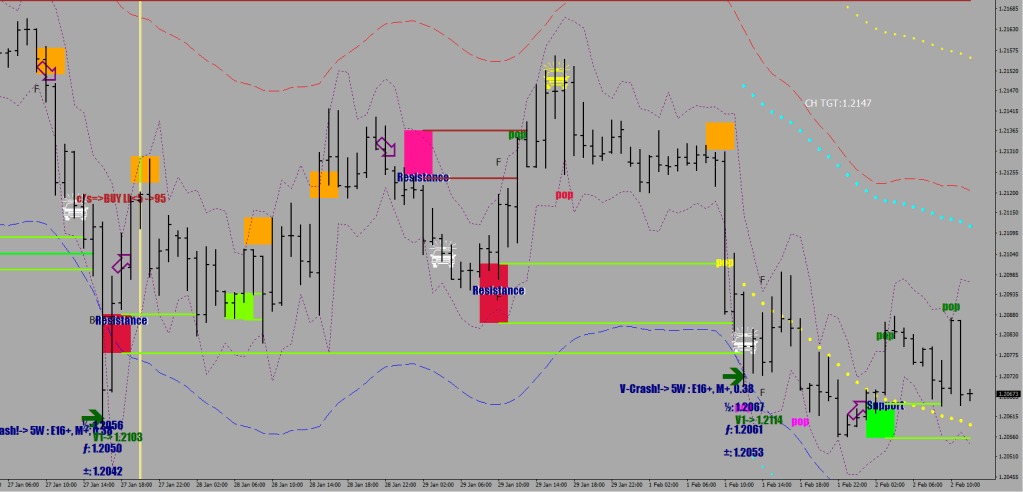
Support and Resistance can be found on the chart due to the volatility breach they caused in a direction = due to the manner price left a level (in a hurry).
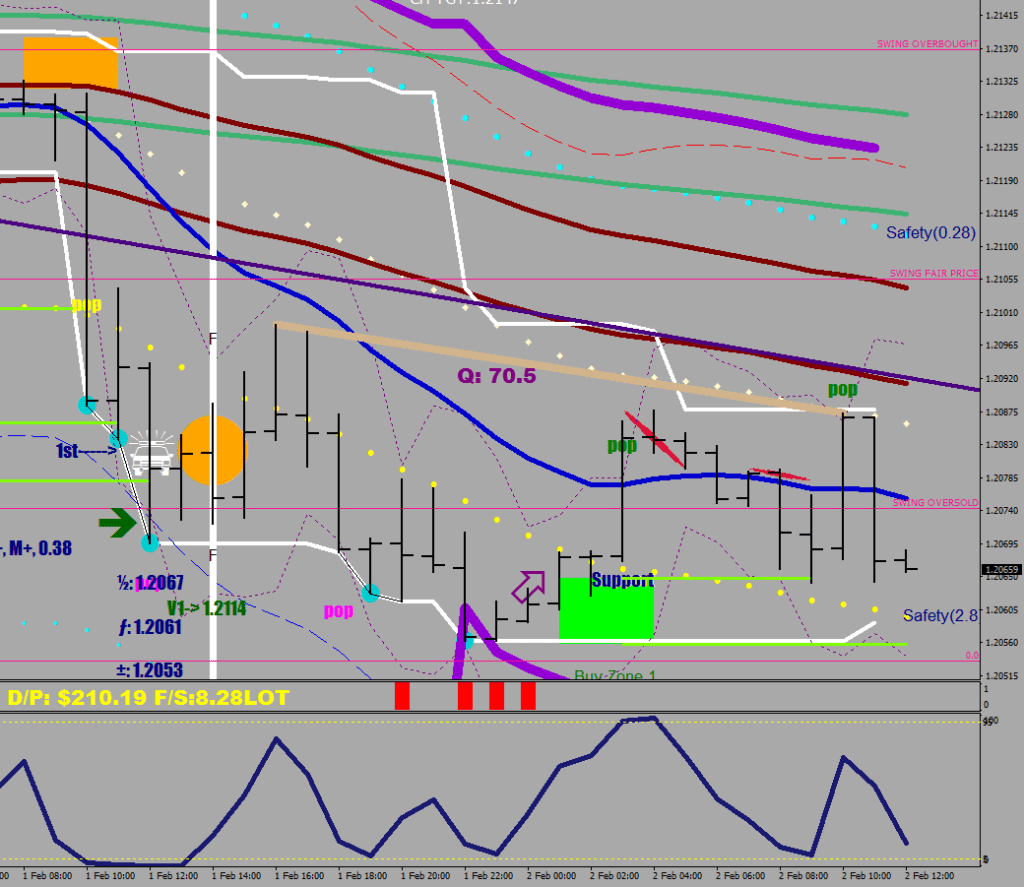
On the image above to find support and resistance zones automatically, my software utilizes the breach of the dotted brackets, which are 10-pip displacements. I also invented a logical switch for “fresh green pop / fresh red pop” to find the most relevant ones.
hdn[i]=Low[i+1]-100*Point; hup[i]=High[i+1]+100*Point;The width I use is
1. from the open of the break away candle to
2. to 4.4 pips beyond the outer point of the candle
I add some displacement is the recent history was nosebleed selling / buying (RSI just hit the floor / ceiling)
The width I use is
1. from 3 pips beyond the open of the break away candle to
2. to 11.4 pips beyond the outer point of the candle
ObjectCreate(0,"SING3_1"+i,OBJ_TREND,0,Time[i],Low[i]-114*Point,Time[0],Low[i]-114*Point);
                          ObjectSetInteger(0,"SING3_1"+i,OBJPROP_RAY_RIGHT,false);
                          ObjectSet("SING3_1"+i,OBJPROP_COLOR,Lime);
                          ObjectSet("SING3_1"+i,OBJPROP_WIDTH, 3);
ObjectCreate(0,"SING3_2"+i,OBJ_TREND,0,Time[i],Open[i]-30*Point,Time[0],Open[i]-30*Point);
                          ObjectSetInteger(0,"SING3_2"+i,OBJPROP_RAY_RIGHT,false);
                          ObjectSet("SING3_2"+i,OBJPROP_COLOR,Lime);
                          ObjectSet("SING3_2"+i,OBJPROP_WIDTH, 3);
The label plays a windmill around the end of the trigger candle
ObjectCreate("SINGRock"+DoubleToStr(i), OBJ_TEXT, 0, Time[i], Low[i]-10*Point); ObjectCreate("SINGRocky"+DoubleToStr(i), OBJ_TEXT, 0, Time[i], Low[i]-10*Point);
                                if (Close[0]>Open[i]-30*Point) {ObjectSetText("SINGRock"+DoubleToStr(i), " Support", 14, "Impact", clrWhite); ObjectSetText("SINGRocky"+DoubleToStr(i), "Support", 14, "Impact", clrNavy);}
                                else {ObjectSetText("SINGRock"+DoubleToStr(i), " Resistance", 14, "Impact", clrWhite); ObjectSetText("SINGRocky"+DoubleToStr(i), "Resistance", 14, "Impact", clrNavy);
So let’s carry over these two ideas for drawing support and resistance:
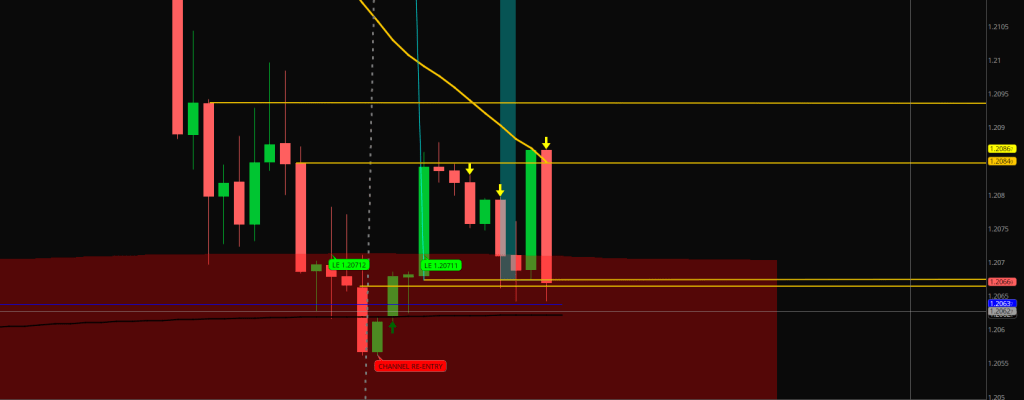
…so your lines are drawn in accurately on your hourly chart, you are eyeing the next level up
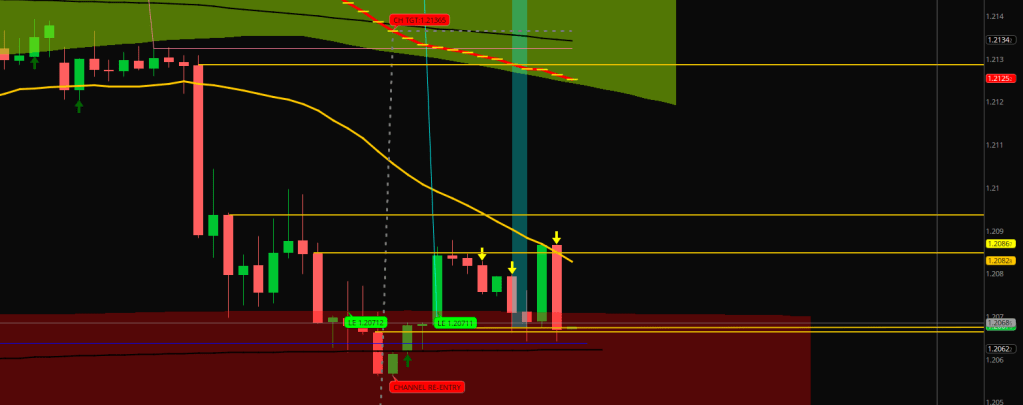
…and this is what happens…
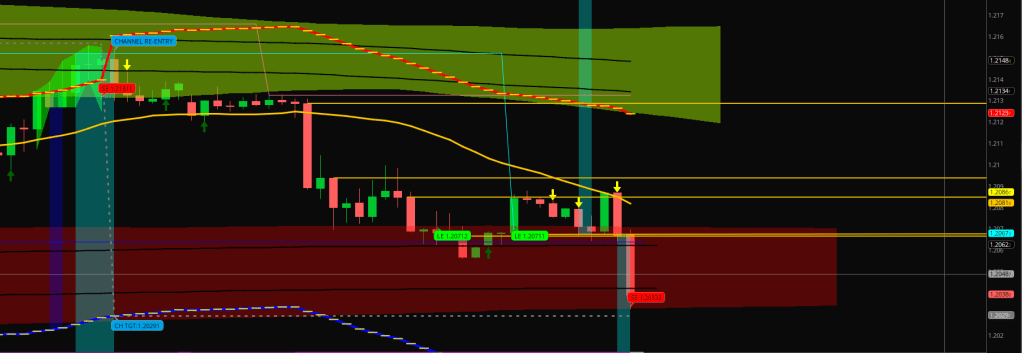
…baby bummer, for you knew all along about the channel target on the left (thanks to my free TOS present earlier), you are conscious of the wave structure and have not used outrageous size… you are in good shape… time to average down that bet!
Price is almost there & life is almost fair>
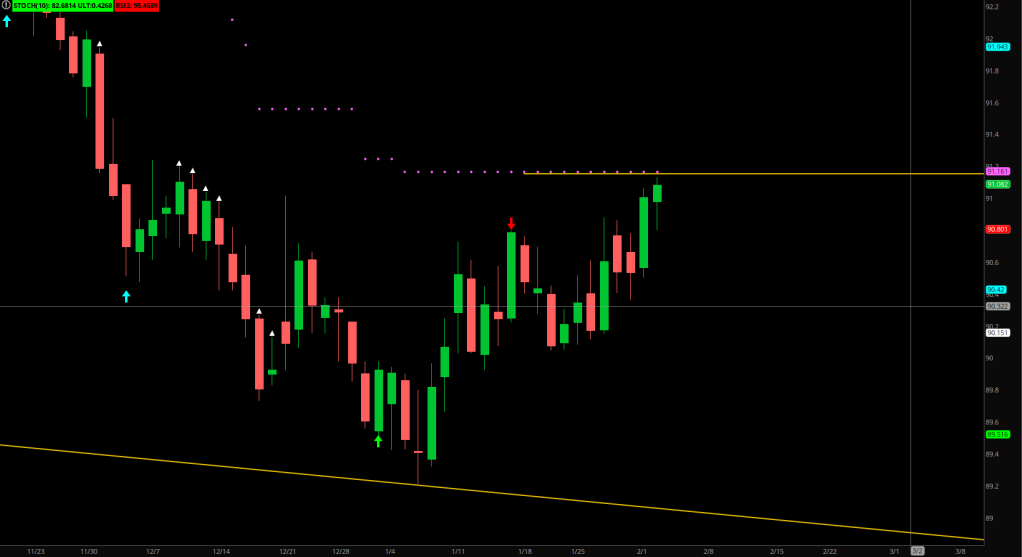
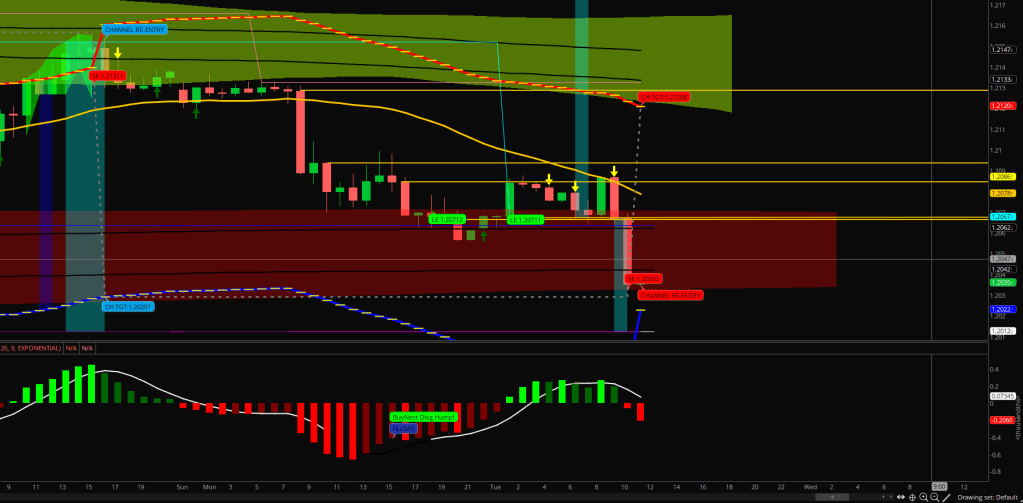
…the necessary correction to the RSI2 30M was made.
…
Channel Target on CloseLines 60-60
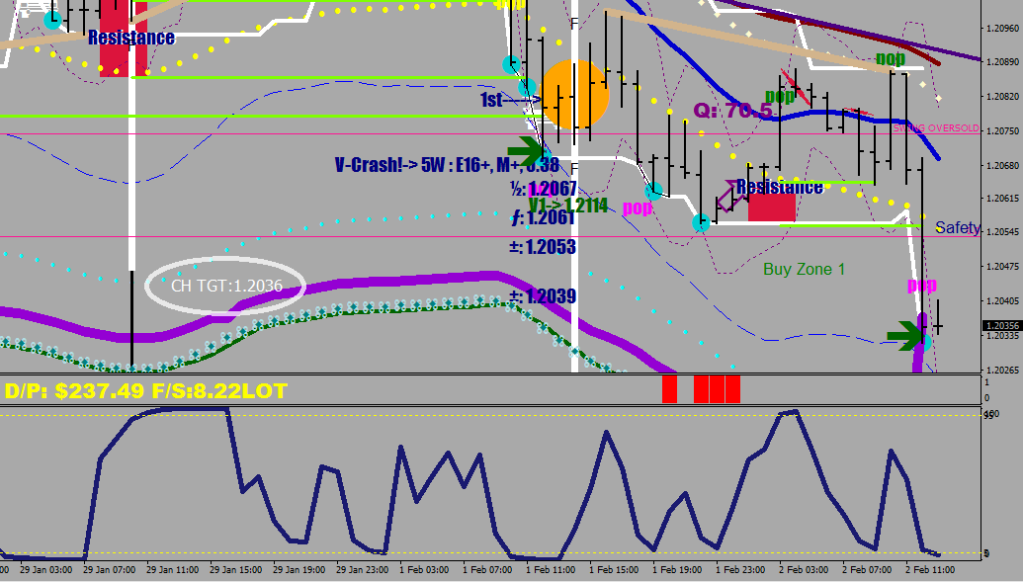
the difference comes from using an E-32 channel VS E-36 on TOS in part
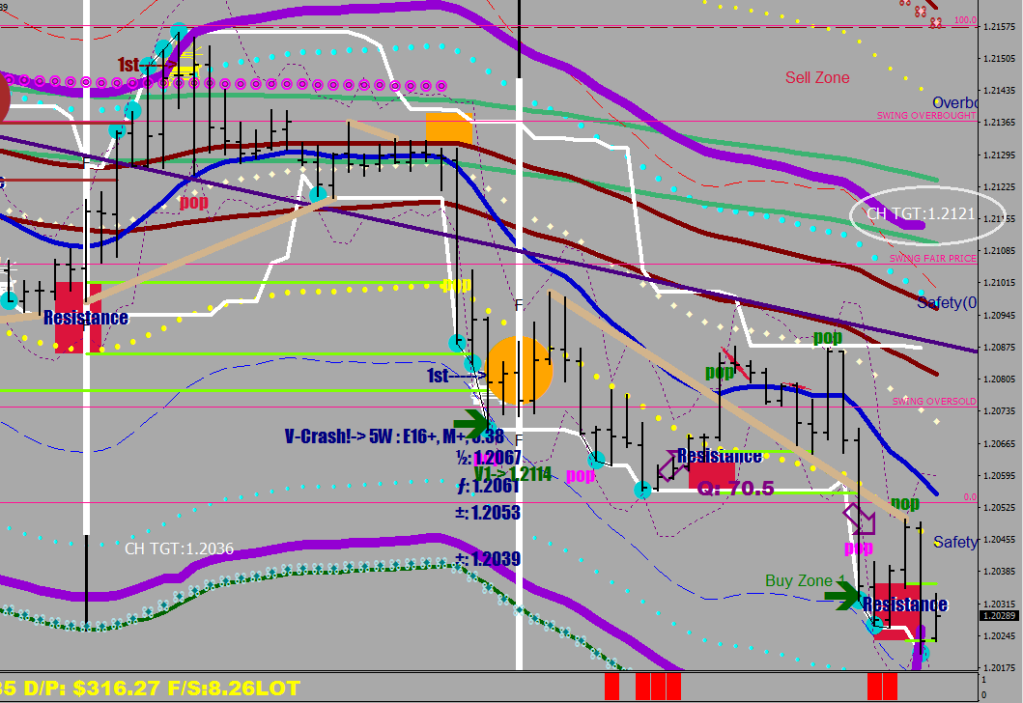
…potential mean reversion from here…
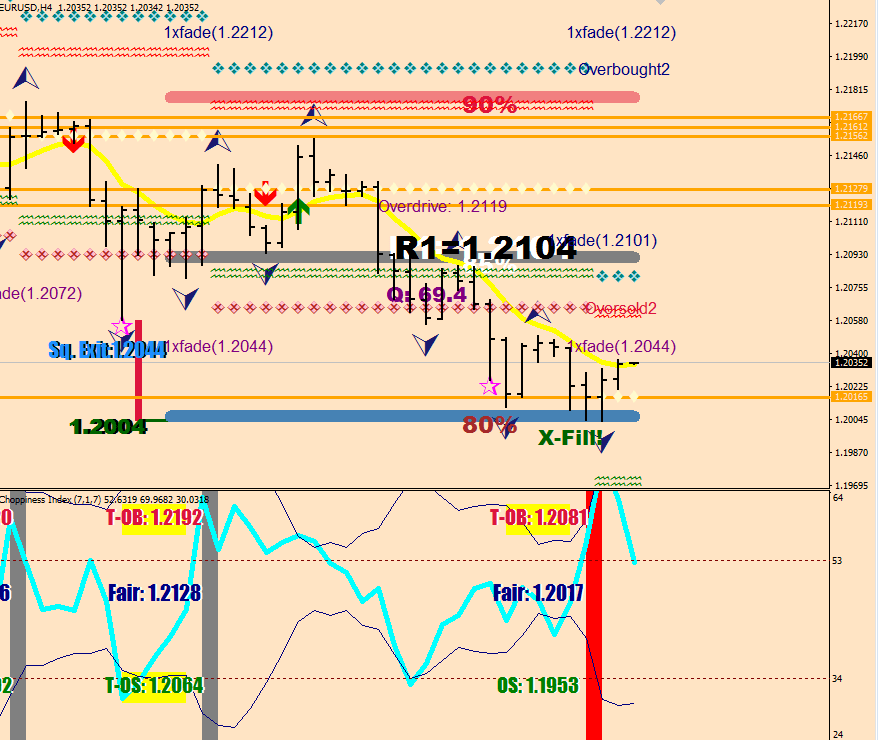
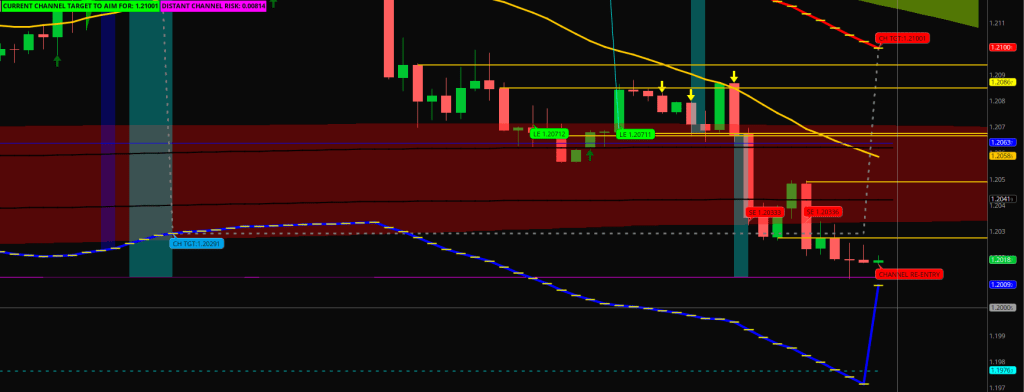
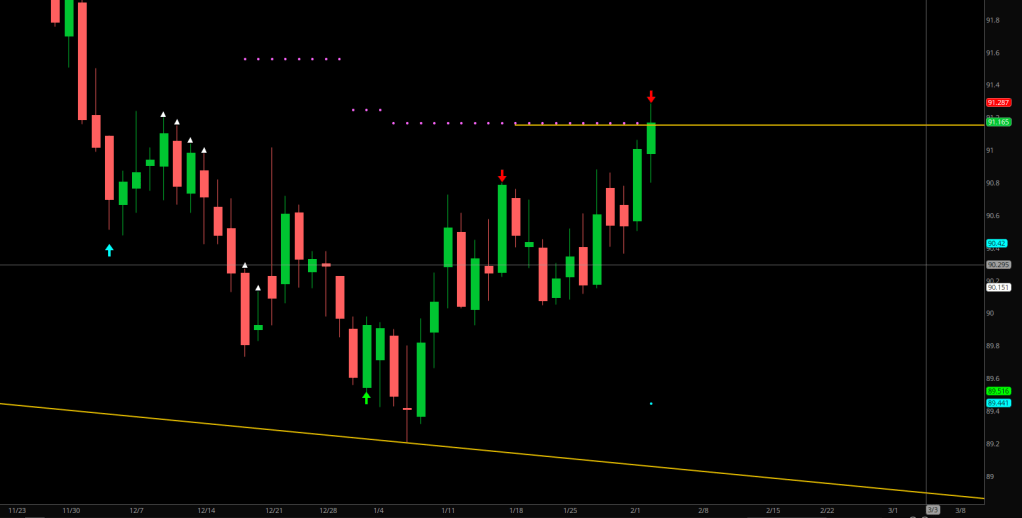
Sweet Child of mine, where do we go from here?
 ForexFore - Internals, indicators, algorithmic trading