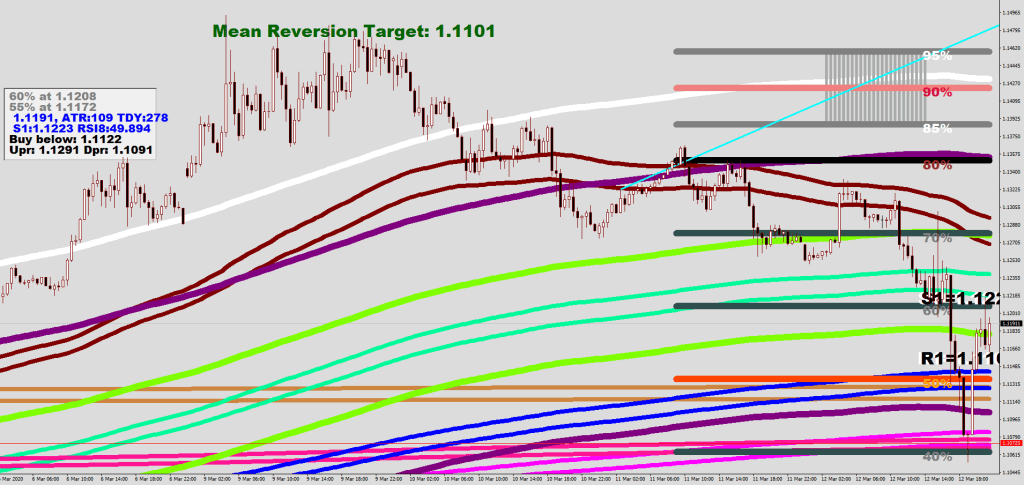
An indicator I made today, that utilizes the turbulence taking place around Mr. Maroon. Excellent for high volatility markets, such as right now.
For sale at the price it would be worth to you.
Write to me at macdulio@yahoo.com
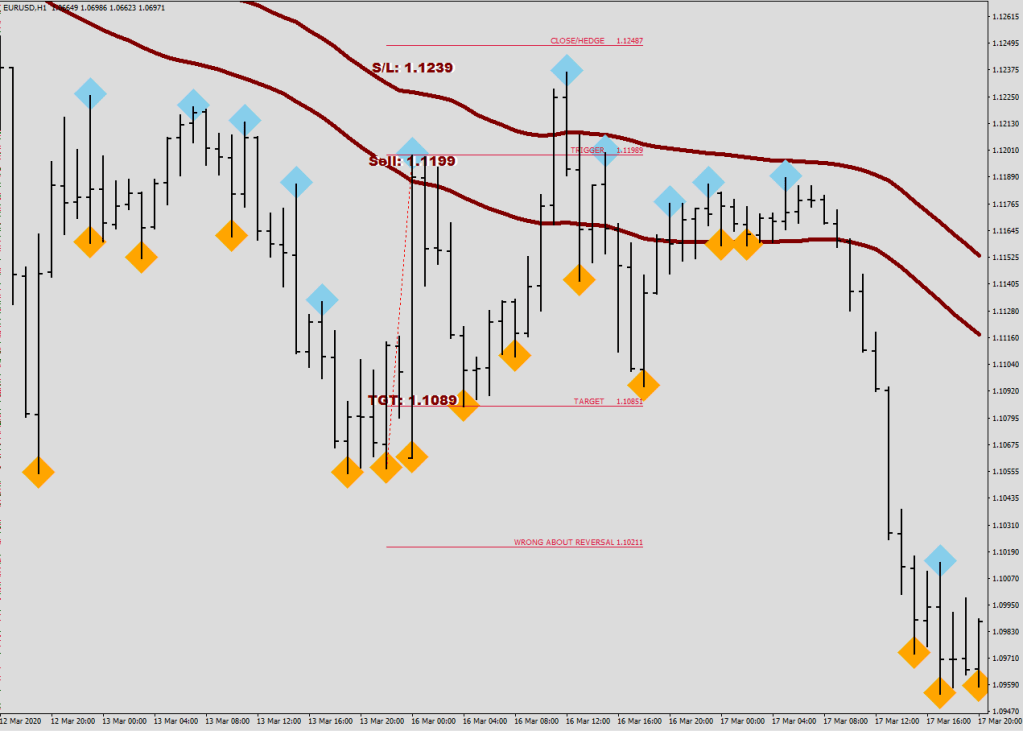
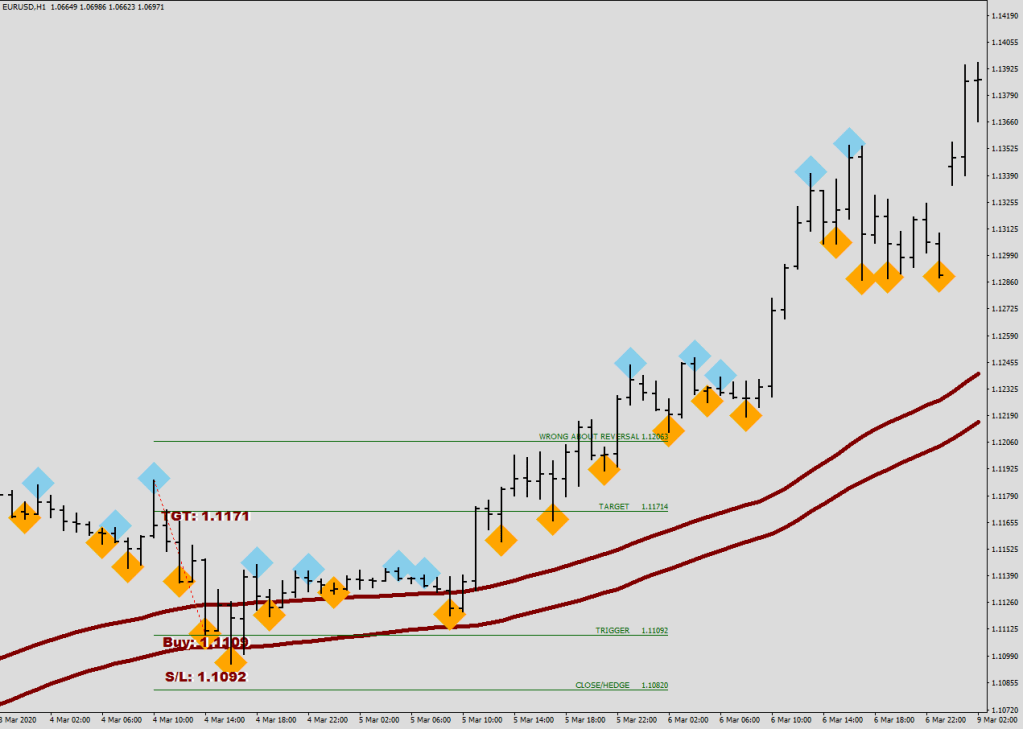
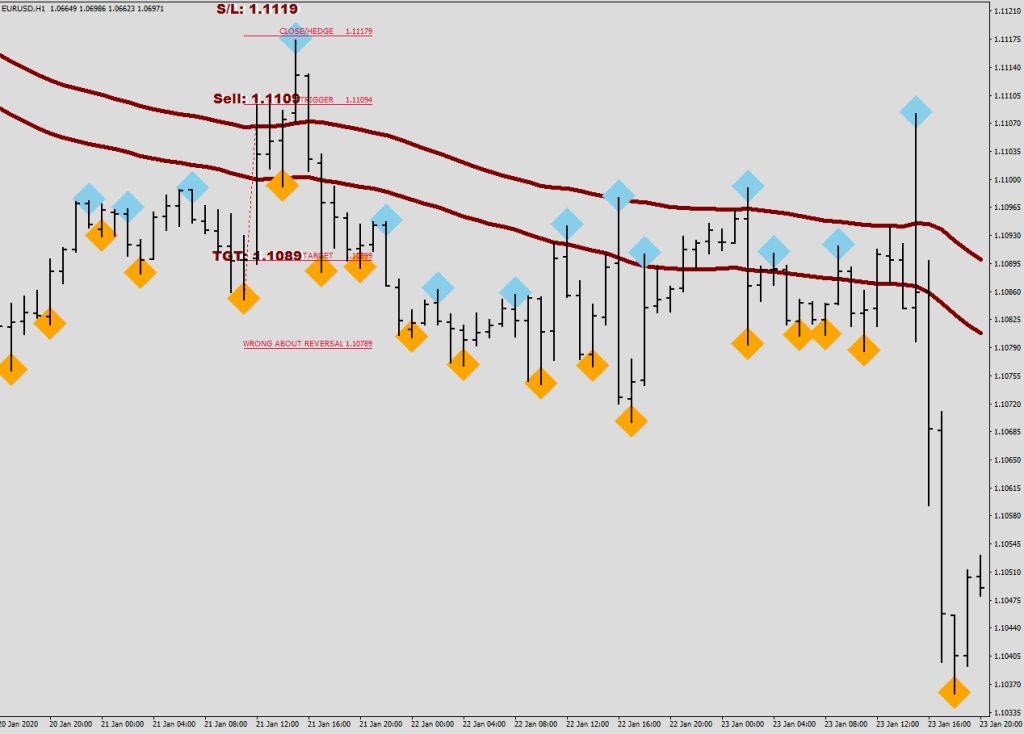
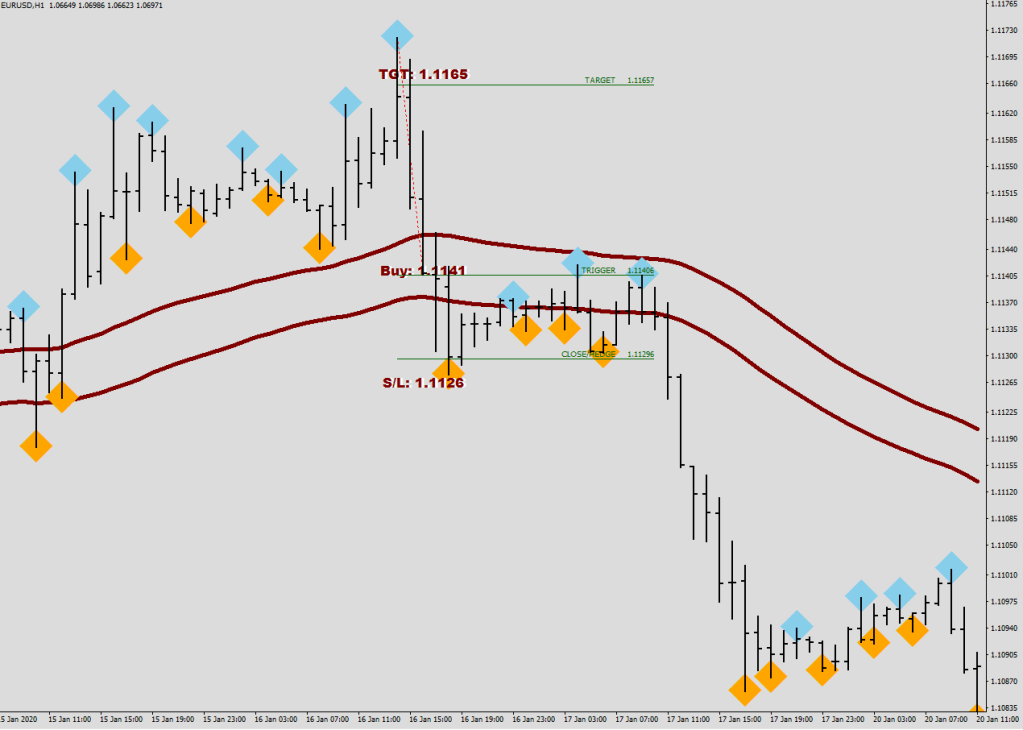
I did not just go back and cherry picked the best looking calls, these are the 10 last calls in reversed sequence.
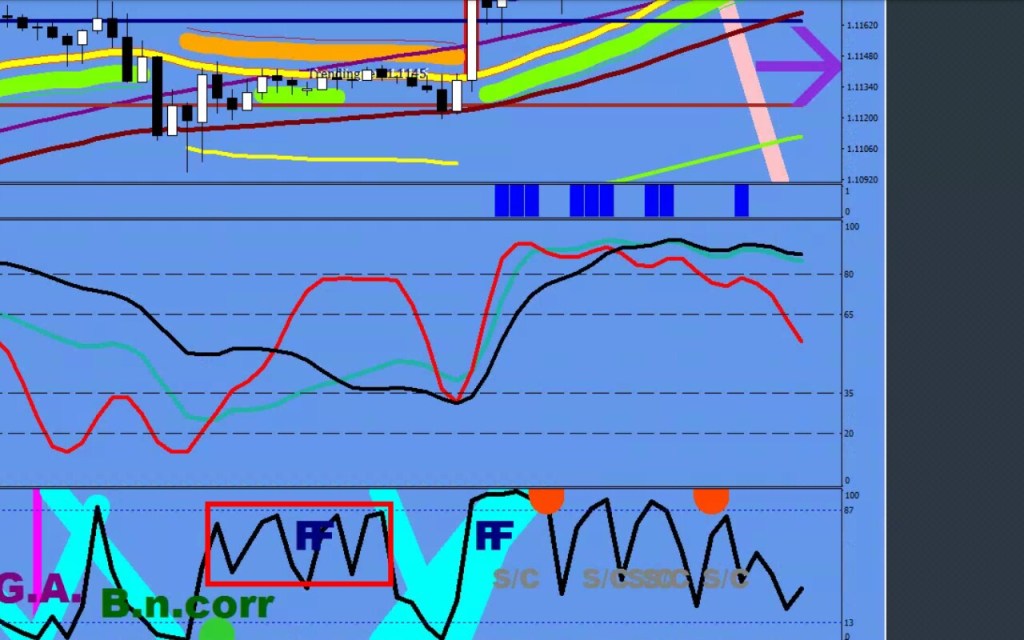
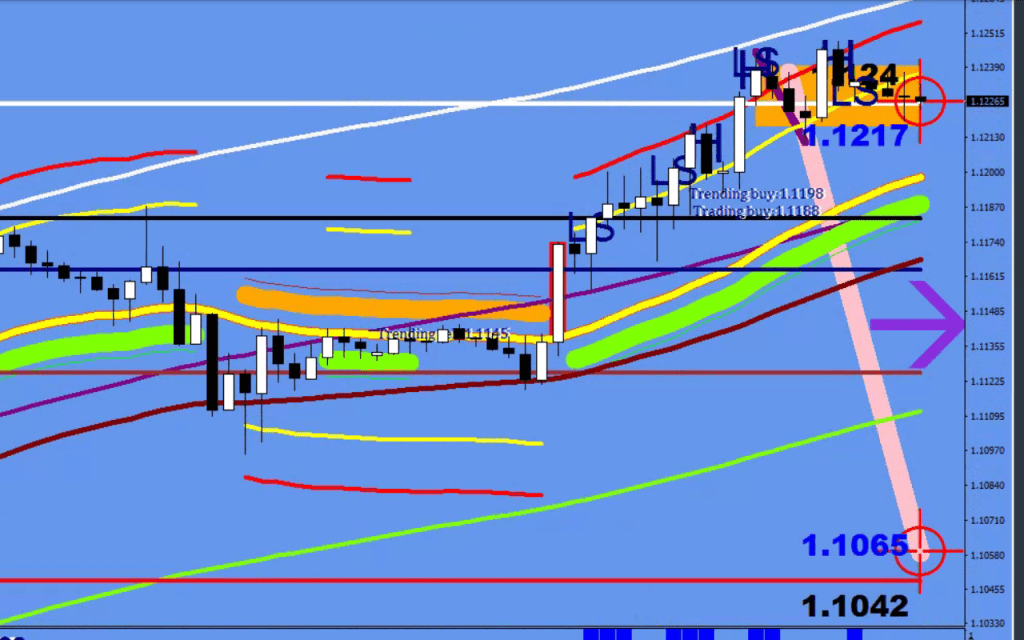
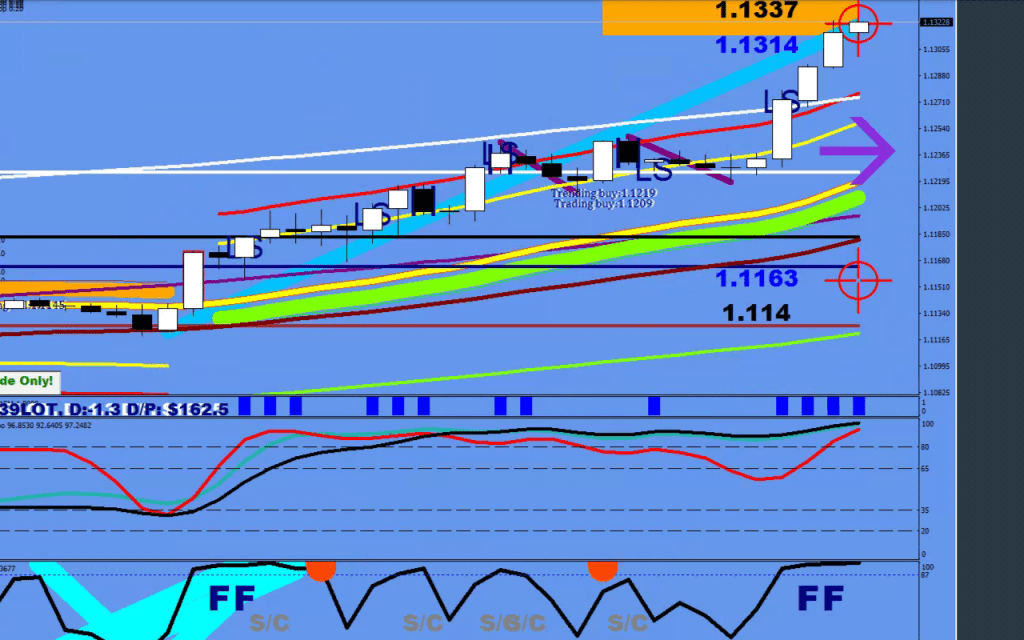
As you can see, every plot will give you 2 trades. 1st trade is Go Long / Short as close as possible to the trigger and use the Target for exit, apply a protective 1-pip trail once in gains, set it and forget it. Your risk and reward values are printed on the screen. The second trade is Re-Opening in the same direction upon reaching the Wrong About the Reversal level – a buy/ sell stop pending with a trail stop associated. If the other end gets hit, the Close / Hedge level is where you open the counter directional trade, which is another buy/sell stop.
…
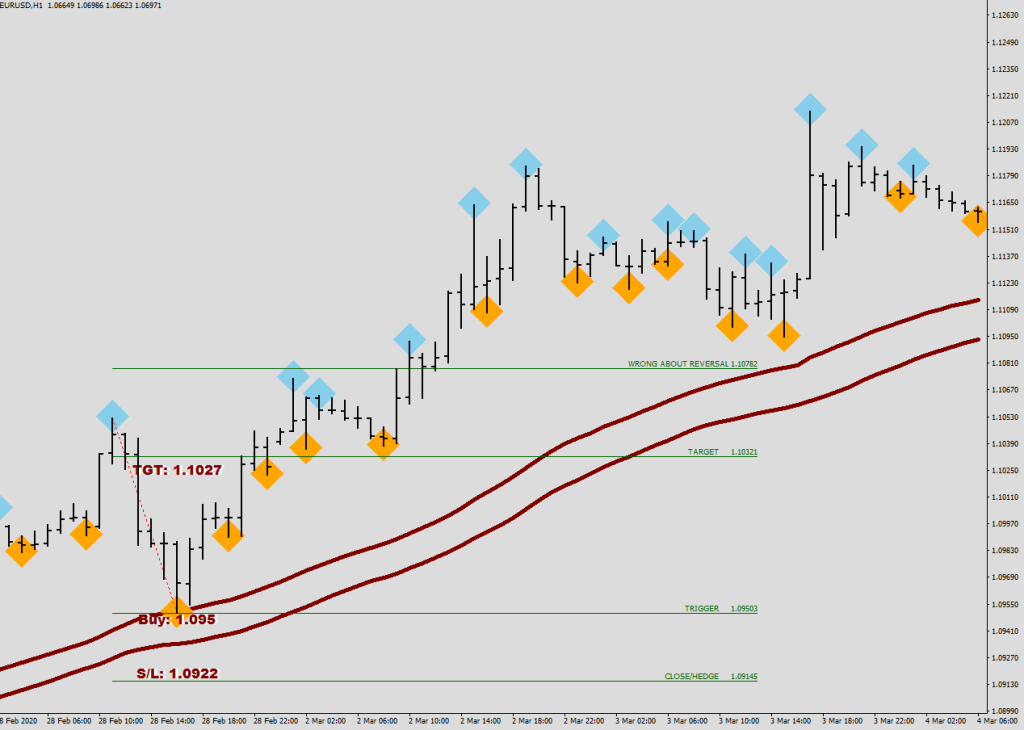
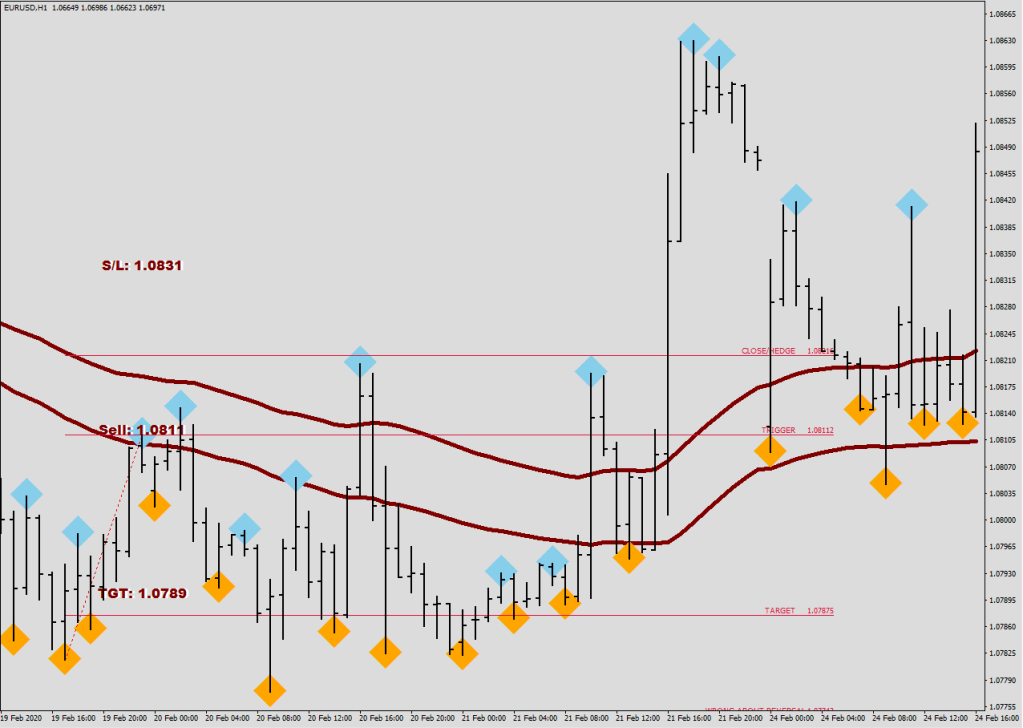
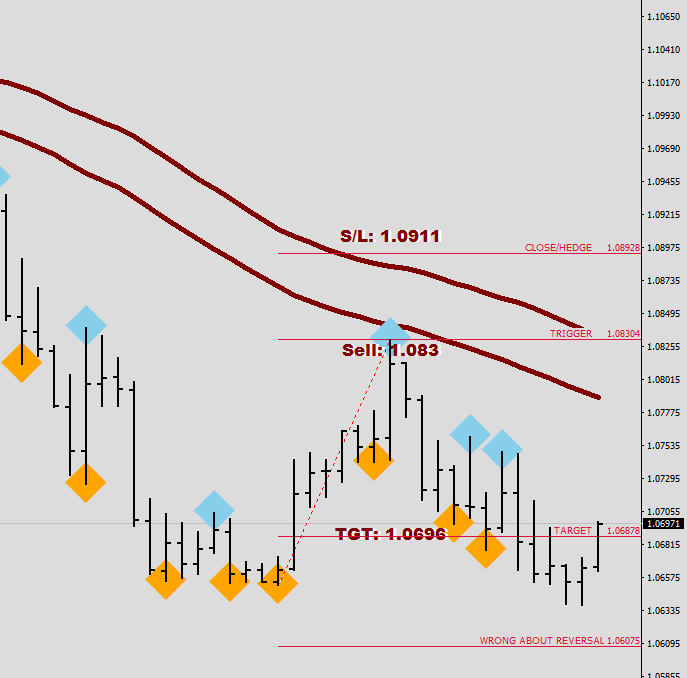
2 more for kicks.
As you will find, if you want to define the risk for the Wrong About the Reversal entry, you can just plug in the Target level, and for the Close/Hedge/Counter Direction Trade, the Trigger level could be utilized.
As for the size of the secondary trade, it should be the normal size if you do not have any holdings, but double the size if you are traveling with a baggage in the wrong direction.
…
& if I increase my Maroon tolerance by a moon hold of 11 pips, this is what I end up with:
Not that it wasn’t obvious that the flat bottom would be undercut after a failed Wave 1 attempt (or a sign of strength), but it is nice to see that this is a familiar picture for the routine after giving it some slack.
Quote from my Friday morning letter:
This time, having printed 5 waves down I do not expect much reaction from E32, I think Maroon would be touched
One last smack down to a lower low is likely especially with the current flat bottom
There is no trading the bear market, forget trading entirely.
You need a completely different mindset, that could not be any further from that of a daytrader’s.
To thrive in the bear, you need to learn
position initiation
location of check points
hedging
If you look back the last 2 posts, you already have a good idea for where to initiate holdings: as close as possible to Mr. Maroon, but a cross beyond E32, sometimes even an approach would do nicely.
I would suggest scaling in to try to obtain the best average price and your required size.
Now comes the roller coaster.
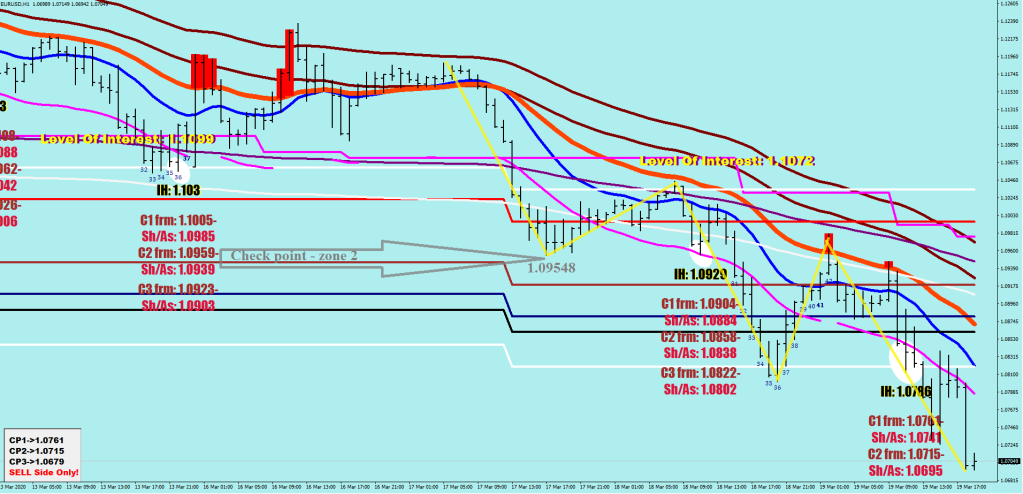
You need to have and to hold shorts accumulated and with the wave structure in mind, you sit back and wait. Wait for check point 2 and check point 3.
Once the price is comfortable at CP2, you can bring your stop loss down to the top of CP1, or alternatively you could have a counter long – hedge initiated at that level with a smart trail stop this is the bear-roller-coaster-hedge option.
Once the price gets comfortable with the CP3 zone, you can move your stop / hedge long stop to the top of CP zone 2.
Consider lightening up on your shorts in the CO zone 3 if price made it there. Scale out, just like you scaled id.
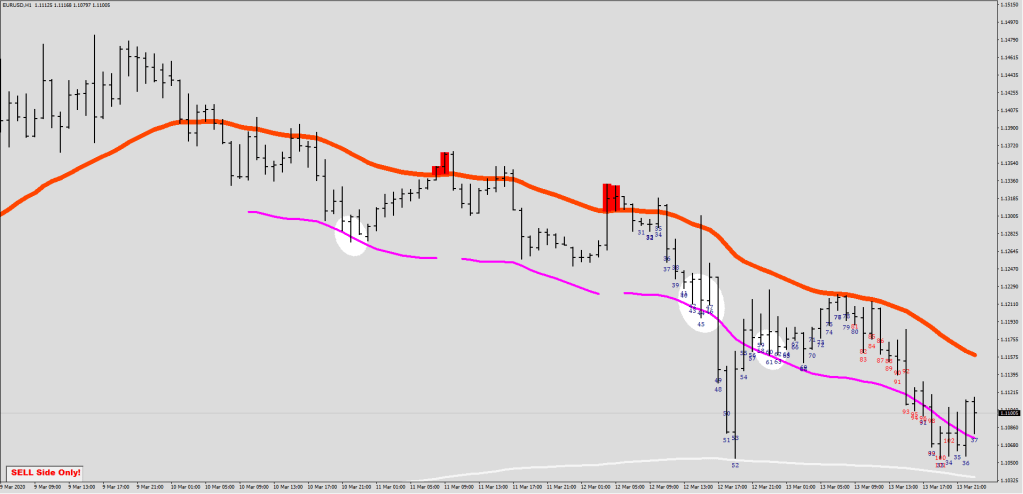
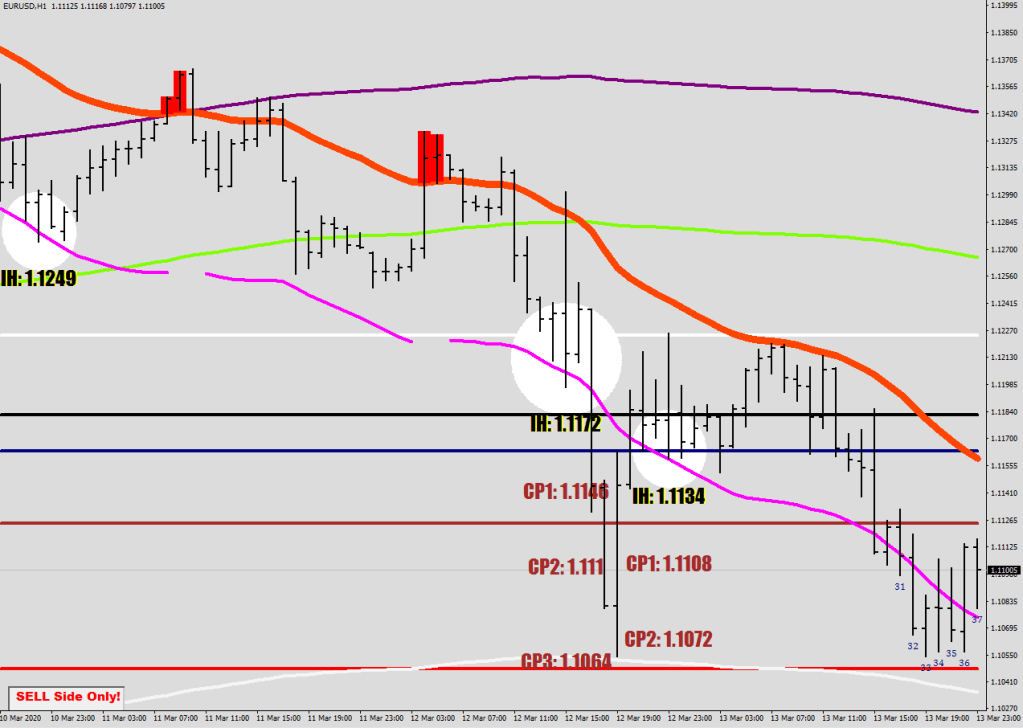
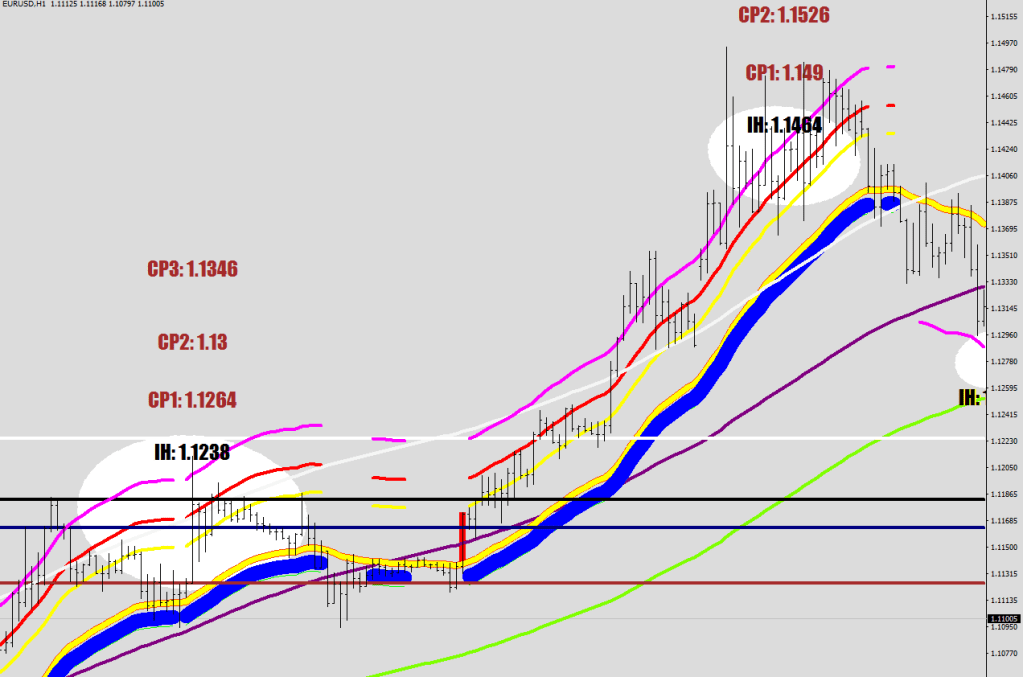
The levels are at certain displacements calculated from there is a threat of the Market Breaking away from its shadow (magenta line, white highlights)
CP1 top: Low[i]-FSize/1.5*Point-300*Point
CP2 top: Low[i]-FSize/1.5*Point-760*Point
CP3 top: Low[i]-FSize/1.5*Point-1120*Point
Each and every zone is 20 pips wide. FSize is 32 pips
Sh/As stands for Short/Add to Short (you may increase your size at these levels)
the shadow-separation line is: OverDriveCover[i]=E32[i]-FMax*Point
FMax (fluctuation maximum) is 6/5th of FSize
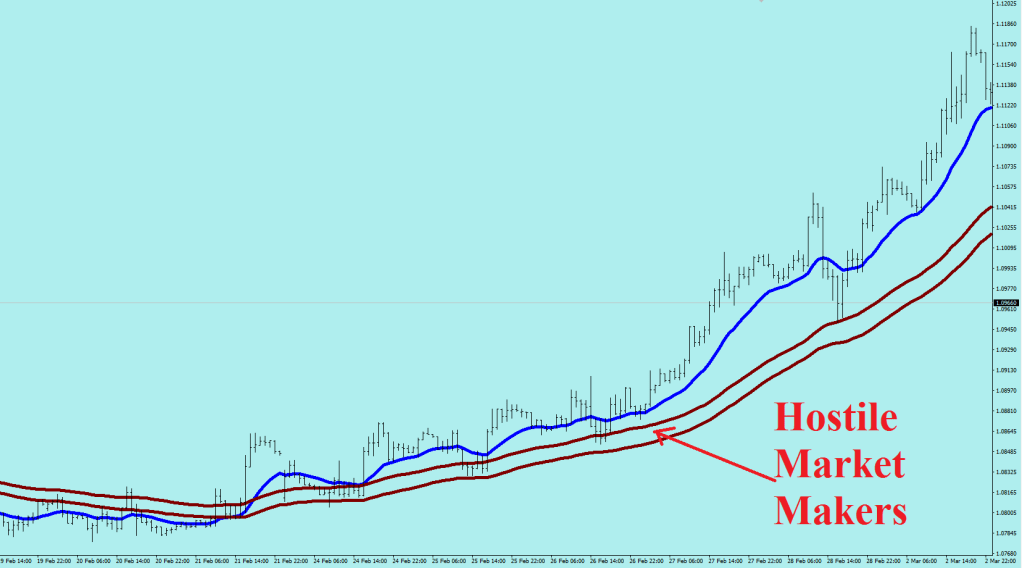
Where to from here? Back to the Eagle Nest of the Market Makers, Mr. Maroon himself.
Wave structure below
In conclusion, you don’t open naked longs unless price is well into CP3.
The bear appears when the Market Makers change their behaviour (polarity) from accommodating to opposing/offensive. Rather than settling for giving fills and collecting commission, vicious rabies comes over these punks.
Mr. Maroon (E67 High & Low) has never been this important
While in a regular market the breaks are operating well (see previous blog entry), mean reversions are a common place; the play accordingly is a return to market neutral, thus stretches can be defied and the hedging direction points outwards, away from the mean. This market has a fair price in mind, and shall make its way back to equilibrium.
E16, MMs can kick into the ball at half field leisurely to extend the duration of total craze.
After the paradigm / polarity shift, the Market Makers work on stretching the Market away from its means as far as possible: suddenly the trading direction becomes away from the MMs, and the hedging direction would be against a move back to the MM zone. Overall this is the fight against the normal, the neutral, the balanced, and the objective seems to be not letting the Market settle. If it seems idle, that’s the calm before the storm. Volatility becomes virtually uncapped. The only thing to stop the bear-train is running out of steam. This is when they allow the Market to fall back to reload – and occasionally change direction.
Check Point 2 is your best bet. Cover below and re-initiate 20 pips later.
A regular bear market goes on for about 6 months, so this thing is going to be here to stay for a more months, i.e. September.
What makes a bear market a bear market? Price dropping 25%? Utter rubbish!
What if the whole correction was 25%? You are allowed to start shorting the bottom? What about what went down while price made these numbers?
What do you need to survive in a bear market?
Acknowledge the change
Learn new risk management
1.
A bear market is when the market is able to separate from its own shadow: the usual safety mechanisms do not work, and the direction can be to the up side as well as the down side.
Volatility is one thing. It got a bump up by 30% since the BRExit.
Now, the daily expectation on average is 105 pips versus the 80 prior.
This does not however explain the breach of the energy bands and the occasional 300 pip days.
The telltale of the market change is when unusual stretches appearing repeatedly.
The shadow of the market is the E32 on the hourly (orange).
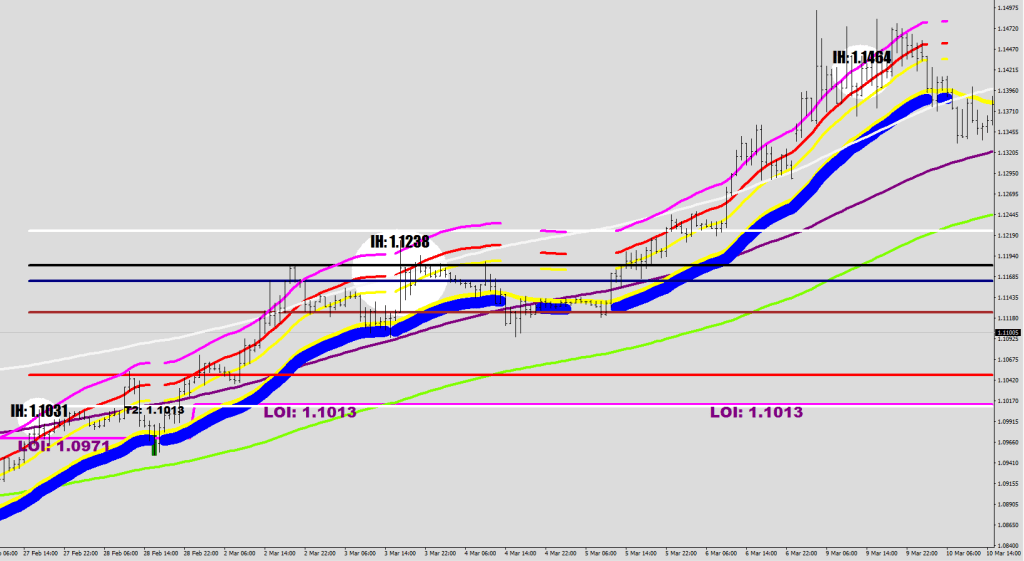
The white circles are highlights of the areas threatening with separating from the shadow.
What comes after this is a one way freight train. This is what the bear market makes possible.
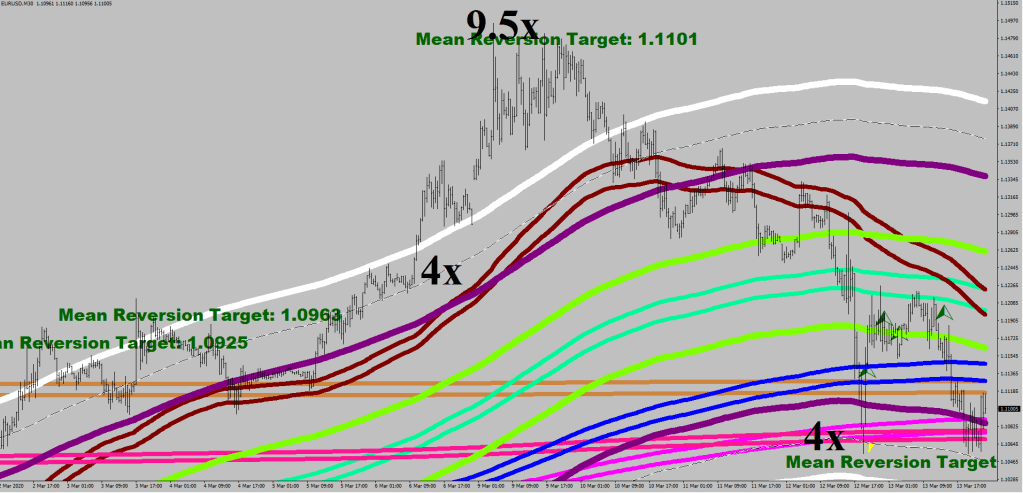
The stretch from the mean itself in a regular market does not exceed a 4x fluctuation maximum multiplier.
On the upside this stretch recently reached a whooping 9.5!
The perforation line was added to better gauge a 4x stretch.
Mean reversion was inevitable, but the market only obeyed after the wave structure was finished to the upside. The 60-pips gap up kicked off the wave 3 of Wave 5 (think wave 3 upon seeing a large gap) only to embrace for another 150 pips rip to the upside during a normally quiet Asian session, when EUR and USD are not heavily traded.
There were these two large gaps that are visible on the 4H chart still.
2.
Risk management.
You need to start learning new terms, such as personal maximum unhedged risk.
You now know, that 100, even 300-pip range days are possible currently. If you snooze, you can very easily loose everything.
You must have enough cushion to withstand 100 pips as a surprise in general,
so for instance based on the equity and the leverage, you figure that you could afford a maximum draw down of $100 per ten 10 pips, that means you must have an additional $1000 cushion available to cover margin, and you better become a proactive hedger.
You would have to monitor for drops greater than 20% below your maximum unhedged risk in your equity margin. A ratio hedger is needed, yes, but I would also recommend to learn the roll out system.
The roll-out system would come with IH (Indefinite Hedge) levels based on the separation of the market from its own shadow: to catch the freight train.
You must take on a hedge at these IH levels and then monitor for the activity around the Check Point levels. In general, you want to see the market surpass a check point and then come back through it: just trail you stop and monitor for changes every hour, and once the trail was hit, place a roll-out hedge for more atrocities 20 pips beyond your disconnection.
More cash flow and more margin can always help.
I have made these routines, yes. Did you want to ask something?
…
The bear works in both directions, in fact the bear does not even care which way is down.
The bear cares about 1 thing only. Causing maximum amount of damage.
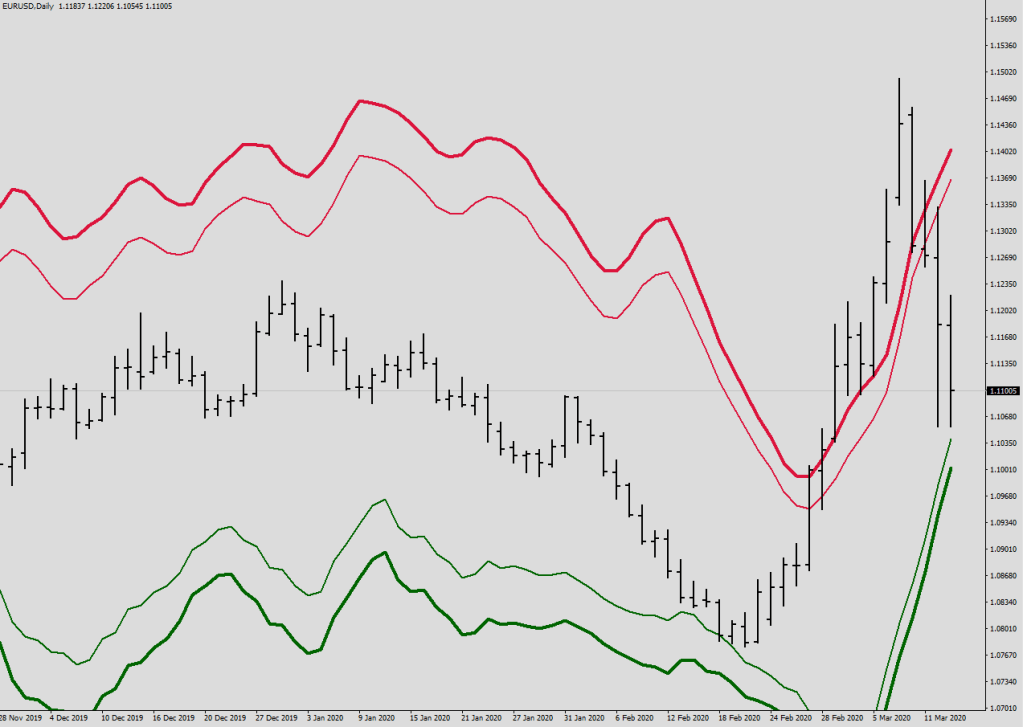
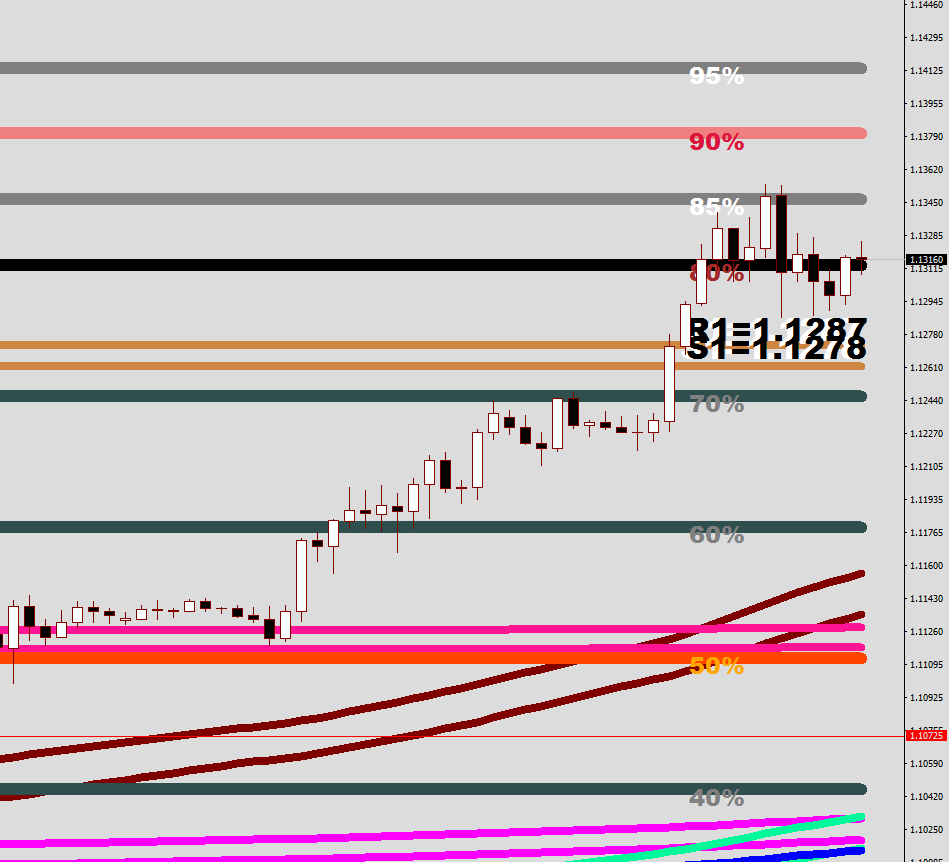
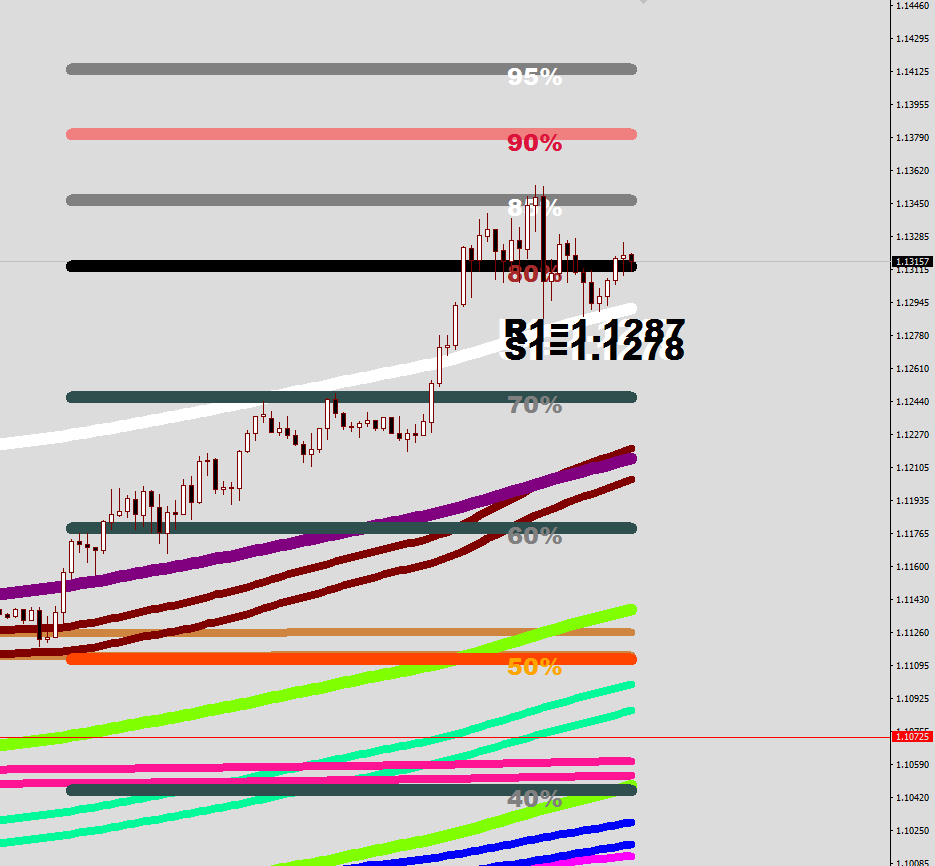
Once the market leaves the overbought / oversold field, it would target the Median (50%) first, then it may proceed to the other extreme to tackle the order-dense field.
Clearly, the market consolidated above the Median (50%+)
I call the 85-95% zone the upper, the 5%-15% the lower reversal zone.
Above 95% the odds are a new high, below 85% a reversal may have transpired.
Where would price be at close today?
most likely rather close to the overbought neckline, saying: on the fence just keep guessing, people!
In no man’s land I’m no man’s friend.
Until price is staying above the 1.1287 ex-resistance, more upside is possible. If it falls, this was a top. Where would you expect price to proceed to from here, having read the answer above?
Embedding is 3 consecutive daily closes in the overbought / oversold field.
Saving is when one day closes outside, but they put it back inside on the next.
You need a market model to gauge market events, direction and strength.
LEMA 30 comes with 2×3 displacement lines of the mean.
1x Stretch is the Guard Rail
3x Stretch is Purple Haze
5x Stretch is the Icing
The market constantly provides you with information regarding for instance the health / stage of the rally.
For instance, yesterday’s events were a failure at the Icing, a dip below Purple Haze, a consolidation above Mr. Maroon, a break back above Purple Haze, which resulted in a new leg up, attacking the other side of the purple-white channel.
The current failure to reach the top of the channel talks of waning momentum, and if we just saw the trigger high, the likelihood would be a mean reversion to where the Green River was at that given moment.
There is a bit more to say about the preceeding consolidation, that came out of the Wave 4’s ABC correction (3 Full lambda legs).
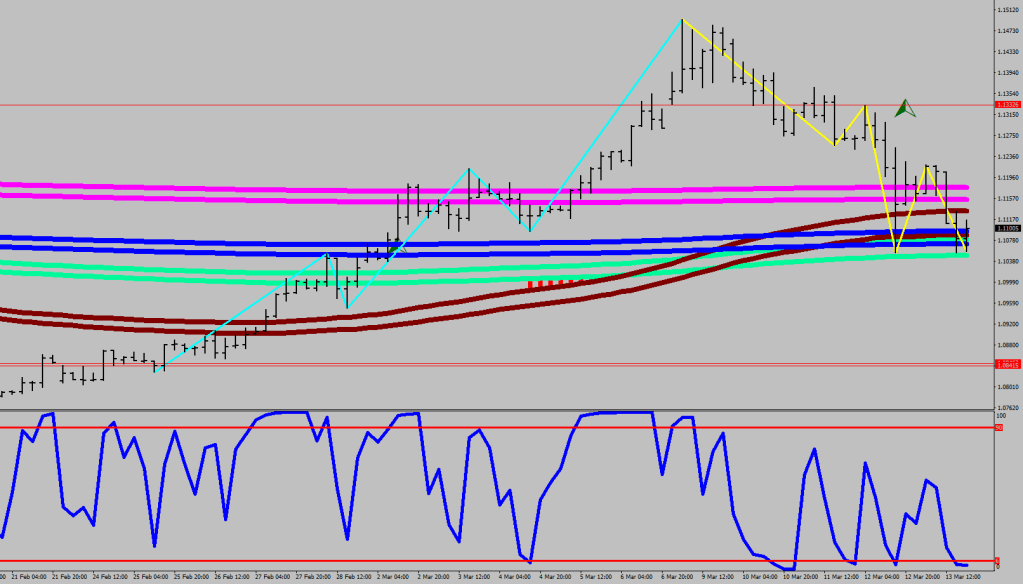
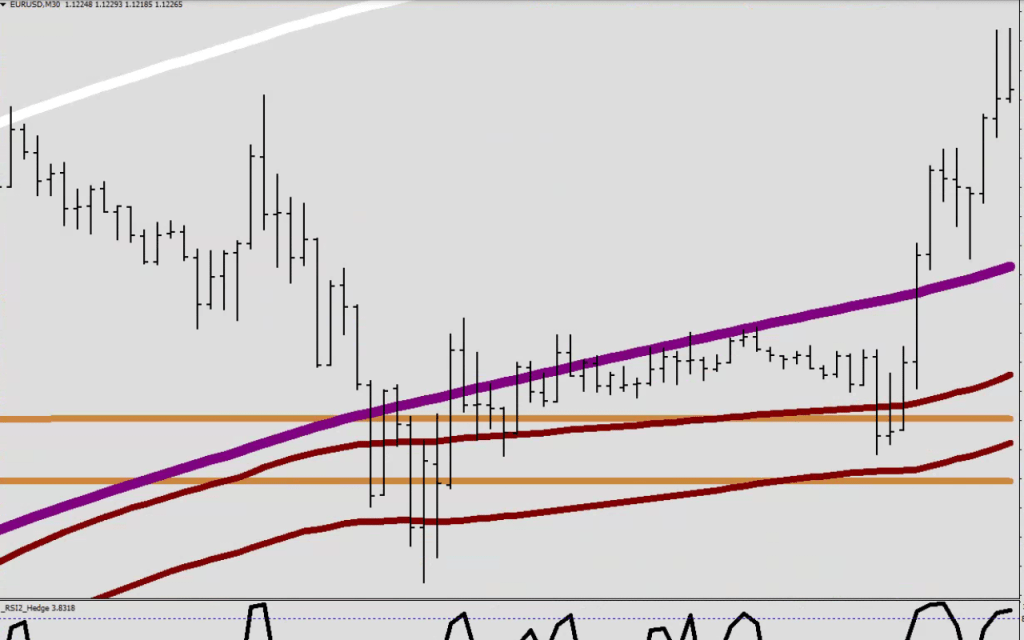
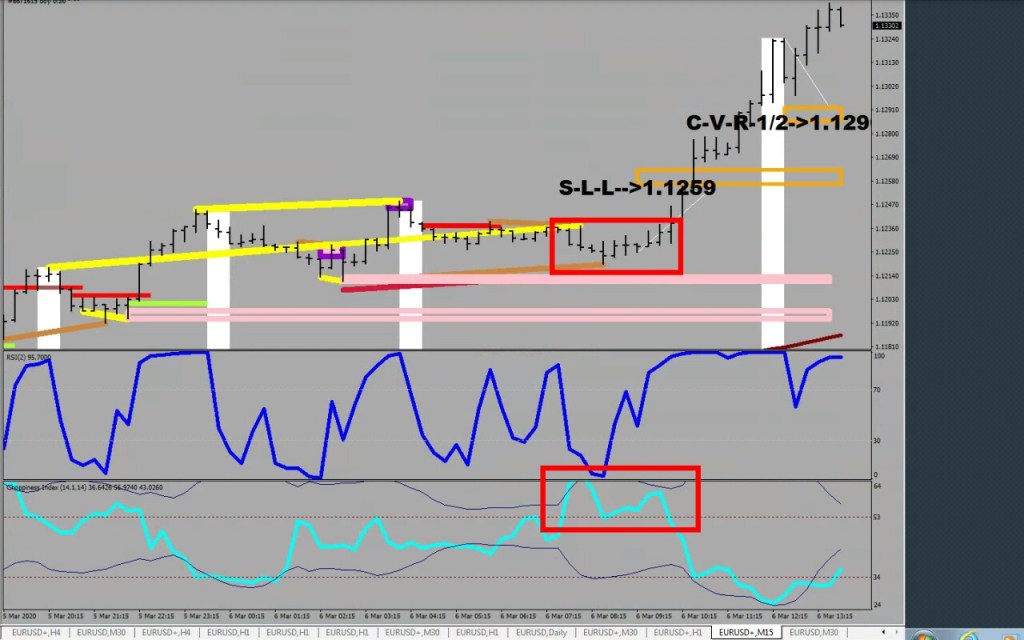
Concentrate on the squashed RSI2 zigzags below. They don’t quite get to the top, and overall are situated in the upper half. This normally preps a top, and the beat would be a sell. Not this time, refer to the wave count.
V break was bent over backwards.
What tells you about the rally being at its final stage is the lack of conventional entry points. Other than this “break away”, there were no opportunities at E32 to get in on a shallow pull back. There was an extra deep pullback, the end of the ABC that was the best spot, and it worked that time. I don’t think the next extra deep pullback would do the same.
In closing consider the 16/26/36 beat calculation between the end of Wave 3 and the likely end of Wave 5.
1.12129+36 pips = 1.12489
…what do you know, price got consolidated & the game was on again…
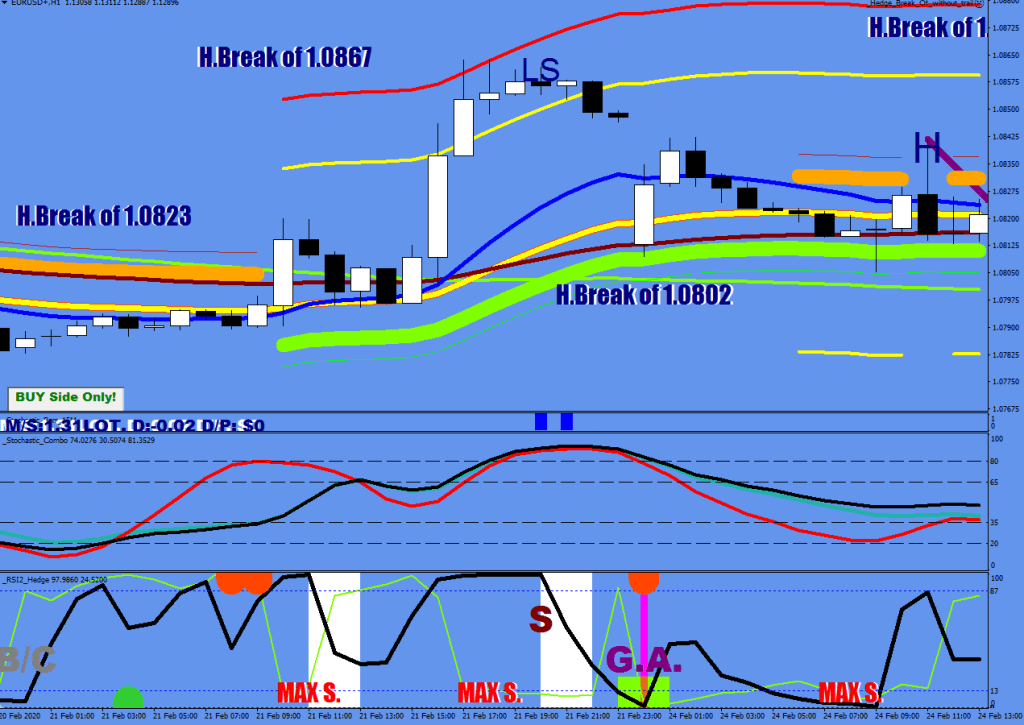
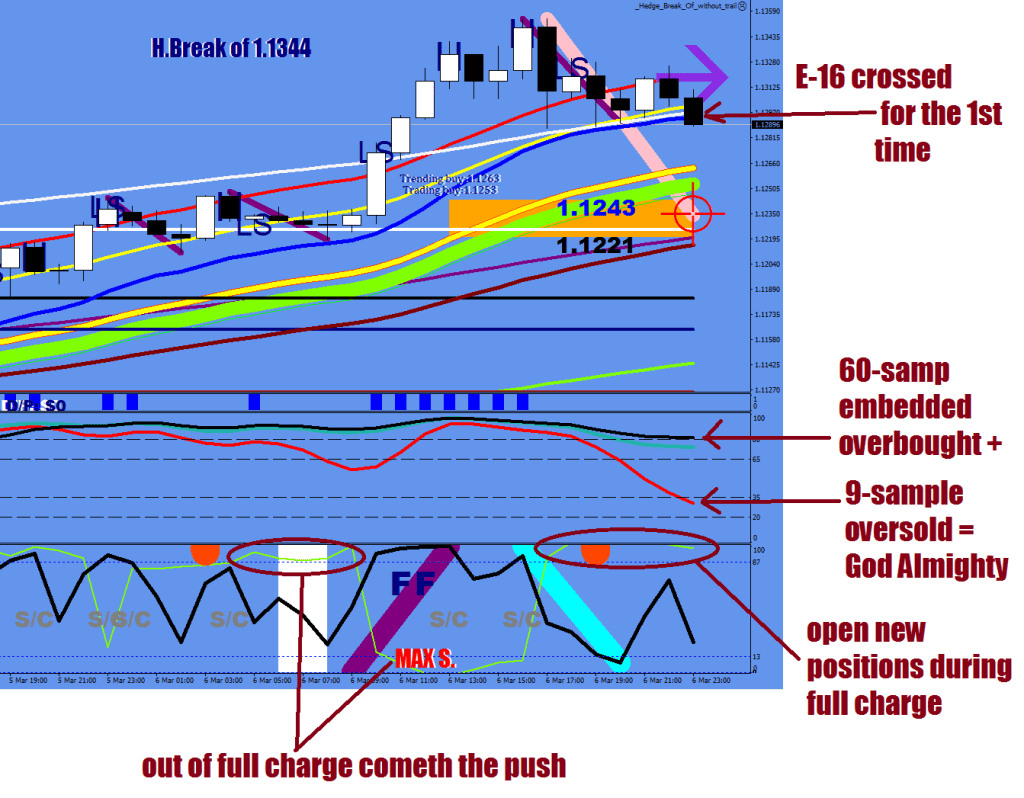
In this valley the price reached full charge
plus there was a continuation divergence visible even from the 1H
When news comes out and the broker’s server gets overwhelmed causing your MT4 desktop to hang for hours, you better know what is happening and have means to interact.
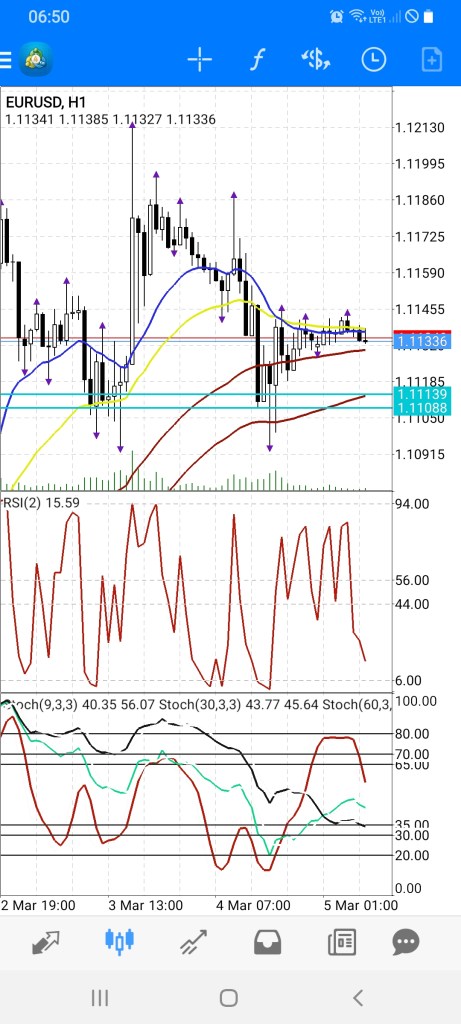
Therefore you should download an MT4 mobile version.
You would need a usable size screen as well as good coverage.
A Samusung A70 may be excellent screen wise, but has issues connecting to a wireless network versus my A20 work phone. I have 2 different providers as well. 20 gig data, but I never even use 5 – only need the 4G when commuting.
What to plot on the phone?
MOVING AVERAGES
I have E32 in a dark yellow shade on the closes.
E16 in blue on Median Price.
E67 in Maroon on the Highs
E67 in Maroon on the Lows
E414 in olive green on the Highs
E414 in olive green on the Lows
E828 in blue on the Highs
E828 in blue on the Lows
E1556 in magenta on the Highs
E1556 in magenta on the Lows
E207 in lime on the Highs
E207 in lime on the Lows
Add Fractals perhaps
INDICATOR Window 1
RSI2 on Median Price
INDICATOR Window 2
STOCHASTIC simple 9,3,3 on low/high, main in background colour, signal in red
STOCHASTIC simple 30,3,3 on low/high, main in background colour, signal in green
STOCHASTIC simple 60,3,3 on low/high, main in background colour, signal in black
since allrelativ moving avearges are relative to the time frame, you should not be switching off between the time frames
Camp out on 1H, and visit 15 on occasions to see get the push count right on the RSI2.
For the desktop, turn off automatic updates and use a more steady operating system, such as Windows 10 Pro.



















 ForexFore - Internals, indicators, algorithmic trading