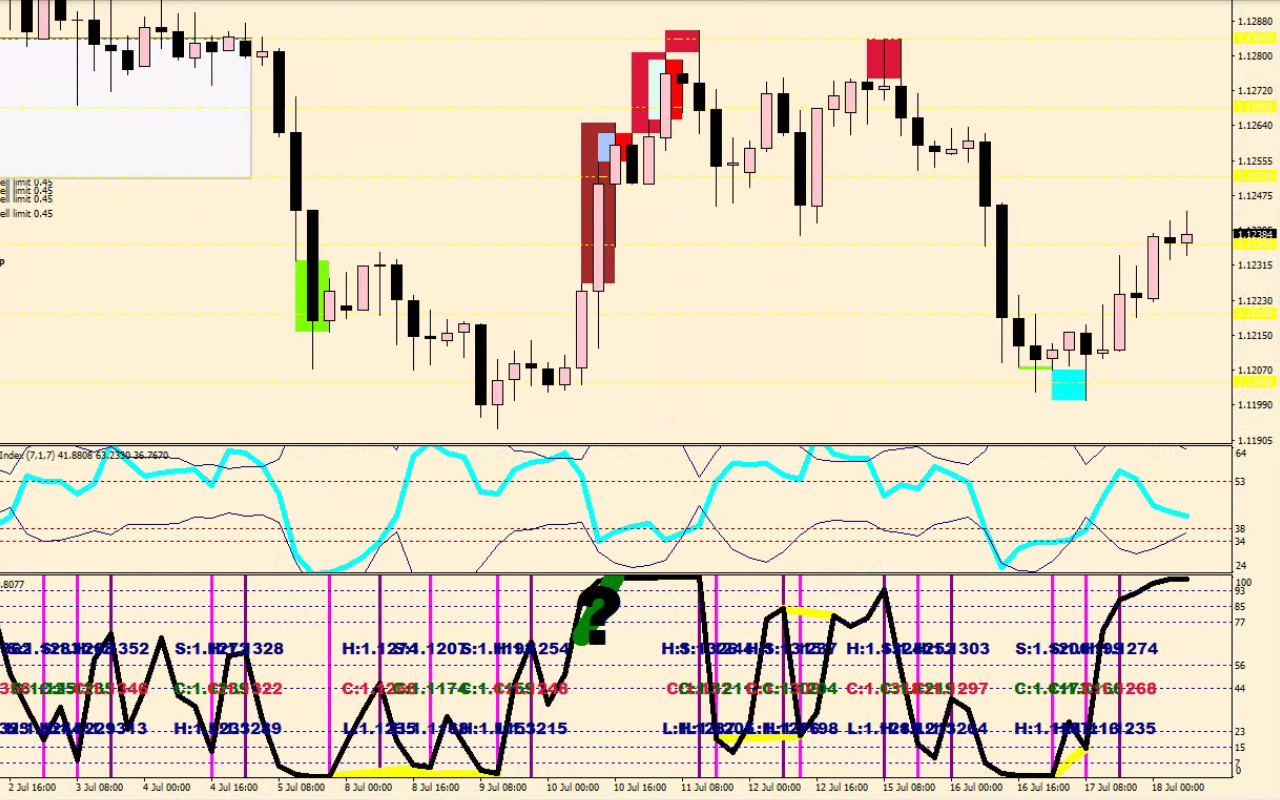
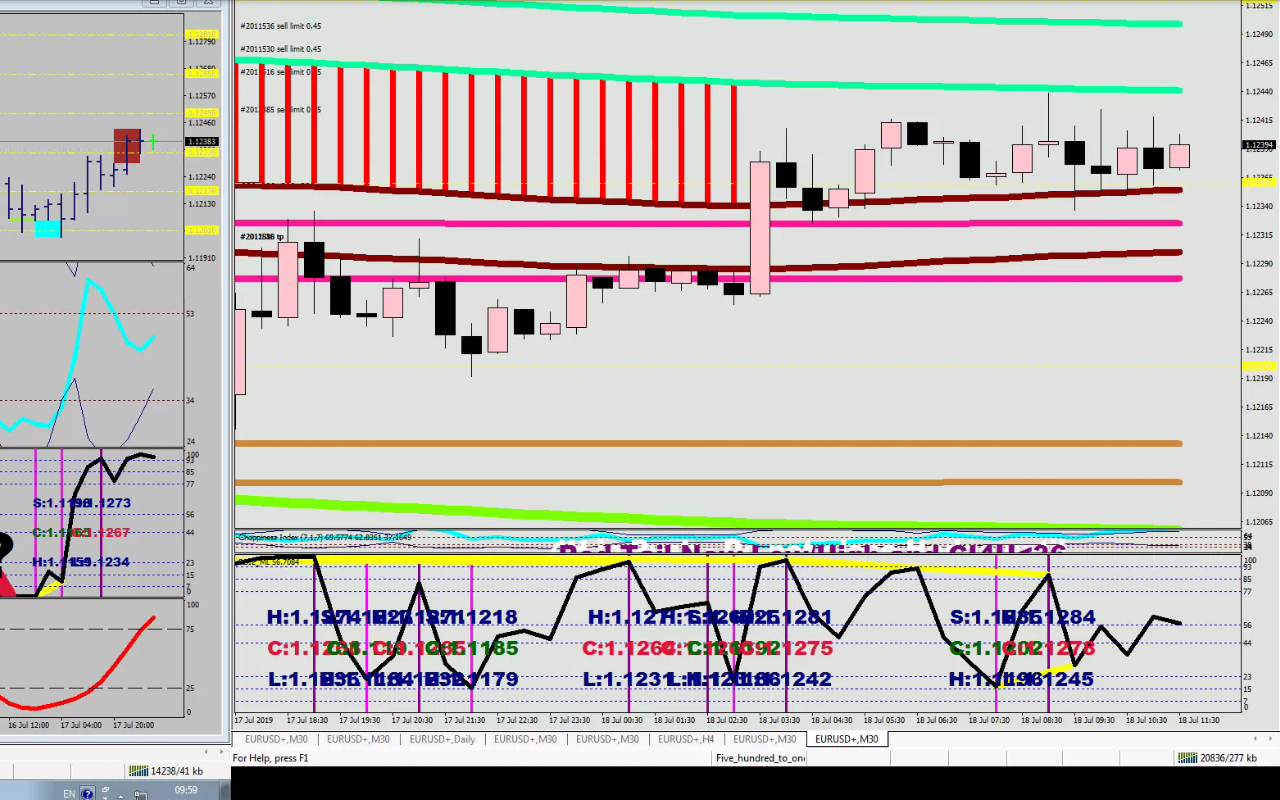
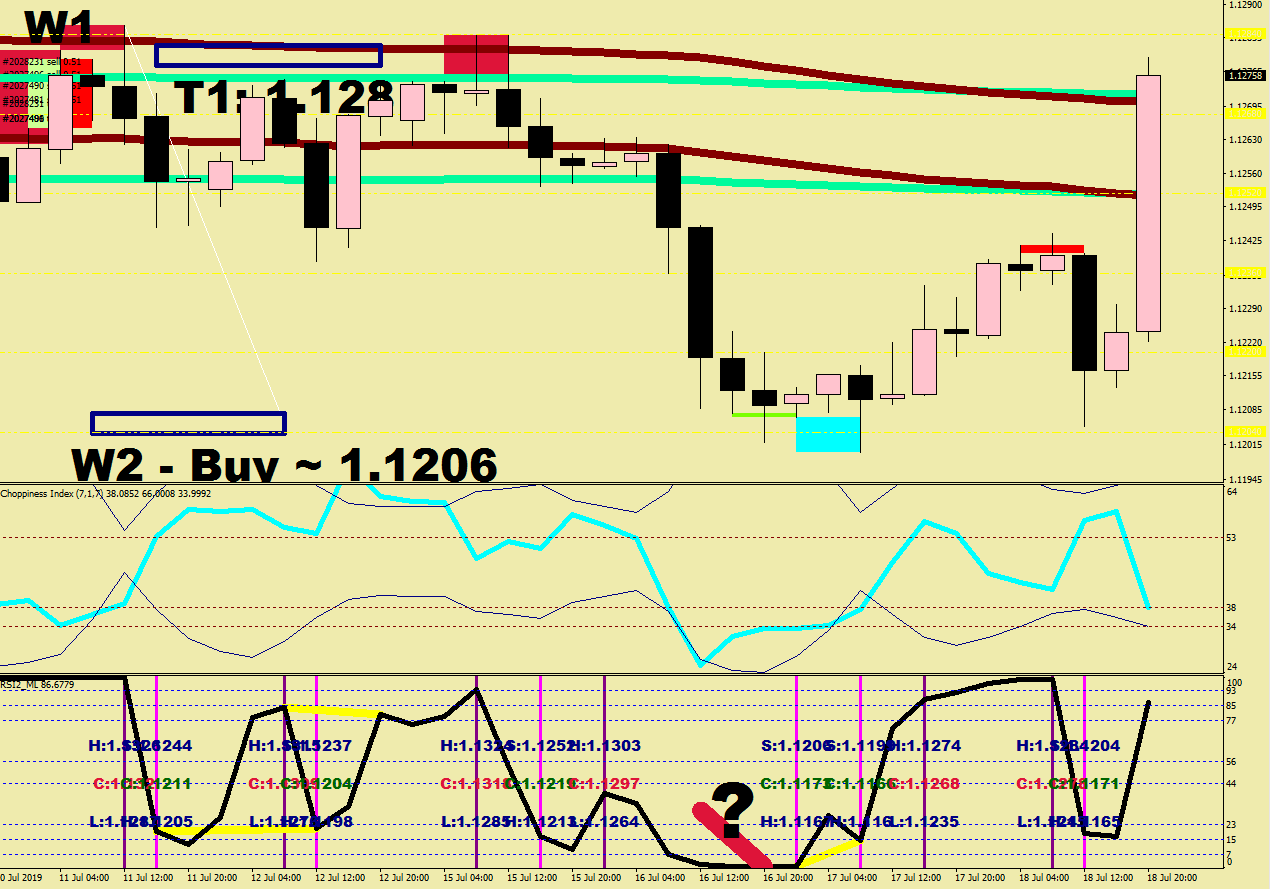
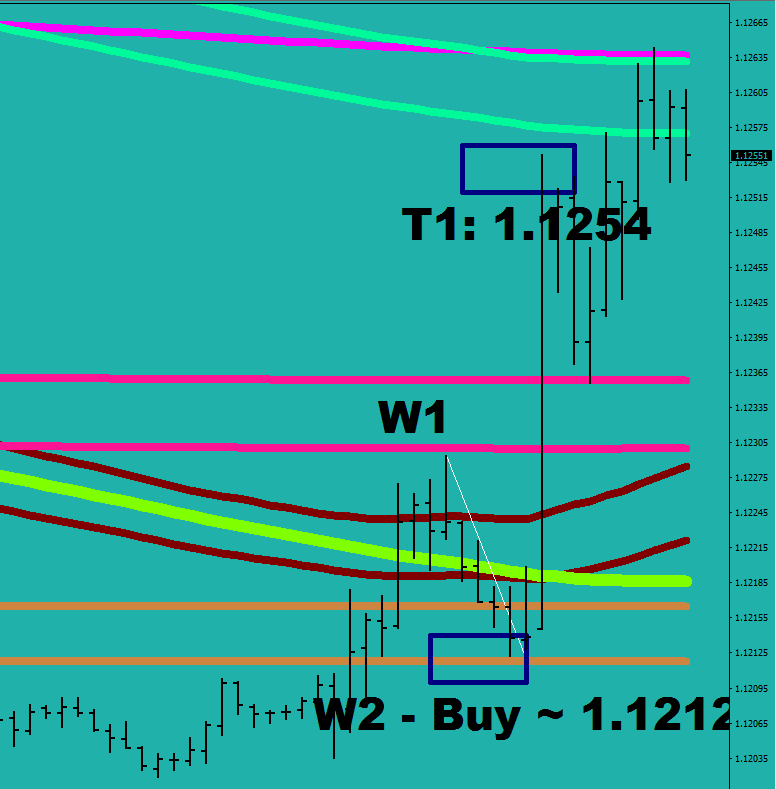
Take Notes

Forget most of what you know about wave theory.
A daytime job is perfect to be able to dedicate enough brain cells to figuring out how things work.

Read the following:
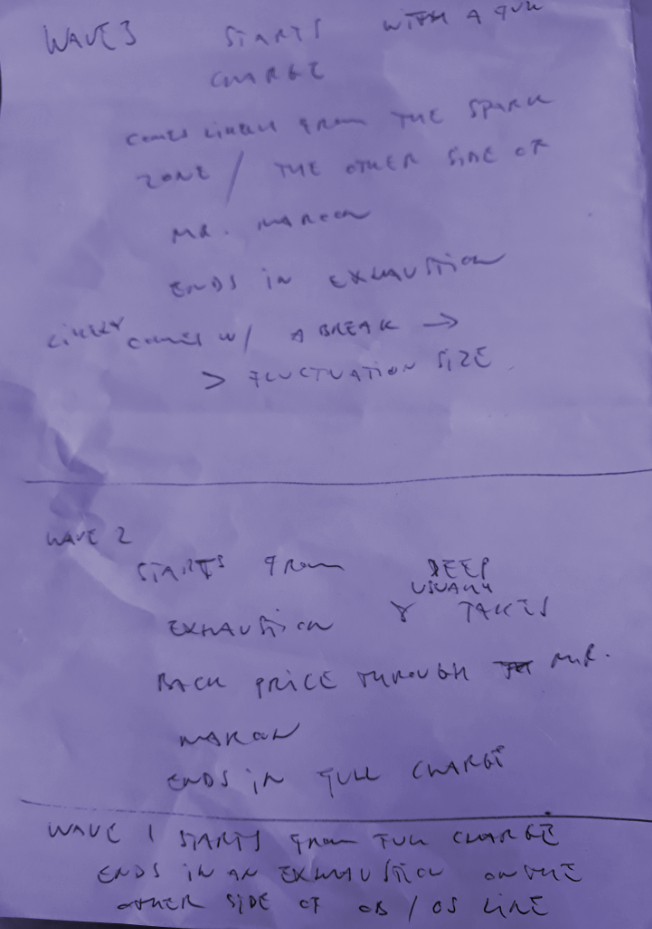
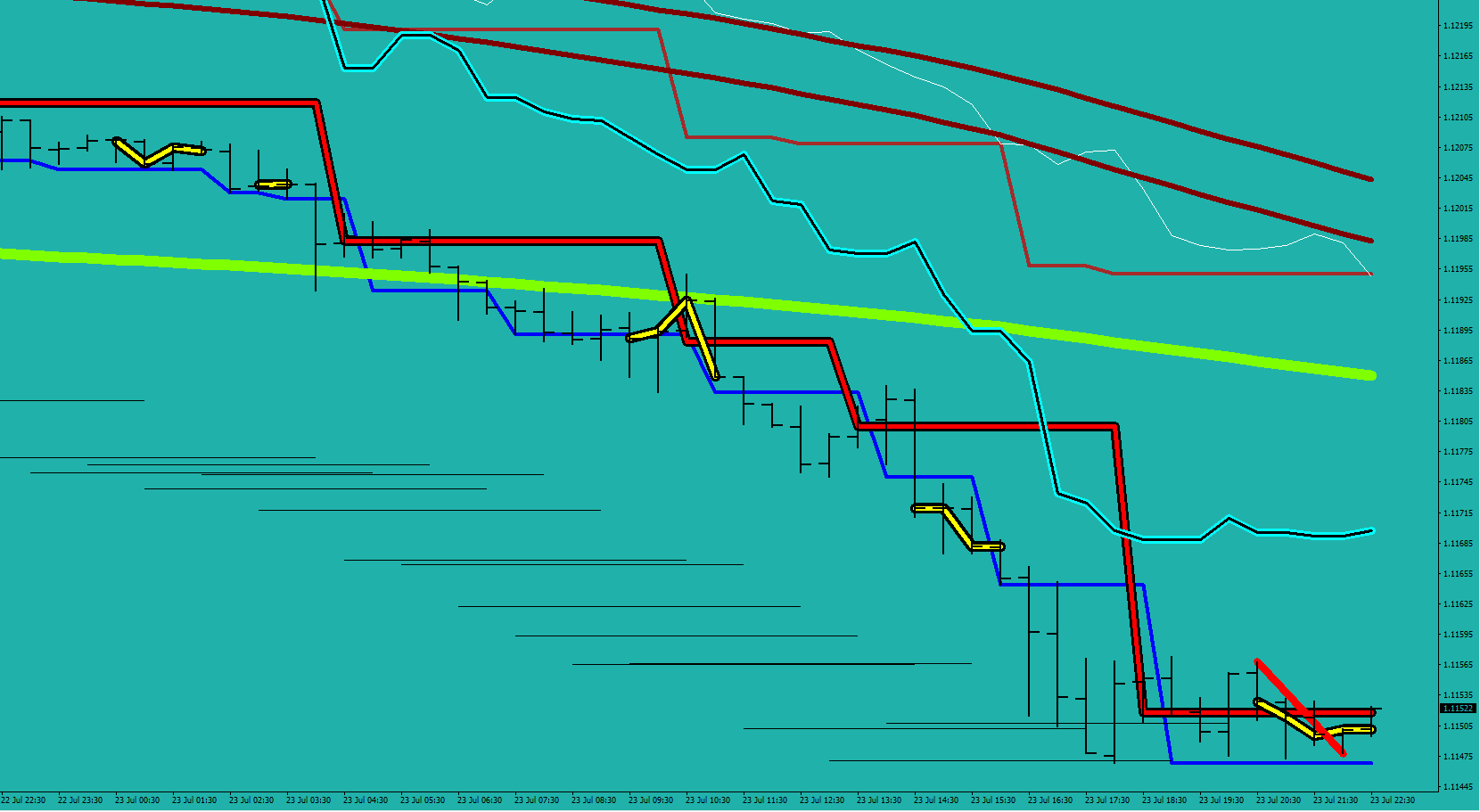
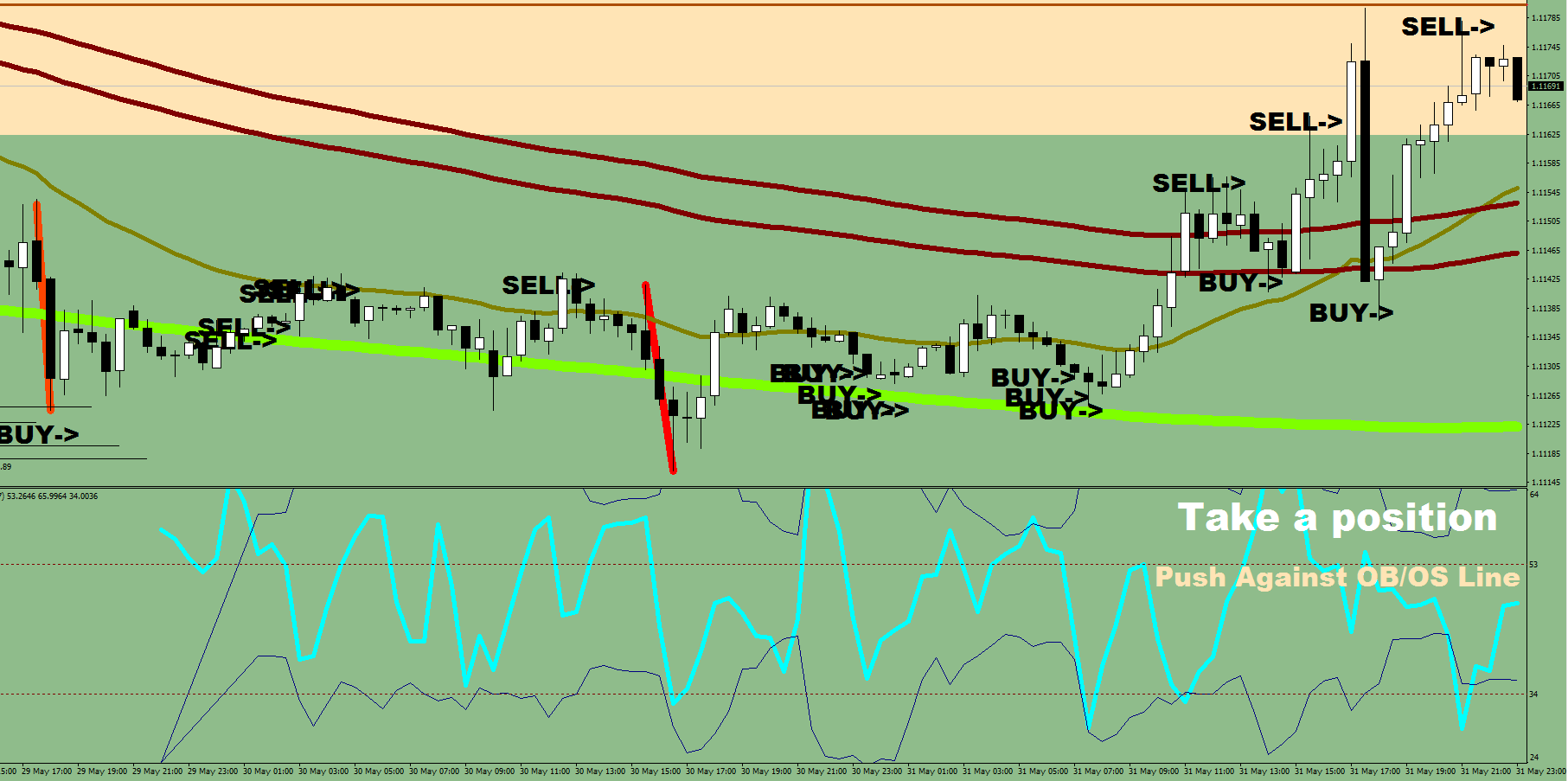
Now, please show wave 1 on the following image:
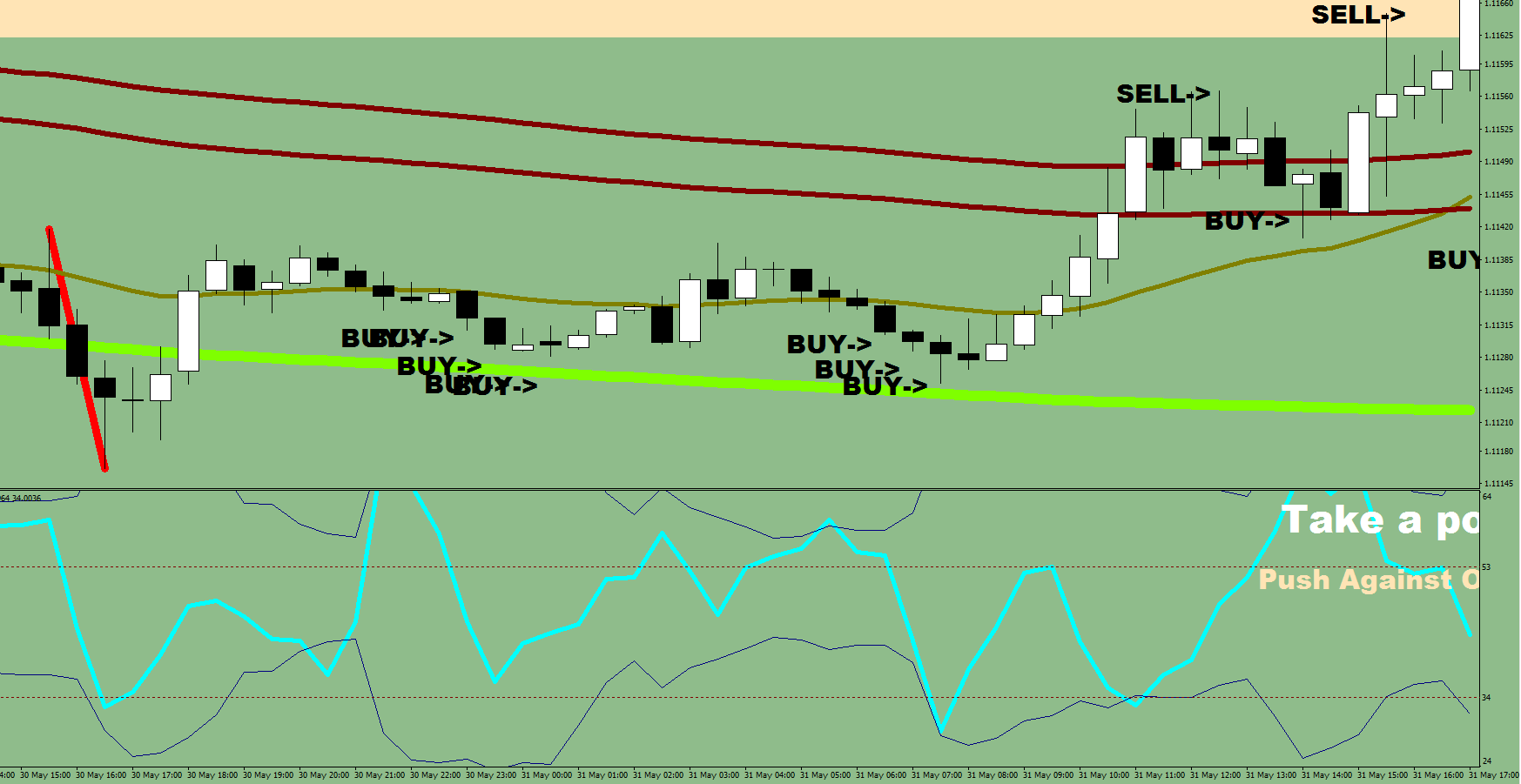
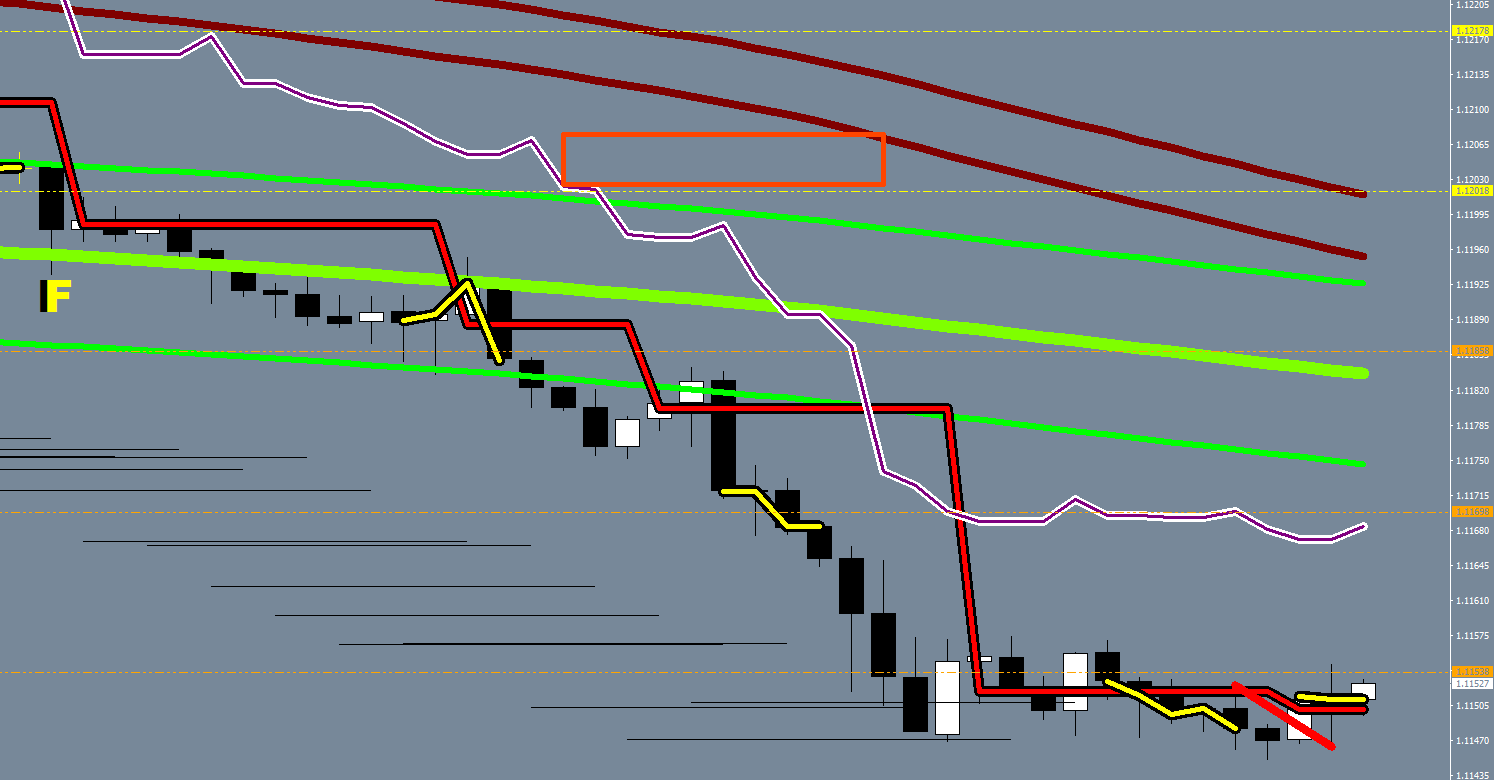
The red tail was an exhaustion terminal tail. If your drawing is any different from the following, then you probably suffer from the handicapp of E.W. wanting to call everything that happens on the chart a wave.

The part between the red tail and the starting, full charge doji was merely fluctuation in the downward channel (which was parellel with the Green River).
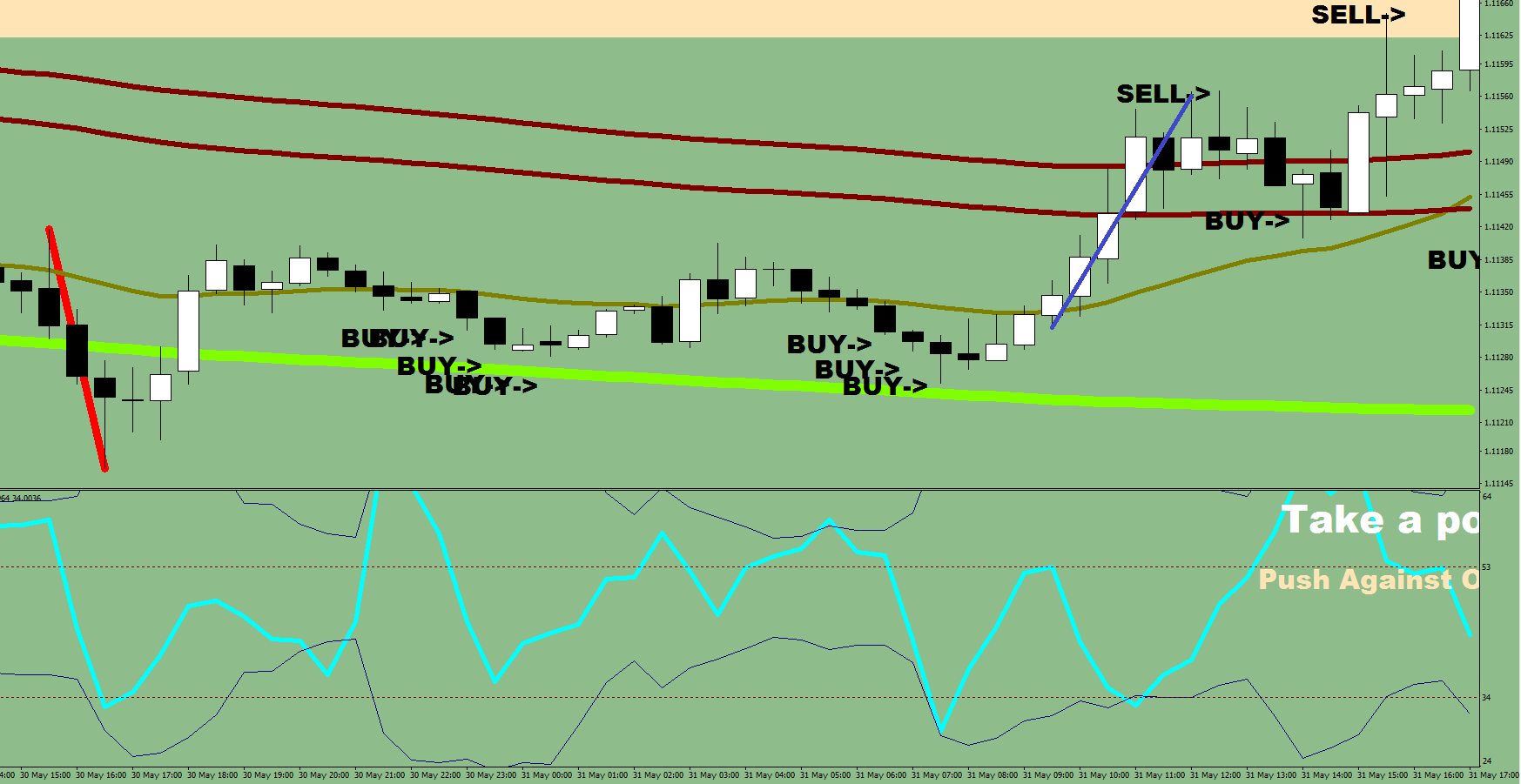
Wave 2 was easy enough, it recharged the energy by making a cross back down through MR. Maroon. The only thing noteworthy about wave 2 is that it took out its own high point while pushing lower.

Wave 3 would show an exhaustion, and this would be new to you, but most terminal moves end in the zone between 45-41.
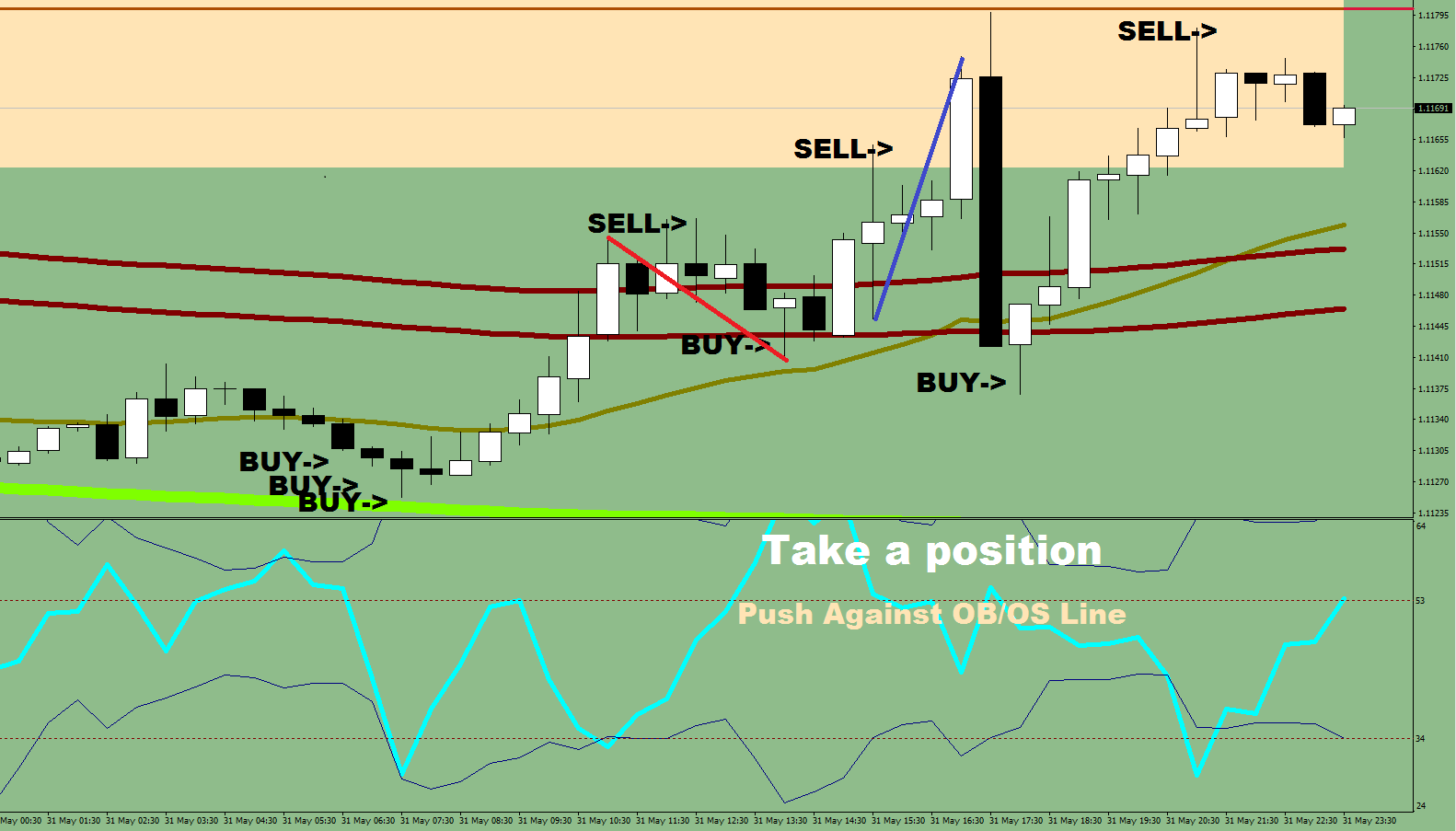
I would put wave 3 like that. Again, not touching wave 2 and not ending at the high point, but rather the exhaustion point.

Funny? It gets funnier. One of the returning features of a wave 4 is the beat of the ending point of wave 3.

Wave 4 recharged the energy again, and ended shy of the wick – which by the way would not exist according to E.W. for “wave 1 and wave 4 cannot overlap”. The heck they can’t.
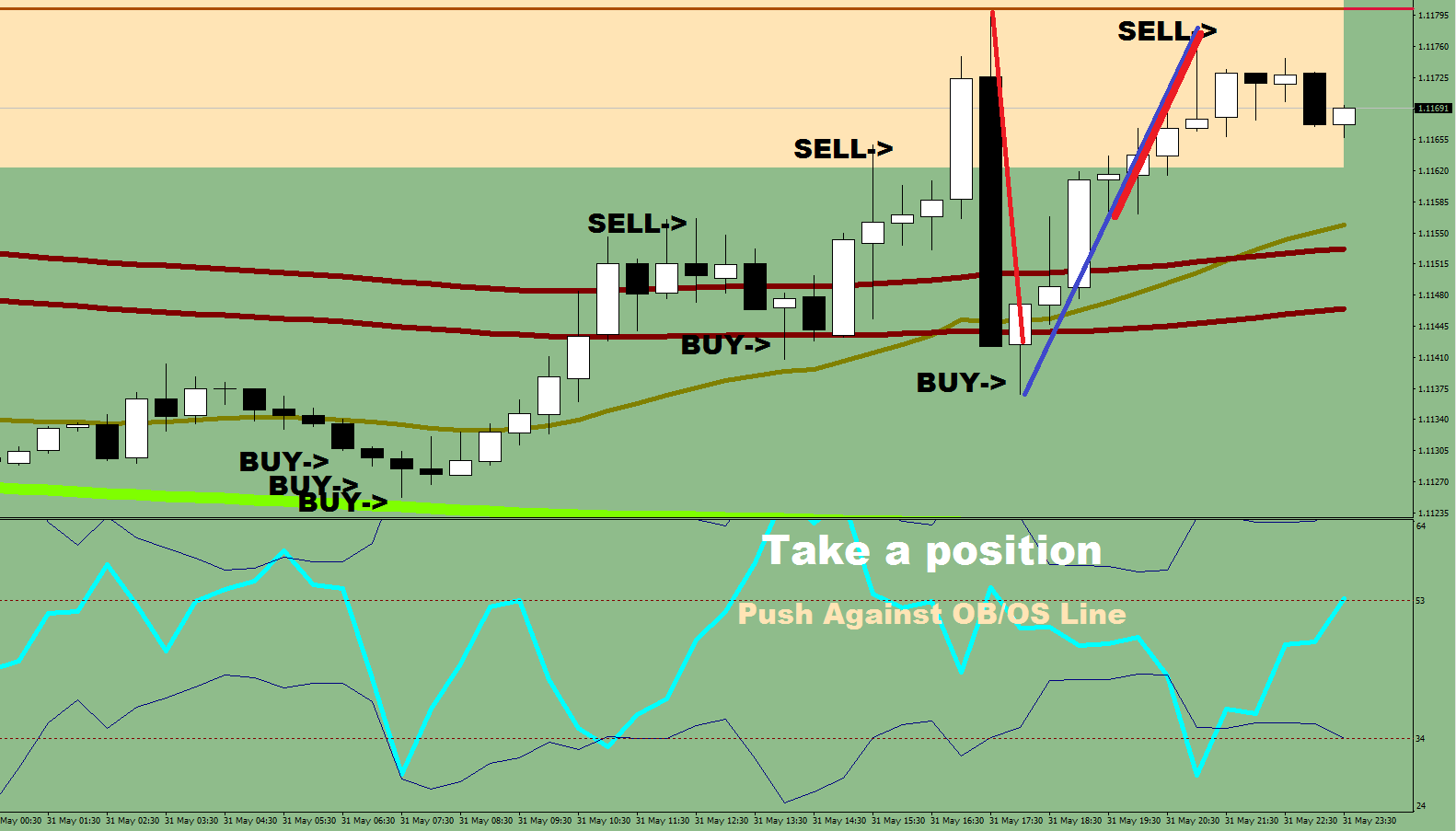
So there you have it, wave 4 in red down and wave 5 in blue with the highlighted exhaustion tail, that took 2 hours to develop this time.

(from the notes of Wave 5)
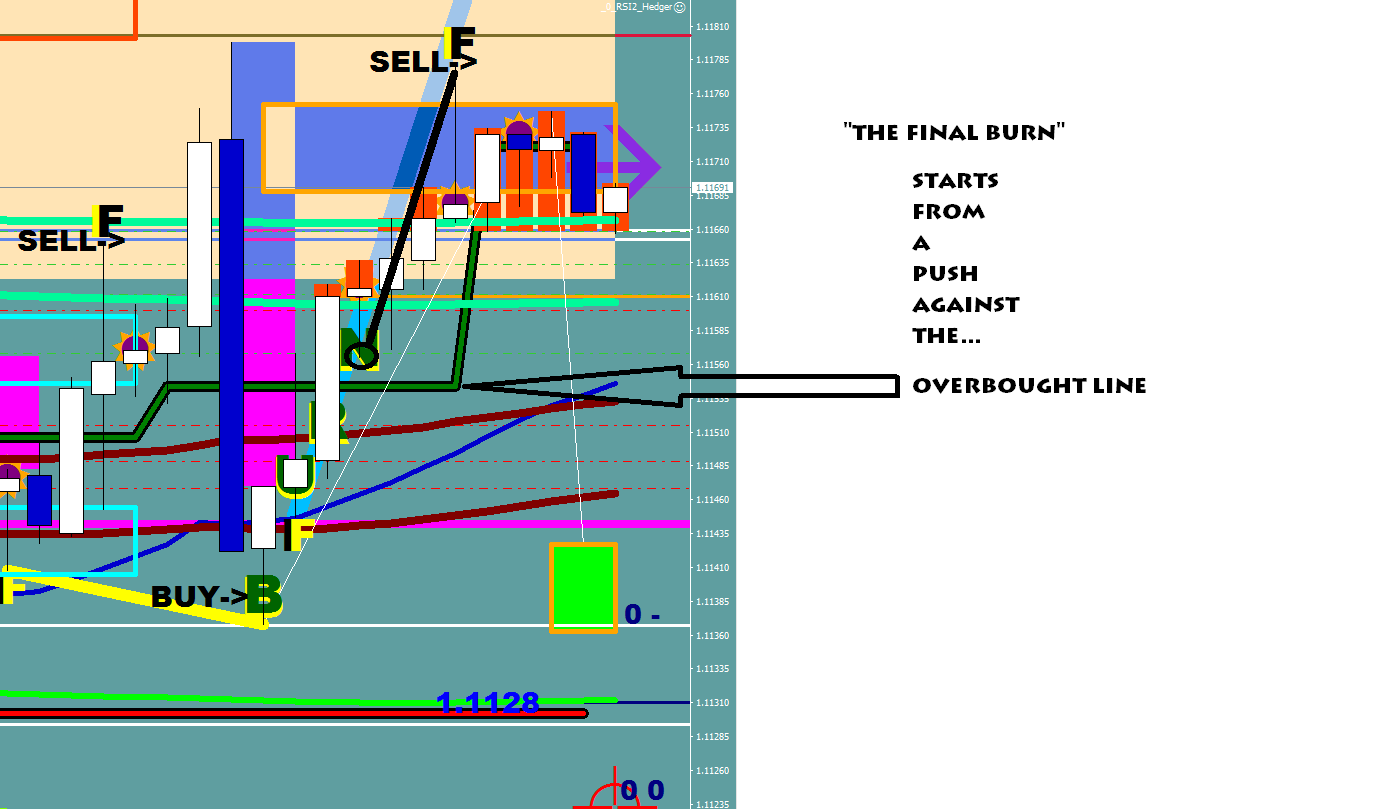
One question that might be shaping in your head if you have been a reader of mine, is if this was a mean reversion.

The numbers on the Stochastic Bars DD were missed by 1-pip on the downside and 1-pip on the upside.
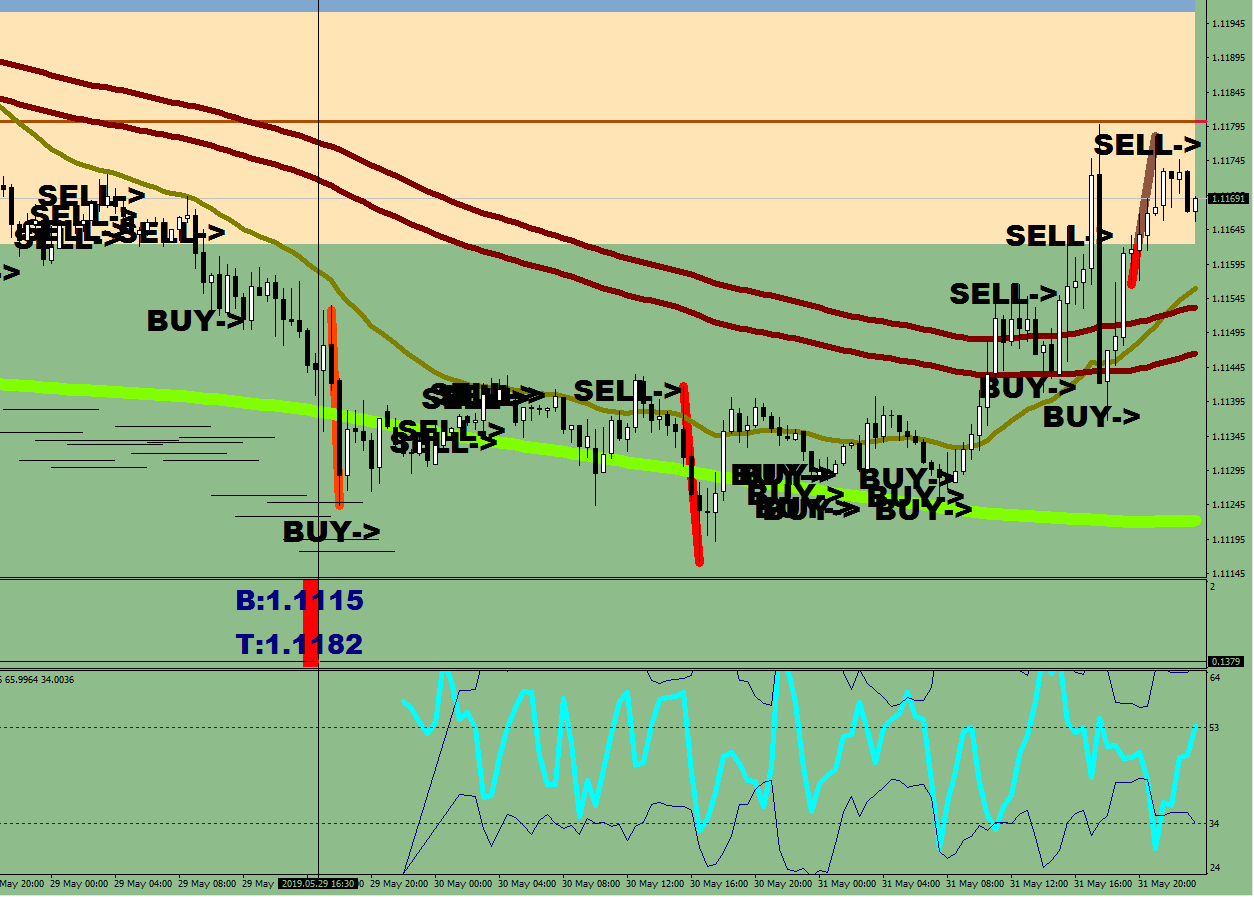
The horizontal line of course was the last Peak Trending Exhaustion.

It is a back test for sure. Was this a reset? What do you think?

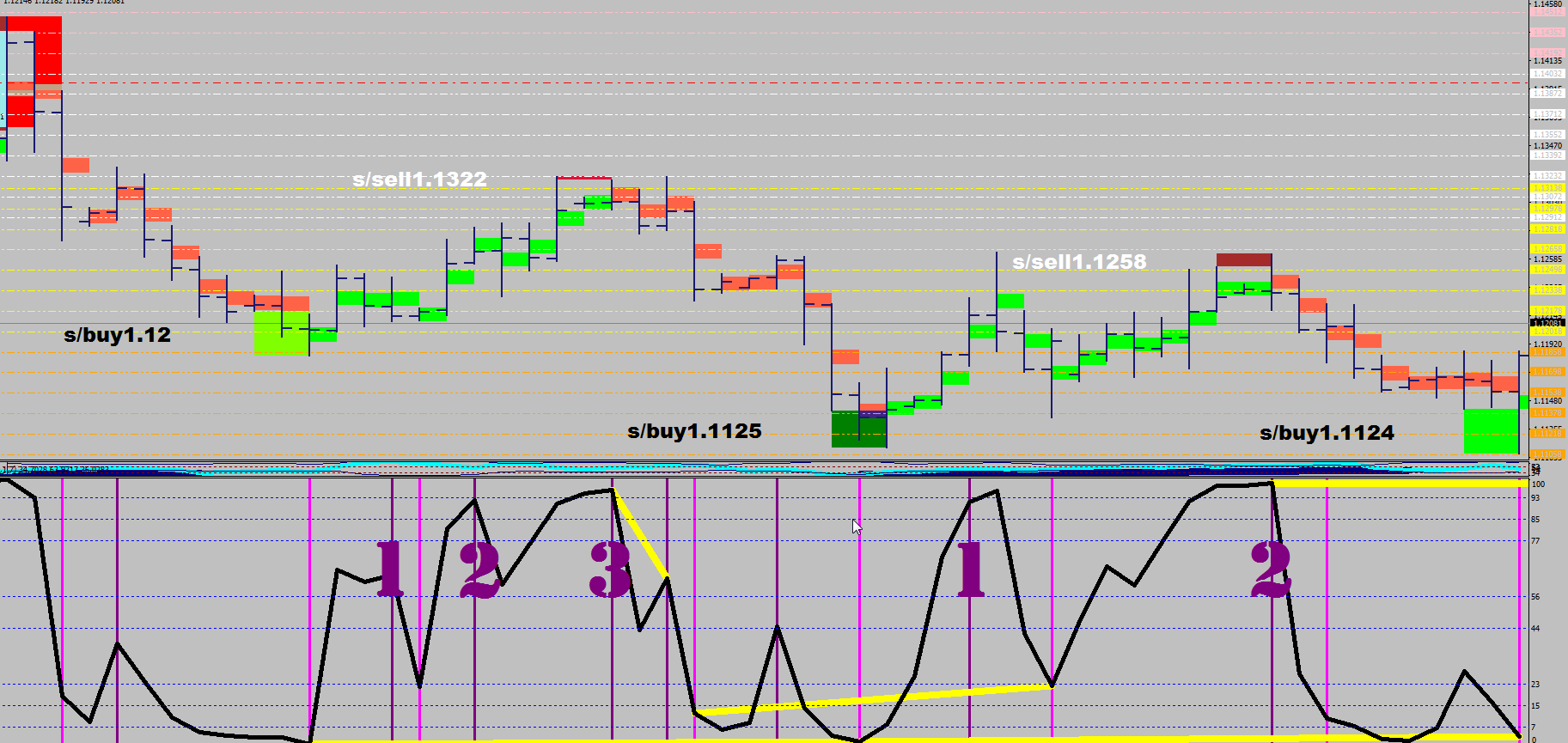
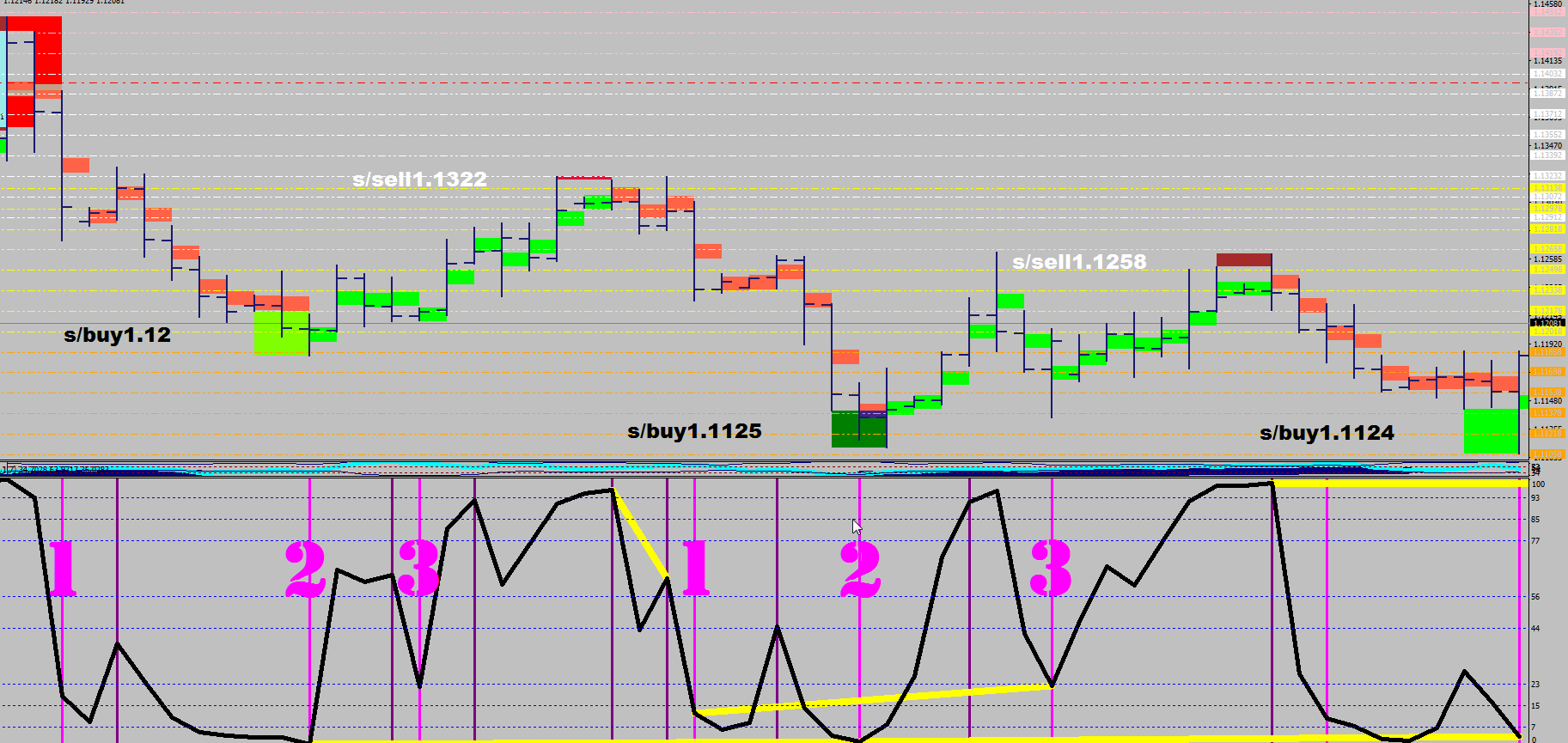
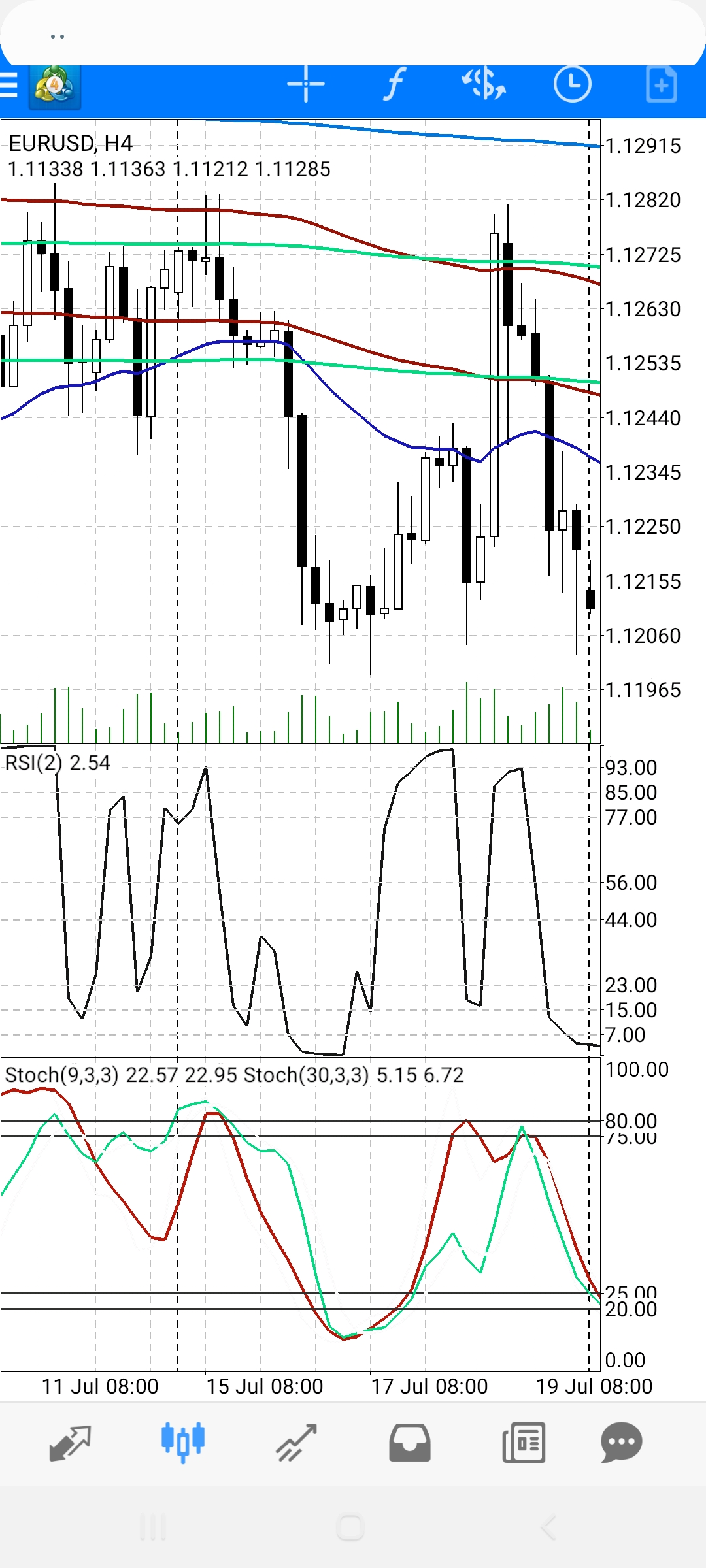
On the following image you can see the starting points of the 3 pushes: the high consolidation-level areas.
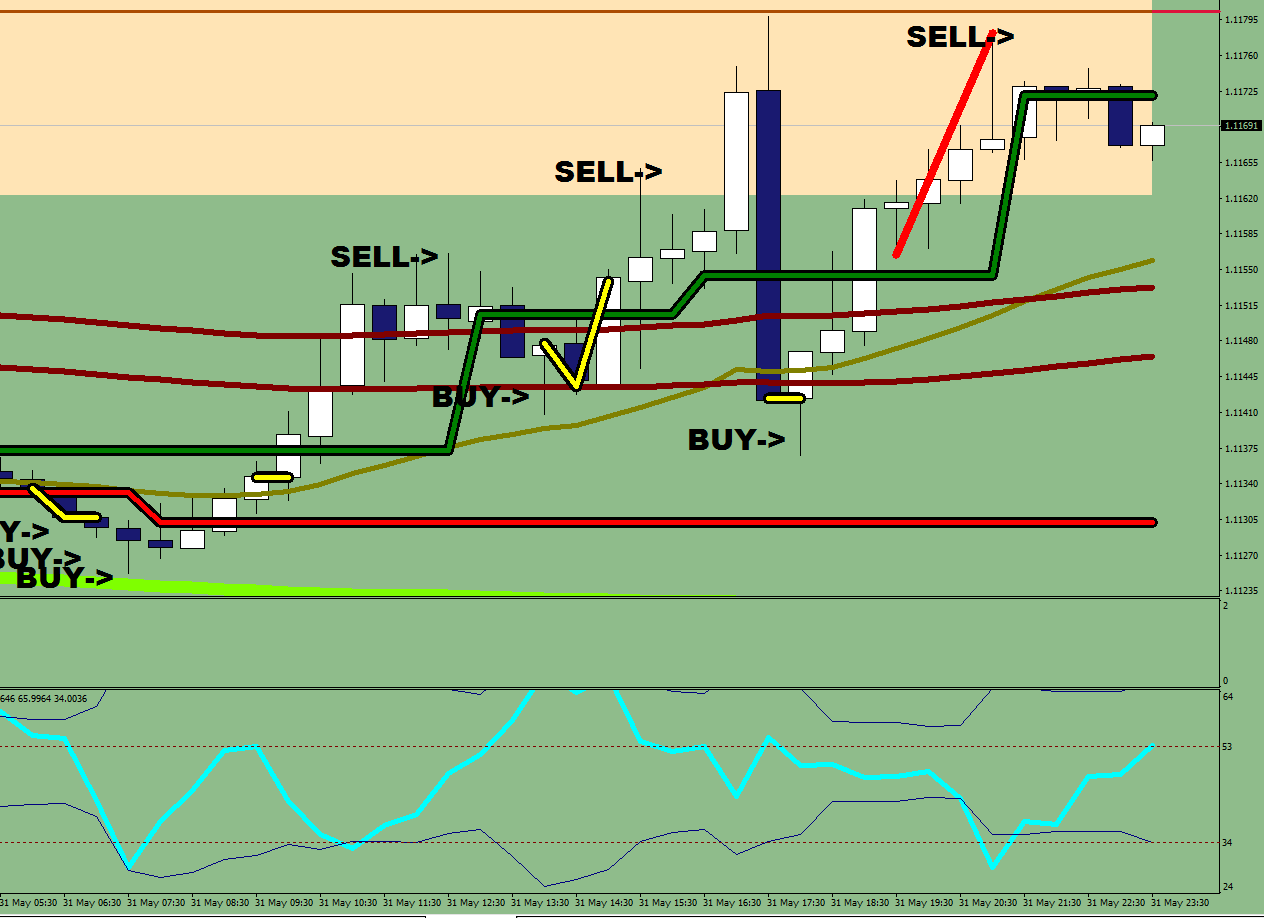
The 1st push came from an out-of-oversold condition. The direction was up from the red tail earlier.
The Direction of the Queen

You already know from me that the market does not turn direction without an RSI2 divergence, and also that the divergence may be between two measuring legs (wedge) or between two shoulders (H&S).

The first, obvious piece of information is this then: the answer to where is the Queen coming from is the last divergence she made.

Divergences that happened during stochastic embedding, should be eliminated.

Example 1:

Wedge turn

The wedge turn happens between two measuring legs as mentioned before.
(The measuring legs are qualifying thrusts that register in the upper/lower third on the RSI2 HL2).

The comparison should happen on the highest/lowest prices reached and the corresponding RSI2 readings. It is important to realize, that the price highs/lows do not always coincide with the RSI2 highs/lows, so go with the readings at the “fractals”.

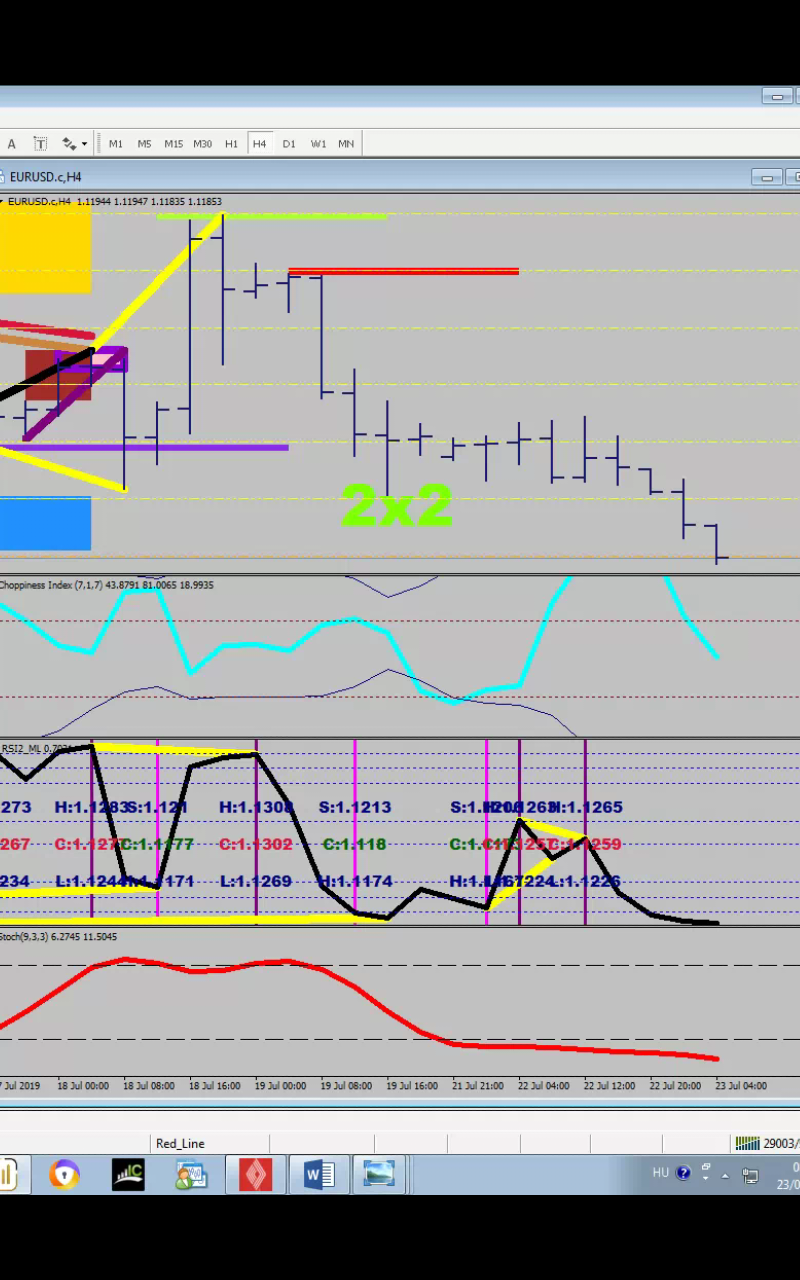
So, as the first example shows, the second high was achieved with a much lower RSI reading.

Now, to the most sensitive part, the anticipation. Anticipation is important, for you must be prepared for the upcoming turn in order to be able to make the necessary steps.

It is one thing seeing that the move is about to run out of juice, and start dumping your holdings especially upon seeing the resistance and the change in the angle.
It is an entirely different waiting for the turn to actually transpire before going in in the opposite direction.
This second part is incredibly hard if your vocabulary has no entry under the word: discipline. Males are by nature breachers, and bankers are doubly so.
You need to start putting yourself on the clock: knowing what time it is means to be present at the last 4h candle finishing and the new one starting to print.
So when did the turn take place in our example?
It did not happen until you had a 4h candle closing below 50% of its length after the print of the divergence.
The best entry would had been after that doji candle, on the 4h open at 1.1260 and on the 6 extra pips kick back there was an opportunity to add to the position to improve on the cost basis.

After this print the Queen’s direction was turned down.

As for some actuality:

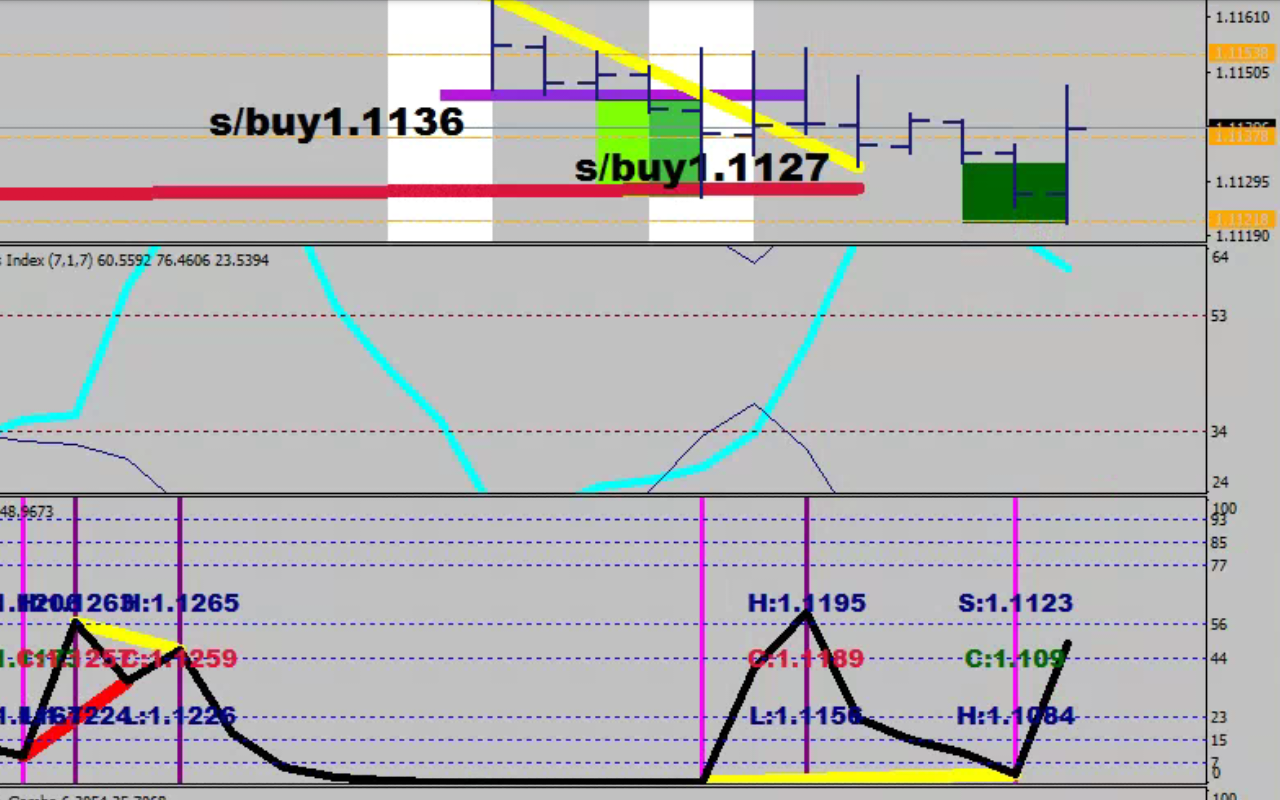
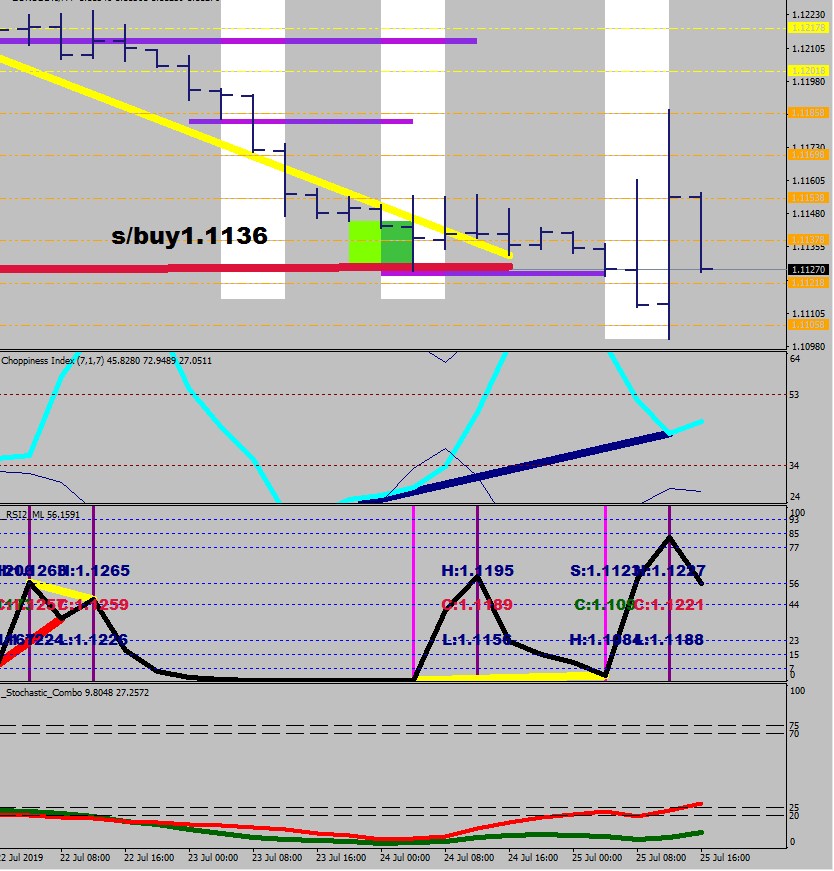
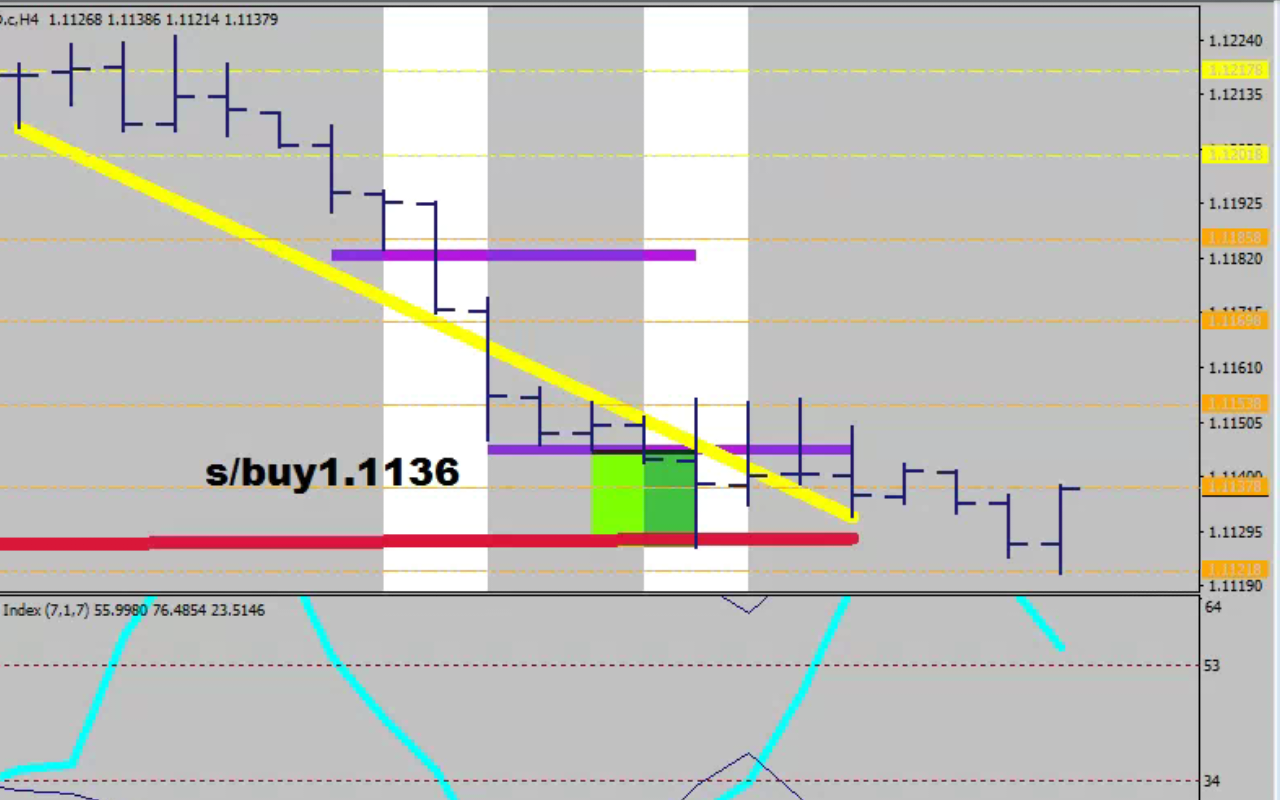
The Queen has found a problem. Her solution might just be buying starting at 1.1136.

In conclusion, if you know what the Queen is doing, you know everything.

Picture shows the disqualified divergence in red

& this is what happened…

Day Ralio: Princi Pals

Learn to make good (compromise)
This involves taking losses voluntarily at times. I.e. for the last 2 days I could had closed out my open positions for at least 5 times for a tiny loss: the 1,500 balance would had dropped to 1,300+, but the prise would had been definitely worth it: no open positions = no drag in any direction. The next day may prompt you with a very different situation. Appreciate the value of a clean slate.

Build equity: take small trades (by distance / time duration) to be able to better the equity / balance ratio and extend on your margin rope. The lower the spread, the higher the leverage, the more edges you have. Small profits can really add up, and the 10x$10=$100 is certainly scalable.

Money management is just as hard as the other part:

Get the reading right

The main thing to concentrate on is understanding the Queens desires.
An example for misinterpretation of a divergence:
The lower low with the higher RSI2 is disqualified by the embedding: the Queen being perma oversold.

That steep rising yellow was with oversold stoch D and so I would change the colour later; breaking it was an excellent continuation entry.


Try to grasp the concept of measuring legs and divergent ones.

When the market is “supposed to be” doing something, and it does not do it, something is up, and you better put on a hedge until you figureit out or it shows you what.

A volume signal (30m) is not a signal on its own: a high print is definitely showing for some interaction, but it may be only partial unload of the holdings, and as such may not be the actual reversal point.

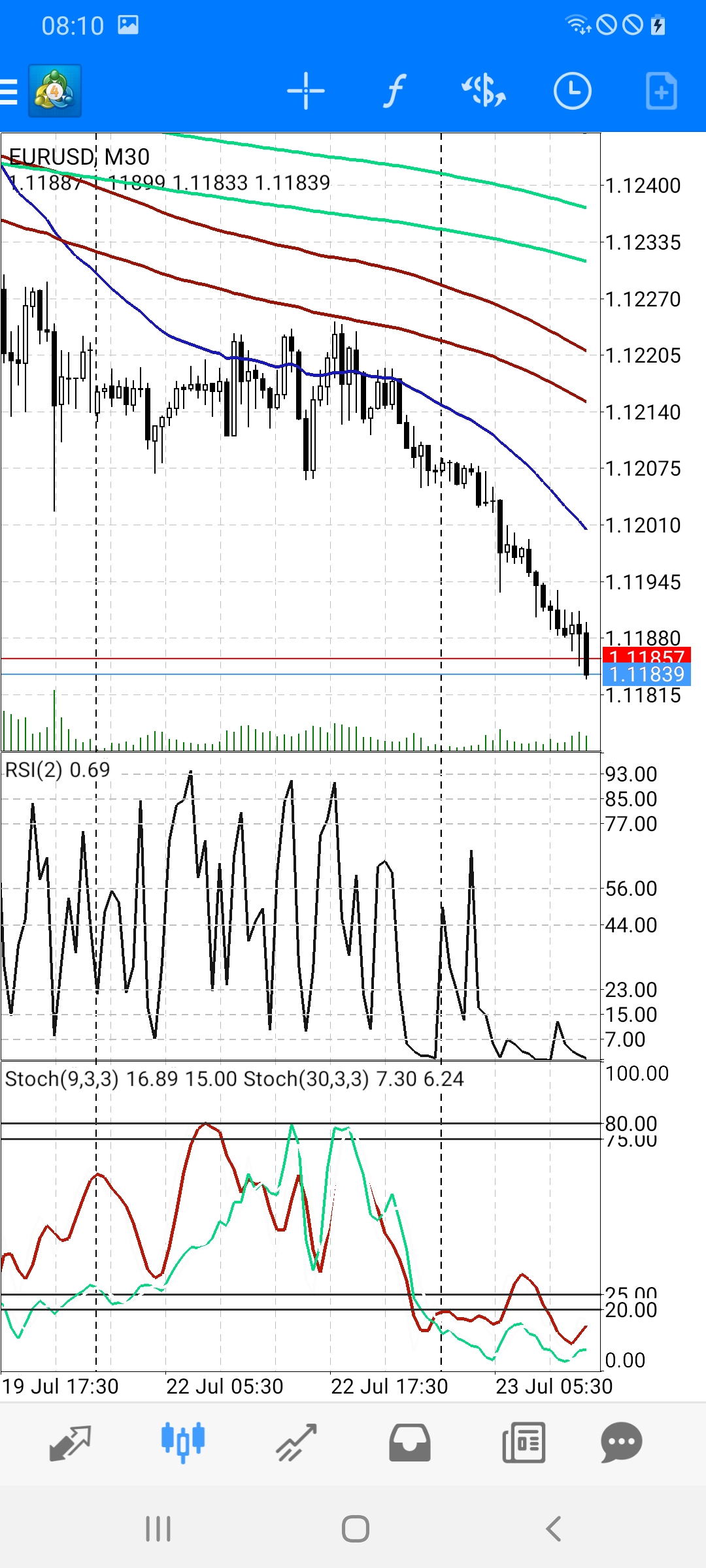
Volume is much more usable on a cell phone screen. The spike on the left did not reverse the price for good.

Keep an eye out for flags
Continuation patterns can keep you on the right side of the trade.

The last wave can go on forever, so if you see a 30-m doji printing after a 9-sample separation from the water line, you better go back in until a new higher high/lower low with a 4H exhaustion and look for a 30-minute red tail (which tends to appear in Bear Zone 1 / Bull Zone 1).


4H on the rampage check list

  • Is the 4h energy exhausted? (CI 7 sample < 37)
  • Have we seen a red tail? (2-4 sample 30-min burn – 3 sample mostly)
  • Have the Infantry (30 min) put up fights 3 consecutive times (RSI2 divergences)?
  • Has there been a 40-sample (30 min) lower low / higher high?
  • Has the daily fuel limit been reached? (3-day average ATR)
  • Is price in the Bear Zone 1 / Bull Zone 1?
  • Was there a volume flush?

At last, the red tail is showing.

Or was it this one?

The King, the Queen and the Infantry

King is the will.
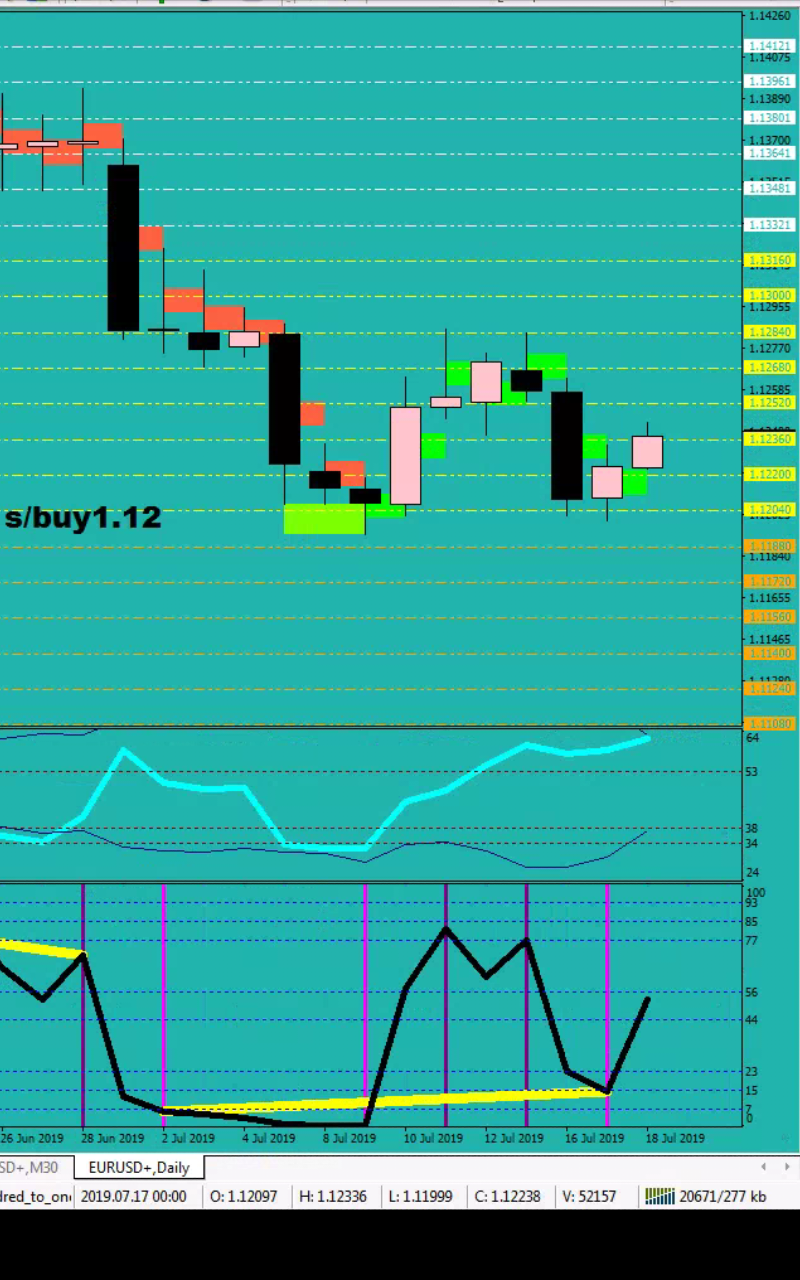
The King has found a solution: purchasing 1.12.


He wants to find a problem now – a problem that isn’t of marital but martial nature (external).

The Queen is the deed.
The Queen defied the King by going against his will.

Your bet should be that the Queen would get her way against anything the King does. Her way is the high way, the divergent way. They reconciled ultimately after the last fight, and now they are both looking forward to what lies (up) ahead.

Yet, there is also the Infantry.
They can rebel, there might be an upheaval, and with their numbers they can overpower even the Queen by the Peasants building a fortress out of divergences.

Now the Peasants are fed up with marching and started building their strong hold by the bank of the Green River.

They are weary, in a rebellious mood and want to utilize the spark zone between Mr. Maroon and the Green River to make a statement.

One possible outcome is to win the sympathy of the Queen and with her will, they can take the King on another ride. For this, a divergent higher high would be needed from the Queen for a consent.

The other possibility is to let the Peasants have their own way and show what they can do for a bit, until the Queen manages to raise a new army where she found supporters before to eradicate all progress made by the Rebellious Infantry.

The third possibility is that the Queen manages to push back the stronghold to where she herself defied the King before. Although she is made of a female, this irrational deed would be the least likely outcome, for the memory of that fight may turn the King out, and this would not be a risk worth taking.


A little literature light here for a closure.

Kings’ Cross

A letter arrived, an ultimatum. It surprised the wise old man. 
I bet this is serious now – he wondered. Vi king is about to take over our property. I have to get some help – Thin king was thinking. Later he visited Wor king. 
“I’m busy at the moment!” – he claimed. Thin king went on. Wal king wasn’t at home. He only left a message: sorry for not being here, I’ll be back sometime, I may be in the garden. What could Thin king do? He went to the garden too. He didn’t find Wal king, but a boy who was juggling with apples. 
“Hi there, I’m Star king, the son of Jonathan the third – he introduced himself. –  Want a bite?” He explained that though he had never left the apple garden, he was willing to help defend the property, and so he signed up. 
Meanwhile Vi king got help from the mighty becoming experienced veteran, Attac king. 
Things were more serious. 
Thin king and Star king sought for more potential help. 
When they met Duc king, “I have to take diving lessons today…” – he excused himself and disappeared under the waterline. 
Smo king signed up himself. “I don’t know if my lungs will hold on, but I’m willing to help.” 
“We’ll fight!” Said the three, and so they declared war. 
It turned out to be bloody, and lasting. Though Wa king sent them a message right after he’d gotten up, he never arrived. Smo king died by senile decay. Thin king followed him: he died of old age. 
Star king could barely hold on himself, but certain sounds just in time brought him hope. The noisy Knoc king arrived accompanied by Hac king, who had just arrived back from the mountains and had picked up Hi king on his way back home, who was hitch-hiking by the road. So now there were four kings on the right side. 
“Poker!” – they said. And so they won. 
The happy ending of the story is the party the Queen of Hearts gave them, as her personal gift for defending the property. But the last dance was given away – how sad – to Roc king. 


Follow up picture

Call Me Mr. Wave 2

You are not a human being, are you – asked my coworker from me today.

No, but I know how to double an account in under 30 minutes – was my response.

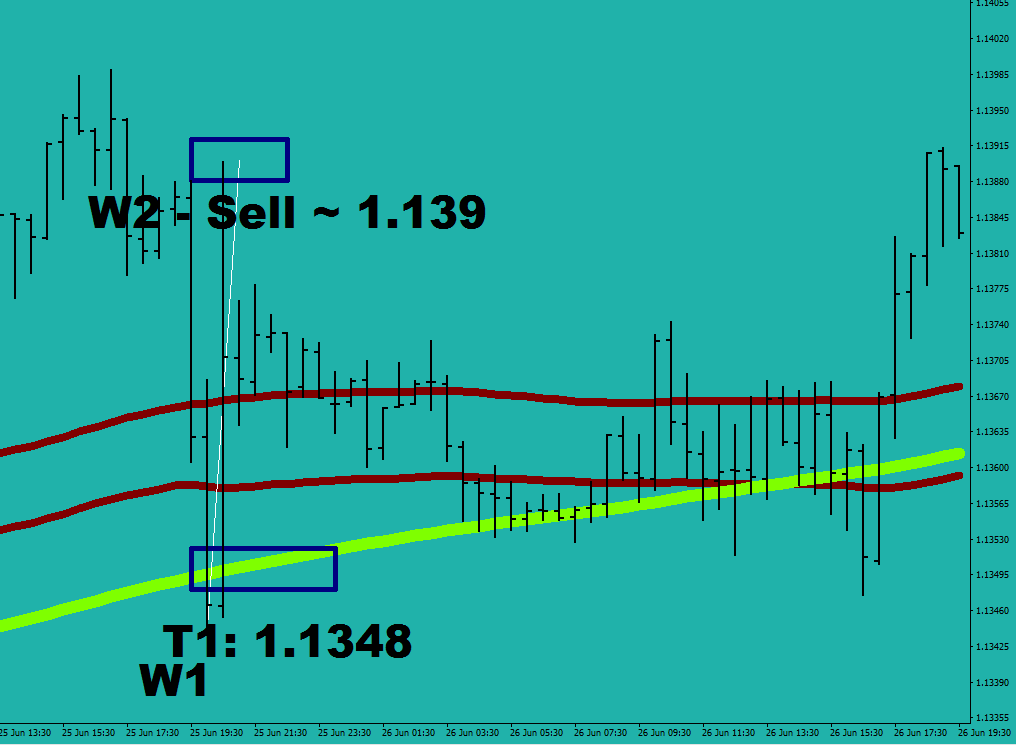
The Wave 2 finder is a real thing, I coded it this evening. It kind of gives unfair advantages to the holder of the routine, and so the Power Trading competition becomes almost meaningless with this dope.

If you burden up a 1:500 leveraged account until the margin level dips just below 200, it is guaranteed that you are going to double the account on the upcoming 40+ guaranteed pips.

As the first example shows, this may not take a full hour.

Reminds me of some broker making up some Asian name to claim that one of their client made 27% that month.

These two trades, namely the one on the 25th of June and the one on the 10th of July would had yielded you 100% twice, a total of 300% compounded gains in 15 days, with a total of 20+1 hours of holding time. Do compare.

You may officially refer to me as Mr. Wave 2 effective today.

Trading With AI?

First of all, what is trading?

Trading is an ability to count to two… and sometimes to three.

You do not need artificial intelligence for this.

But there is a field for AI, and that field is probability derived from statistics and projection of possible outcomes.

AI could chip in by licking through lots and lots of data and bringing your accuracy up by not only saying buy here and don’t buy here, but would be able to associate a percentage of probability to this strike being a buyable 2 or that strike being a rather pass on two. AI ultimately could make predictions based on similar sequences and how they played out in the past.

Although all disclaimers always make an effort in discrediting what transpired, the only way forward is to remember every little thing, every combination that has happened. Being a human clearly isn’t enough to do this.

DubStep Hedging

Ratio hedging is so XX. century…

Plotting a grid of 1/2 fluctuation sized steps can yield the idea of halftime drums, or DubStep hedging.

You open a position with the utmost consideration for being in accordance, in harmony with the direction of progression.

Yet, the market starts moving against your holding, what should you do?

  1. know the instrument = be conscious of the fluctuation size
  2. do nothing until 1/4 of fluctuation size pressure from your open plus a little slack
  3. open a hedge that is 25% greater than the position to be hedged with the following conditions: a) have a target for the hedge position at 68.75% of 1/4 fluctuation size b) get your strictest trail stop involved with the right launch codes to protect any gains made by the hedge-trade c) repeat the same thing for 10, 1/2 fluctuation size steps out
  4. there should be a target setting logic in place that would adopt to motion in the opposite direction, meaning, it would not always just aim further out, but could retract as long as it is still happening in gains

The size increase is to make up for some lost ground between the steps.

This hedge-trade may be called in multiple times, each time yielding you something.

The whole manouver would only make sense on an ECN, low raw spread account where the commission is not very high and high leverage is always a handy thing.

How does it look like?

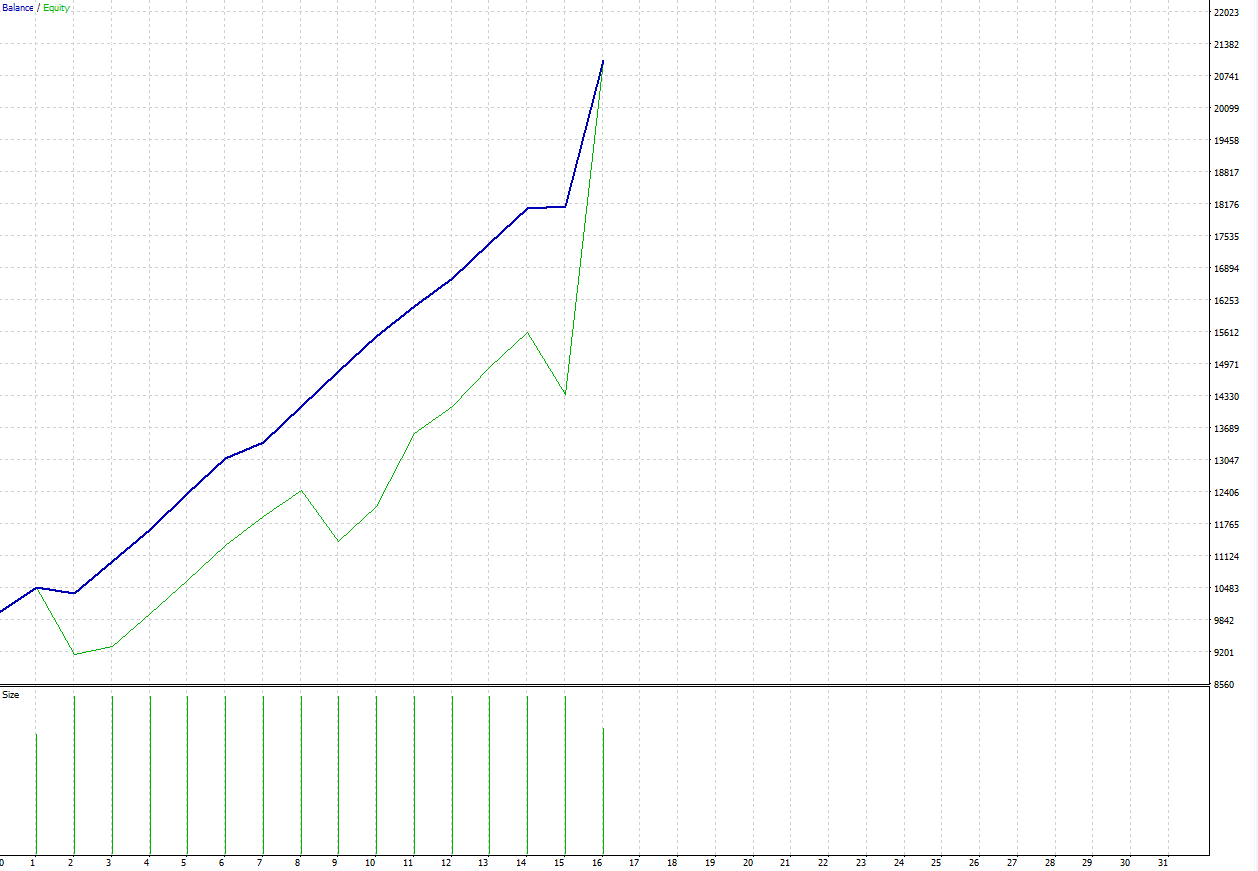
The green equity line separating from the blue balance line shows the presence of a hedge-trade. When the green gains on the blue, a hedge-trade gets closed out. At the meeting point the account has no open positions.

What is so great about this type of hedging? That it takes a back seat, it only steps in when something is really off, and it puts on a fight for a good size section, going into war as many times as needed be.

Remember that hedges can give you relief, but may ultimately become an over sized counter weight that can sink your ship, this is why my current thinking is that hedging should be precise, powerful and predictable.

Intermission – no hedge at all.

The Ugly Truth of Forex (In)differences

What is the very first reason why you should never expect that you can simply buy an auto trading EA and that would produce money for you eternally, like they said it would?

The difference of the data among brokers.

Where is the difference coming from?

Server time difference

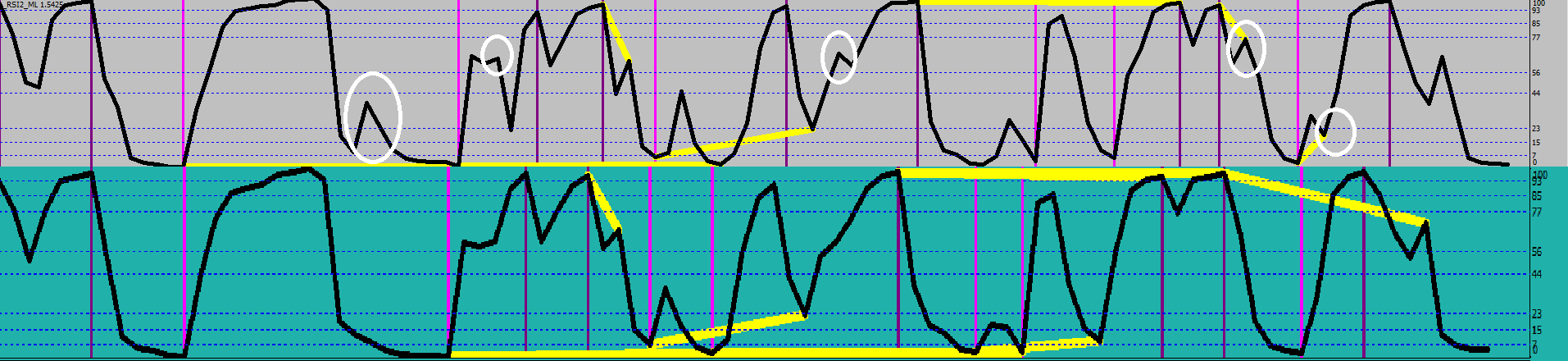
The image above shows the same iRSI(symbol,0,2,PRICE_MEDIAN,i) expression, yet the outcomes on the two different brokers are drastically different. White circles are only some high lights.

Since one broker is right on GMT +1 hour, their daily candles start at midnight, thus a week is made of exactly 5 candles.

The other broker is on GMT -1 hour, it opens 2 hours earlier, so there is a 2-hour long daily candle on Sunday and therefore the total number of candles in a week is 6.

Imagine that the automated trading routine utilizes RSI2 divergences as opening signals. The program was made with the Gray background broker – so for instance, on the first image, the last 2 white circles should result in opening positions. On yours, these events simply do not occur.

Conclusion: every value derived from daily candle groupings would be different, therefore you cannot use a different broker and expect the routine to perform the same way.

Every oscillator (not just a 2-sample size one) would end up showing different values at almost every reading. One may have the stochastic level below 18, the other at 35. One would be considered oversold while the other isn’t. I had the same routine opening a long on one account and a short on another because of such an uncertain divider.

When it comes to 4-hour candles, the differences are even more pronounced. One of these brokers started the current 4-hour print more than 3 hours ago, while the has only been under plotting for the last hour and change.

One shows a doji for the last 4-hour candle, the other – thanks to the different grouping – do not have this.

I probably don’t need to tell you in detail that a 3, 4, x sample high or low aren’t necessarily going be identical either.

Let’s only mention here vaguely that the brokers do not open and close at the same time.

If I write a scalper that cuts an EUR/USD position at 1-pip gain after reaching 4 pips in my favor (as a protection mechanism) and this would yield me 0.2-0.3 pip gains after commission and spread, while you have an 1.7 pip “fixed” spread at your broker, then the trade that gave me some profits lost you at least 0.7 pips.

The slippage values, the overnight swap, the commission are all different at every single broker.

If my broker allows for 0.2 pips slippage, then I can put out a pending order rather close, but your broker with the 2-pips slippage would deny placing the same order.

I hope you are beginning to get the sense of why trade copying cannot work either.

If my broker only cranks up the spread to 2-pips overnight, while yours pushes it beyond 4-pips, this can easily make the difference between receiving a stop out or not, or triggering a hedge position vs not.

Let’s only vaguely mention the margin calls that would be the outcome of different margin call percentage values despite of having the same leverage.

Let’s faintly mention other values such as maximum lot size, that are also unique to a broker.

So, how do you overcome all this? You can’t.

You can only develop and optimize for the broker you are trading with.

Your auto trading routine (EA) won’t behave the same way with any other broker, not even with different privileges when using the same broker.

People, you need to stop looking for substitutes and single pill fixes all solutions and invest in what I’ve been investing in: understanding how trading works – for real.

Zö Hóly Graíl

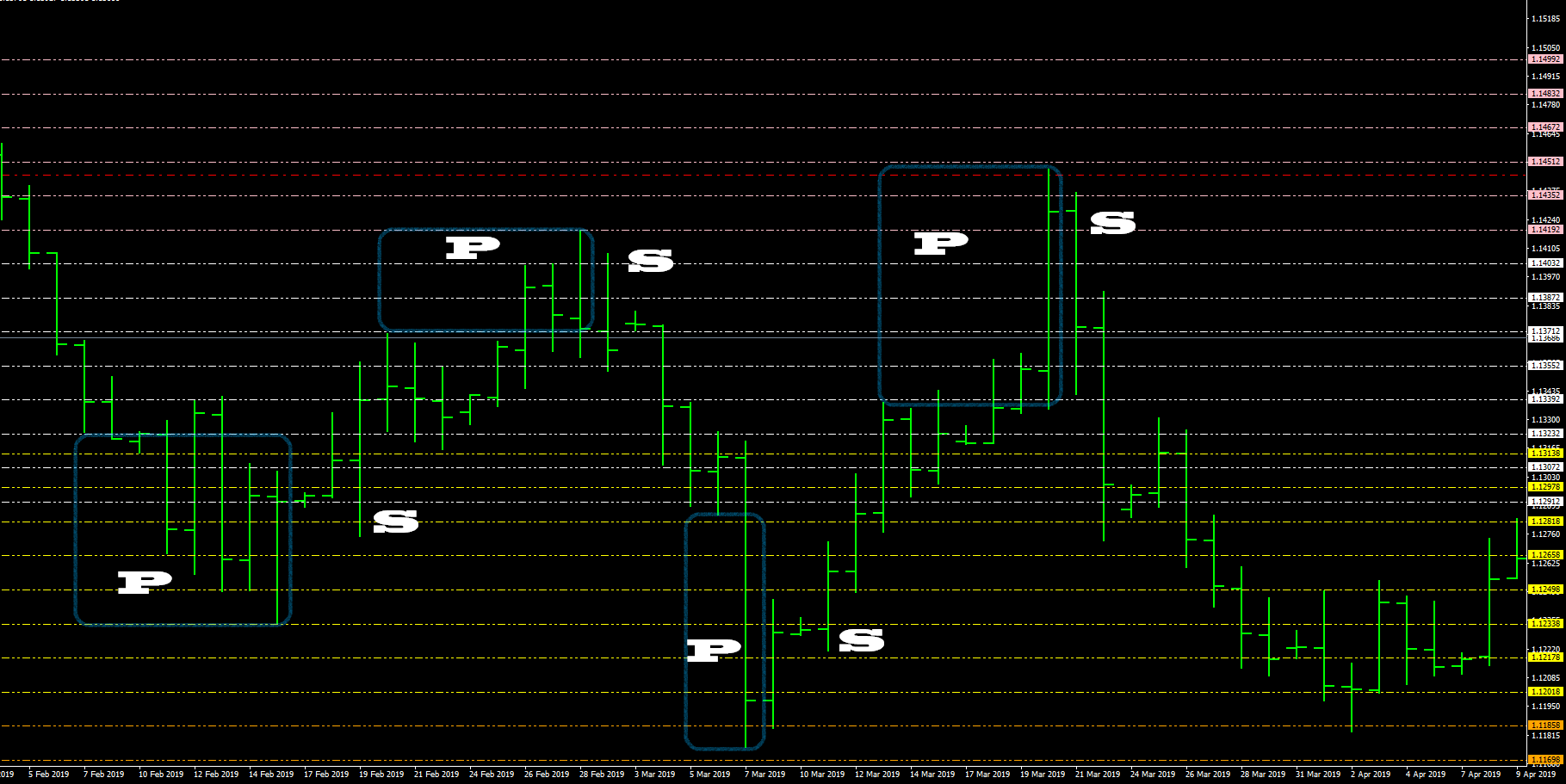
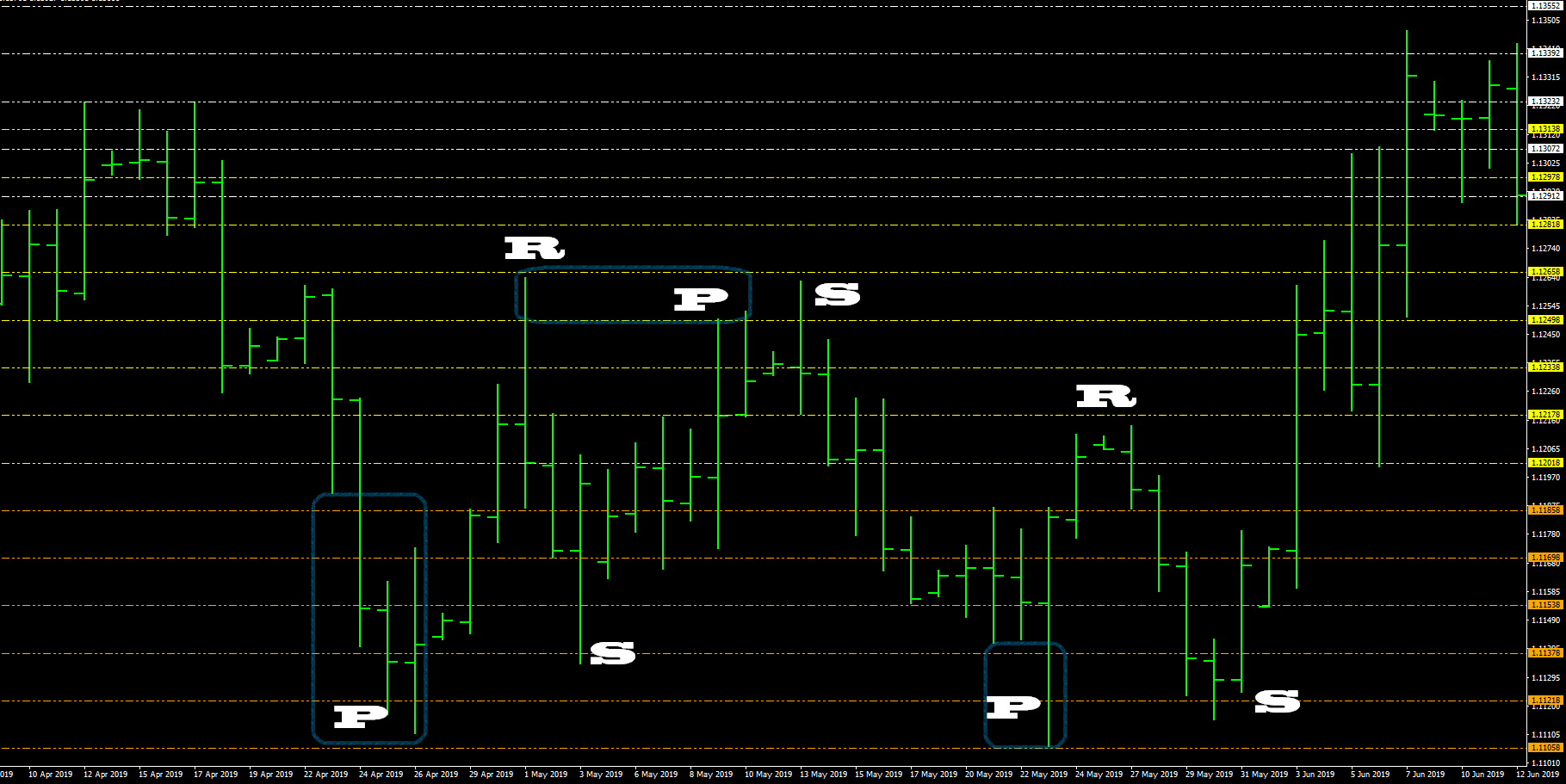
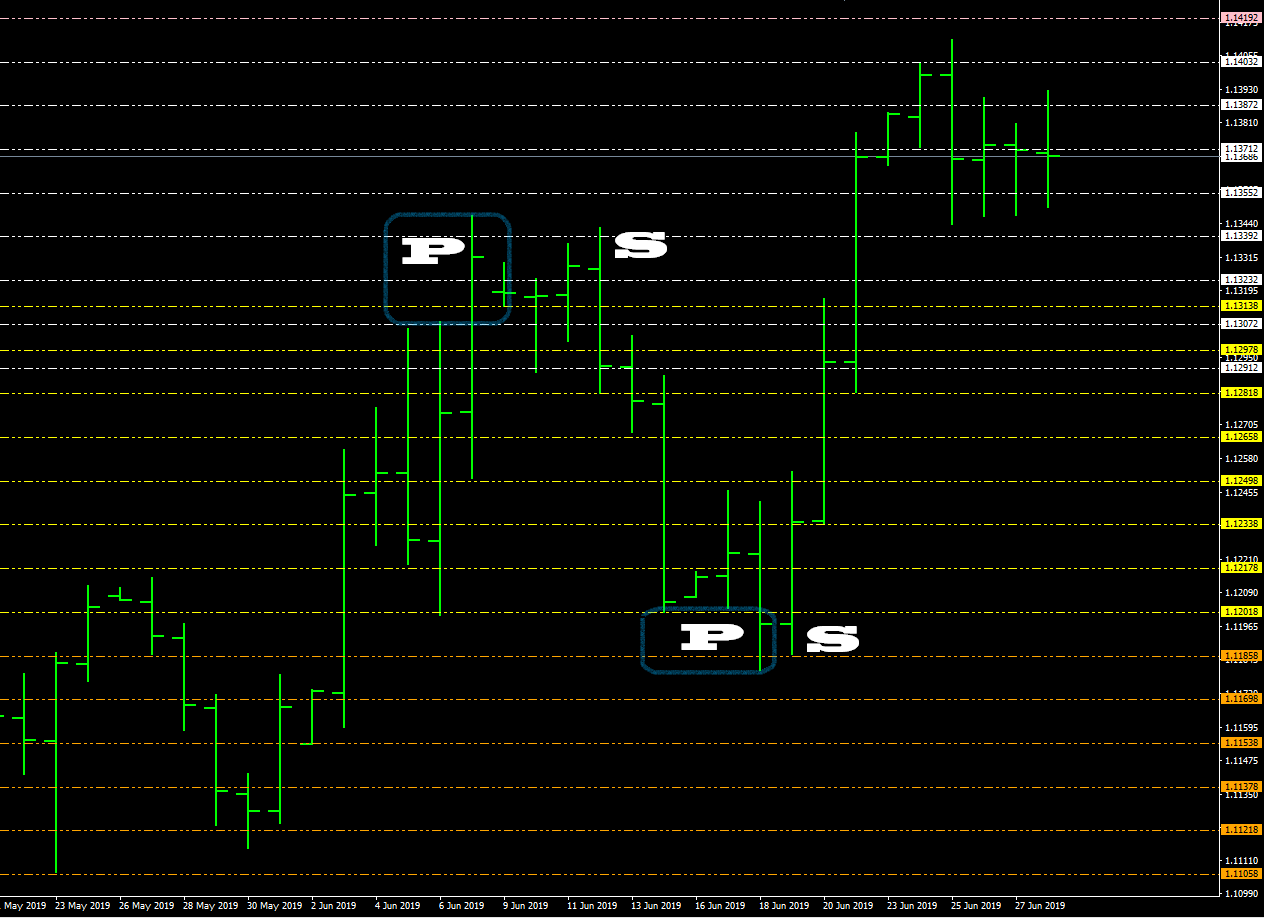
S=Solution
P=Problem
R=Relapse/Reprise

Yes, the answer to trading can be summed up in 3 letters.

This is all I can give you for free. If you want to know more, you’re gonna have to team up with me.

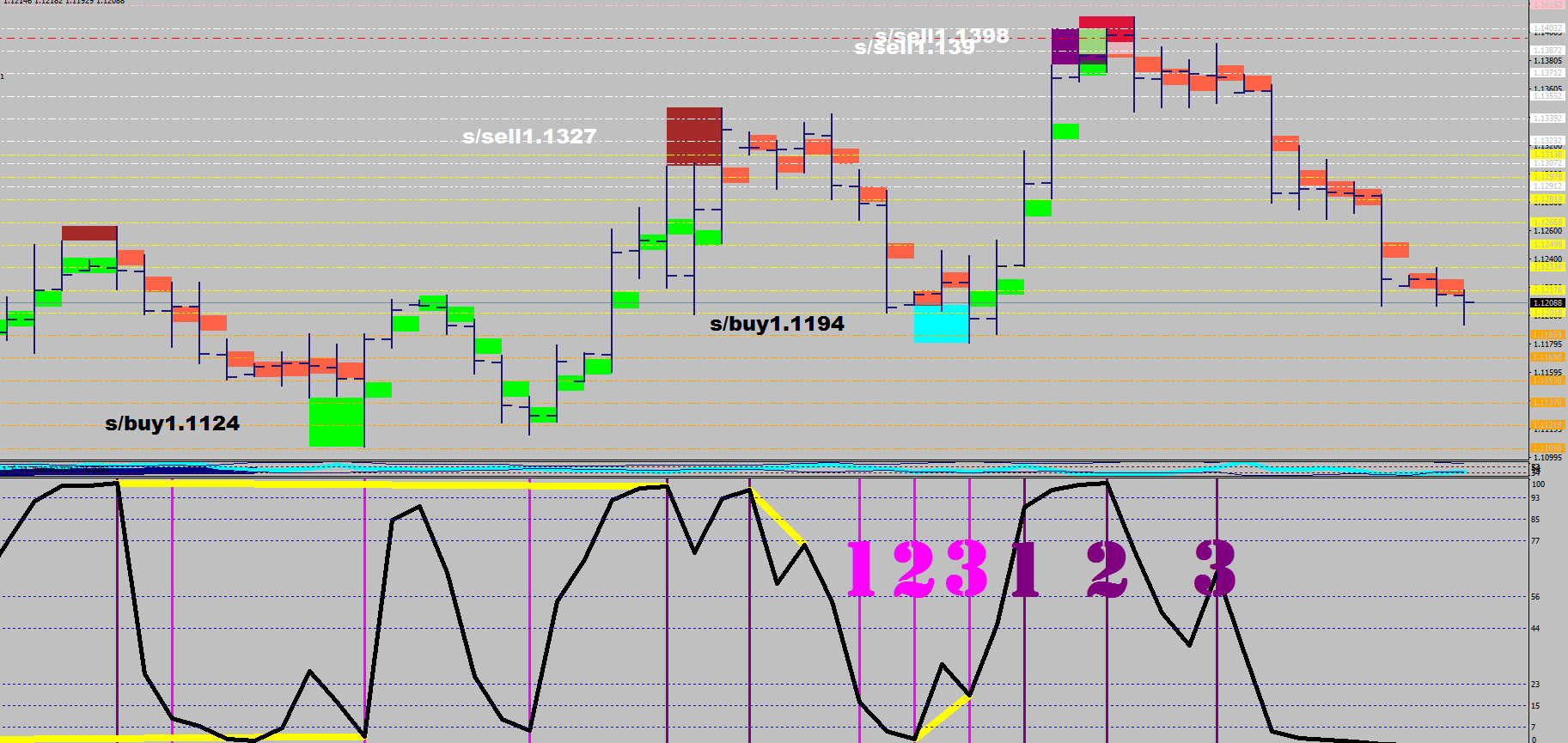
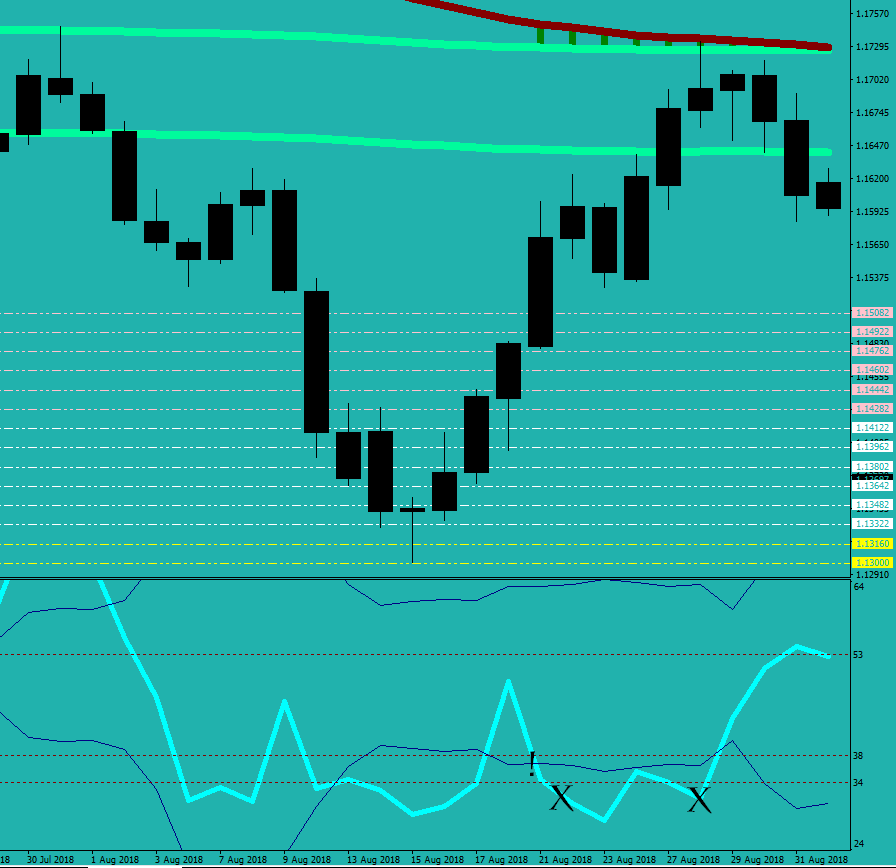
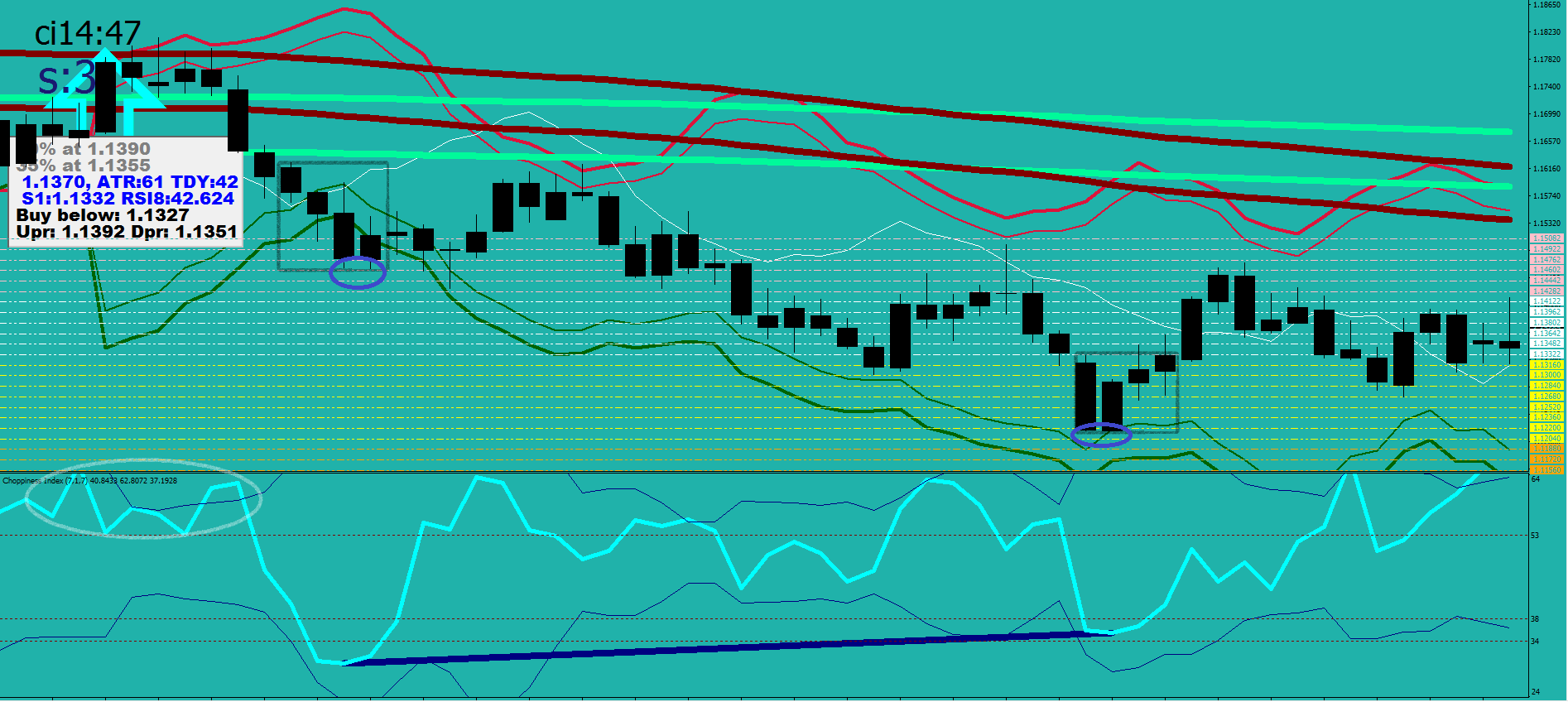
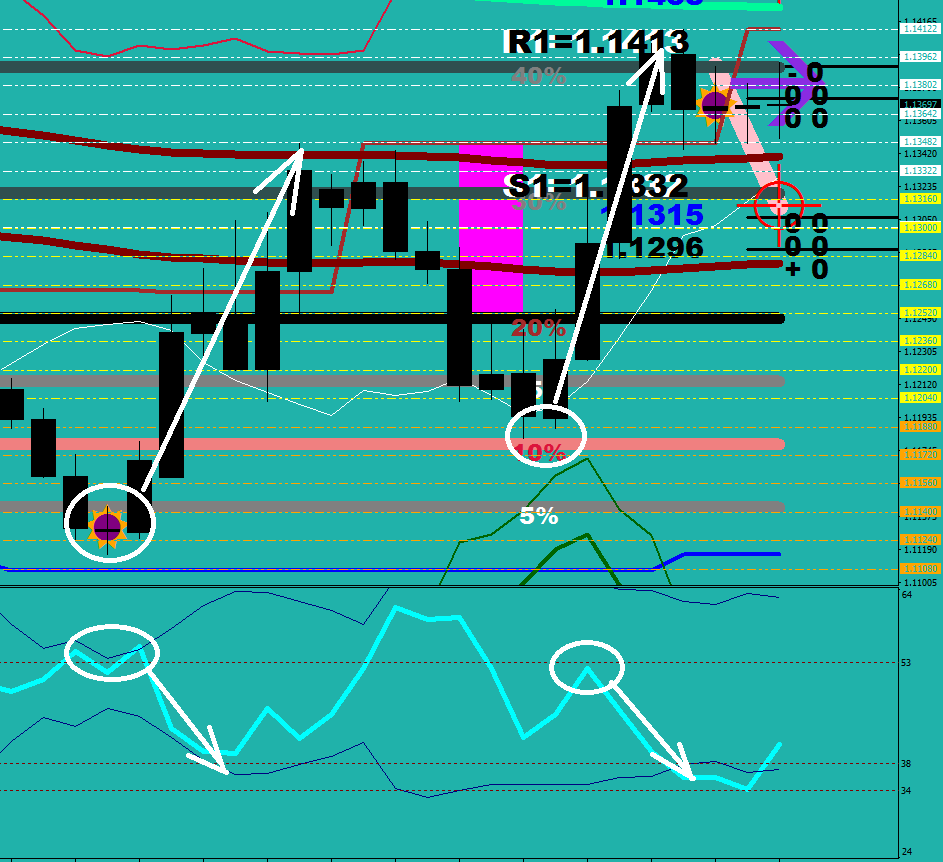
Draw Your Conclusions (Homework)

This is your homework for the summer:

Based on the images below, try to draw conclusions on

  • what is an exhaustion
  • what prompts a consolidation
  • what state does the price make a starting push from?
  • what level on CI should be considered as highly consolidated?
  • what level on CI should be considered as exhausted?
  • how many candles needed at the minimum to consolidate energy?
  • what happens when the CI goes outside the bands?
  • what is a CI exhaustion divergence? what does it do?†
  • what else is needed along with the CI exhaustion divergence?

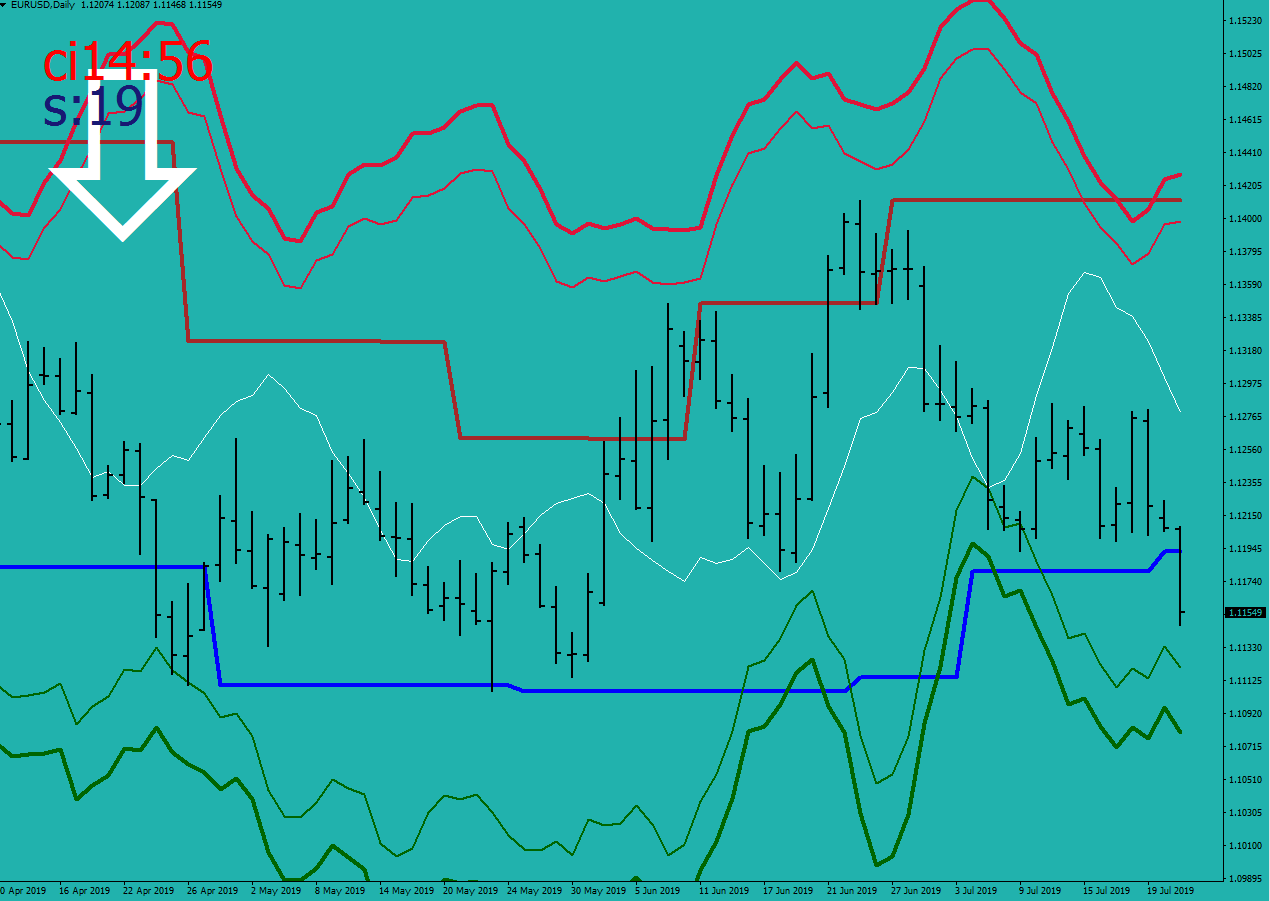
The calculation of CI – in TOS:

input TF = {default “1 HOUR”, “4 HOURS”, “DAY”, “WEEK”, “MONTH”};
def CI = ( ( Log(Sum(TrueRange(high(period = TF), close(period = TF), low(period = TF)), 14) / (Highest(if high(period = TF) >= close(period = TF)[1] then high(period = TF) else close(period = TF)[1], 14) – Lowest( if low(period = TF) <= close(period = TF)[1] then low(period = TF) else close(period = TF)[1], 14))) / Log(10)) / (Log(14) / Log(10))) * 100;

I can’t give you a copy of the Choppiness that David Moser made in 2009 for MT4, but it is out there, try to obtain a copy.

I use 7-sample CI on Daily, 4-Hour and 30-minute charts.

I use 14-sample CI to calculate the Energy bands.