Nick’s Lessons #1

Some suggestions for you.
You could open an account with $150 at VantageFx.
A True ECN account has 0.2+ pips spread and 0.4 pips commission, so you would have a total of 0.6-0.8 pips on a round trip on EUR.
Also, their margin call level is starting at 80%, not 100%, and you can choose your own leverage. They also open earlier and close later than most other brokers.
While you are learning, use 1:100.
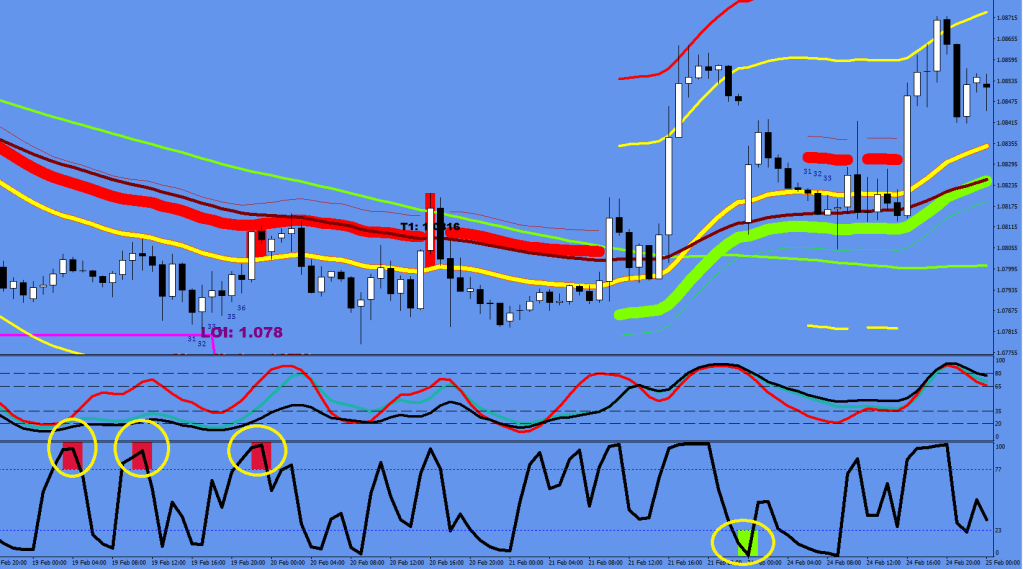
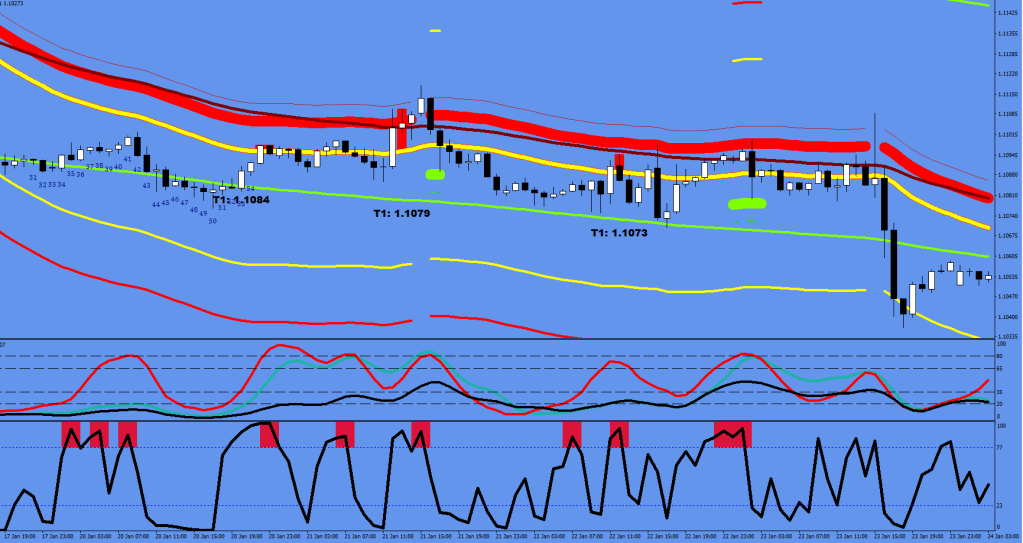
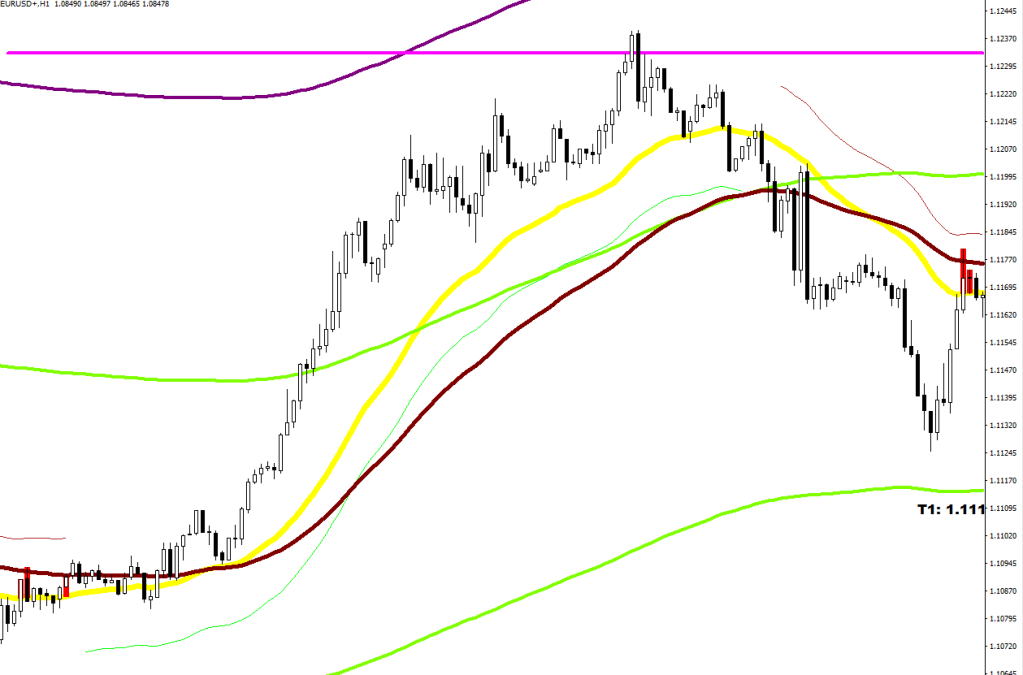
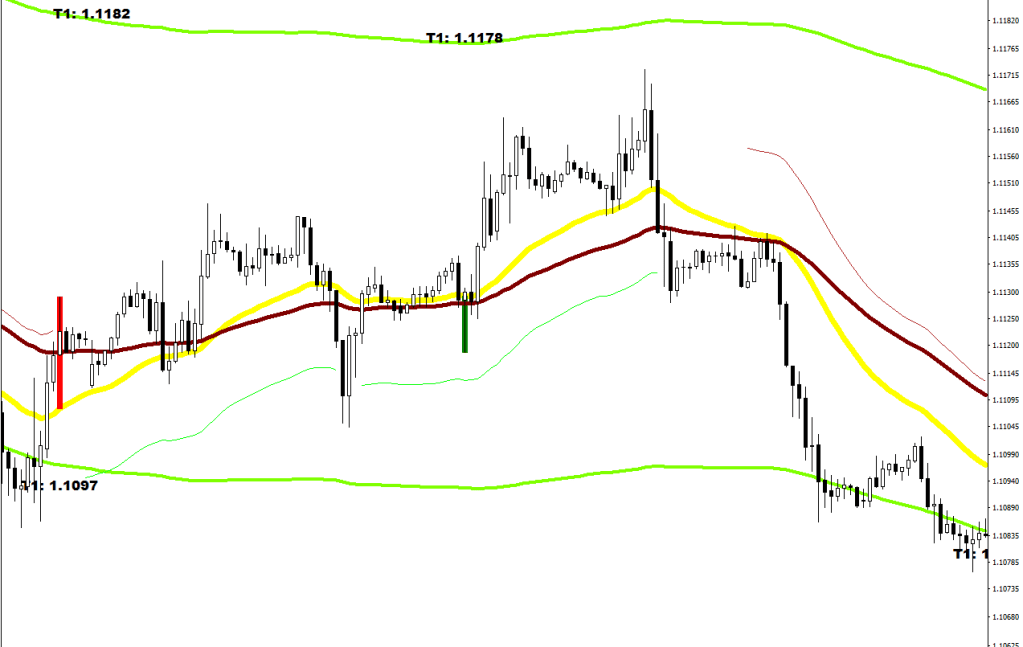
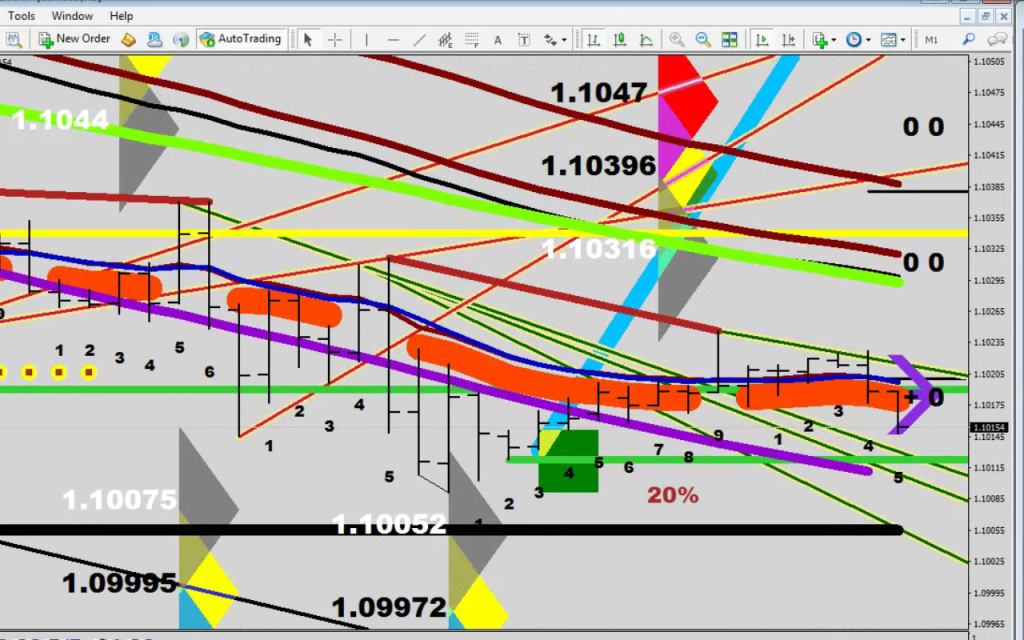
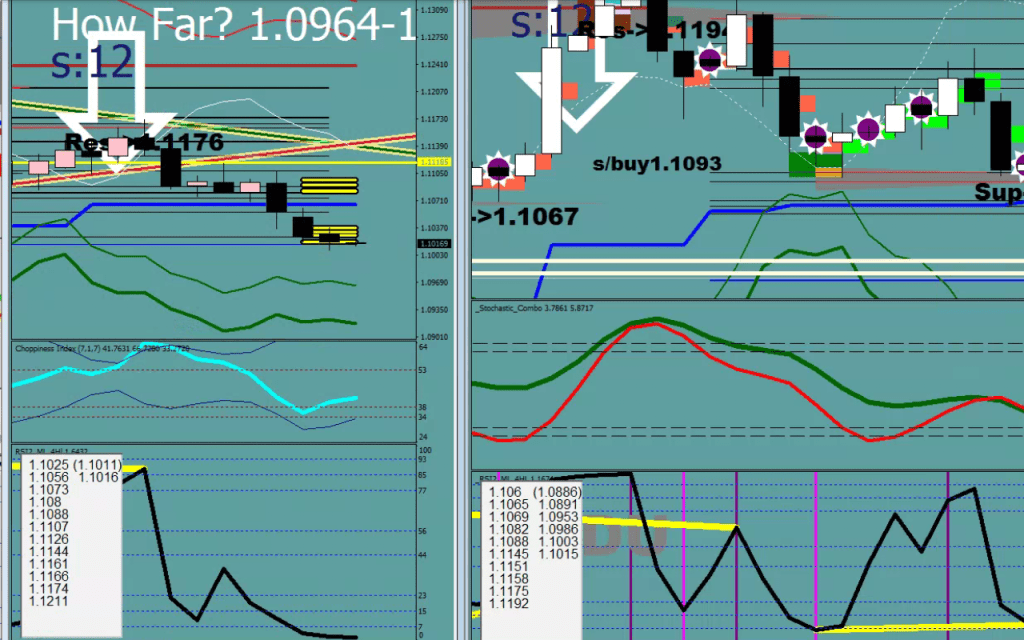
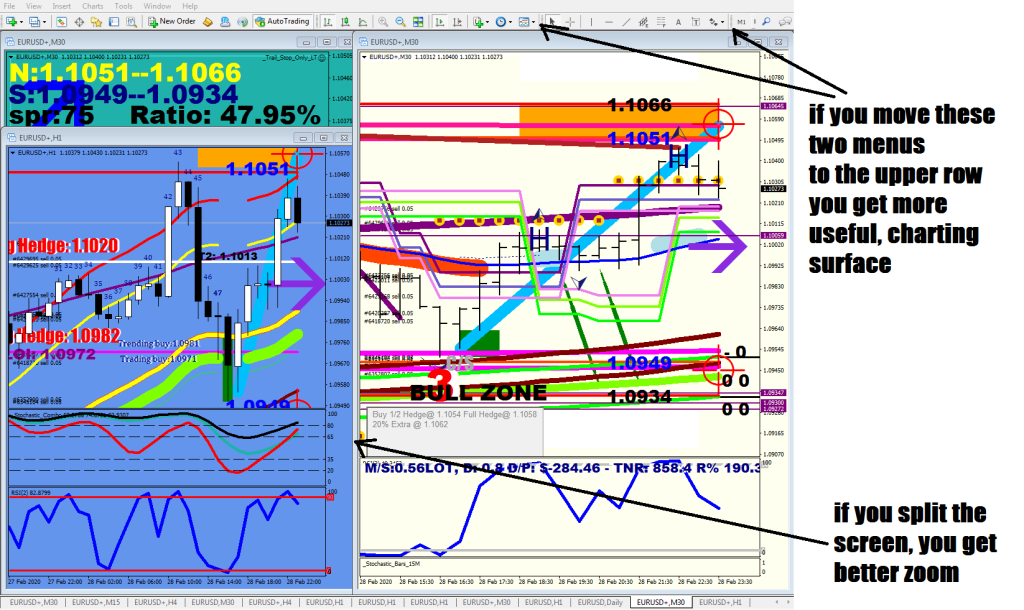
The image shows configuration ideas.
That’s all for now,

The one size fits all is the furthest thing from my thinking.
I have traded Natual Gas, Stocks, ETFs, Futures, weekly options and a number of Forex pairs, and I know that they have nothing in common.
I try to capitalize on my familiarity with EUR/USD as well as its way below 1 pip cost. I specialize.
I don’t care for anybody’s models that I have no understanding of. I invent mine.

Here you can see on one chart what it would eventually lead to if you are trying to hedge apples with oranges. There was a good documentary online, but cant’ find it now.

Long-Term Capital Management

Nick, 


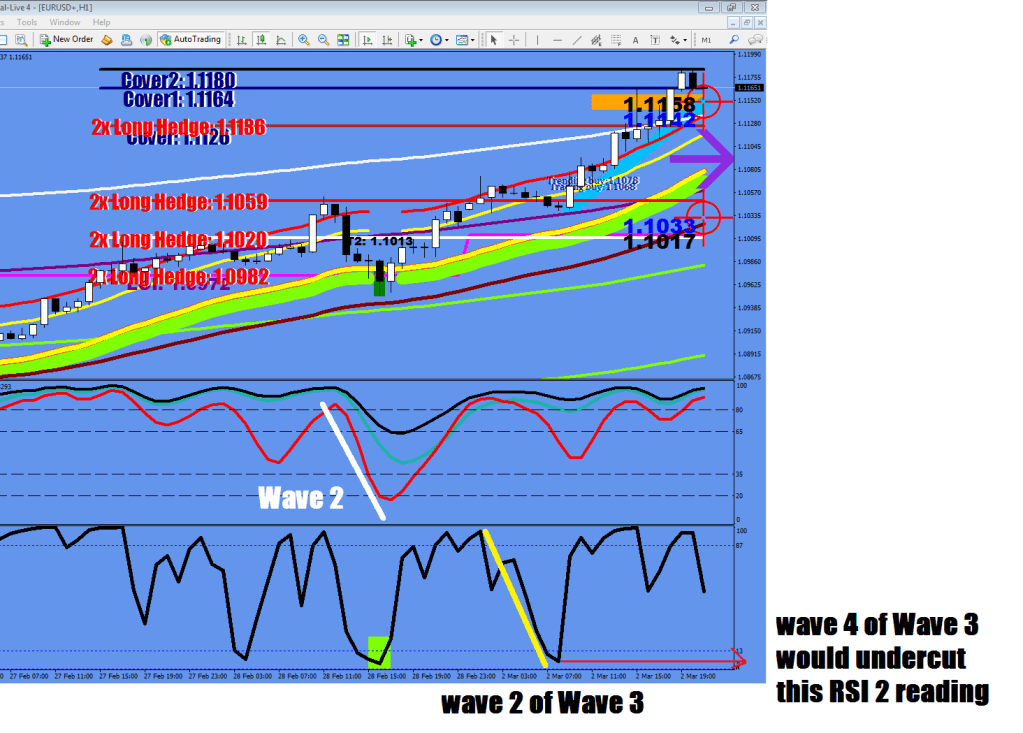
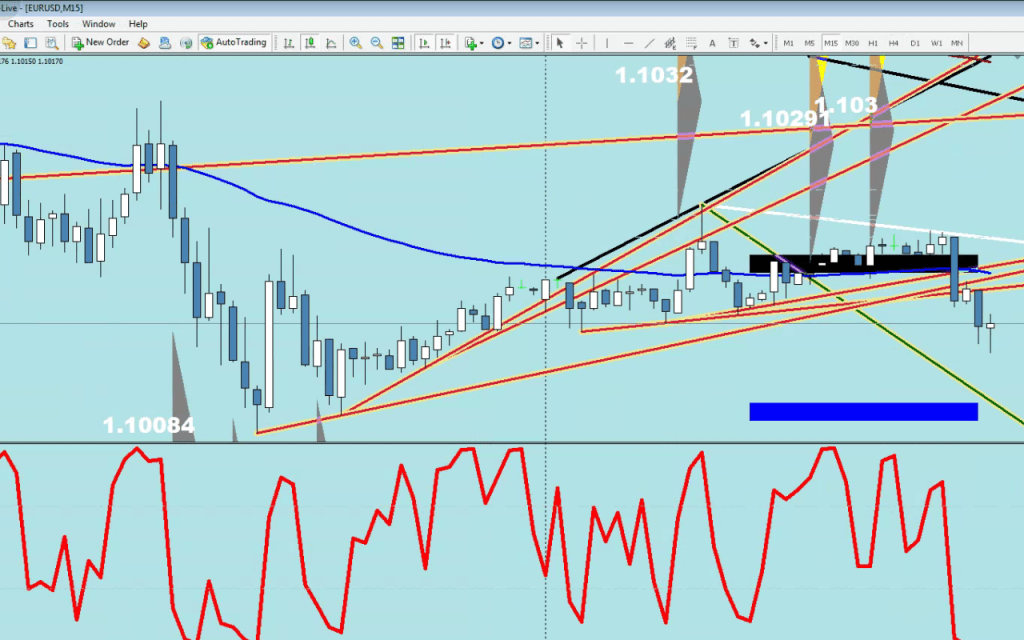
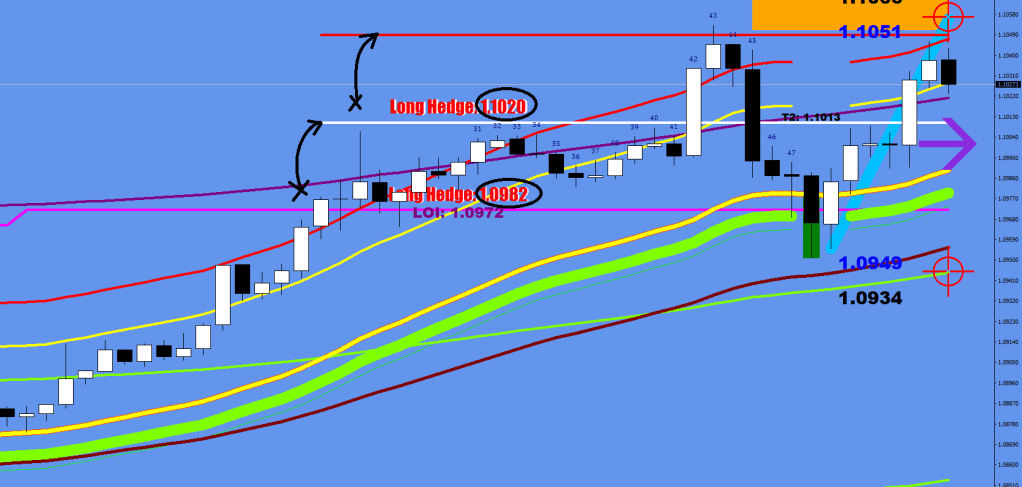
Try to get this concept of Wave 5 making a beat over Wave 3.
Price stops progressing at the end of Wave 3. Inertia carries it a bit further on a back test, but the size of the beat rarely exceeds 16 pips or 1/2 fluctuation size.
So, when you see a Wave 4 print with the lower low on RSI, you know what is about to happen, and have an approximate expectation of where price is likely to fail moving any further.Picture the 3 above the last swing high and add 16 pips.
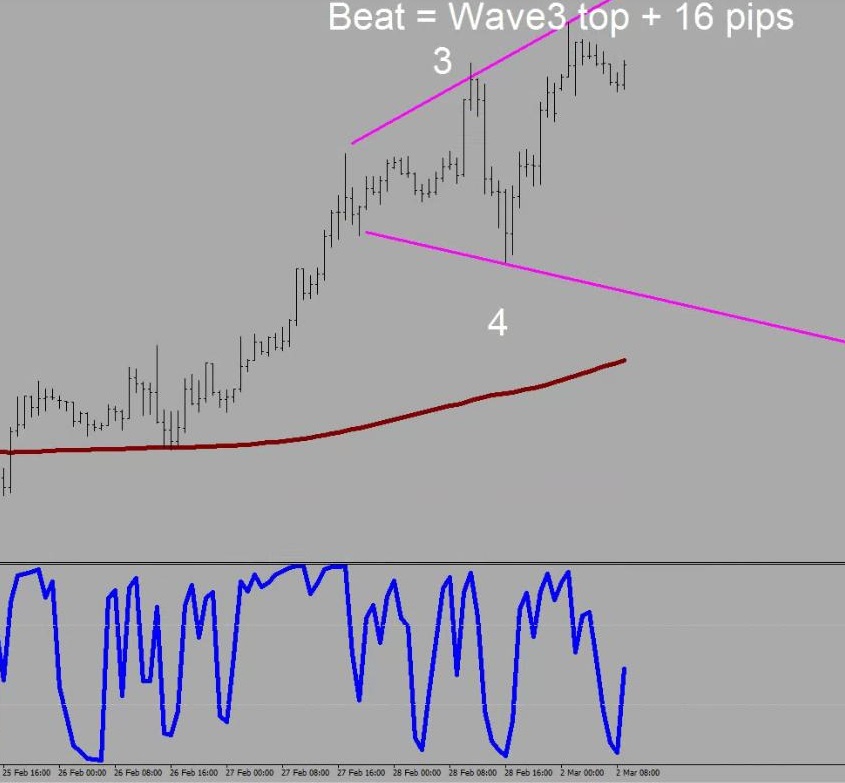
Look at your 15 minute chart and identify the measuring leg, the divergent leg and the beat that make up wave 5.

Also check the exhaustion print on the daily CI with 7,1,7 settings. Exhaustion + beat = turn
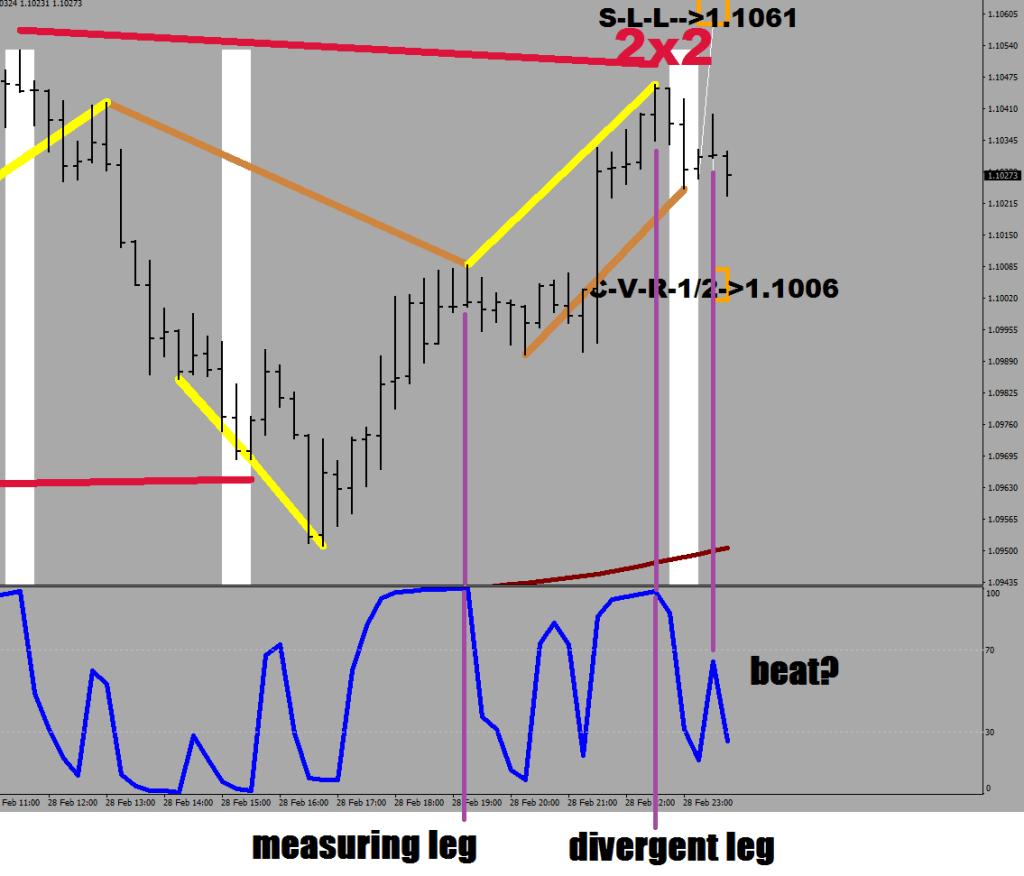
Remember what I said when you have a wave 3 and wave 4 printed, how to estimate the target?
There are 16, 26, and 36-pips beats. 16, is the most common, 26 is the second.
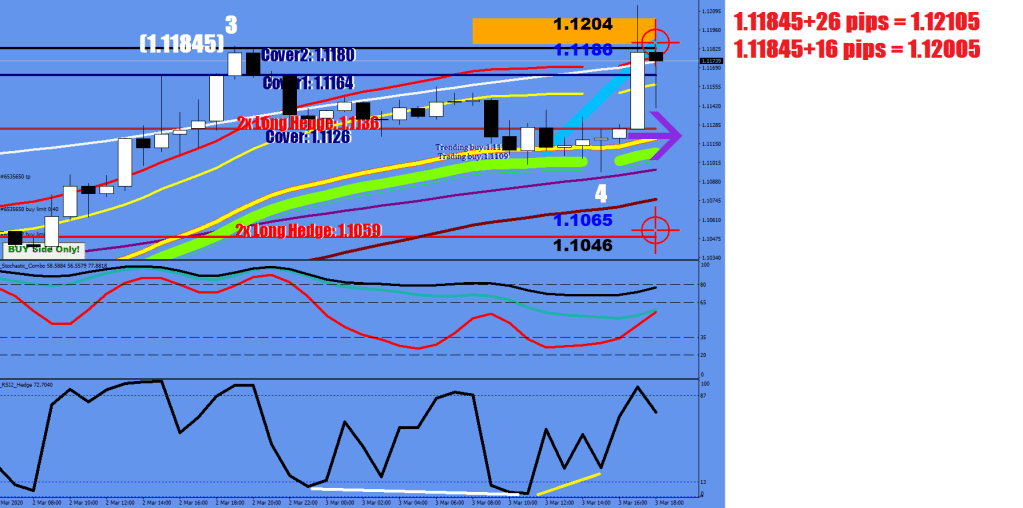
1st of March, 2020

Remember the date when I answered the question you did not know you had.

How I did it was trading the question:

(What’s the answer to) “The Life, The Universe and Everything” and simplified to “Trading”.
It took Deep Mind a decade to come up with the answer.

Would had gone faster if only I had more rest.

So, the answer to trading is that it does not start with levels or percentages.

It starts with hedging. Once you have hedging figured out, you have everything figured out (this one took me 3 years).

There are 3 kinds of hedges

  1. Roll out hedge
  2. Proactive hedge
  3. Reactive hedge

#1

Refer back to my “A Working Market Model” article to understand the basis of the roll out hedge, which I called the Level Of Interest. The idea is to have a field of moratorium beyond the level, which is either the LOI or its shift by n times Fluctuation Maximum, where the hedge would get initiated. To make up for lost ground, the hedge’s size would be rather large – I would suggest 2x the holding size. The Exit level is a hit or getting very close to the next extension-limit level. Rinse and repeat: place the pending roll out before closing down the current hedge. This kind of hedging requires knowing the instrument’s fluctuation size.

#2

Proactive hedging happens with the consideration of the Hourly music (refer to the market model again) and a print of an RSI extreme in the wrong direction. Proactive hedging calls should be held back based upon failing the LOI. Hourly RSI2 hook-back could be utilized for the purpose. Size suggestion: 150% of the net holdings in the wrong direction and exits are the ones mentioned under #1 as well as the trending exits (thin red lines).

I would suggest using a trail stop at Mr. Maroon after a 5+ pip hourly print separation from it.

#3

Reactive hedge is a reaction to margin percent dropping to low. Refer to my Ratio-hedging related articles on the subject.

Over leveraging / miscalculation should bring on this Equal size hedge.

Once the apples are balanced out with the anti apples, after a deep breath you can start trading in the right direction with the right entries and exits like the whole burden did not even exist, just don’t forget to remove those positions’ targets and stops and make them exempt from auto cropping / trailing etc.

You must leave this entanglement on until you encounter an LOI, where you can take off one side – just don’t forget to put out the pending roll out hedge first (with its suggested size).

No pictures for this one.

Roll out hedge & levels

A Working Market Model

So, EUR/USD is trending. The price of the Euro is being adjusted down.

This is one of the rare occasions, when the Energy Bands get exceeded.

What works?

1. The understanding of where is the mean

2. The understanding, that the channels are parallel with the mean.

3. That there is a 1x and a 3x stretch condition from the mean that are of high importance.

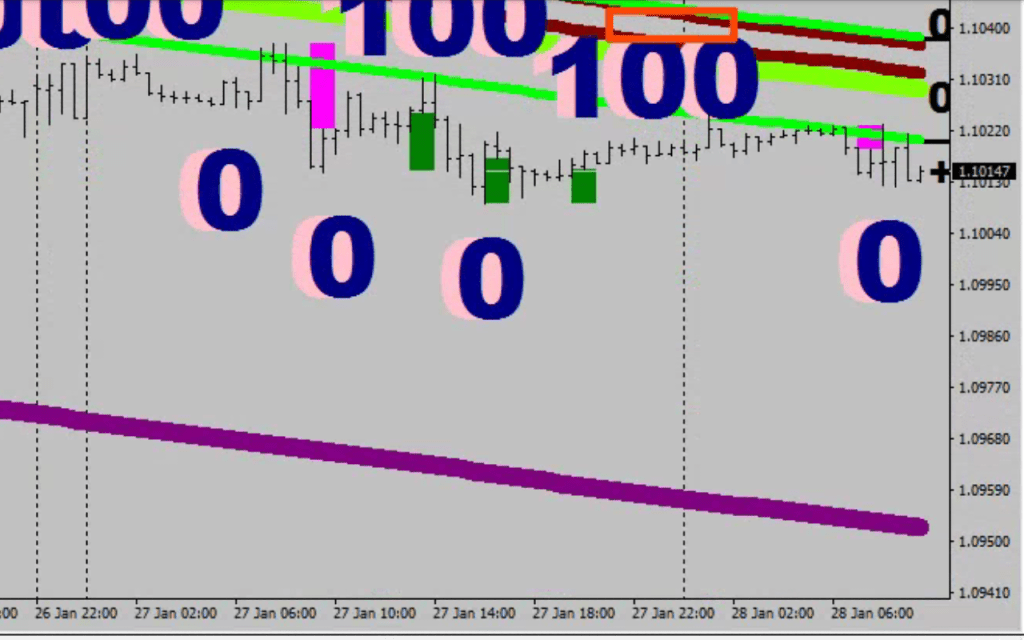
The mean is the High and the Low of the 207 EMA on the 1H. Plotted below nowhere, but both the guard rails in green and the purple brains haze lines are measured from it.

Your directional entry is always the same: the other side of the Yellow E32 lone with an RSI 2 read fizzling out.

The music is a 60 period stochastic signal line with 3 slowing. That produces the thin lines with 1/2 fluctuation distance away from E32 (kind of a warning – stop loss nearby – things are about to change) trend following lines.

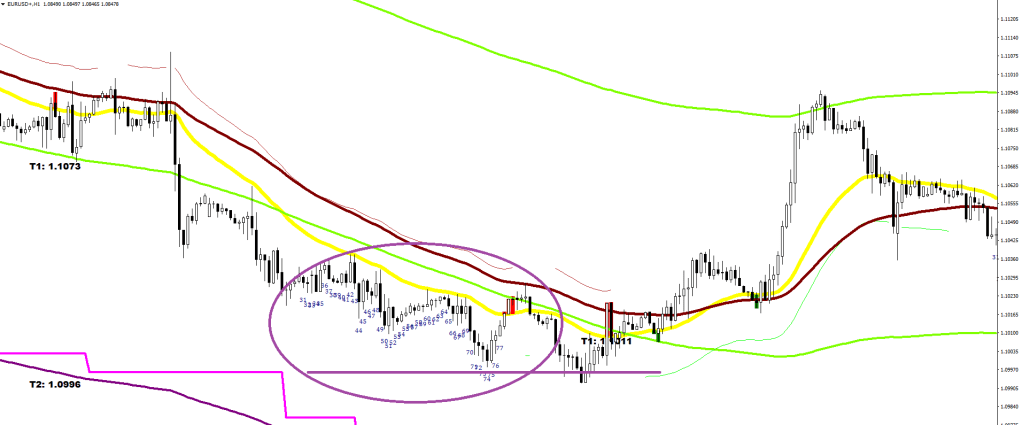
As for the exits, which may end up becoming the very level the market turns at, they are derived from the location of the channel lines at the time of the invocation. Some hold out helps at times. I already added a 8-sample delay to get a visual reference.

Look how the encounter with the upper guard rail printed the lower high.
This high did not even make it to the guard. The music changed when a consolidation was carried out below Mr. Maroon (in Maroon – E67).

The first channeling move down ended after a period of no entry calls by price not being able to surpass E32, and the last purple projection was the level of interest. The next lower high was the touch of the upper guard rail. The area was at hand from the green invocation boxes and the corresponding T1 prints.

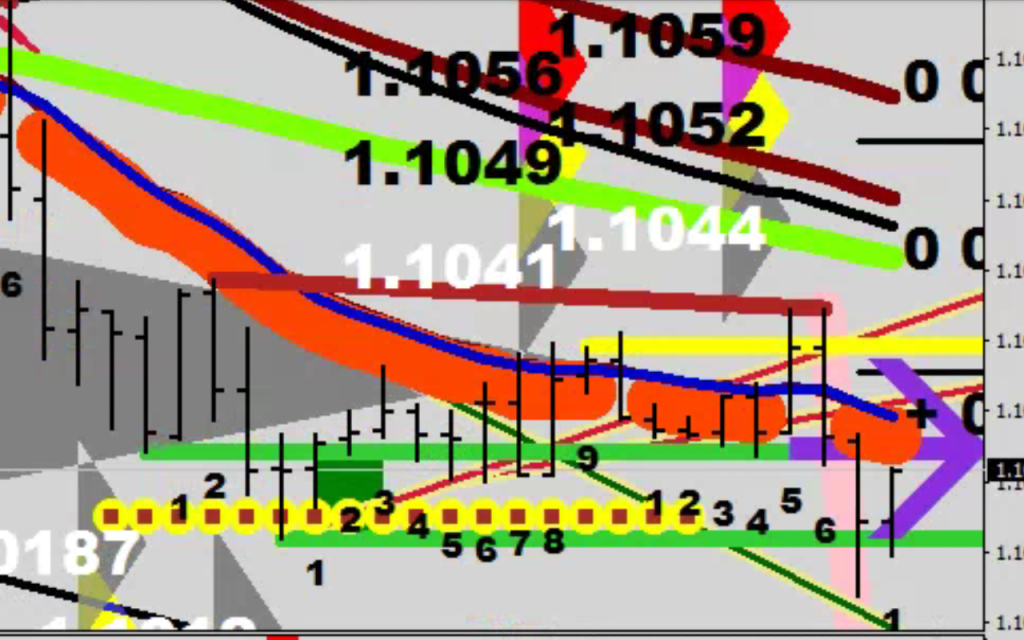
The second channeling down is the prolonged down move between the green and the purple. Load above E32, unload below the encounter with a T2. Rinse and repeat. When the magenta line got exceeded – that was the end of a Wave 3 to the downside: price went too far.

Not that Wave 4 was a major move back up, it was more of a flat, time waste for a re-consolidation before the last move down. Wave 5 also had a separation section where price could not get back above E-32, and the level of interest was again the last invocation prior to this.

Wave 1 up was exceeding Mr. Maroon and Wave 2 pulled back did not result in a lower low – your subtle changes. Wave 1 of Wave 3 up exceeded Mr. Maroon again, and wave 2 of Wave 3 pulled back just beyond E32 for the perfect wave 3 of Wave 3 long entry.

The first touch of Mr. Maroon was a sign of strength to which the response was dumping shorts resulting in a lower low.

Now, you have seen a mean reversion and a wave 4 of Wave 3 was printing into the close.

Since I used Histograms for the shadings, I had to make an indicator pair.

Where to Buy and Where to Sell are available if you would care donate something for them. Name your price to

macdulio at yahoo.com

They are not for every instrument under the sky, but were made with the knowledge and understanding of EUR/USD fluctuation distances. I tend to throw in some perks as well.

New function added: The Below Counter (to understand which line to extend and the overall wave structure)

& above counter as well to keep things symmetrical

Level Of Interest (LOI) added

Angel Eyes

– I think his idea was that I’d kill you.

– …when I’m paid, I always follow my job through.

  if (Close[i+1]>E16[i+1] && RSI2[i+1]>94 && RSI2[i]<=RSI2[i+1] && Close[i+5]<E16[i+5] && Close[i+10]<E16[i+10]  && High[i+1]<(iHi5[i+1]+iLo5[i+1])/2){
      ObjectCreate("Toof"+i,OBJ_TEXT, 0, Time[i], Open[i]-10*Point);
      ObjectSetText("Toof"+i, "Sell: "+NormalizeDouble(Open[i],4), 23, "Impact", clrNavy);
        ObjectCreate("Toofy"+i,OBJ_TEXT, 0, Time[i], LowBuffer4[i]-10*Point);
      ObjectSetText("Toofy"+i, "T: "+NormalizeDouble(LowBuffer4[i]-50*Point,4), 23, "Impact", clrNavy);
         }  

From

Follow Up Article

Backtest of Angel Eyes Trader (as seen in my YouTube video)

Isotope (off beat)

Opening my Open Letters to OpenAI

When Elon says, it would be a good idea to hire those with exceptional achievements, he must not mean musicians and creative artists, for they are not going to contribute much to self driving; we have to be specific if we want progress.


Now that we found data, what are we gonna do with it?

One problem is that human thinking never really left the kindergarten level of “this is like that”. I know, because I never went to kindergarten.AI would have to implement all human limitations, the superstitions, the urban legends, the beliefs, religious paradoxes, for this is what we are, these are things that we co-exist with and live by. We must include not only the stars, but the horoscopes. Wanting to find correlations has its dangers. An example is when a chart of those died of being tangled In bed sheets and the cheese consumption chart seems eerily similar. A coincidence can become extremely damaging when algorithms start enforcing the selling in Corona (the company) based on the attention the word gets in the online media (thanks to a virus outbreak with the same name), for human lives may depend on fiscal losses (reputation, credibility included).

How do you store and restore values? In the future, when a picture shows the Amazon from space, a boat load of descriptions would need to be enclosed, saying that this is the River System in on the South American continent on Planet Earth, in our galaxy, and not a delivery center from Seattle.Who’s an ethical programmer, who’s values are in line with the majority and could be represented in decisions, and who is in the majority at all? Not everything is comparable, yet we want a yes or a no at the end of every question. How do you define “maybe” for an AI in a satisfactory manner? Superposition sounds fancy and futuristic, but can it answer the problem?We have dilemmas like all people are equal, but some are more equal than others. Can you weed out the “eye for an eye” logic? No, I don’t want to bring up the example of the unavoidable car crash where the AI has to de decide between sacrificing your life or five other people in the oncoming vehicle, but the problem is responsibility. It always will be. Playing God, playing Big Brother. 
I called myself Melon Husk in my latest book, the Computer Aided Trading, so I should ask: who would be teaching humor to AI? It seems there is a need for a philosopher-comedian after all.I.e. “the erection of giant metal phalloses and their ejection / their penetration to space is the Space-seX”. Come on, don’t tell me you did not get this one!

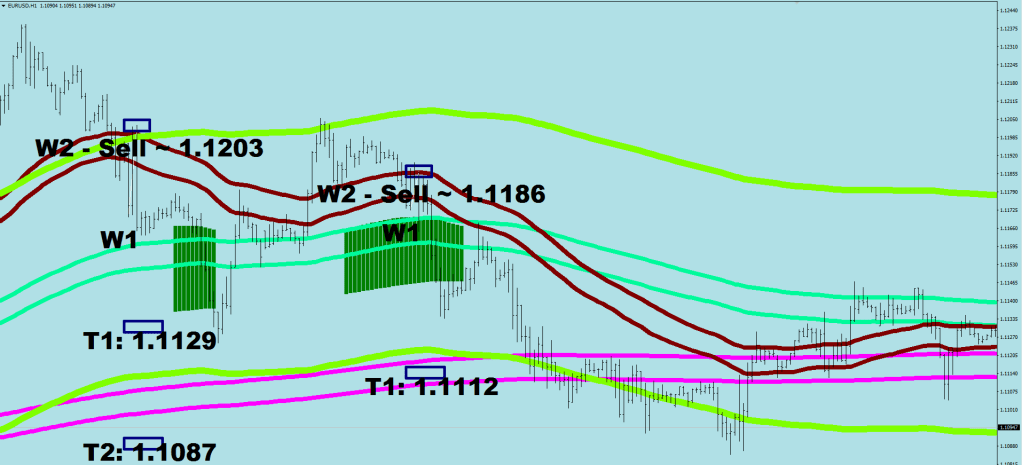
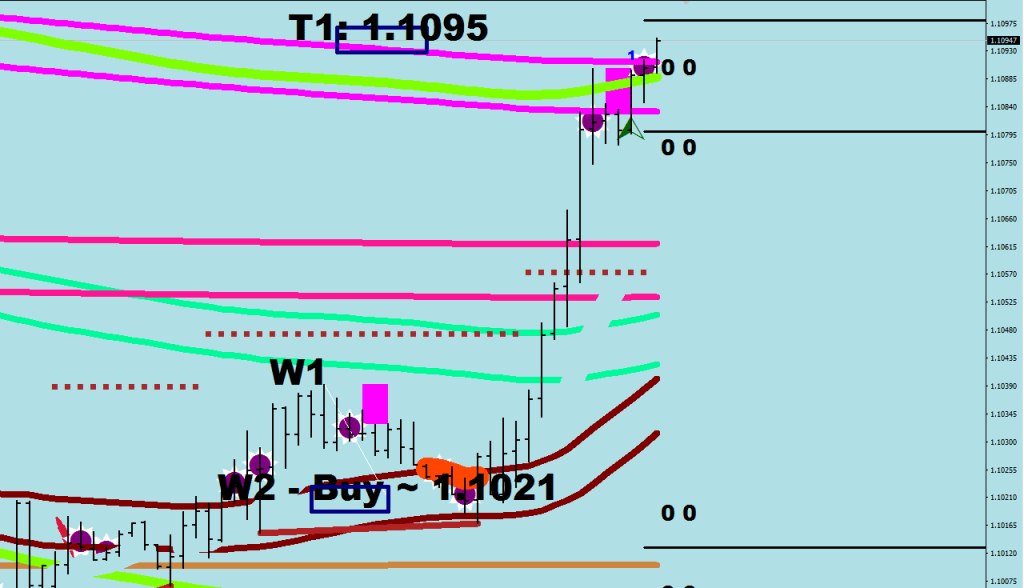
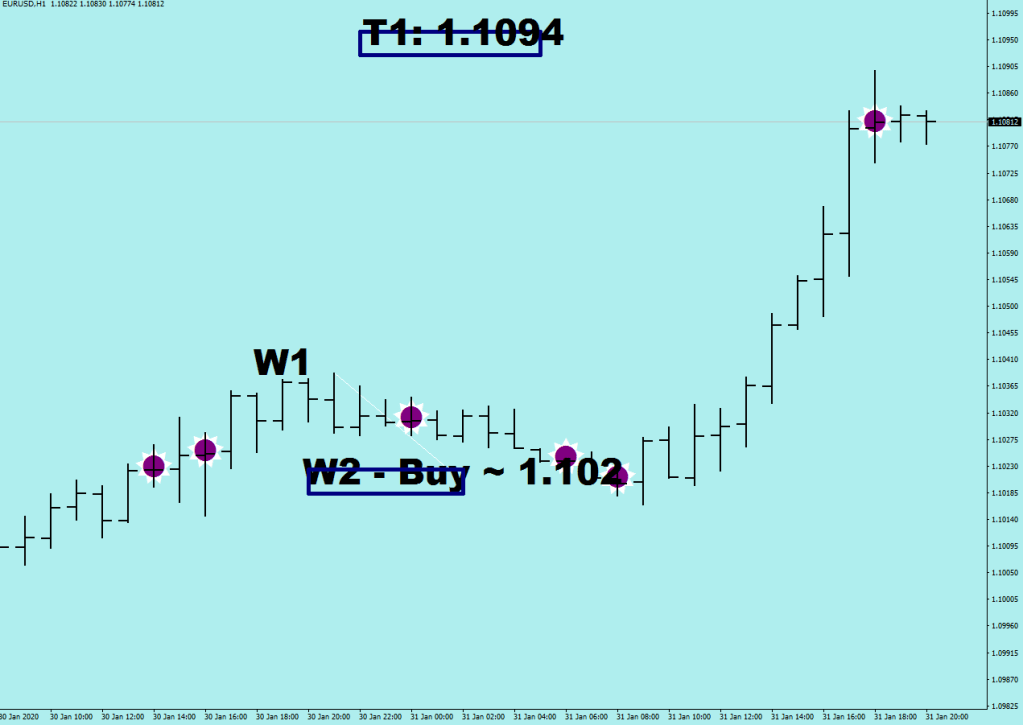
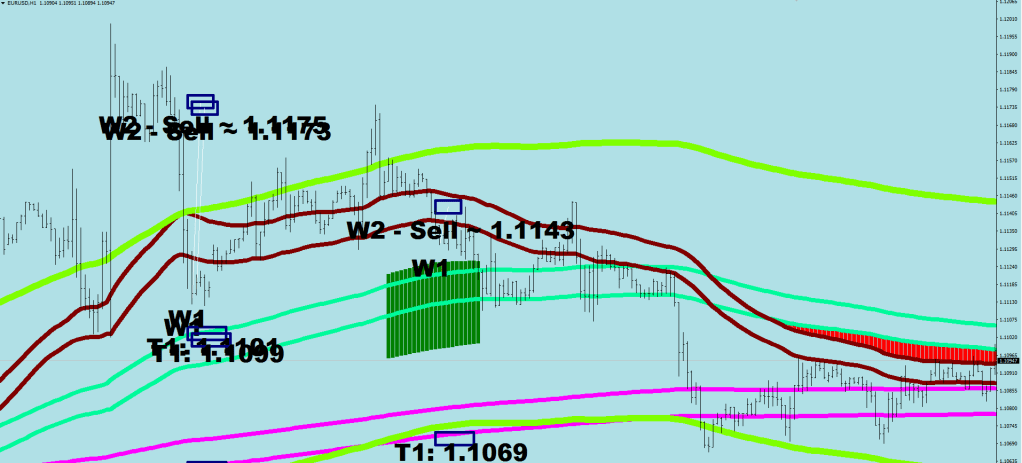
Wave 2 Finder Examples

There were no other calls on the buffer’s sample size.

It was made for EUR/USD, knowing its characteristics, its fluctuation size.

The program plots on a 1-hour chart

  • W1 for the end of a Wave 1 suspect
  • a W2 Buy / Sell with a value and a blue box and a white line towards
  • a T1 (target 1) with a blue box
  • a T2 (target 2) with a blue box

The moving averages are just for reference (additional program used: Lema 1H)

Works on any broker including IC Markets, Vantage, Darwinex, Purple trader, Squared Direct – just to name a few.

Get a copy a Wave 2 finder.EX4 for $7.99

Paypal to Macdulio att yahoo.com

Whatever you do…

Do not fade a Wave 3!

This is the number one lesson in trading.

Need I say how important it is to get the wave count right?

I myself counted this up move as a wave 3 (of Wave 5), but not as a Wave 3.

The difference is that I closed out all of my longs at the mean and called it a day, missing out on 1/2 of my potential gains and making merely 7.5% this week.

The problem is that I am Mr. Wave 2, and I managed to mess up the count while I have already made an algorithm (an indicator, and I never called an indicator an algorithm before, but this one is a beyond eloquent solution) back in July, last year.

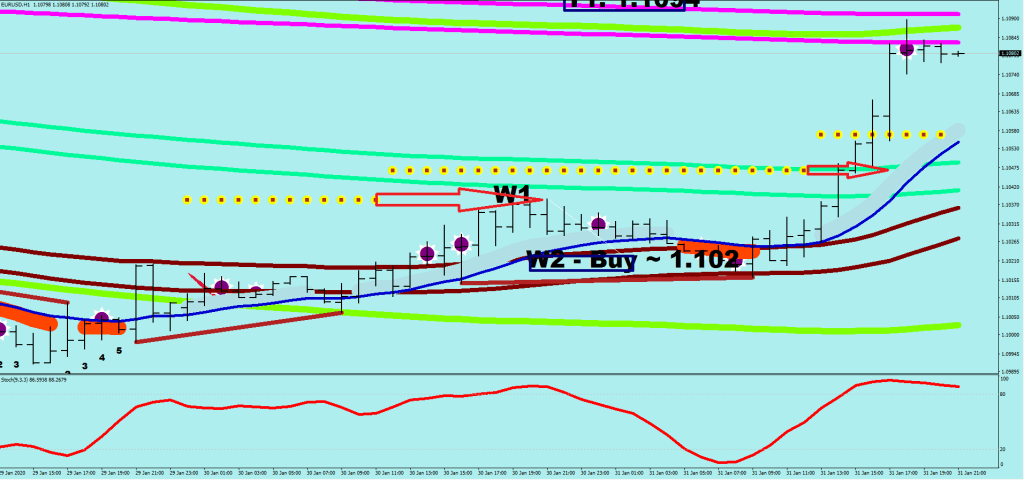
In fact, if I were only paying a bit of attention to one of my charts, I could had spotted this easily:

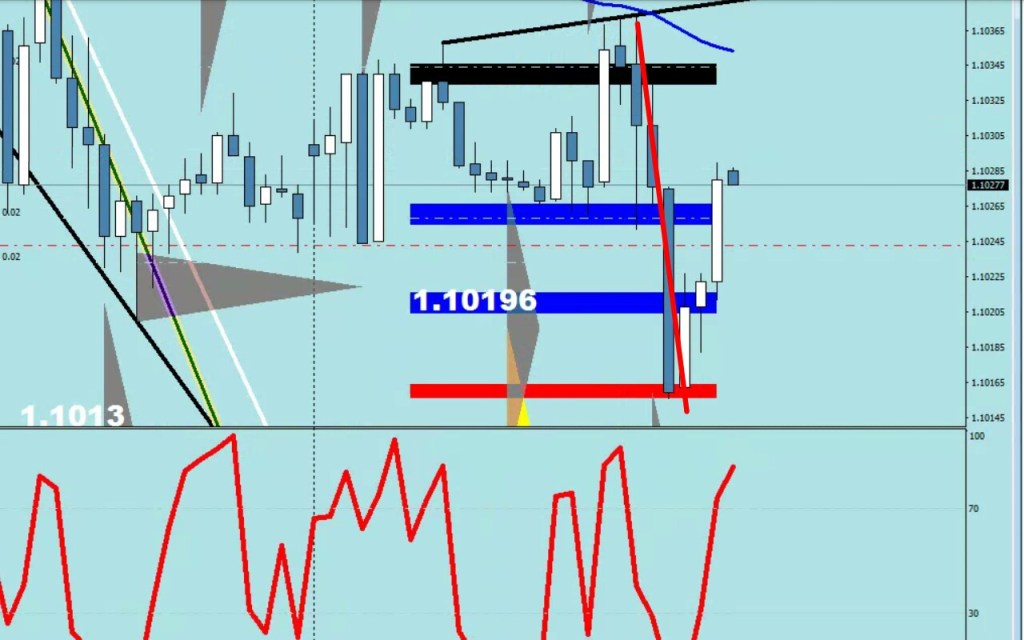
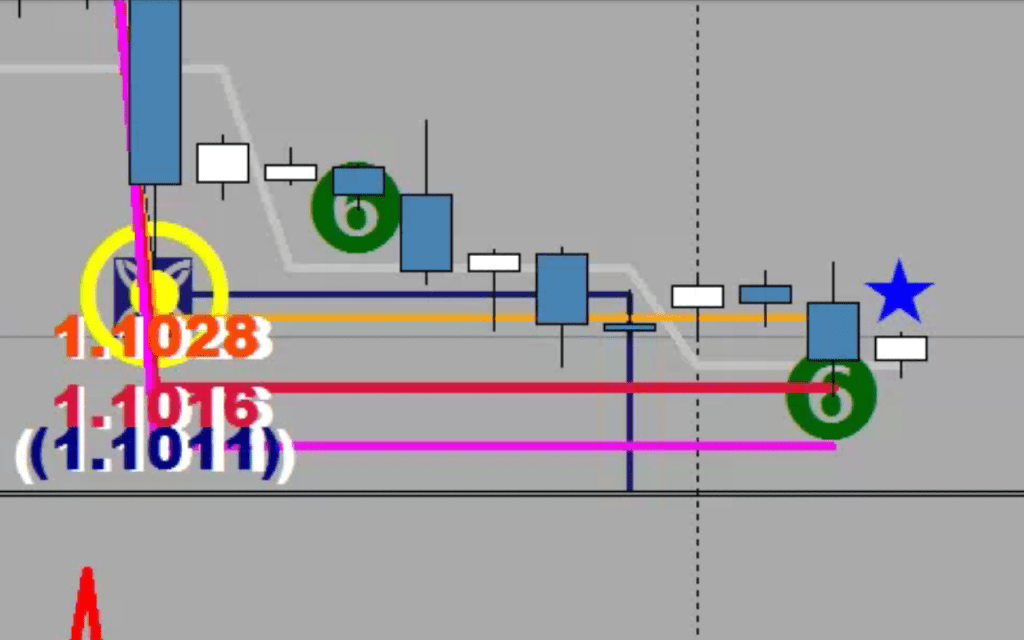
(the actual low was 1.10165, but remember, you want to get a fill)

Imagine how much money you could had made with this sure shot call that counts back two dojis, factors in a 4-pip dip and tells you where the Wave 3 could fizzle out, leveraging you a guaranteed 70 pips in a matter of 10 hours from your fill.

Now comes the lesson about the difference between a Wave 1 and a Wave 3.

There are only two resistance zones that are capable of turning back an impulsive wave structure.

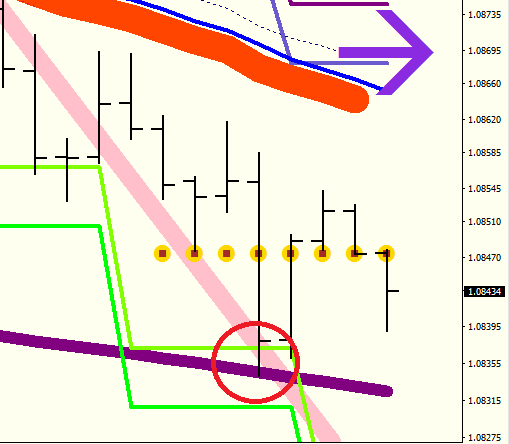
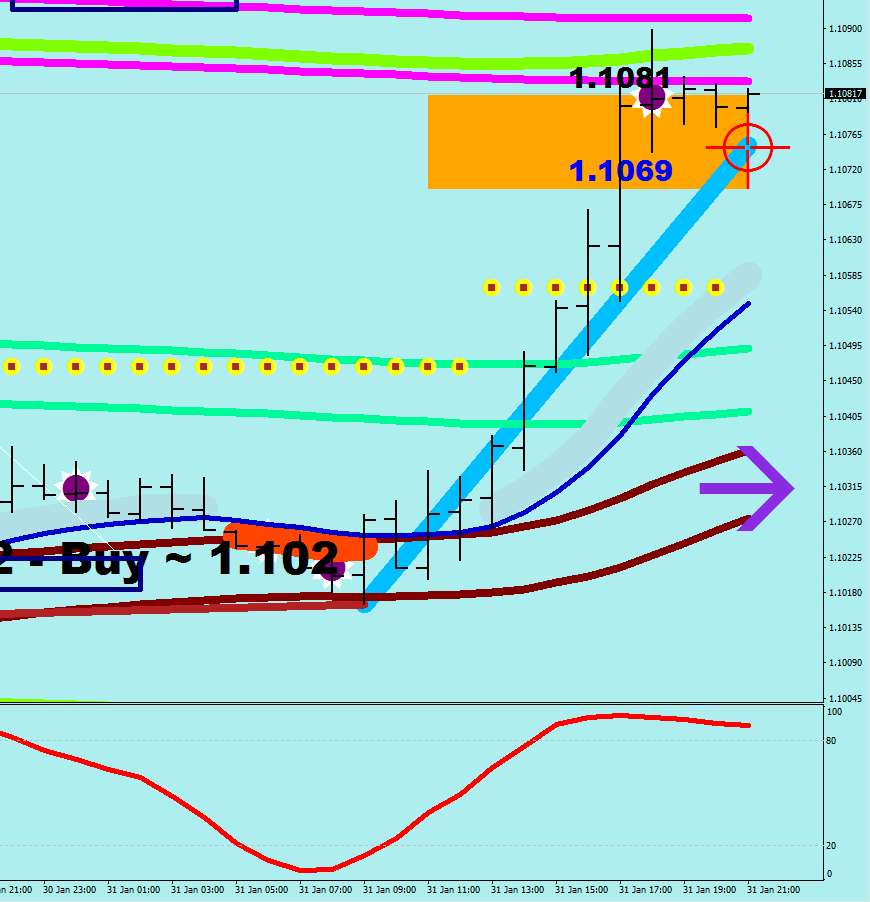
The Fluctuation Maximum or Sound Barrier (Brownies) are measured from the last swing low / swing high from the other side of E-16 (in blue).

This image shows W1 failing to take out the last sound barrier, while Wave 3 managing to overcome it and even use it as a spring board.
The second resistance zone for a Wave 3 would be the far end of the daily fuel limit (in orange) and a bit beyond (+9 pips or so).

If you want to get better in getting the wave count right, start plotting a 9-sample stoch D on the hourly.

…now I need to get back to my train of thought trying to figure out why don’t some plots appear on Darwinex with the same version of MT4, and why my croppers remain idle without any errors.

A new section is in works on the blog marketing all software assets at real cheap and as a lead up I have a video planned around the Full Lambda Auto trend lines that should blow the lid off most people. See you soon!

Wave 1 Failure

Meet the Market Maker, keeper of the bridge (Mr. Maroon).

He has one question for you.

What is your favourite colour?

If you, Mr. Wave 1 answer this right, then he’ll say: fine, off you go – this is market making at its finest.

Now what happens when you are on an exuberant quest, and you happen to answer:

Blue! No, the red. And maybe gold too.

You would of course be swung back to where you started your quest from.

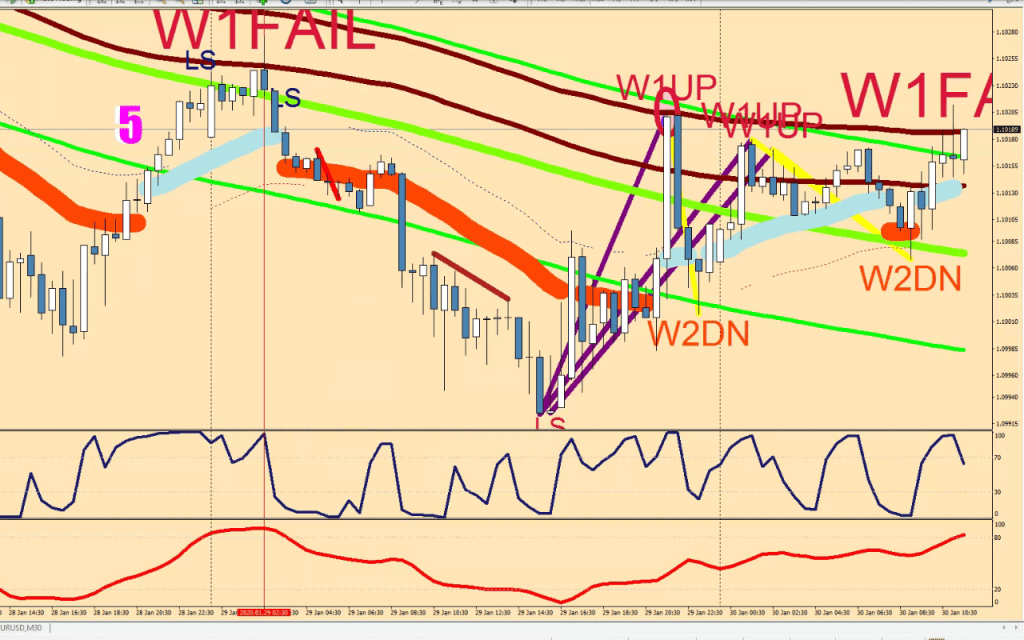
I know I called this a Wave 2 failure at first. I was wrong.

What happened was that the Wave 1 failed by becoming much too overbought much too soon (60-sample stochastic D).

So, applying the necessary corrections, the reality goes like this.

(the last yellow line is wave 4 of Wave 1 up, the first W2 marker was wave 2 of Wave 1 up – as per my current read.

Follow Up Article

We left off yesterday in Bear Zone 1 with a Red Tail and a new lower low finishing off the Primary wave structure.

Now the Bulls have done exactly diddly squat with their 9 hours, so we can call Time Up on them and look to ride the Secondary wave structure lower.

The volatility whip that came out of the lower low should had provided the base for a Wave 1 up. It didn’t. The second high expanded the range a bit, but by less than 5 pips, so it is a failure. 9-10 pips would had been a break out.

There is an abyss below, and it is the path of least resistance, so what is the holdup?

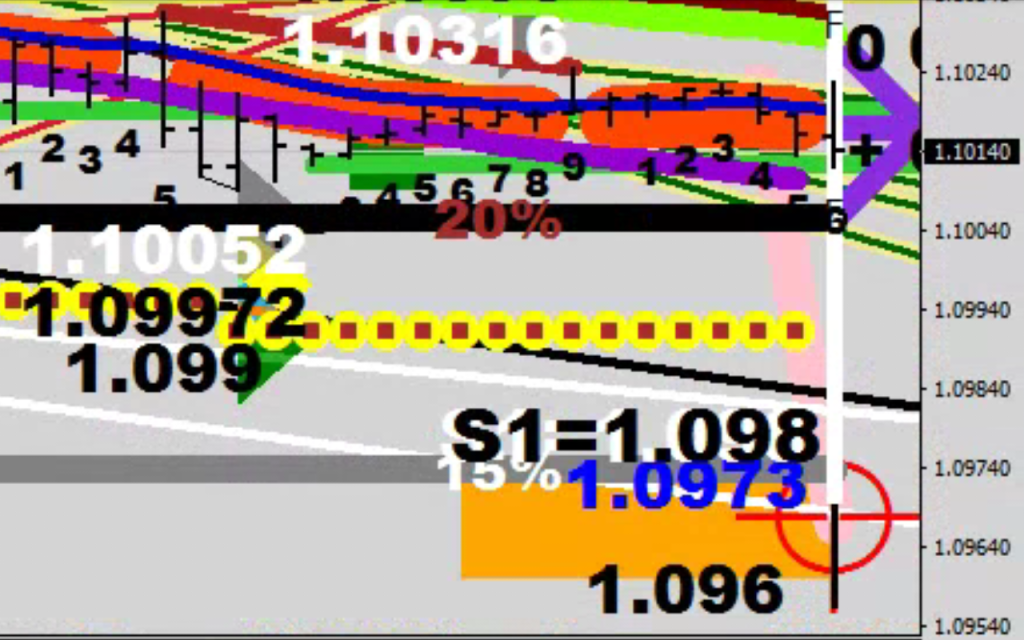
The energy bands would allow price to make a B-line to 1.0964 and then some.
The “support” levels are in the right column of the white boards.
Daily fuel limit reaches into the low sixties.
The hourly energy just got consolidated, and the 15% comfort level is very close to the top of the Orange box.

The problem is that there is no root. You would need to see a continuation divergence for the kick start of the next wave structure down.

You would ideally want to see a rally falling shy of the marked high whilst RSI2 becoming more overbought and falling shy of the descending Mr. Maroon if possible. Right around the thick green Lower Guard Rail.

I hope you listened well and understand why I picked that high: Mr. Maroon tipped his hat.

In conclusion I would be scaling into shorts from 1.1028 and stop shorting before 1.1031 and would feel utterly dumb if the Market Makers let this rally slide through Mr. Maroon and throw all passengers off board.

If for some reason there would be a lower low first, fade that (refer to the support levels), and add to your shorts upon breaking the low if the perceived higher high (the short entry) would get printed.

The ultimate target would be the 3x stretch limit, the purple haze, from where a Mean reversion would be likely.

Trading Decisions

Trading Decisions should be made with factoring in

  1. The zone price is engaged with
  2. The wave structure

1) is the top priority for it is easy to often think that a Wave structure had ended.
Your best friends are the Guard rails and the hourly count-up to know when you must hedge/ take action for a continuation is due.

Bear Zone was engaged by two hourly lows below the Lower Guard Rail (in Green).
The count up started from the fresh lower low. When the count reached 9, and the bulls failed to make a Wave 1 up by reaching the Market Maker stronghold (Mr. Maroon), you had the continuation sell level on your screen (the highest open / close of those 9 bars & beyond).
A hint of a last leg starting is crossing back over E-16 (in blue) briefly.

2) To pin point a wave 5 of a Wave 5, you need to be constantly looking for the ending wave, which is
a) gonna end with a 22-sample (30 min) higher high / lower low
b) it would not hurt if you could point out a high octane burn that I refer to as Red tail for a confirmation (30 minute again)

The Red tail is a 1.5 hr or so long burn (3, max 4 candles long swing on the 30-min). Now, with the fresh lower low there is 9 hours of Fore given to the bulls when they get to try to make a Wave 1 up. This time it should be different.

To answer the riddle I posted on LinkedIn, the next number was -16.

The Red Line is a 16-pip displacement of the last swing low. This being merely at a 1/2 fluctuation distance away is a no-break extension / break out failure.

Nobody won anything.