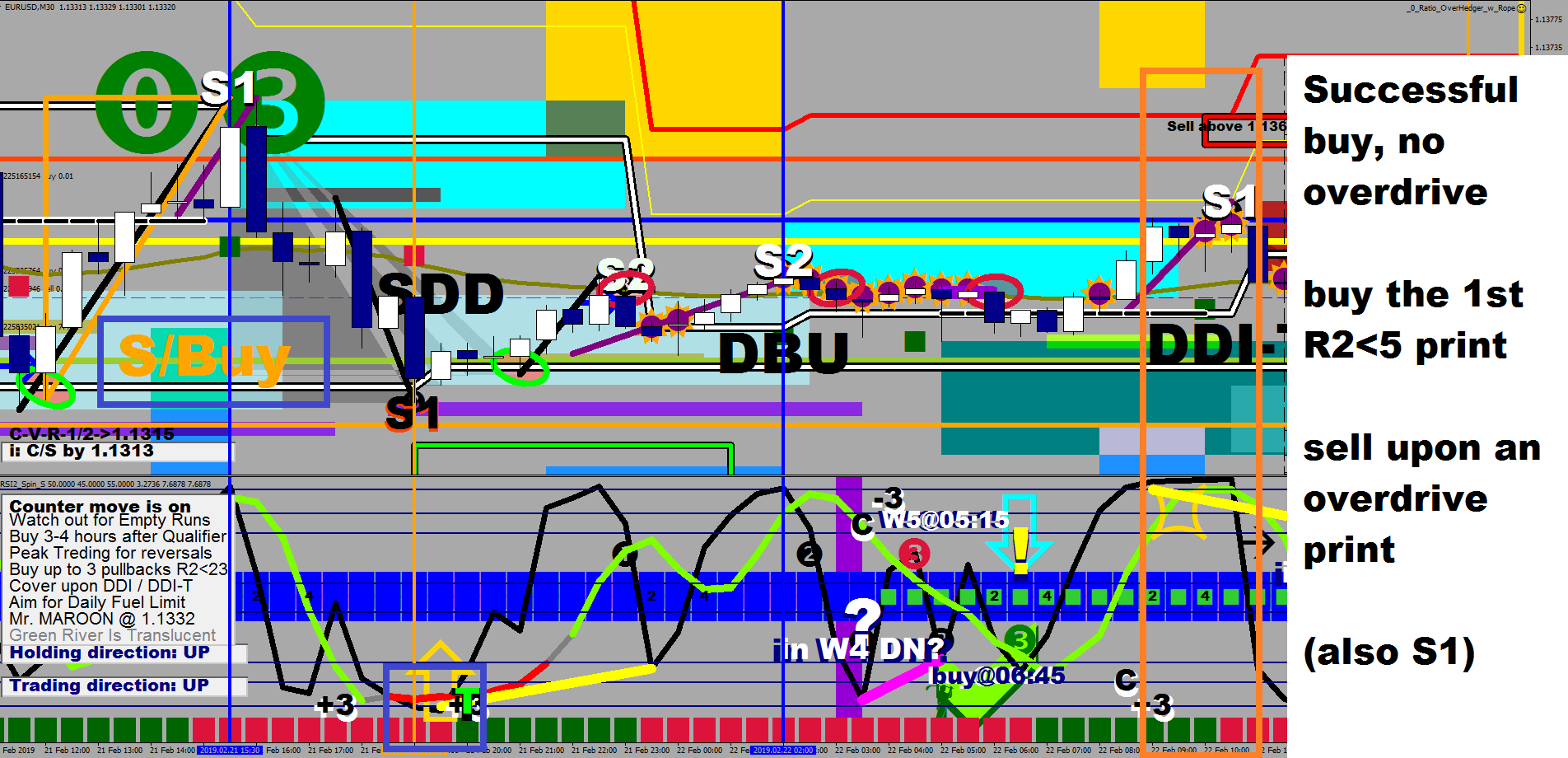
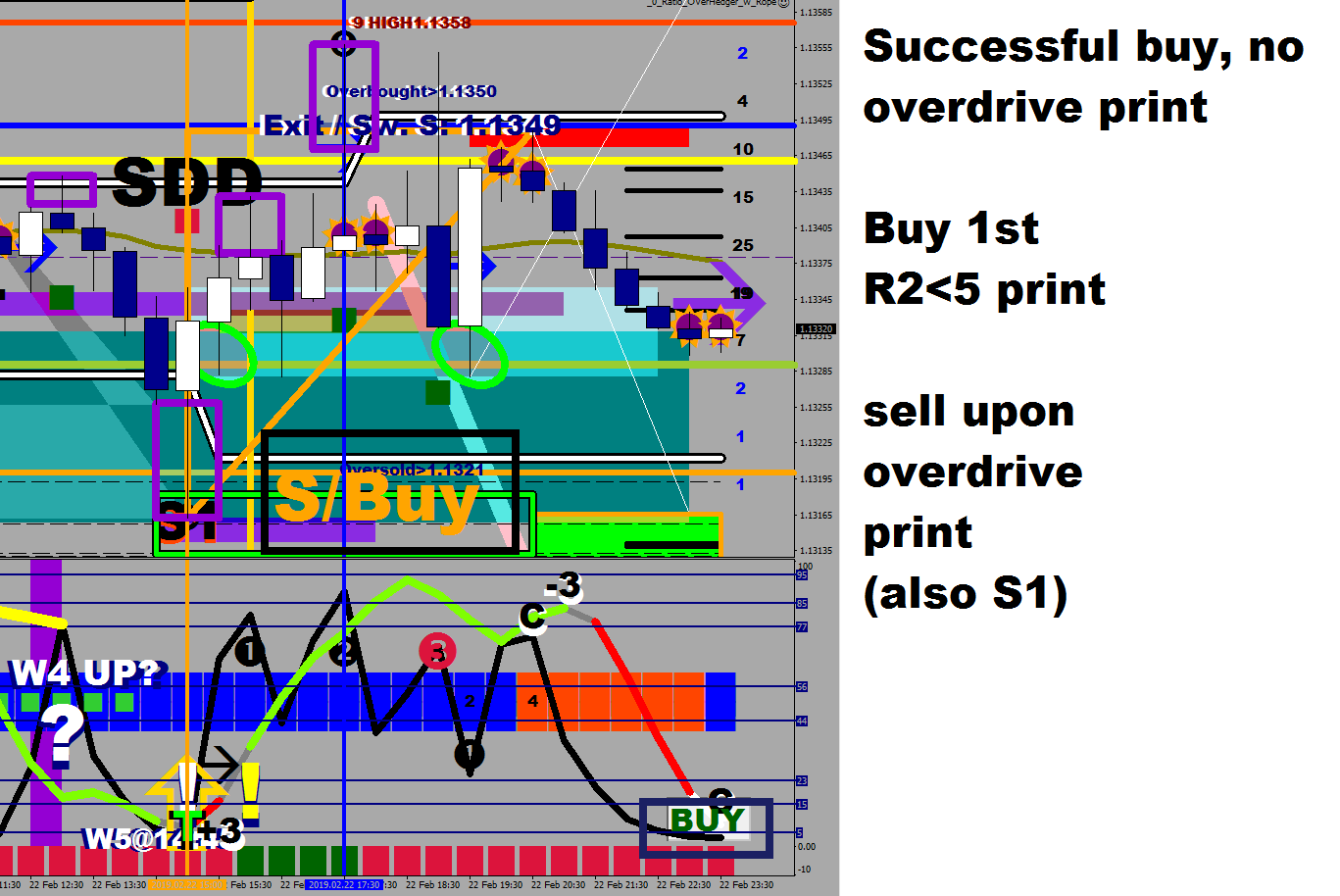
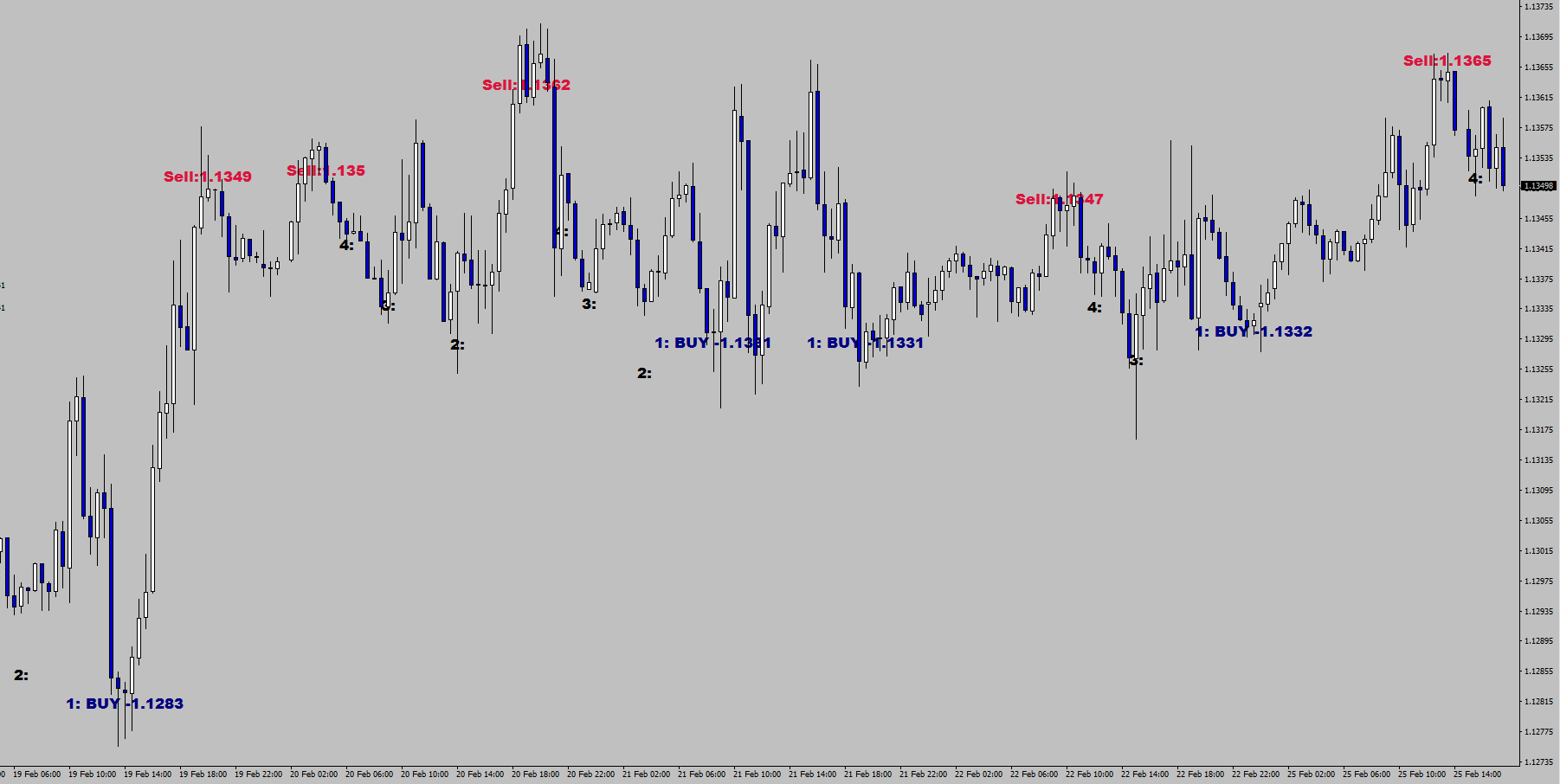
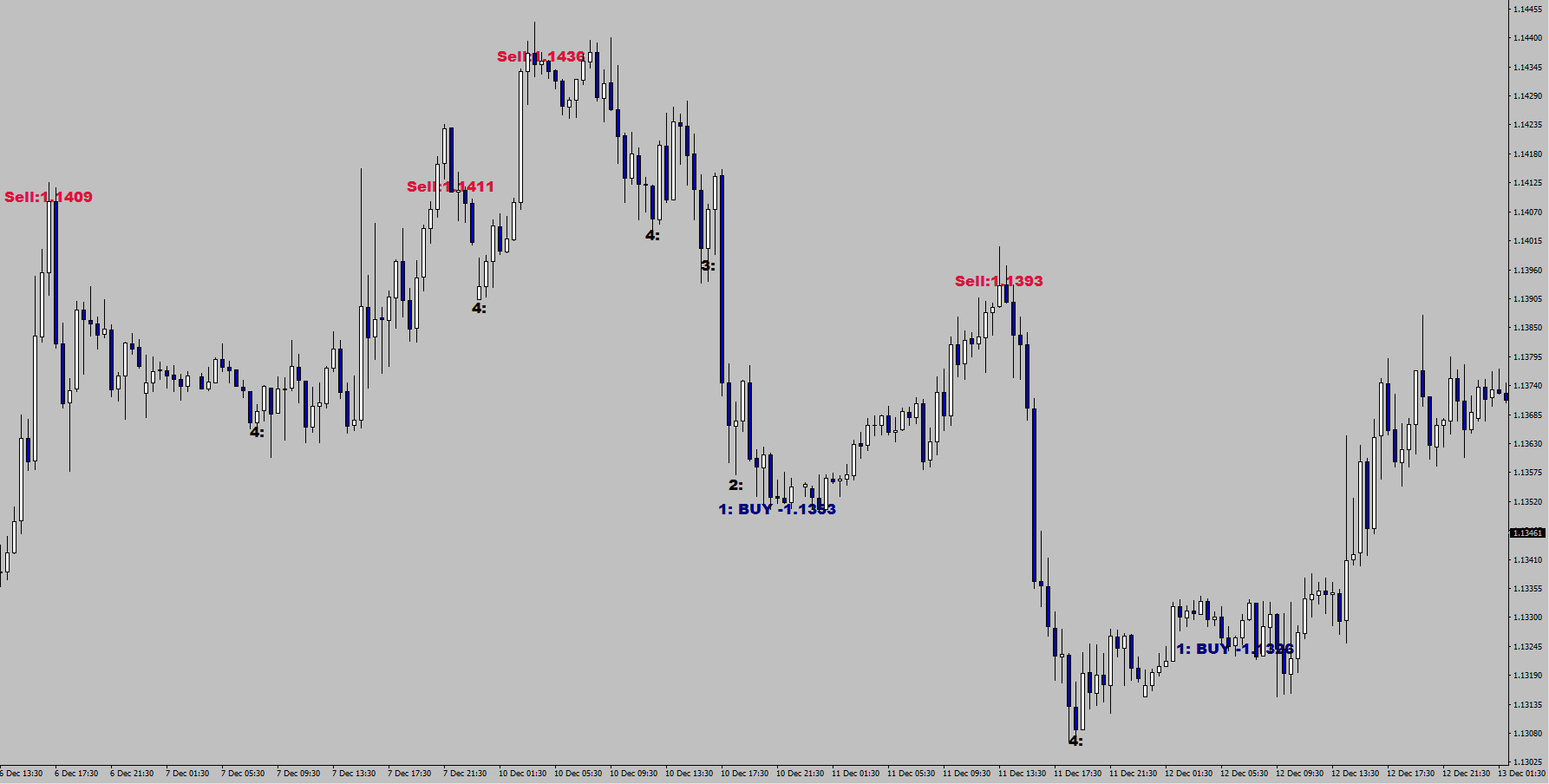
Wishing on a Star (the EA)

First, a shout out to all the LinkedIn peeps. If you are one of those, posting easy to forge cell phone statements, chances are, that I already unfollowed you. I suggest others do the same. It is lame, it is unprofessional and you are swimming in the same water as all the scammers – so, stop it!

Back to business.

About the algo development

Let’s get this straight: there is no holy grail, there is not a single EA in the world that can do it all, that can perform well in all the 3 different kind of markets, there is simply no “one size fits all”.

If someone starts a sentence by saying: “My Algorithm”, I can only think that you are an amateur, a green horn, so I’m begging you, please start using the phrase: “This particular algorithm of mine” instead. Better, now I might listen to what you have to say.

There is a reason that I am running 5-30 EAs at once on a single account depending on the type of the market. To be able to claim anything in algo development one should have made hundreds of them, like I did.

One last bit here: an on screen indicator in my opinion does not fall under algorithms, they may be the basis for them, but an algo should perform some kind of an action related to a trading order. I have been making indicators for a decade, but only started making auto trading routines three years ago. These routines seldom ever plot anything on the screen. I don’t call everything that has a plus or a minus somewhere an algorithm, and neither should you.

What is the world’s first EVO-5 EA made of?

It is a 4-in one routine with features used for the very first time.

The whole thing starts with a carefully selected bunch of triggers.

I combined the Wishing on a Star indicators signals with the RSI sharpies, added volume change triggers, invented counters and factored in other failure possibilities.

Evolution 1 & 2

This is my first time to use a volume change trigger in any EA, and you do not need to know all traded volume to find a change. The sheer complexity of the trigger categorization would be hard to follow for a human brain, this is truly an artificial intelligence.

Evolution 3 & 5

The trigger conditions not merely initiate and close positions, but they serve as stop loss adjusters or the basis of in house hedging.

Evolution 5

The EA is equipped with several cropping lines i.e. Golf Cropper and Star Cropper.

So, the question becomes, if this routine can and does it all, is this the holy grail? No. It is only expected to perform well in 2 out of the 3 market types. I would not run it in a no edge market.

Would I say now the sentence “My algorithm”? No. I would still run it with at least 2 other routines simultaneously: a ratio hedger (just in case) and a smart trail stop.

Too much talk? Show the test already?!

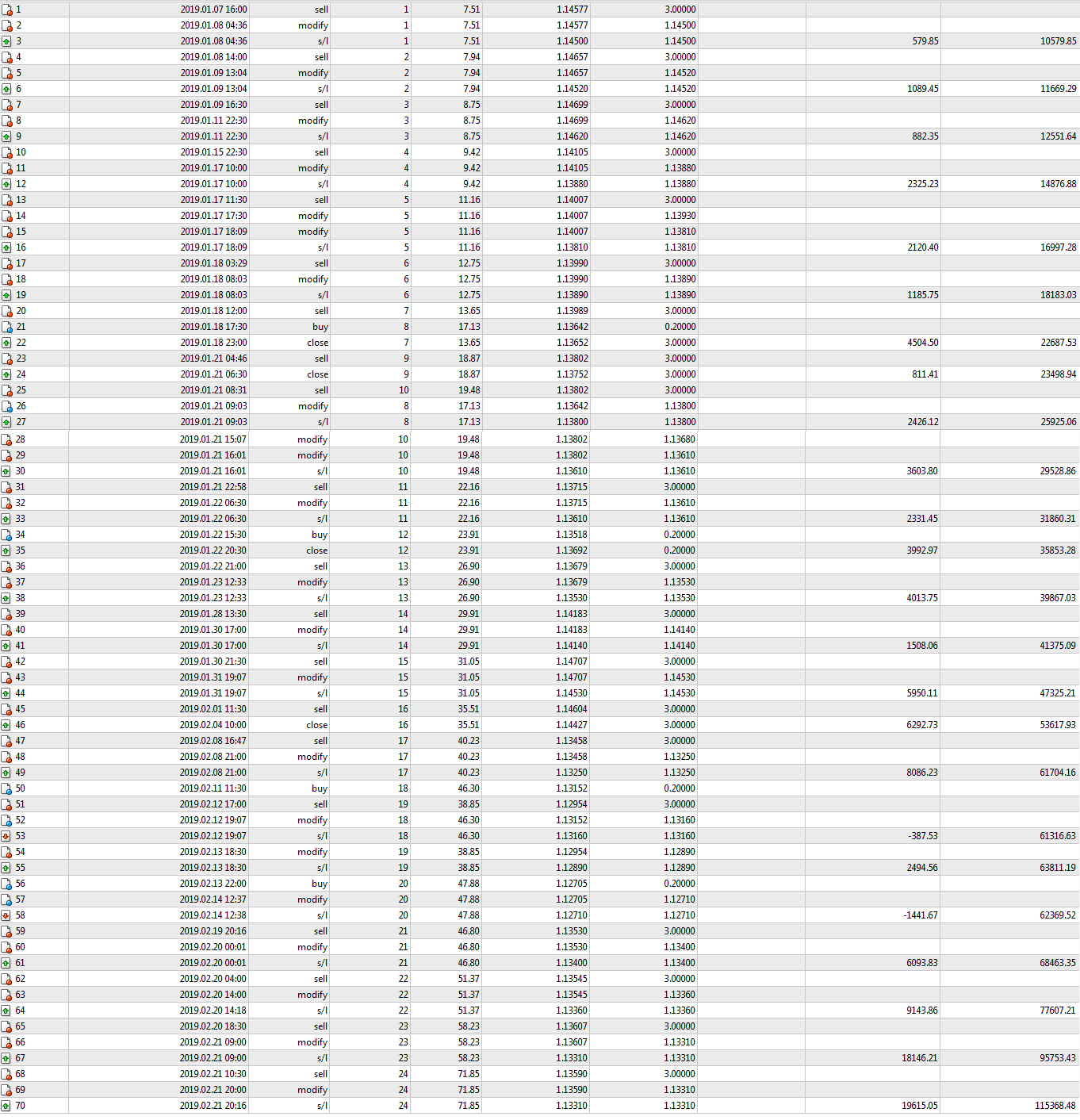
Well, here it is…

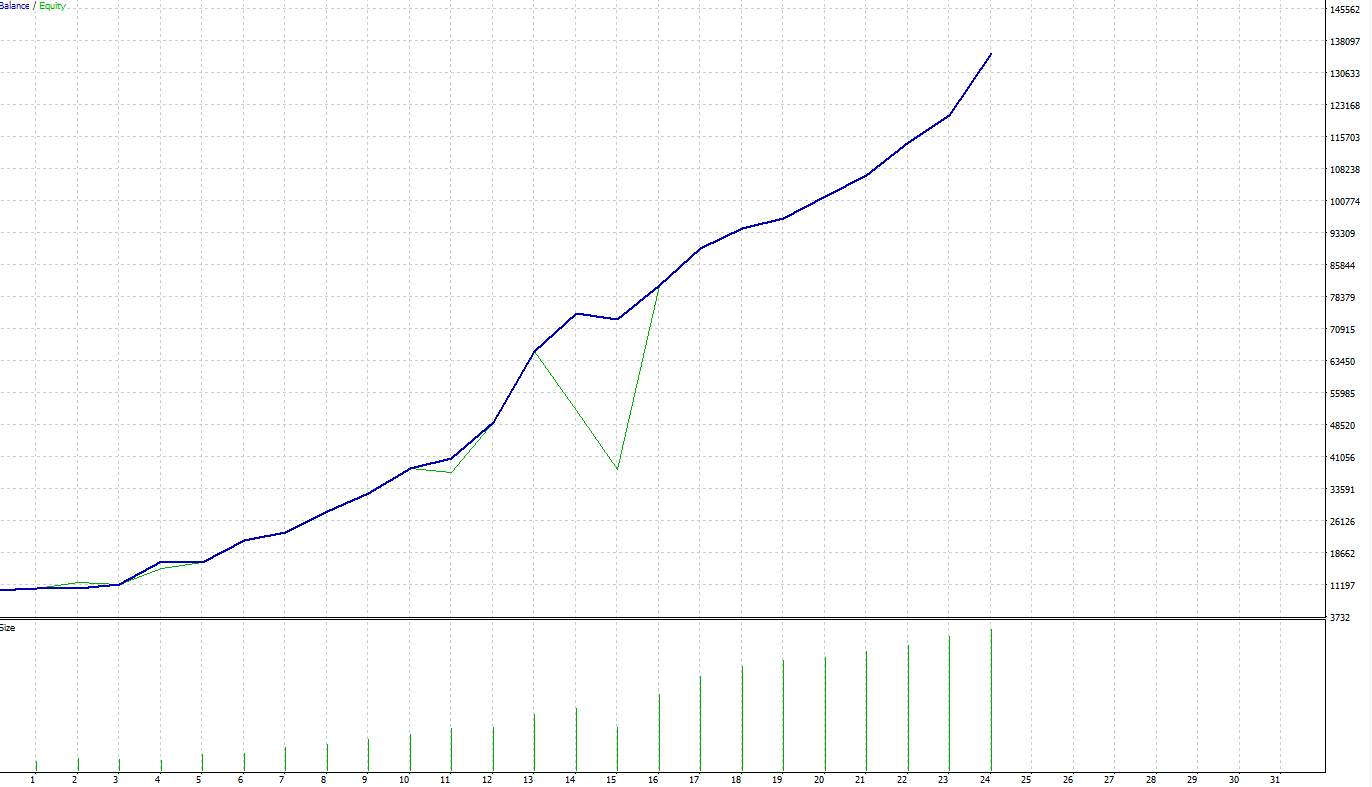
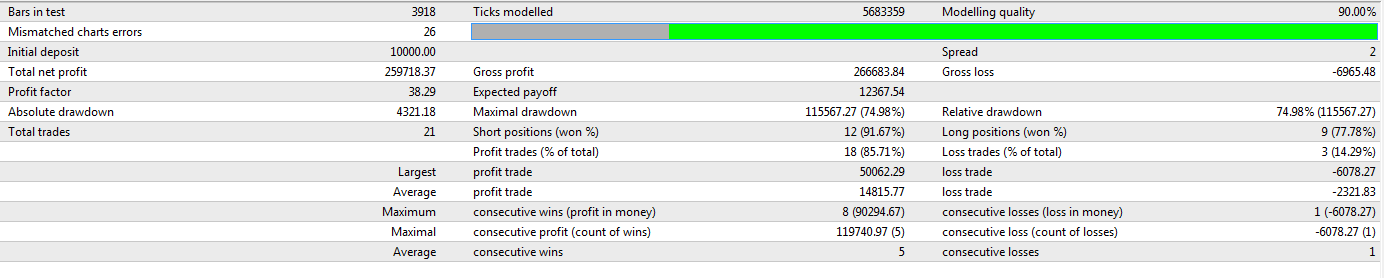
Remember, you are looking at a routine that does not apply stop losses at the open, and yet it does not get in trouble. With a Ratio Hedger running alongside the maximum relative draw down is expected to be less than 35% at any given day. The maximal draw down is spelled out for you: 26.13%

This program works just as smoothly as transmission of my once favorite Mitshubishi Lancer used to.
A/C – In One Breath

What market are you in?

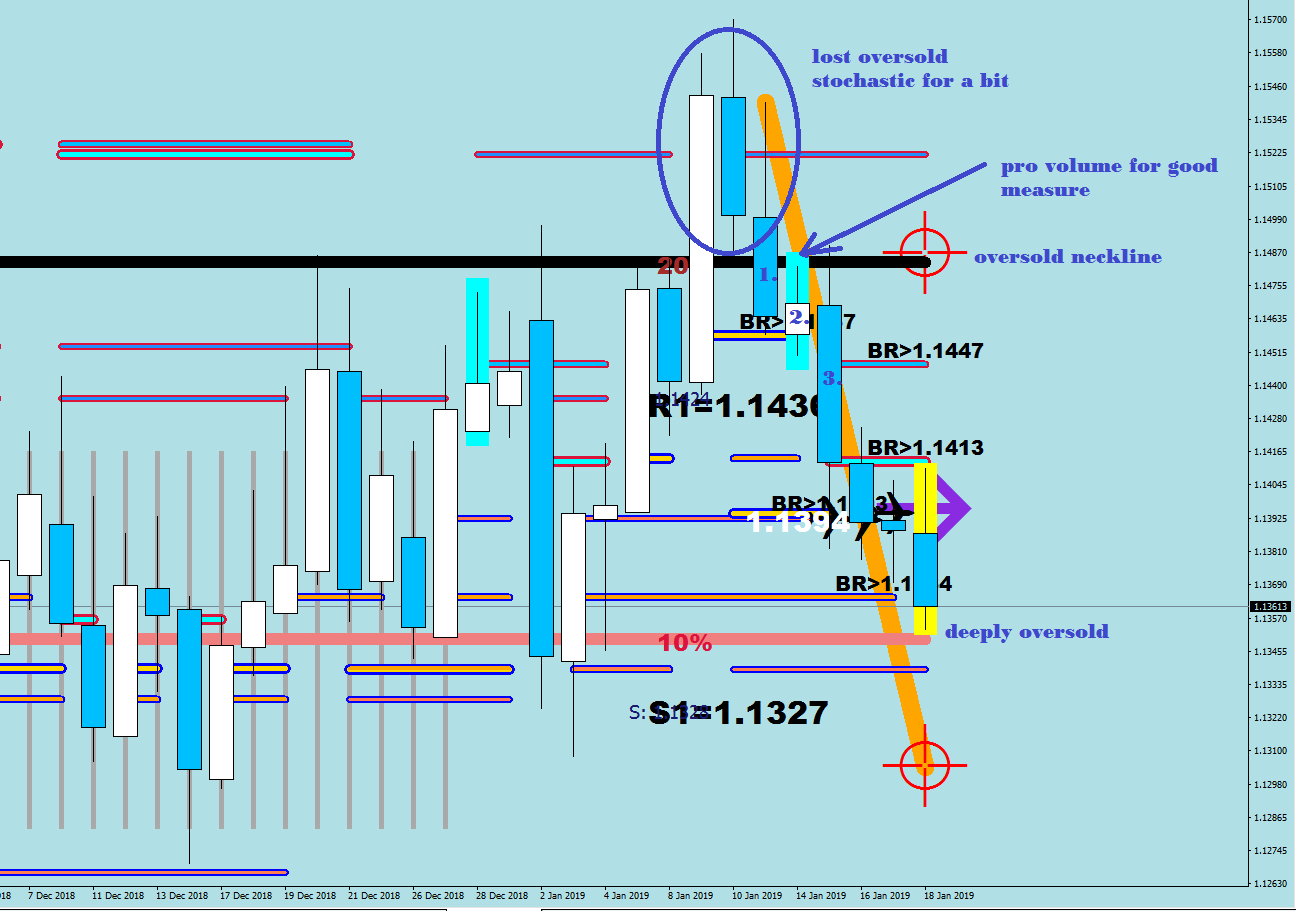
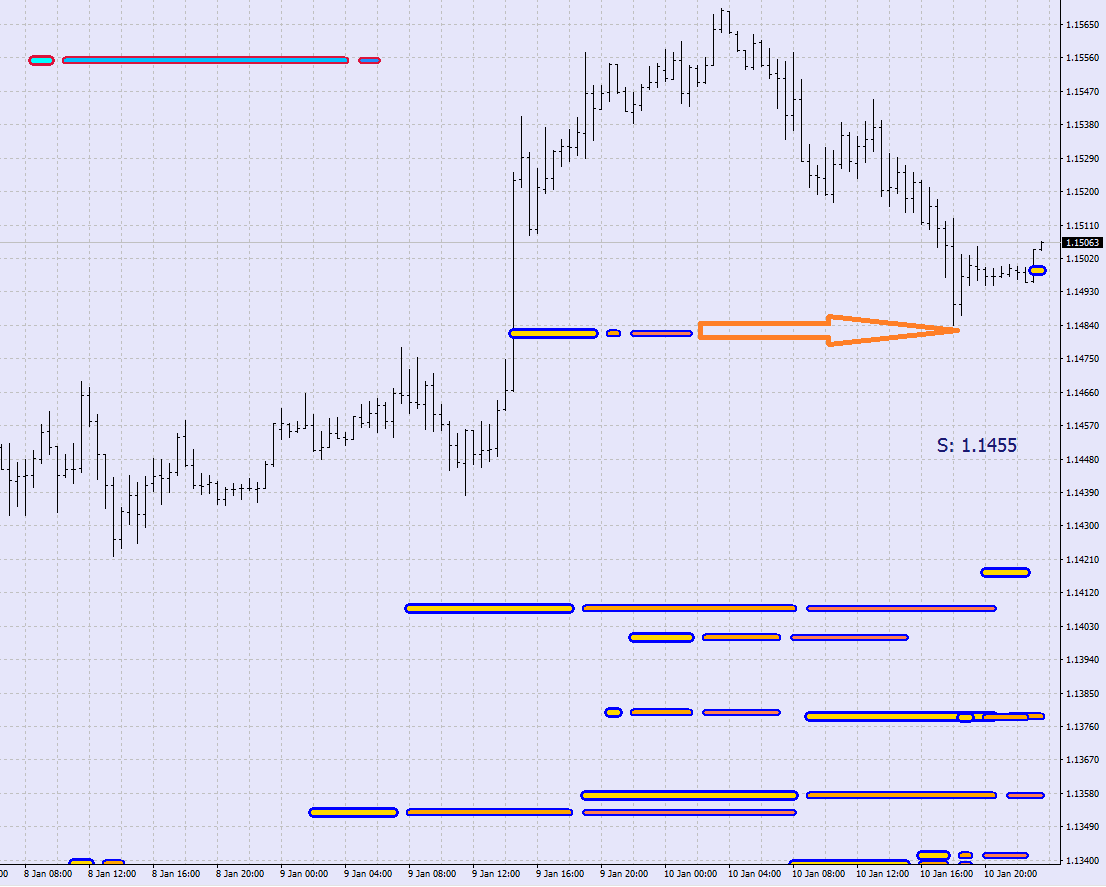
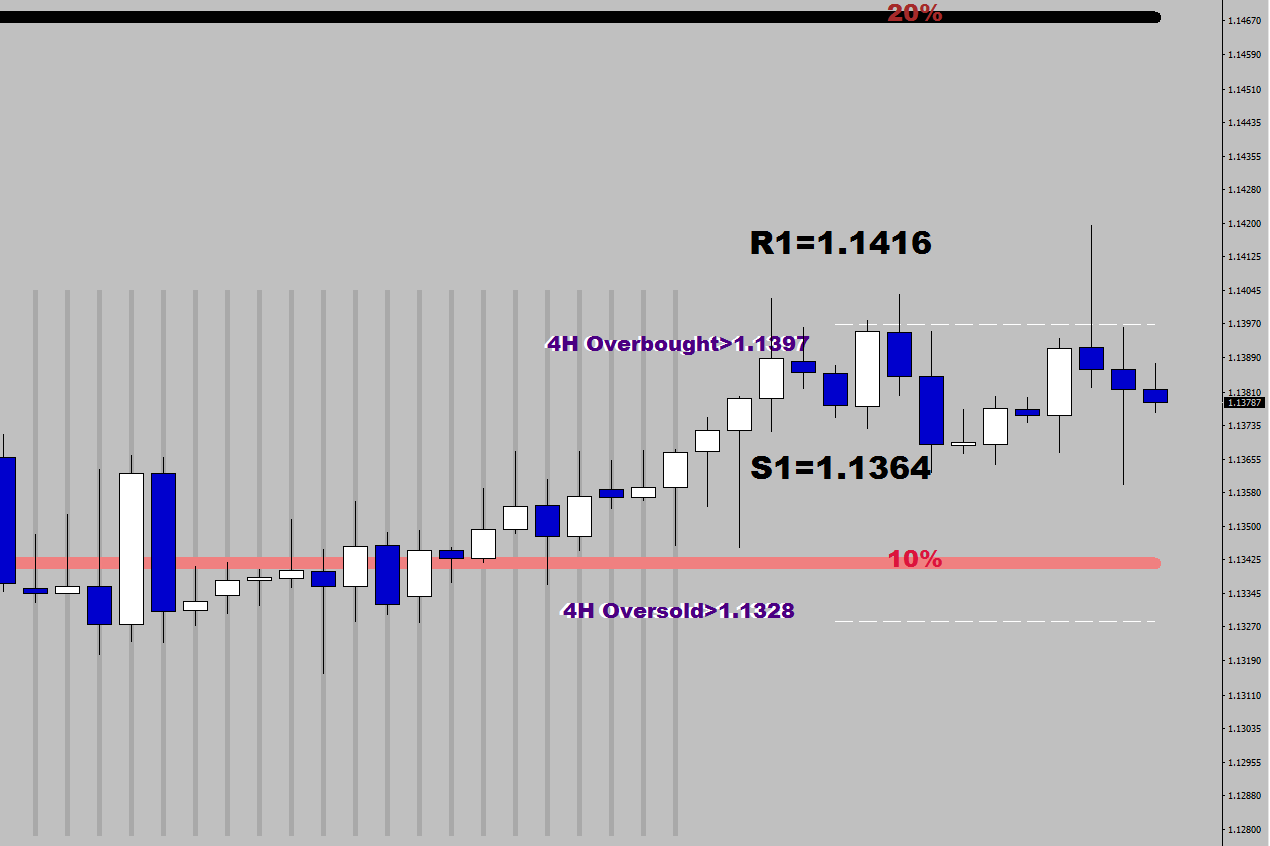
Embedded oversold. Meaning, there has been at least 3 daily closes below the long term oversold neckline (20%) @ 1.1468.

What are the two market types that exist in an embedded market?

  1. Trending
  2. Counter trending

Why do you want to trade embedded markets?

The moves tend to be enlarged / long, for there is plenty of liquidity, lots of participation, you can trade in and out easily, the spread is at its lowest, you can stay in safely until the trending direction does not change.

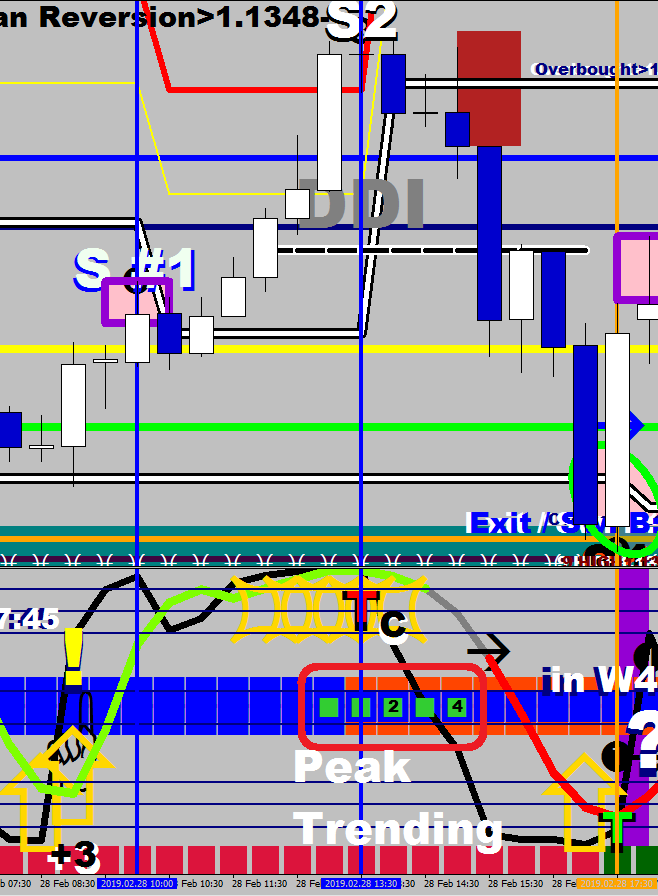
What is required to make the market turn within embedding? Peak trending.

Peak trending is brought on by 1h 30 min – 2h having been spent opening above the local overbought or below the local oversold neckline.

An example of peak trending: 4 30-minute opens above the overbought neckline.

Visual signal for peak trending:

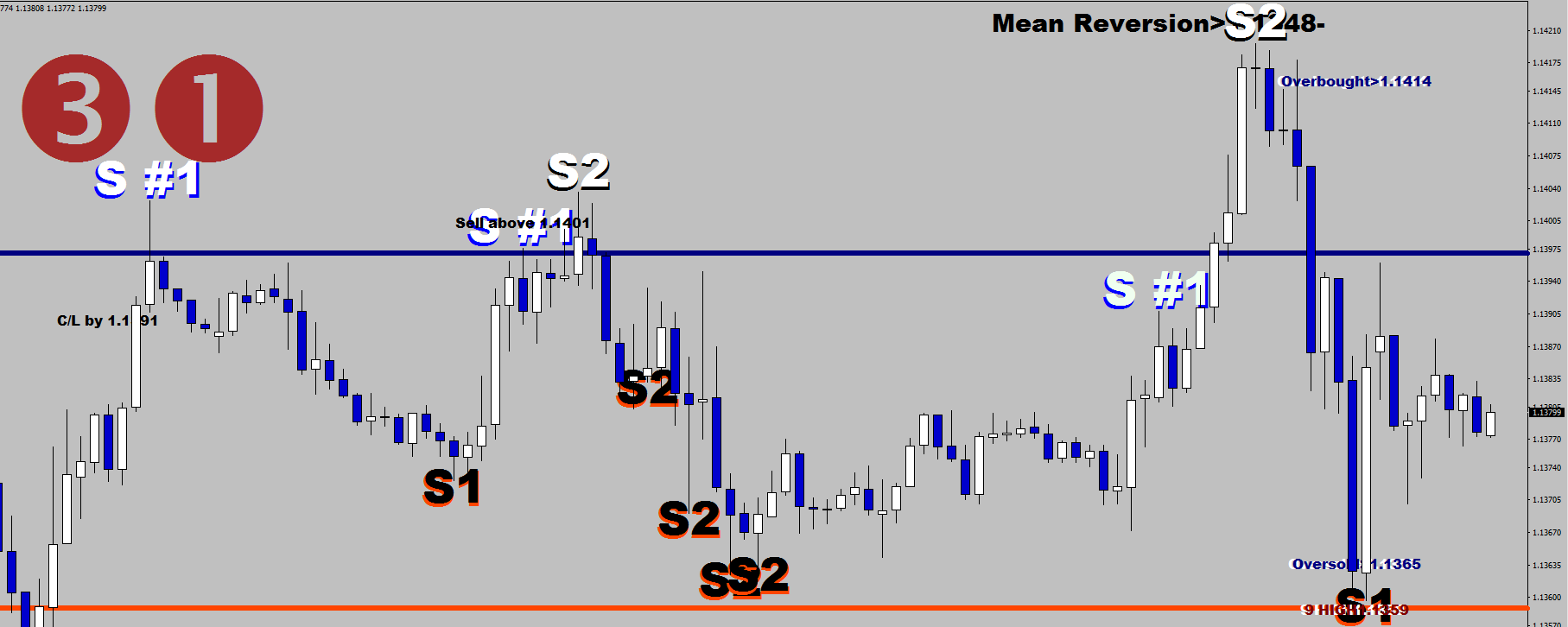
Calculation for the overbought / oversold levels (based on my modified fractals):

if (sdn[i+1]!=0) minus[i]=Low[i+1]-110*Point+FSize/2*10*Point;

if (sup[i+1]!=0) plus[i]=High[i+1]+100*Point-FSize/2*10*Point;

Where sdn and sup are arrays with Sychronized highs and lows

and the Fluctuation Size is 32 pips (EUR/USD)

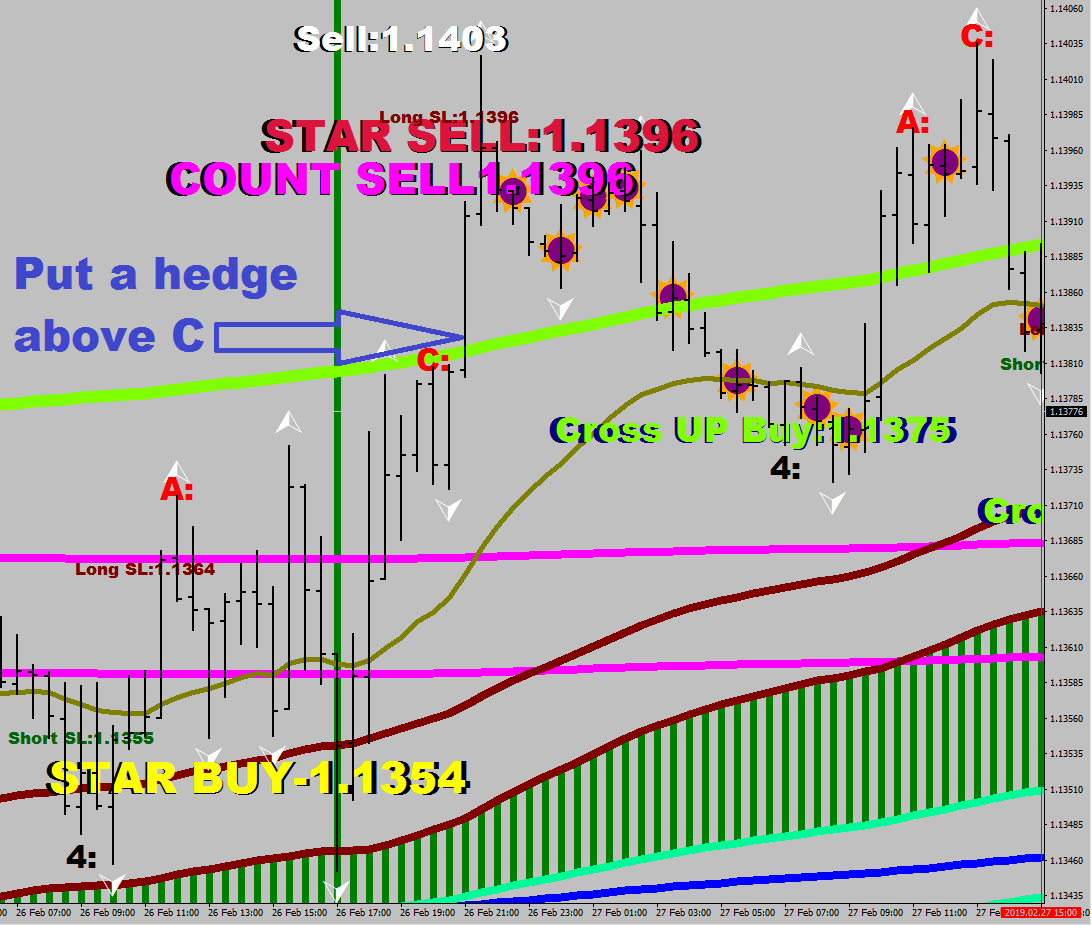
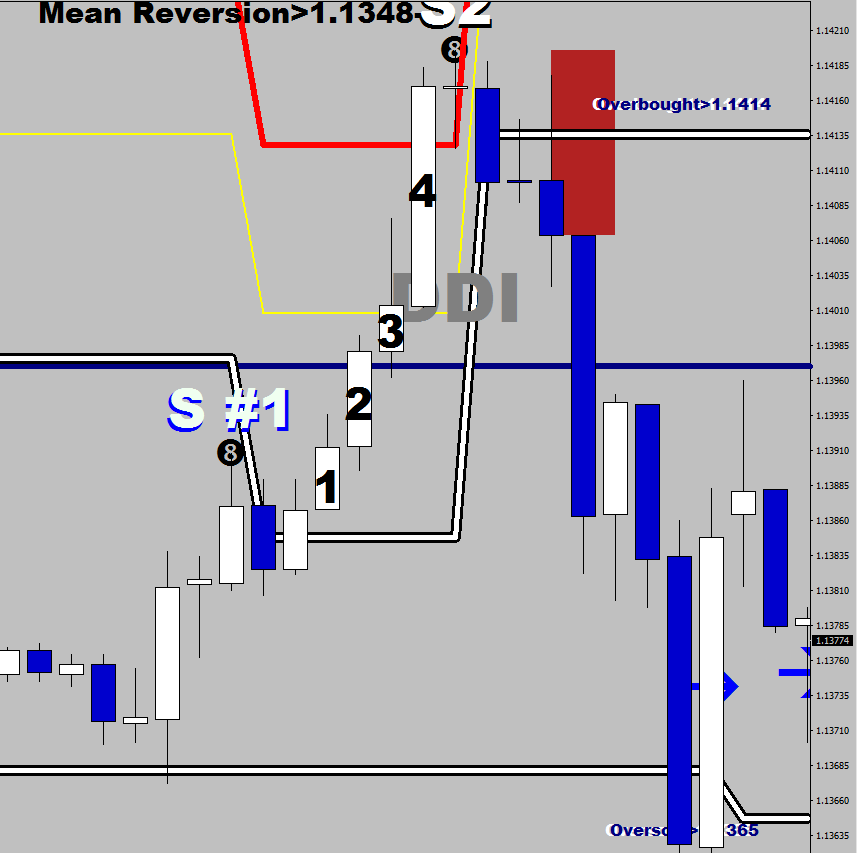
To find a starting point for the oversold trend’s continuation, you would be looking for an ABC correction.

There are a couple at once.

At times you may be wrong, and the high of the C would be taken out unexpectedly, so that is where you would need to initiate a hedge temporarily.

The image below also shows the violation of the upper guard rail coinciding with this move:

Here’s the calculation I use for the A & C count:

int countback=4;
int countup=4;

 for(i = 188; i >= 0; i--){
      if (trianglehigh[i] && ExtMapBuffer3[i]!=85 && ExtMapBuffer3[i+1]!=85 && ExtMapBuffer3[i+2]!=85) countback = 1;  
      if (ExtMapBuffer3[i]==85) countback = 4; 
      if (tup[i]!=EMPTY_VALUE) countback = 4;
      if (trianglelow[i] && ExtMapBuffer2[i]!=15 && ExtMapBuffer2[i+1]!=15 && ExtMapBuffer2[i+2]!=15) countup = 3;  
      if (ExtMapBuffer2[i]==15) countup = 4; 
      if (tdn[i]!=EMPTY_VALUE) countup = 4;
       if (RSI2[i]<92 && RSI2[i+1]>94) {
           if (countup==1) {
                 countup=countup-1;}
      else if (countup==2) {
                 countup=countup-1;}
      else if (countup==3) {
                 countup=countup-1;}             
      else if (countup==4) {
                 countup=countup-1;}        
      else if (countup==5) {
                 countup=countup-1;}    
      }
      if (RSI2[i]>8 && RSI2[i+1]<7) {
           if (countback==1) {
                 countback=countback-1;}
      else if (countback==2) {
                countback=countback-1;}
      else if (countback==3) {
                countback=countback-1;}             
      else if (countback==4) {
                countback=countback-1;}        
      else if (countback==5) {
                countback=countback-1;}                         
   }
}

Where lays the dog buried… The triangle highs and lows.

I have been talking about the Slope of Nope and successful buys and successful sells. People tend to put me on ignore for this, oh, well…

    if (stoch2[i]<20 && Period()==30){   
        for (j=i+1; j<=i+11; j++)         
         if ( iHigh(symbol,30,iHighest(symbol,30,MODE_HIGH,j-i,i))-Low[i]<FSize*1.5*10*Point && stoch2[j]>80)
               trianglelow[i]=True;}
    
    if (stoch2[i]>80 && Period()==30){  
    for (j=i+1; j<=i+11; j++)         
         if ( High[i]-iLow(symbol,30,iLowest(symbol,30,MODE_LOW,j-i,i))<FSize*1.5*10*Point && stoch2[j]<20)
                 trianglehigh[i]=True;}
     } 

ExtMapBuffer2 and 3 are the Stochastic Bars Mixed’s High and Low arrays

As for ending, here is some visual practice to draw meaningful conclusions.

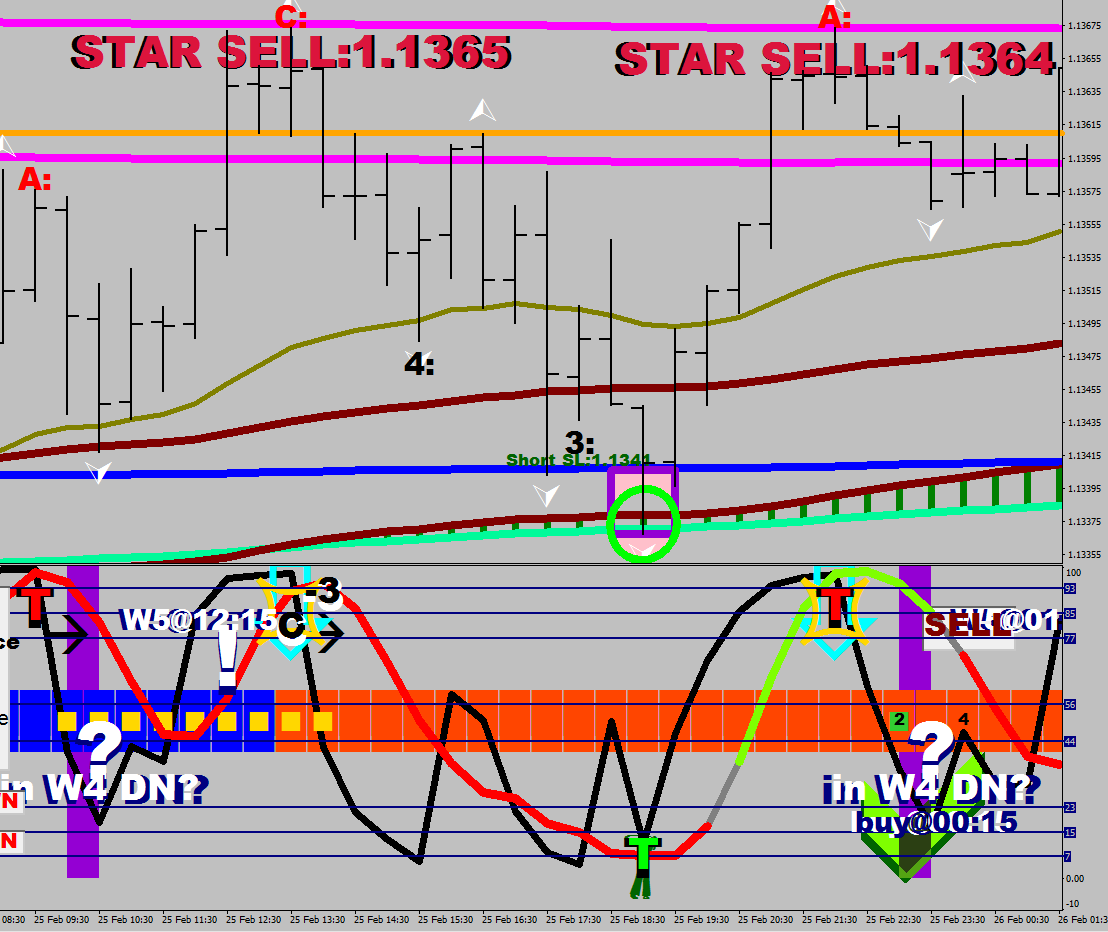
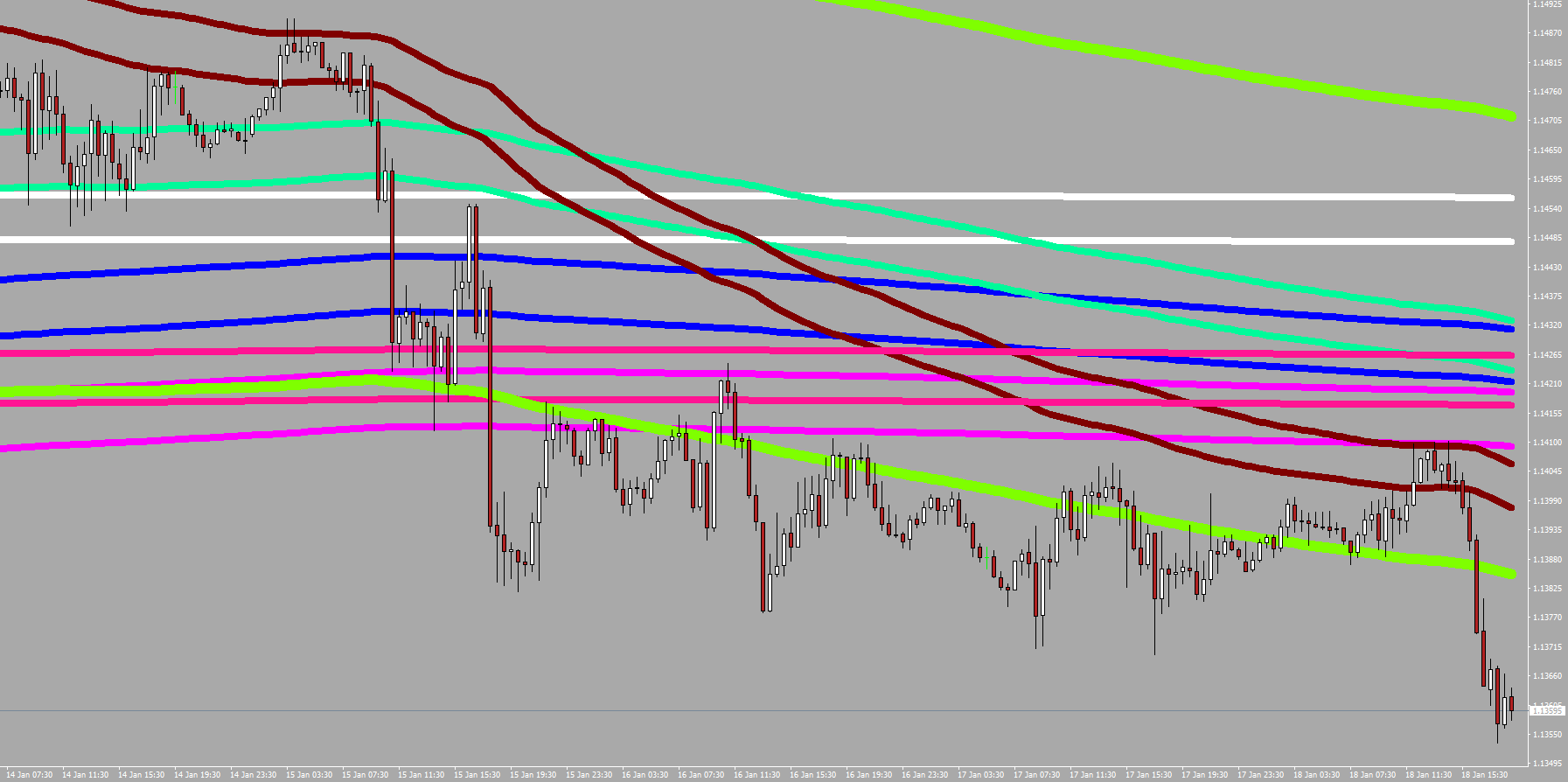
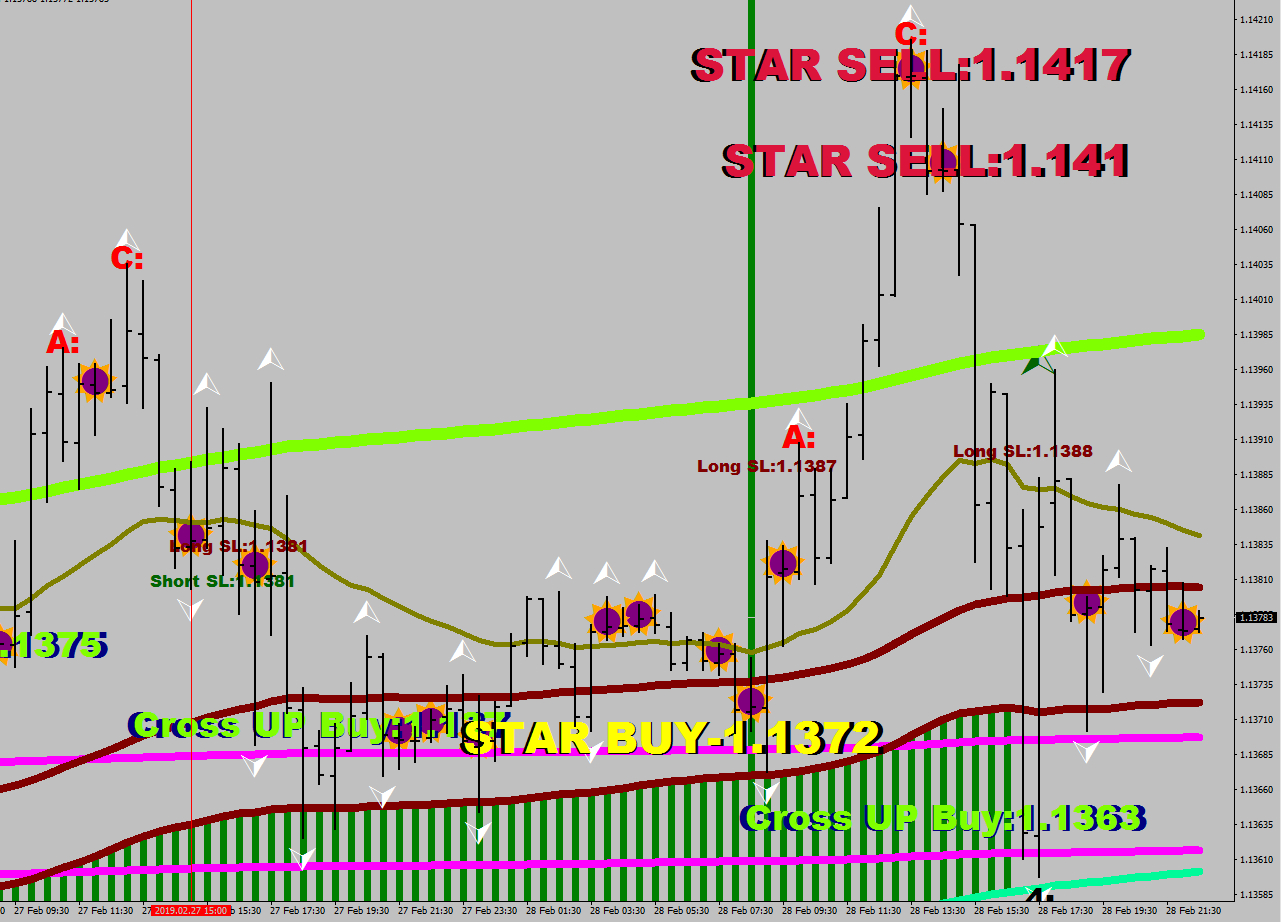
Look at the shaded zone between MR. Maroon and the Green River. That is what I call the Spark Zone, where moves come out from. In our case, it served as the igniter for at least 5 counter moves on the image below.

It does not take much the sync up these two images and see, that both A/C prints were S#1-S2 Sync pairs, furthermore they both had their ending points beyond the chartreuse upper guard rail. Ironically, it is the Bull Zone 1 where the bulls fail.

Sorry for the high density, I hope that things are starting to come together in your head.

Homework: knowing what you know now, how should the embedded oversold trading program look like?

  1. initiate a short holding after an ABC correction to the upside.
  2. Exit(s)?!

…another A/C from a little earlier…

Wishing on a Star (the indicator)

On this unusual Monday afternoon, with the highest ever recorded temperature in the UK for the month, in his grip (hype!) Macdulio was pondering to himself… Hmm… Everybody is talking about Fusion, maybe I should call my Trading Direction Plot on the bottom of the RSI2 indicator Fusion. And he saw, that this was good. And then he thought to himself: I could make an indicator that would be even better than a TradeMate! And then he quickly realized that any indicator on this planet was better than that. So he went on to do his own thing, as per usual.

It started out as an innocent pattern recognition among everything that looked like chaos. I noticed a recurring theme.

& I made a call based on these:

& since I was right, I made an indicator based on these:

& for the hell of it, I am going to make an EA out of it, yes.

RSI2 Spin – Test EA

Somebody asked if RSI2 Spin was an EA, And about why do I call this artificial intelligence. This was the first part of my answer:

I refer to the complexity of figuring a direction, that could be deemed as artificial intelligence; I enter a lot of premises that would exceed the human mind’s capability to make a binary decision about.

You could make EAs out of the logic, but they may be late by 30 minutes, for they need settled values, otherwise you might get false triggers.

The second part was taking the AI as is and turning it into an EA.

I decided that it should close trades if both the Omega and the Omega Master are the same color (in consideration for the direction), and was not the case for the last print, and open a directional trade on the third alike print.

I lifted the target logic as is from my DDI trader that operates with the real swing levels for exits – as mentioned in the previous RSI2 Spin article.

I knew, that my auto trail stop would be running alongside, so I used the new codes, 0.2 and 3 for stop losses, that do not start trailing until 20 pips in gains.

The close out part had to be done by a cropper function, so this became the first ever instance of a 2 in one EA test, where a cropper is part of the EA, not a separate routine.

As for temporary draw downs, I am not at all worried, for I would be making on the opposite direction automatically by my Ratio Hedger initiating counter trades at different levels of draw downs starting from 15% (it would first slow down the equity draw down, then eventually reverse it). In the back test it is not possible to include other EAs.

I even adjusted the cropper part of the Omega trader to be able to close all but one micro lot from 3 out of the 4 kinds of hedges: the rope trade, the half hedge and the over hedge can now be automatically closed out upon a direction change (and leaving 1 micro lot would prevent them from being re-opened), the full hedge can not.

Of course, the sizing is current equity based, as it is on all of my routines.

Here is the first test, that had one weak spot:

Here is the second, optimized one a little larger size:


If you wanted an answer for the life, the universe and everything – here it is.


No clue why, but at times the test does not run for the whole period, it gets cut off like in this case.

Mixed feelings, I know… The world is my oyster, and I don’t even like sea food!

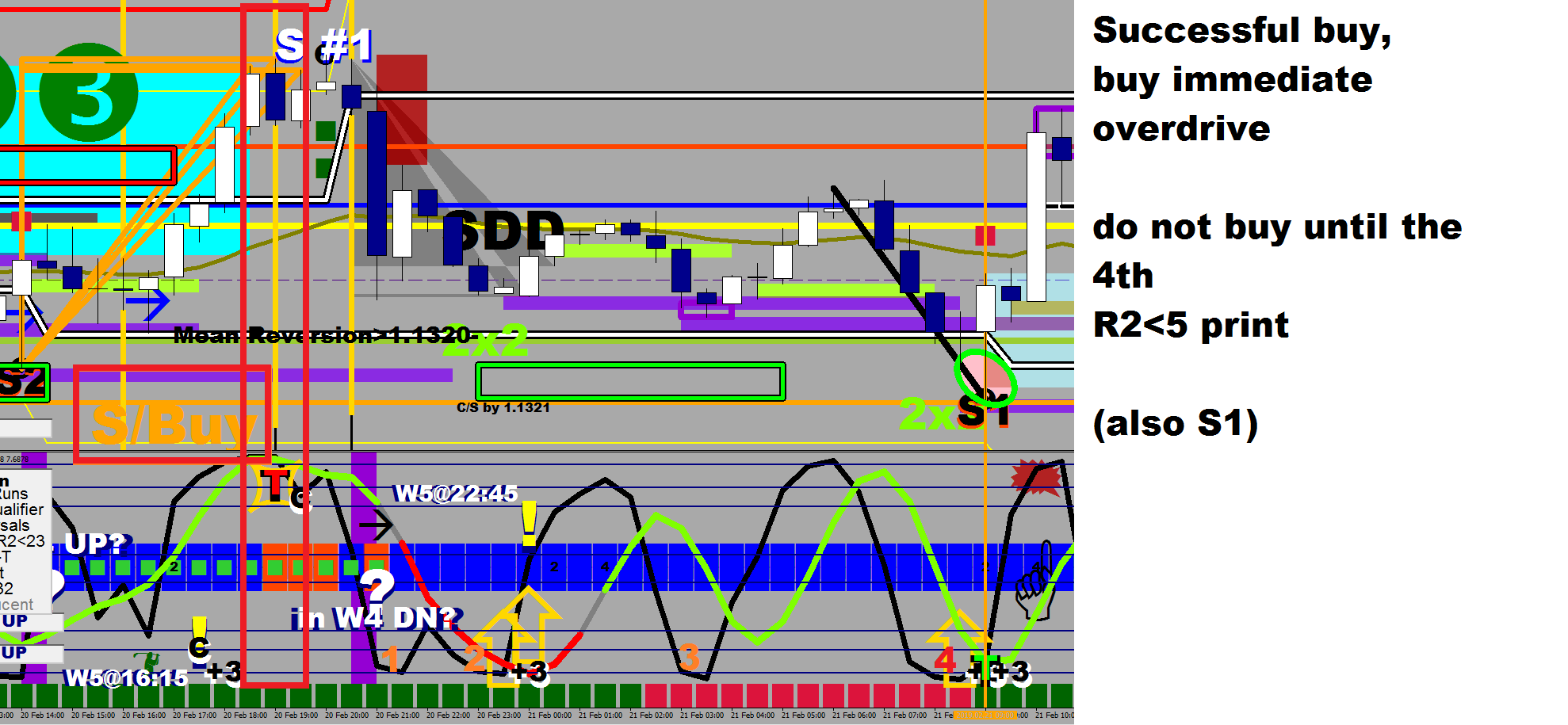
Had to give more credit to the successful buying since the last article.

RSI2 Spin

This blog entry is about an indicator I am developing for EUR/USD to have an accurate reading on what is going on. See, I am an internal conditions guy, and this is the most complex AI I have ever developed.

It understands embedding, counter trending, it has timing features, and it deals, it knows a heap of conditions I have managed to identify. If you want to gain edges, and comprehensive evaluation, nothing would beat this program.

To scare you away and prevent you from wasting your time reading any further, here is a snapshot of the looks of it:

What is on the screen then?

Upper half:

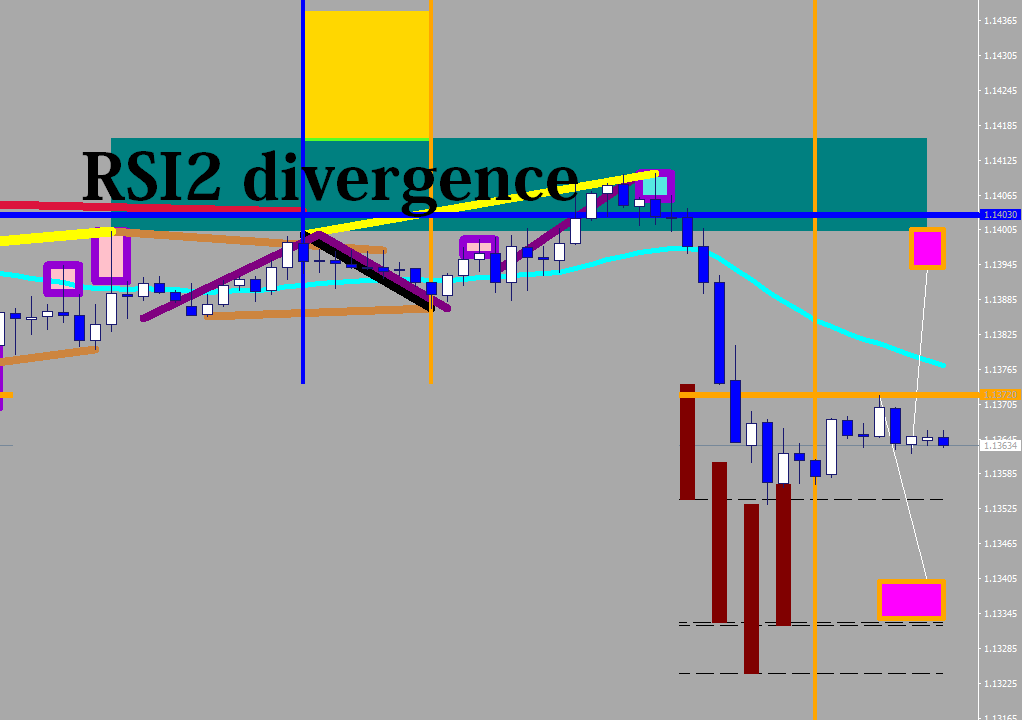
The thickness of the RSI 2 divergence field is 16 pips or 1/2 Flutctuation size of the EUR.

In opposition of what people call Swing Highs and Swing Lows, these are not levels that I don’t expect to be touched, but rather the ones that are always expected to be touched: you need an exit in mind upon entering a trade and these provide you exactly that by averaging the last two outer (modified) fractal values.

The black lines are a summary of levels that were prompted by wave 5 projections, later about this under “timing”.

Lower half:

The first thing to talk about of course is the Omegas.

Omega Master exists in an embedded market only. Embedding can be figured using my Comfort Levels indicator’s calculations. Omega Master accordingly switches off between Embedding and counter moves / counter trending.

The trending boxes in essence represent peak trending. An embedded market does not turn without reaching peak trending first.

The Omega calculation takes up about 1/5 of the 2500 line code. It understands “successful buying / selling” (slope of nope without going into overdrive), it knows when “upside/downside progress is useless” (Wyckoff thrust?).

The hand signals meant to draw attention to the steepness of a move. The idea is not so much opposing this move, but rather finding pairs of starting and ending a move.

The open hand would normally mean upside/downside progress is useless, but the ones above are exceptions, and don’t bear this warning, for the move itself managed to exceed the Fluctuation Maximum – the interpretation thus is temporary pause, a good area to get in on the move.

The arrows pointing up / down – they are warning signs that things may e about to change. There are ones placed a little higher, they changed the trading direction on the above image, but not the holding direction, and the one placed lower did change both: peak trending was achieved.

Timing.

The purple shading and the W4? and the question mark are also warning signs, signalling the possible end of a wave 4 and placing the question marks further out; a white one at 1h 45 minutes away (filtered by RSI2 actual print) and a yellow one 2h 45 minutes away, for these are the likely points in time, by when the terminal end of Wave 5 is expected to be printed. (The “Tick” is to echo the Actual time (adjusted to your watch, not the server time) is by when you should be back from snorkeling, to be able to make the trade). Some Wave 4 warnings would line up with Wave 2s, so you should check into it yourself.

There are also 1-2-3 numbers plotted counting the directional waves with some basic understanding.

The 2, 4 counts on the omega are highlighting the rhythm to follow for entries.

The Ts (thrusts), just like the hands, show terminal length moves which can either be the starting or the ending of a move.

A successful buying can set a timer as well, and is plotted as a “Check mark” – see it on images coming up. The Slope Of Nope triangles are the plot of my 88 Luftballons Routine.

The golfers are similar to Sharpie prints (88 Luftballons) and show a quick act by either a bull or a bear party: they made a swing, that was potent enough to turn the price in under 30 minutes.

The smack / splash / cartoon speech plots are showing when a party managed to break the progress in under an hour, but it did take longer than 30 minutes.

The “+3”, “-3” marks should be interpreted as “buy” and “sell”, and the “C”-s mean Cover.

———

The magenta dash is an RSI2 divergence and so is the yellow one, but only the first kind gets plotted on the chart itself.

I have some intelligence breakdown of the market conditions on the white labels.

Thrust boxes are a plot of the 88 Lines indicator – I use these two in combinations.

Daily fuel limit is a plot by 15m ATR Targets or the ATR Limit 15 routines (free).

The Green River plot as well as Mr. Maroon comes with the LEMA30N routine (free).

Overdrive plots (they are the magenta stars here) equal to the Stochastic Bars Mixed (free) bar plots.

Computer Aided Trading

The E-book? It is coming along nicely, should be ready by the end of March.

A computer can aid your trading in countless ways. Machines do not sleep, they can react when you are incapacitated; they do exactly what you tell them to do.

The first example is that of shortcuts. You may decide to pick up a half hedge or a full hedge, and any second is precious, for price does not stop moving. A pre-programmed key combination would calculate the needed size accurately for you and place the order almost instantly.
Meta Trader comes with the possibility of running Expert Advisors that can open, close, manage trades. I personally run 30 of these at a time on a single account, and all of these meant to give me extra help, extra edges.

When you have a remote control only (cell phone) in your hand, the application is incapable of assigning trail stops to the orders. With a trading computer / cell phone combination this may no longer cause any problems, for one of your EAs could be a smart trail stop that you communicate to in a form of a code. For instance, you may want to initiate a holding, and do not want to be taken out of it just yet, so you put no stop loss with it – signalling to be ignored. If you chose to do this, you should be running a ratio hedger routine as well, just in case (that’s another thing a computer is for, auto hedging). Now, if you put anything other than 0 for stop loss – that may be the code for the Smart Trail Stop routine to start managing the trade. Some auto trading routines may be granted exceptions as well based on the magic numbers they use. Decisions do not have to be binary either. Say, if I put 0.1 stop loss that can mean that I want the trail stop to be locking in 1 pip gains upon going into 5 pips in gains, lock in 2 pips upon exceeding 8 pips gains and start trailing the stop ½ Fluctuation Size or 16 pips behind starting from 20 pips in gains, but if I put 0.2 stop loss for starters, I do not want the implementation of the first 2 steps, only the 16-pip trail stop.

Cropper routines can cut the positions if a condition was met. I often use cropping for trades opened with auto trading EAs, to cut them when they have made 2.5% or 7% gains relative to the account balance.

There may be other reasons, such as a perceived change in market direction to trigger a crop, a hedge or to initiate a trade. Many of the conditions are only temporarily present, and a human is at complete lack of sensitivity and incapable of making quick, informed decisions not to mention the execution speed.

Computer aid is not merely an option, it is a necessity.

A computer can aid your trading in countless ways. Machines do not sleep, they can react when you are incapacitated; they do exactly what you tell them to do.

The first example is that of shortcuts. You may decide to pick up a half hedge or a full hedge, and any second is precious, for price does not stop moving. A pre-programmed key combination would calculate the needed size accurately for you and place the order almost instantly.

Meta Trader comes with the possibility of running Expert Advisors that can open, close, manage trades. I personally run 30 of these at a time on a single account, and all of these meant to give me extra help, extra edges.

When you have a remote control only (cell phone) in your hand, the application is incapable of assigning trail stops to the orders. With a trading computer / cell phone combination this may no longer cause any problems, for one of your EAs could be a smart trail stop that you communicate to in a form of a code. For instance, you may want to initiate a holding, and do not want to be taken out of it just yet, so you put no stop loss with it – signalling to be ignored. If you chose to do this, you should be running a ratio hedger routine as well, just in case (that’s another thing a computer is for, auto hedging). Now, if you put anything other than 0 for stop loss – that may be the code for the Smart Trail Stop routine to start managing the trade. Some auto trading routines may be granted exceptions as well based on the magic numbers they use. Decisions do not have to be binary either. Say, if I put 0.1 stop loss that can mean that I want the trail stop to be locking in 1 pip gains upon going into 5 pips in gains, lock in 2 pips upon exceeding 8 pips gains and start trailing the stop ½ Fluctuation Size or 16 pips behind starting from 20 pips in gains, but if I put 0.2 stop loss for starters, I do not want the implementation of the first 2 steps, only the 16-pip trail stop.

Cropper routines can cut the positions if a condition was met. I often use cropping for trades opened with auto trading EAs, to cut them when they have made 2.5% or 7% gains relative to the account balance.

There may be other reasons, such as a perceived change in market direction to trigger a crop, a hedge or to initiate a trade. Many of the conditions are only temporarily present, and a human is at complete lack of sensitivity and making quick, informed decisions not to mention the execution speed.

There may be other reasons, such as a perceived change in market direction or a break out to trigger a crop, a hedge or to initiate a trade. Many of the conditions are only temporarily present, and a human is at complete lack of sensitivity and incapable of making quick, informed decisions not to mention the execution speed.

Computer aid is not merely an option, it is a necessity.

Computer aid is not merely an option, it is a necessity.

1234-TRENDING

Those people drawing trend lines and Fibonacci retracements, would never figure out what the market is about.


Do they have a clue why they were stopped out? Do they know what trending / emedding means? I doubt it.

I already mentioned about embedding in my previous article, so let’s talk about:

Trending is not measured by oscillators. Trending is embedding, and so it is measured by time.

What you see on my _RSI2_Spin indicator below, in the middle block, the small squares are the positive / negative readings, and their color is immaterial if it comes to trending, its their presence that counts.

if (Open[i+3]>plus[i+3] && Open[i+2]>plus[i+2] && Open[i+1]>plus[i+1] && buy[i+1]!=EMPTY_VALUE) positive[i]=50;
if (Open[i+3]>plus[i+3] && Open[i+2]>plus[i+2] && Open[i+1]>plus[i+1] && sell[i+1]!=EMPTY_VALUE) negative[i]=50;
if (High[i+1]>plus[i+1] && High[i]<plus[i]) {positive[i]=EMPTY_VALUE; negative[i]=EMPTY_VALUE;}
       
if (Open[i+3]<minus[i+3] && Open[i+2]<minus[i+2] && Open[i+1]<minus[i+1] && sell[i+1]!=EMPTY_VALUE) negative[i]=50;
if (Open[i+3]<minus[i+3] && Open[i+2]<minus[i+2] && Open[i+1]<minus[i+1] && buy[i+1]!=EMPTY_VALUE) positive[i]=50;
if (Low[i+1]<minus[i+1] && Low[i]>minus[i]) {negative[i]=EMPTY_VALUE; positive[i]=EMPTY_VALUE;}   

Plus and minus are the local overbought/oversold levels based on the last fractal +/- displacement, and the Buy/Sell filters are the stochastic current’s two polarities.

This is your answer to what trending is. Trending is not something you hook an oscillator on, and has degrees, it merely is on or off. After 4 of those squares printed we talk about embedding/trending.

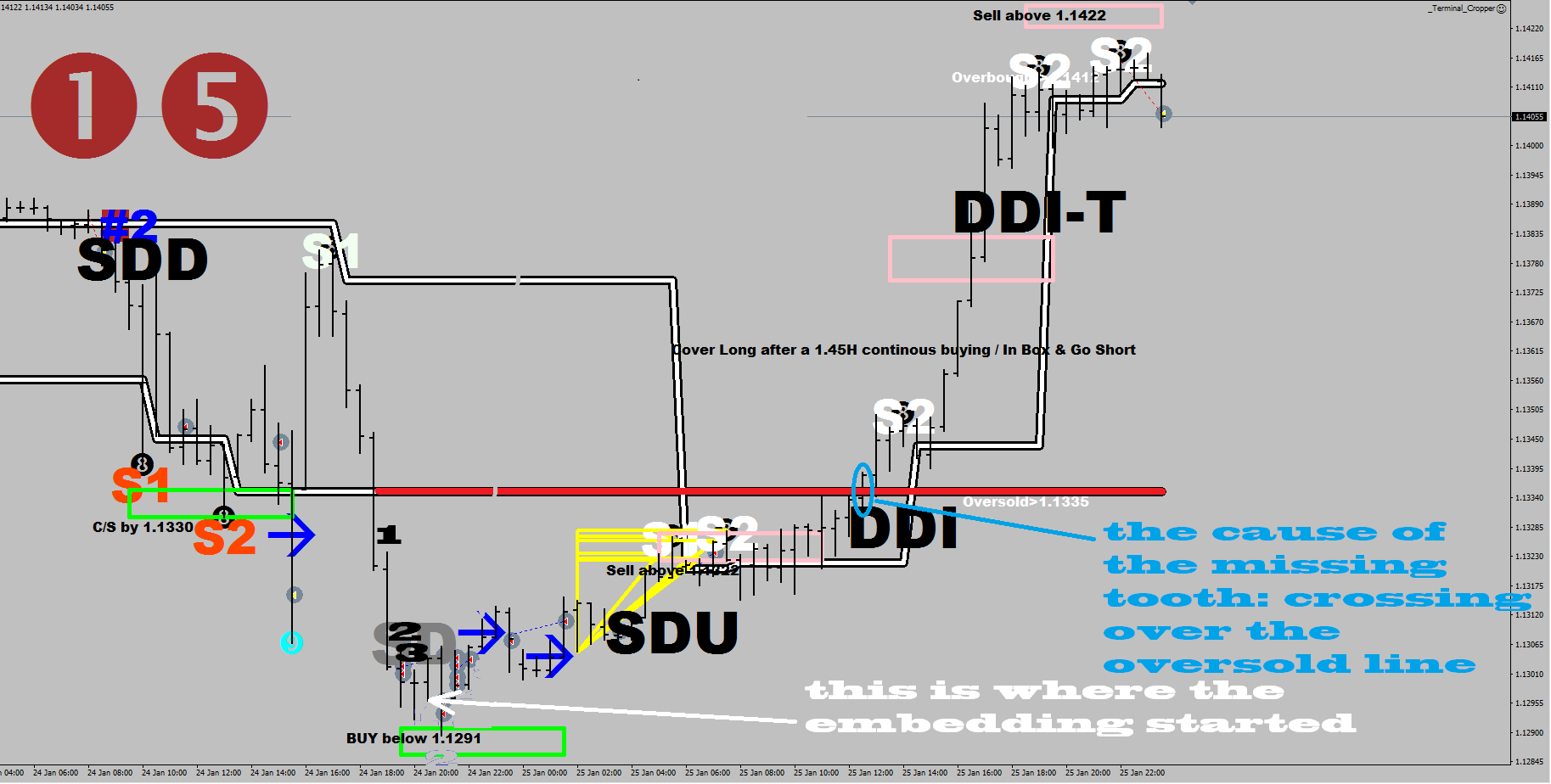
The answer to why was this buying successful in the face of the Long Term embedded oversold condition, is the persistent buying that has brought on its local counter trend.

The one tooth missing is normally called “saving” that results in re-embedding. This does not apply for the current example, the one blank was merely signaling an open below and a close above the oversold neckline.

The answer to when it is going to fizzle off, is that the market has two speeds, 2H 45 minutes for slow, and 1H 45 minutes for fast. What is still missing from that chart is a 3-4 candle long burn off of the excess.

You have the upper guard rail straight ahead (green) as well as a market maker level @ 1.1425. The top of the lower reversal zone (15% – gray vertical shading) can also make things difficult for a bit at 1.1416.

In slow motion:

The orange S1 and S2 were not followed by any more Synchronized lows. The number “9” print made by my 88 luftballons routine was giving a warning sign for a possible counter trend starting.

The embedding kicked in, and subsequently the white S1 & S2 prints adjusted the overbought level.

The rest would come in the shape of a book.


D-Day, mayday!

Hoping for / Waiting for a D-Day was my sales pitch on different forums for my last blog entry.

Let’s do what people always forget to do first: top down analysis.

  1. With daily closes back below the oversold neckline, the price re-embedded – meaning started trending.

If my name was Oscar, I would had been saying every day as a reminder: “Do not fall in love with the upside!”

Let’s insert here the next image and discuss it in the context of D Days later…

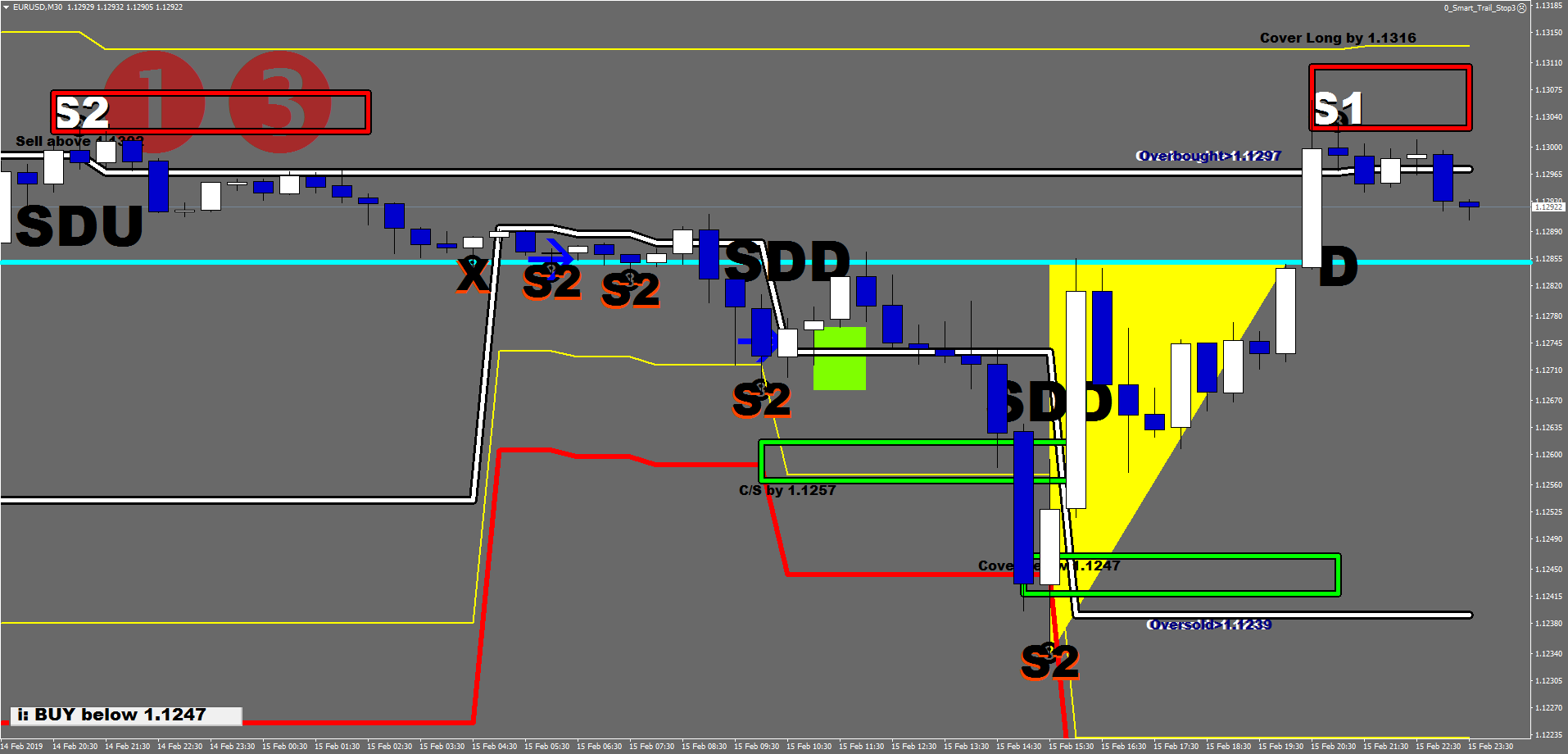
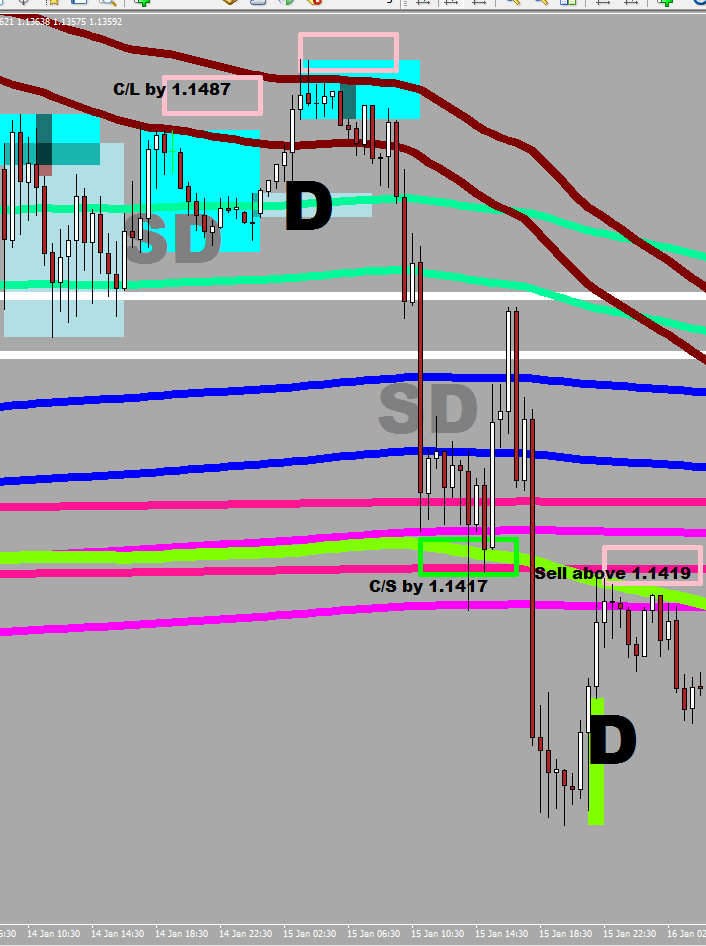
D-Day (Driven Day) #1 to the upside happened upon briefly exceeding Mr. Maroon to the upside. The SD (Screw Drive) got grayed out both to the upside and the downside for being too close to the Mean, the Green River. The close proximity was the reason for them alone not being able to turn back the price.

The second D with its projection box to the upside did not have to turn the direction back down, for it never got turned back up. It was merely a continuation.

I know, double “D”-s can be attractive, and triple D-s, now that sounds confusing. Yet I have 3 more printed since.

The one on the left turned the price back up and had an X, showing no bottom yet – so the stab was expected to happen into the green rectangle.

From then on the direction was up, until today… another D happened on the upside, with another stab – into the projection box, merely 1.5 hours later. Remember the first D I showed you with price slightly exceeding Mr. Maroon? Well, this one did the very same thing.

Finally, the very last D print to the downside… It has its stab distance projection box plotted already. There seems to be limited room for progression right now.

There was a mean reversion in progress that got interrupted forcefully, so better make a mental note of the move being delayed. It would just make it so much more powerful when they let go.

The institution that already bought some at the 10% (deeply oversold) line now has the opportunity to double their bet.

Below: RSI2 divergence as launching pad – for this is rocket science.

First extension filled.

Now, where were them Market Makers at?

Get With the Program pt. 4

First, some actualities.

The market printed a D and a DDI to the upside.

The first lesson is: You do not trade what you think, you trade what you see.

And how handy it is that my indicators have visual capabilities way beyond any human being.

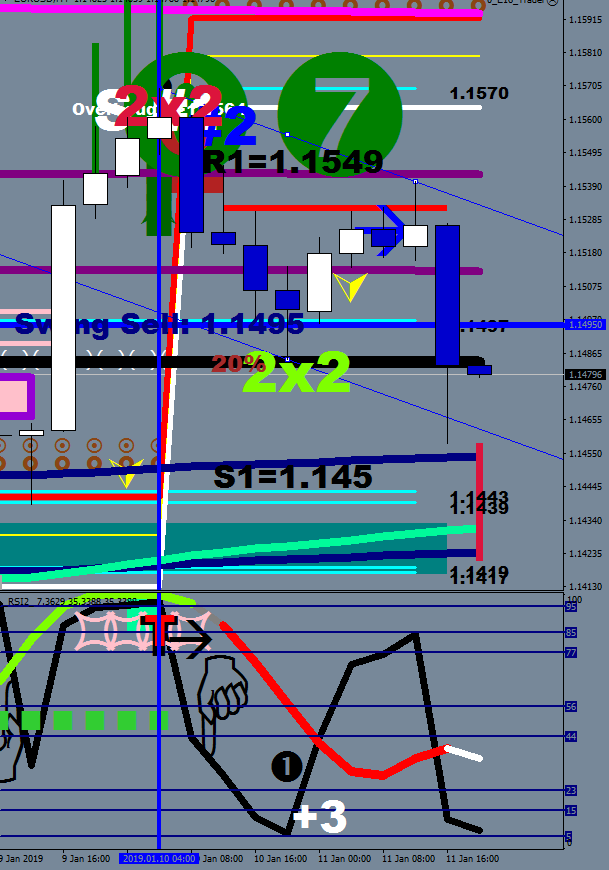
The God Awesome indicator called the swing to the DDI-t high an end line (in purple) and plotted S1 and S2 down below. It also highlighted the sharpies at the very top. The red 2×2 preliminary topping warning was from this indicator as well.

Of course you already knew about the swing buy level being at 1.1462 – thanks to my _RSI2_ plots (see previous post).

The 88 Luftballons indicator called the D, plotted its box, called the DDI, put out the omega signals, showed the cyan backed time out resistance, the D to the downside – with its box, etc.

As a human trader to maximize your potential, you need burn some principles inside of you.

Principle #1: Load Up and Let It Run.

In order to invest in a direction, scaling in is advised inside your shopping area. The maximum, invested size is based on the available equity, and my 88 Luftballon’s stats screen, can provide you with this information. (M.L.=Maximum Lot size based on 1:200 leverage)

The positions would have to be opened without stop losses. Your flash crash protection should be a Ratio Hedger running in the background.

You should set a generous target to an obstacle near to what the market is capable of reaching to on the given day (see my 15-min ATR Targets) routine. The current swing lines are always players.

Upon receiving the any D print (SD, D, DDI, DDI-T), you should adjust the positions to and “other than 0”. This means for instance with the EUR/USD that the longs would be set say 0.1 stop loss and the shorts 2.0

With this move you instruct my Smart Trail Stop to start handling the running positions as “game” which would result in a trail stop being dragged behind by 1/2 fluctuation size (16 pips).

You should also consider closing out some of the positions inside the D-projection boxes.

Between the 2, 2x2s you have a channel looking thing going on. Price is back in the oversold, and this looks like a bull flag.

There are certainly things pointing to 1.1416, the lower reversal zone showed by the Comfort Levels 4H indicator, so does the 15M ATR Limit, not to mention my Market Maker Lines DC (plus the Projected Distance line above on the 4H chart).

We have to take it one step at the time. We think about the possibilities, but we do not fight the market. At this point we need a D, any D on the upside to go short again. Until then, don’t short!

The current pullback to the Green River is a mean reversion, and this is way more bullish than bearish.


Get With the Program pt. 3

Two more images for you first, then we’re going to continue with the heavy part.

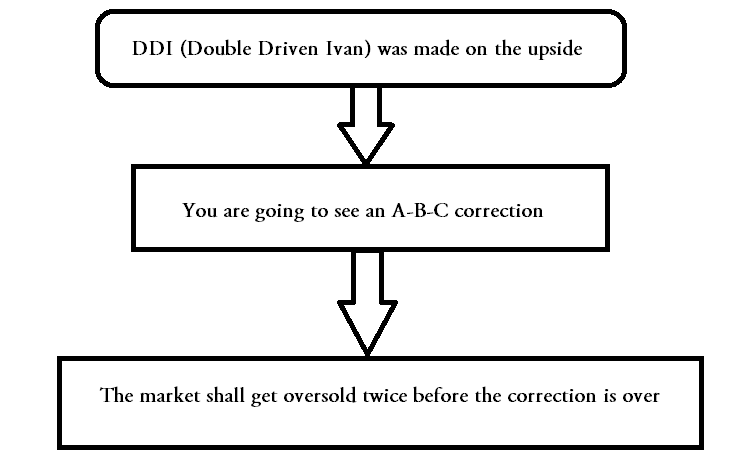
Flow chart piece – easy enough still.

Now, for some fine tuning / sophistication.

You could read off the images that the 2 bull – 2 bear and the reverse are the tell tales of a sharp turn, or a crazy Ivan move.

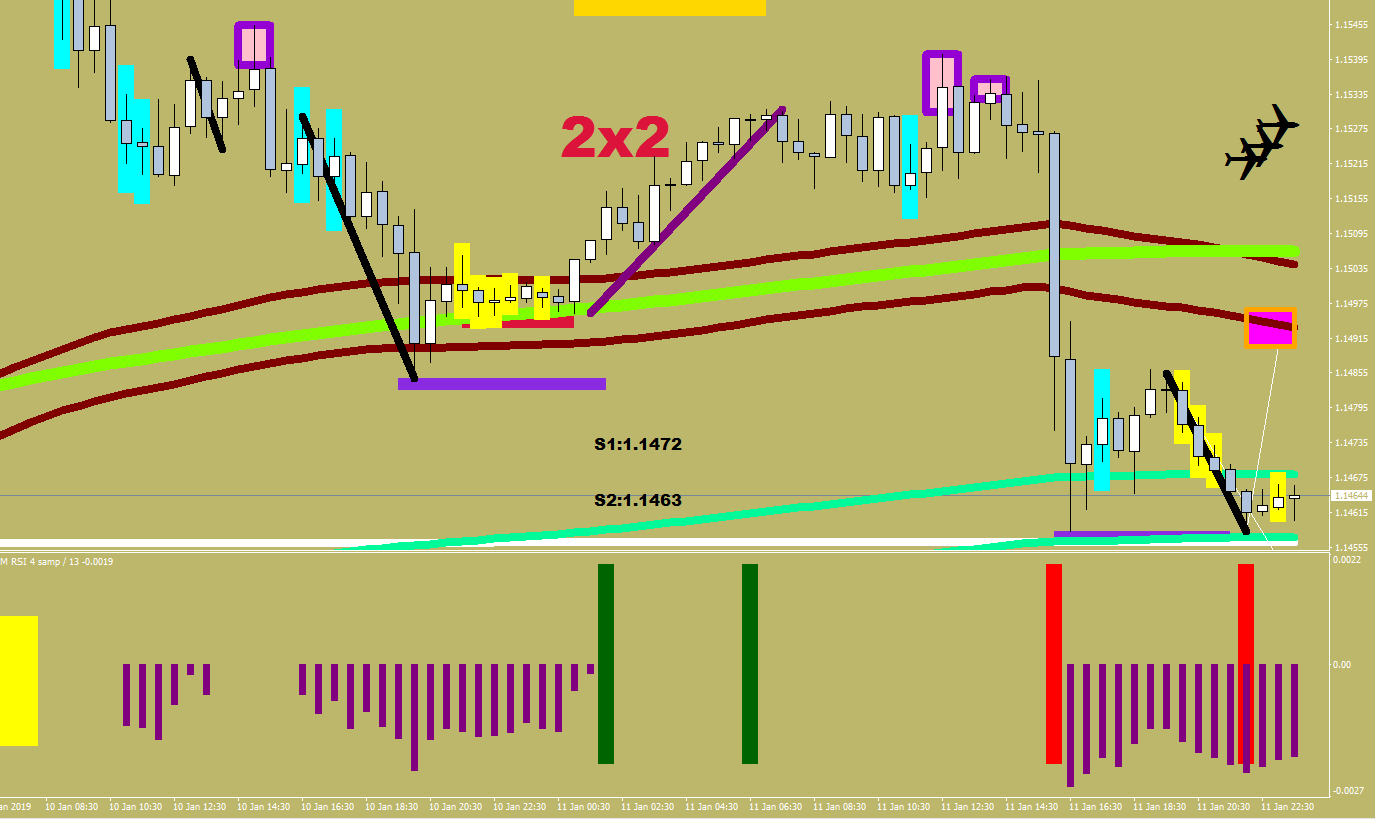
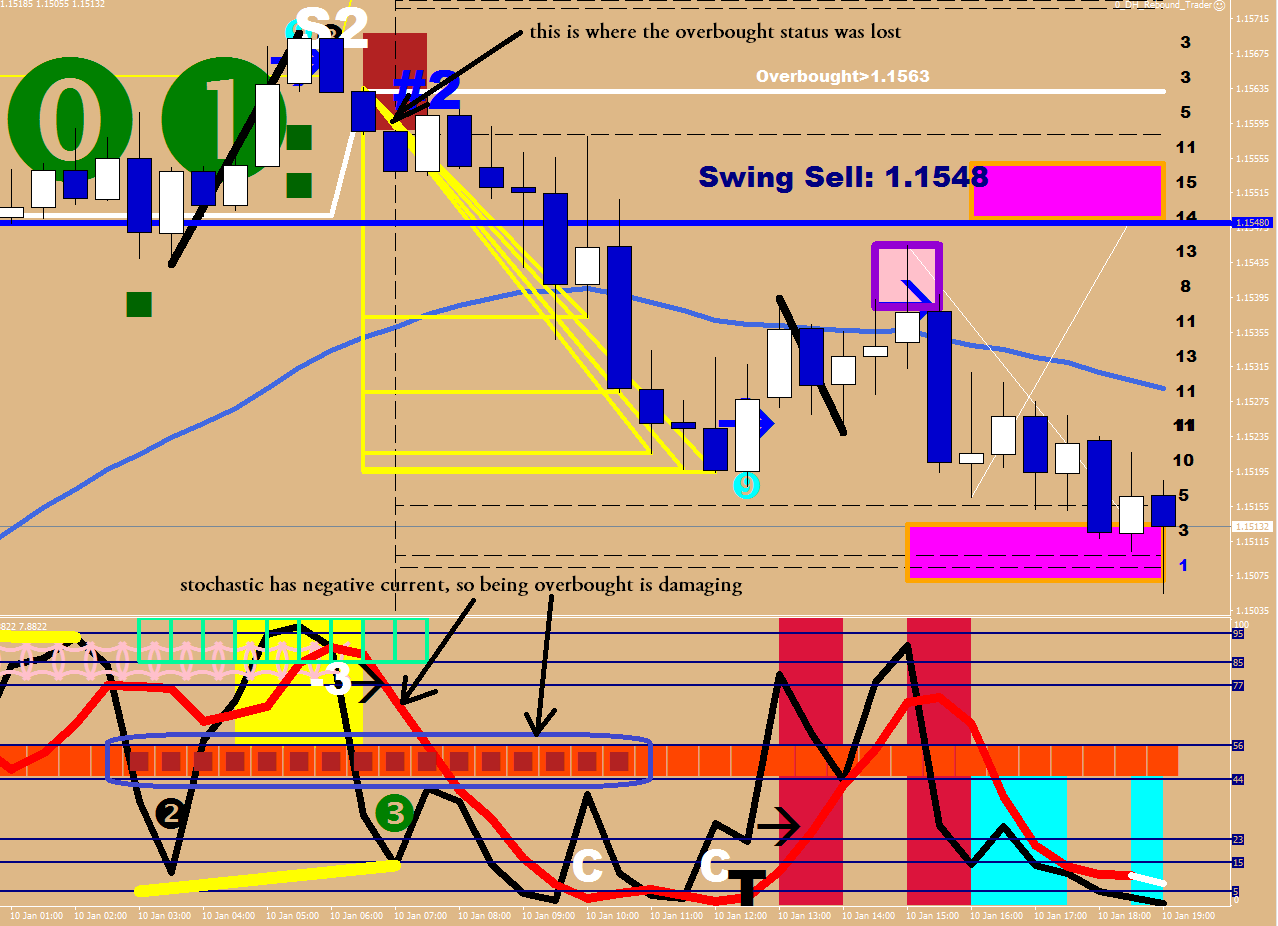
Let’s try to find parallels and differences between the two ABC corrections of late. Our timing device is a 13 and a 44 sample Hull MA, their relationship plotted at the bottom.

This sell-off had the rationale to back test a break out / RSI2 divergence level.

It had impulsive waves at the beginning and at the end mirroring the other’s steepness / speed.

The length of the B wave was about equal to the length of A wave + C wave.

The total correction took about 30 bars = 15 hours.

The rationale was to back test a break out / RSI2 divergence level, but it failed to punch into it.

Impulsive strength selling was present towards the ends of the correction, not from the beginning.

The length of the B wave was less than 1/5th of the length of A wave + C wave.

The total correction took about 30 bars = 15 hours.

(The 2×2 text shows the back to back 2 bear 2 bull candles, that normally preceds a top – here it coincides.)

There is one more clue you can read out of the chart with the help of my 88 Luftballon indicator:

There was overt eagerness in selling, for as soon as the Driven box was plotted, it thrusted into it.

I have yet to include the driven condition as a reversal.

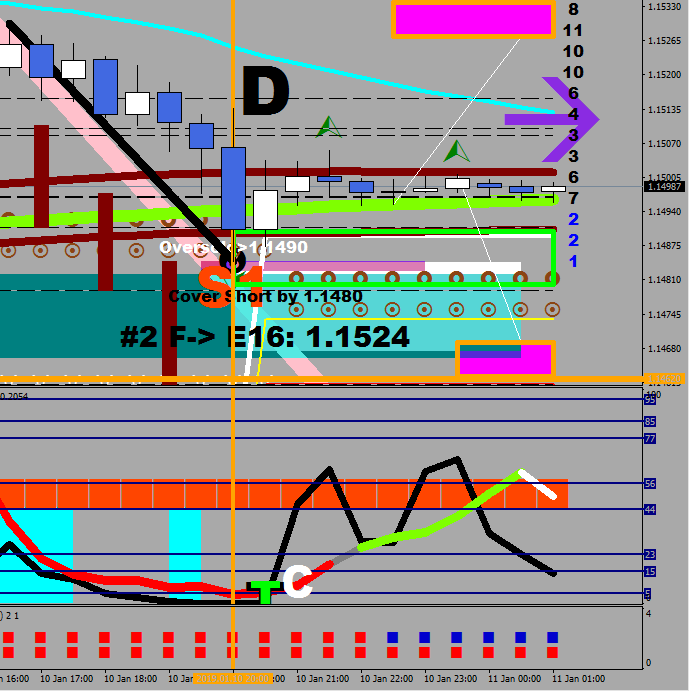
Better. As you can see, one more leg down with terminal length would take price to the Swing Buy level of 1.1462; yet I don’t expect price to reach beyond the teal RSI2 support. From the looks of it this was another shy away from the projected distance line.

Price just broke the continuation divergence displayed by my God Awesome indicator, and is on the way up to 1.1524. This should be your wave 1 up.

Market Makers had their opportunity to square their shorts.