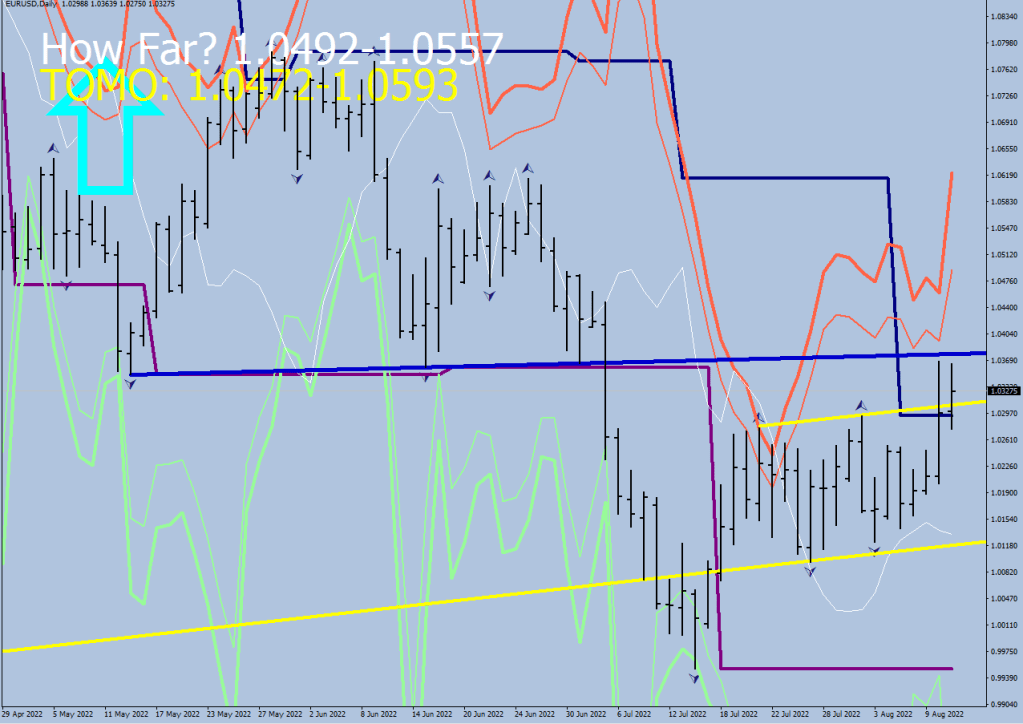
Angel Eyes in 2022

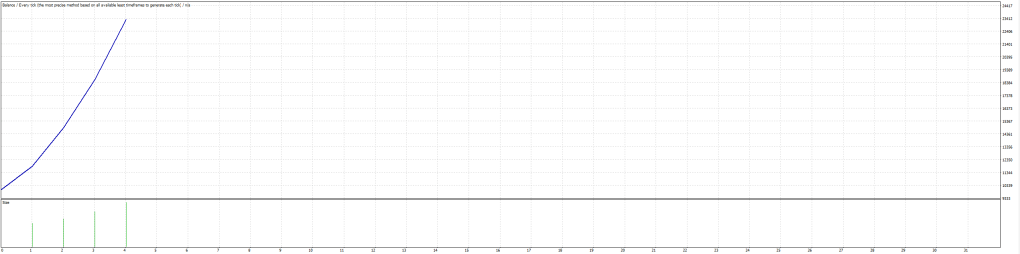
End of August, this gives us 8 months of data in 2022 so far. Let’s start testing on my newest comp for the first time.

Just look at the level of sophistication here, the active trail stop management.

Think of how you did with your investments this year. Think of what the dollar denomination difference could had contributed.

That’s another 13% extra over the relative currency depreciation. 150%+? Oh, the pain!

For those who may think that I had the same ideas for every auto trading routine I ever made, here’s some other routines and their results.

The Boogie Man

Silver Surfer
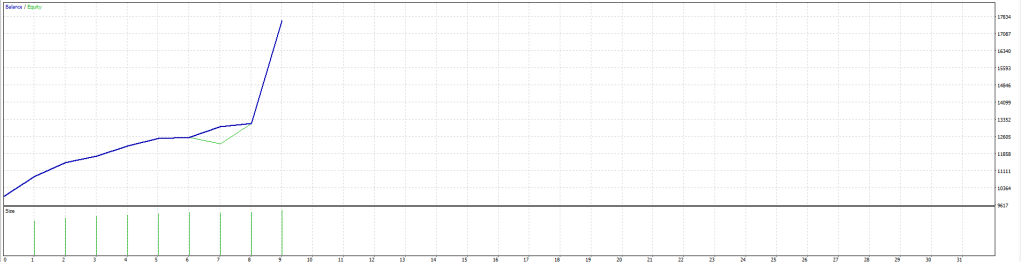
Trust me, I am a champion of the field when it comes to auto trading ideas. Would I trust meaningful percentage of the available capital to these routines? NO. Results are always curve fitted, they may be true for a most likely cherry picked period, especially if you get some additional filters to weed out the trades that bring down the results, they are showing the best and nothing of the worst. If you get a bad turn at first, you can say goodbye to that capital. There is no way of including the commission or the broker’s spread expansion excercises with added slippage into these results either not to mention the market gaps if you get caught with a holding on the wrong side. Displaying auto trading back tests would only showcase talent in deception.

You can turn off the longs or the shorts for the period examined. Yes, it is possible to find something that is unique about a bad month in retrospect and those kind of trades would not get picked up in the future due to some additional filter i.e. you could simply remove trading if the Month() was equal to 6. This however cannot prepare the routine for everything that the market may introduce in the future.

Case and point: what if I started the back testing for Angel Eyes in June? What if I forgot to disclose conveniently that I halted the first test permaturely – somewhat intentionally?

Look at where being honest has gotten me… You don’t see me running ads & selling courses on YouTube. You don’t see me pretending to have trading gains by depositing the inflow from people’s purchases of my worthless junk. You certainly don’t see me pointing to a crypto event to explain a missing 2M USD, after managing to talk this money into existence to prove my own worth and penis size. Yes, Cameron Zeus has finally let the cat out of the bag. “That’s life” – he shrugged off this imaginary happening. It is rather easy to part from something you never had in the first place.

Don’t worry, I will answer the question of how to make money consistently here, on this blog.

“He is the Tai Lopez of Forex”

Leveraged Chess

You are not going to like this one, it has lots of math not to mention the wormholes, foxtrot, fox holes, Jackson hole and a lover spurned between the ranges that throw off everything.
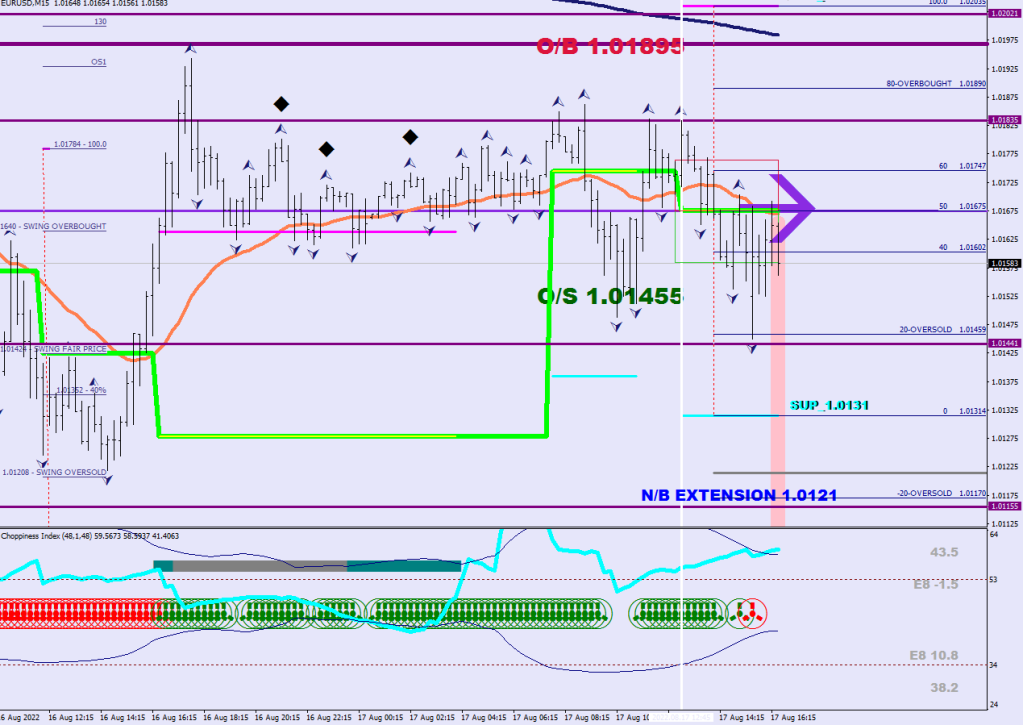
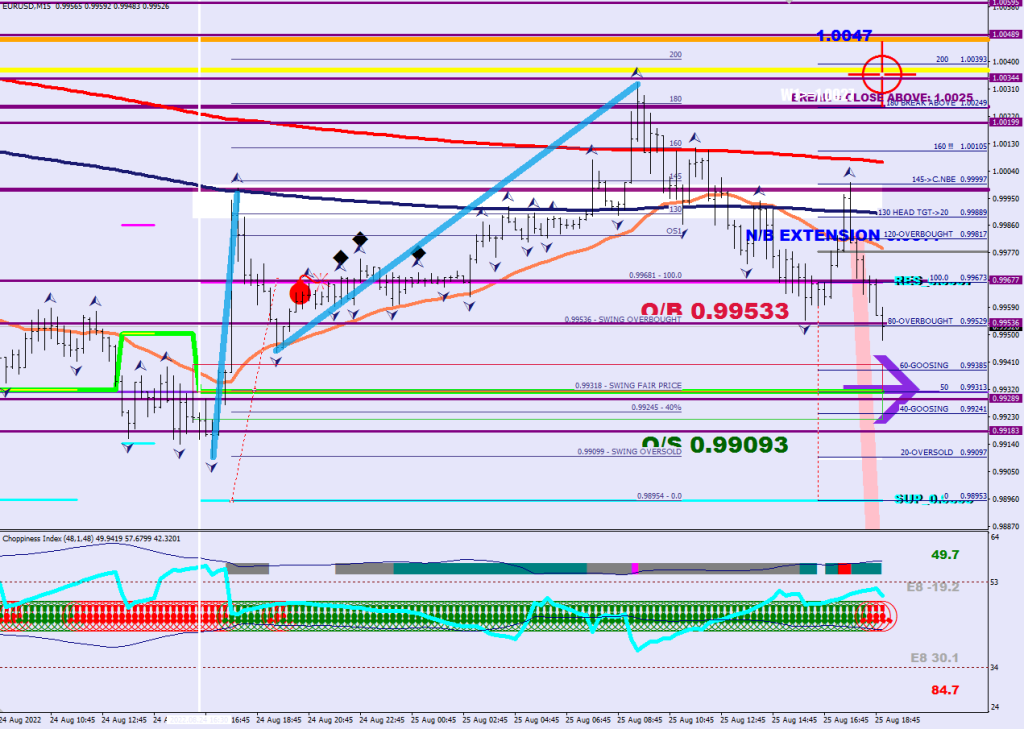
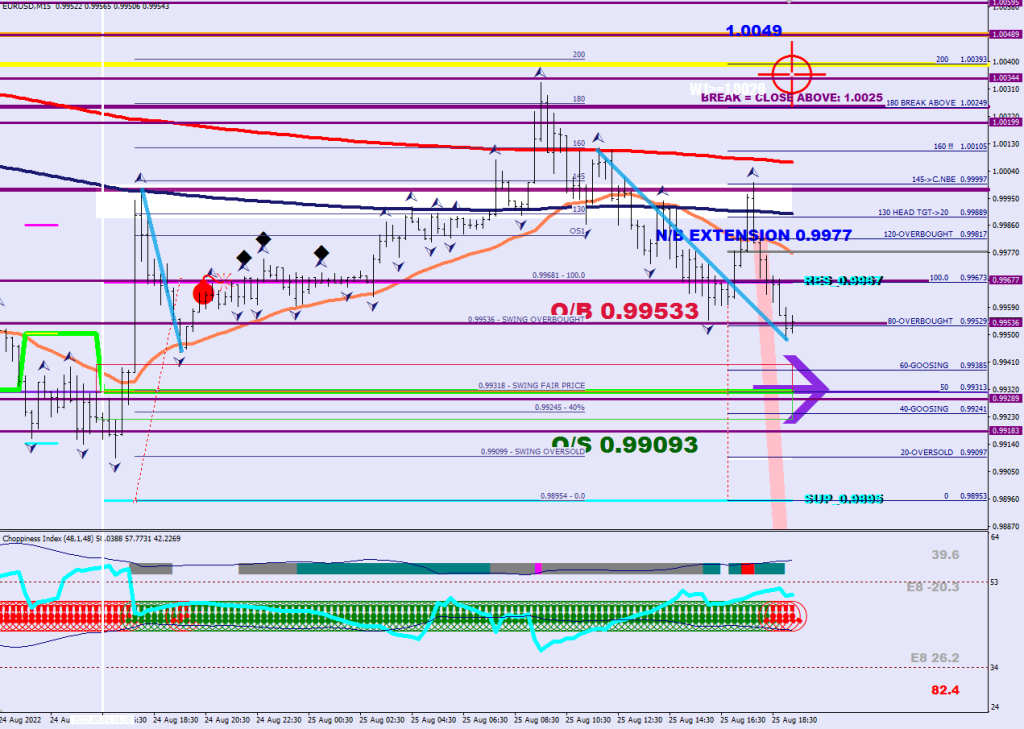
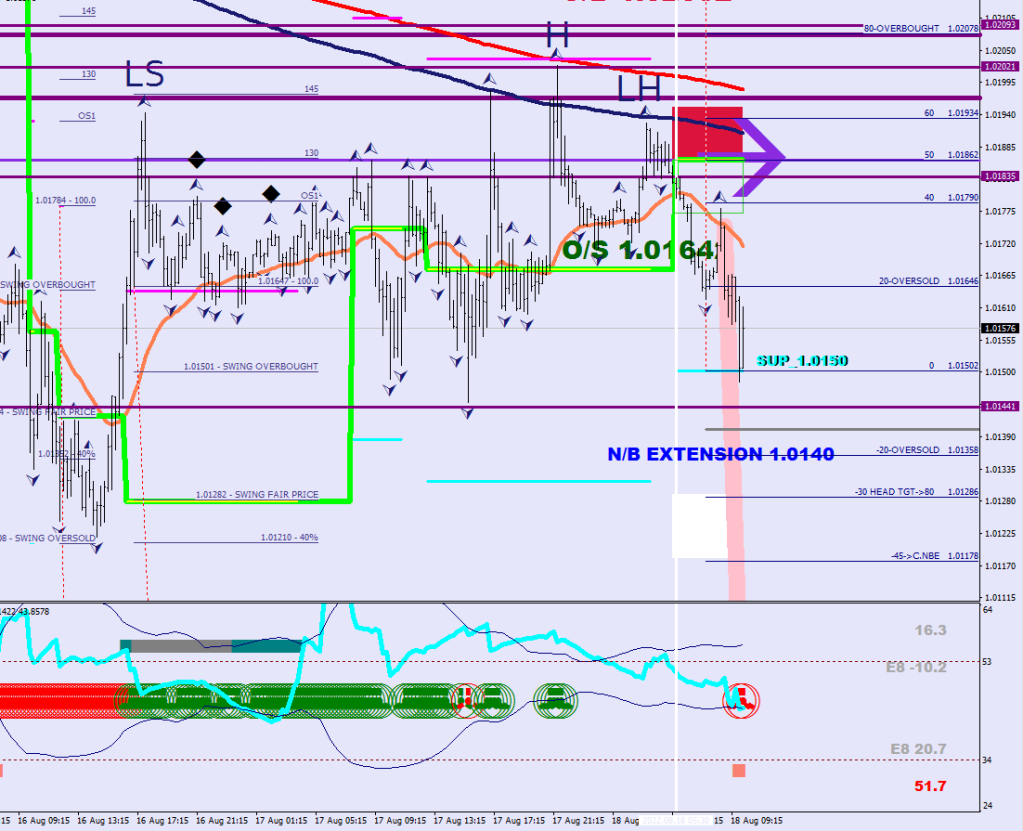
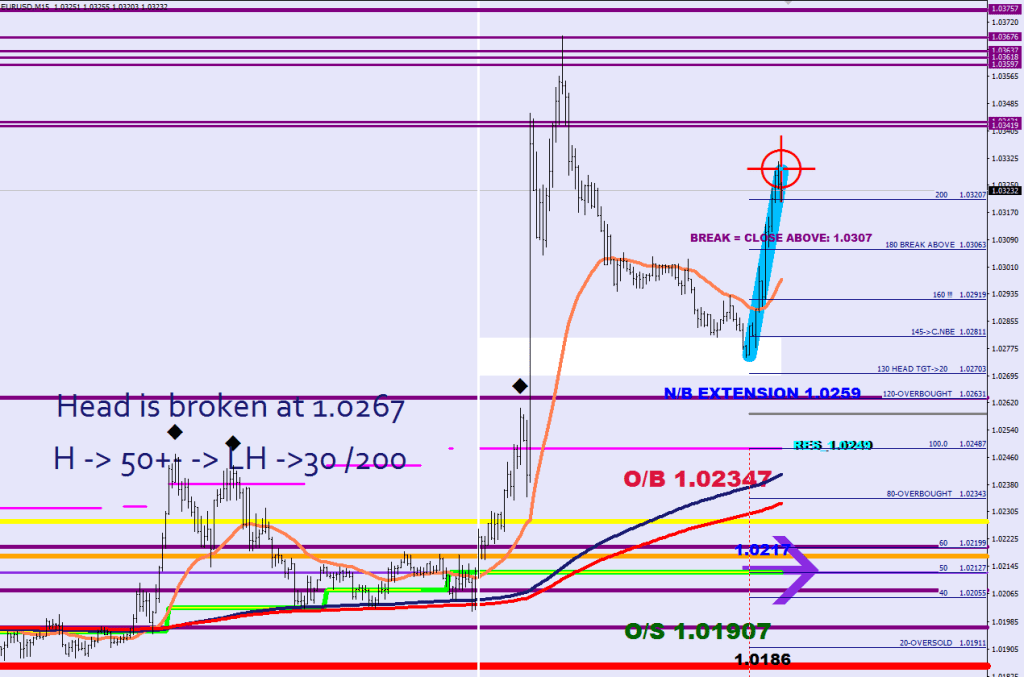
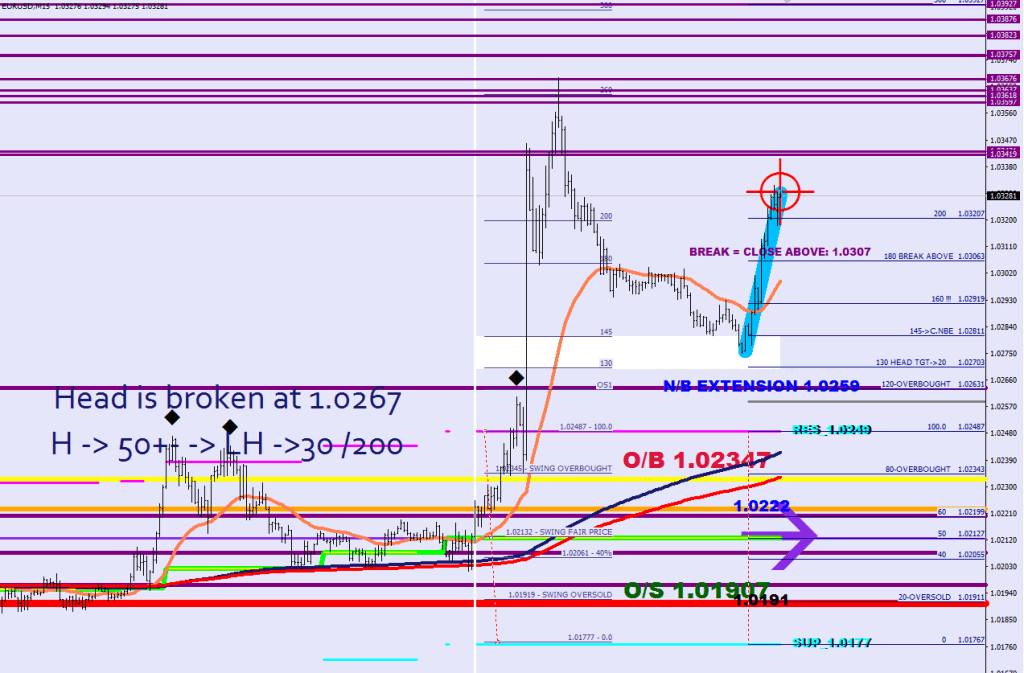
If you measure this move from the 20% on the range-pendulum-wheel to 170%, you get 150%.
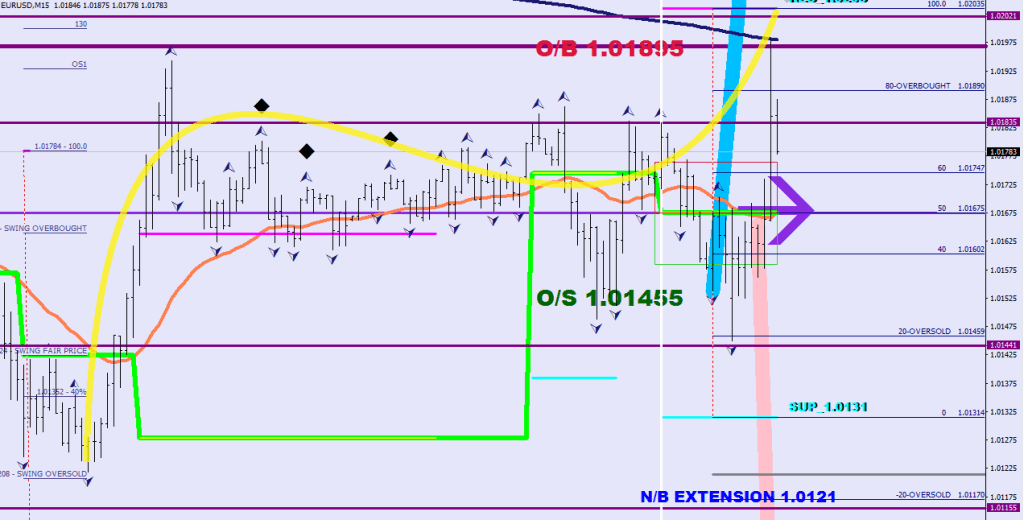
If you measure the first blue line, between 20 and 140, there is 120 degrees. If you measure the second blue, it went from 70 to 190. 120 degrees again. Recognize the importance of the 8-hour EMA of opens in orange. Don’t mind the red bomb, I’m not settled on the filters yet.

What is the point in this mindless exercise? To determine the bull’s flower.

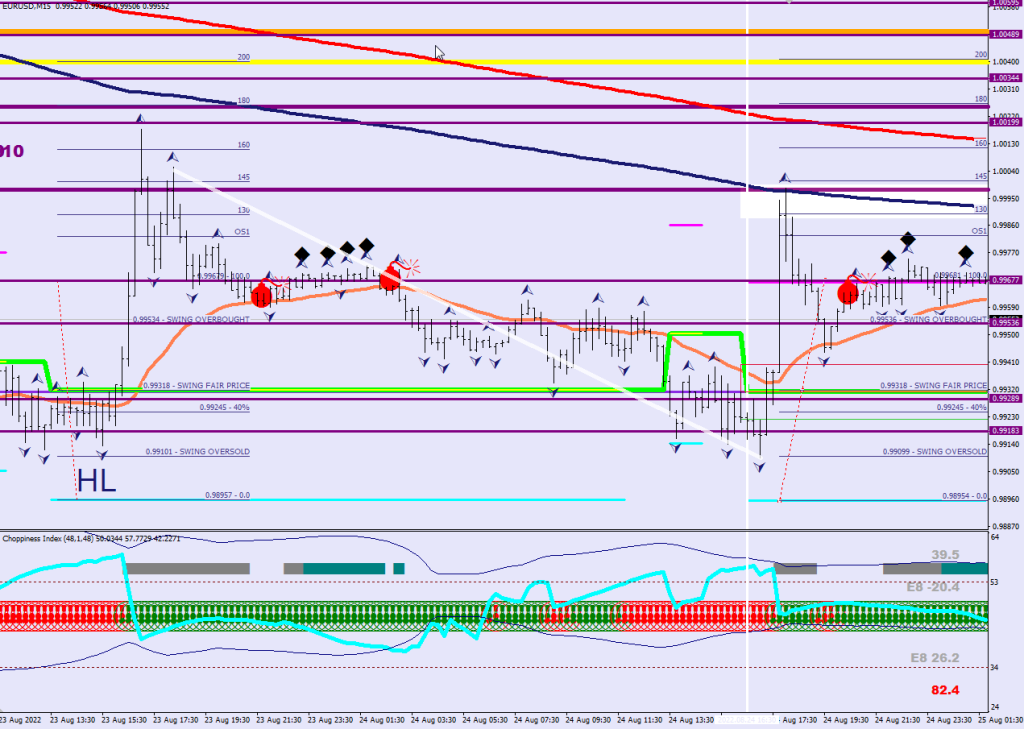
If you measure form 145 to 20, you get 125. But wait, I did not measure from the swing high! Yes. The one thing you should take away from this blog entry is the Higher Low / Lower High prints after the swing point. They are an unfair advantage, a right foot out instead of a sprint from squatting down. The starting off the right foot is the leverage in this chess game. Other than the seemingly random origo-replacement of the range.

140-70 = 70, 160-70 = 90.

Why am I telling you all this and why am I telling you all kind of things and why am I making you miserable? Don’t you feel like you have to kill someone?

See the thing is, that the bear’s flower has to exceed the bull’s flower if you want to be starting something, Michael.

Also, don’t you think that it is an actionable piece of information that you should not be fading an up move closer than 120 degrees from the swing low / higher low. Has it no value that price would get back to the other side of the 8-hour EMA, and you should see at least 70 degrees of distance for a short?

Bears power, bulls power, Jerome Powell, turtle power.

Is The Bottom In?

Watch my hand, I’ll do it in slow motion.

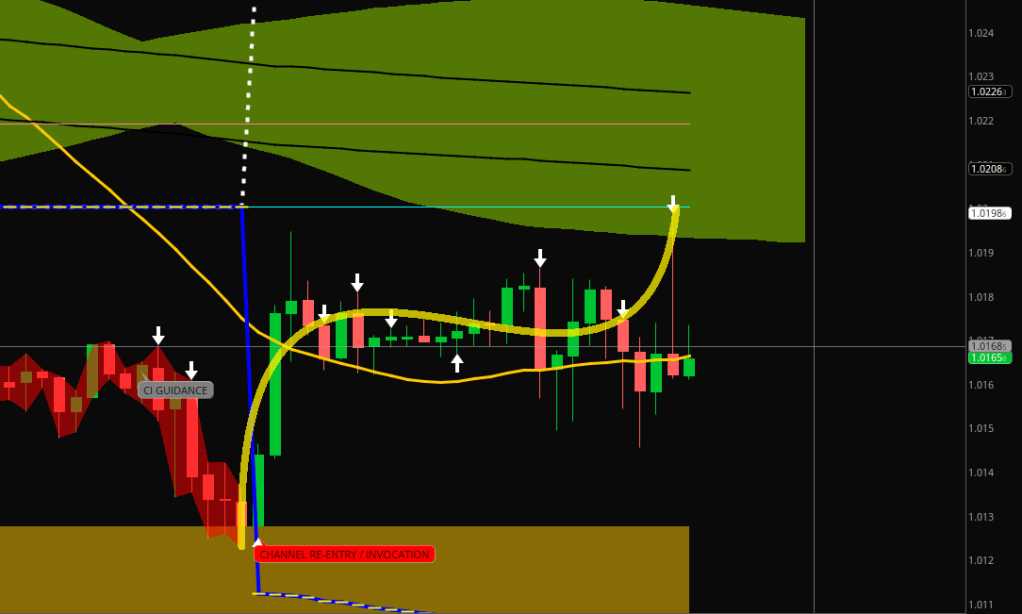
On the bottom is the CI chronometer / metronome. The question it is asking repetitively is about the bottom when the radioactivity is red. Now, why was that fractal landing on the zero line not a Head?

Because the price arrived from inside a previous range.

Why was this a dynamite head?

The dynamite had a corresponding target – a “160 degree” full swing on the Range Pendulum.

You knew this? Very well, come sit in the front!

The First Blood print was where they dumped a larger short position into the German PMI today. They were not careful enough and they moved the market tipping their hand. I actually could spot this in the price movement.

     ///first cut up

   if (NBEU[i]!=EMPTY_VALUE && NBED[i]!=EMPTY_VALUE)
   if (iLow(symbol,0,iLowest(symbol,0,MODE_LOW,100,i))<NBED[iLowest(symbol,0,MODE_LOW,100,i)] && High[i]>iLow(symbol,0,iLowest(symbol,0,MODE_LOW,100,i))+480*Point && Low[i]<iLow(symbol,0,iLowest(symbol,0,MODE_LOW,100,i))+480*Point
      && (High[i]<taxi[i]-70*Point || (High[i]>iMA(symbol,0,32,0,MODE_EMA,PRICE_OPEN,i)+50*Point && Low[i]<taxi[i])) && High[i]>taxi[i]-500*Point
   ){
////zero dn   
      if (iFractals(symbol,0,MODE_LOWER,i) && Low[i-1]>Low[i] && Low[i]>NBED[i]-330*Point && 
        (
         (High[i]>NBED[i] && Low[i]<NBED[i])  || (High[i+1]>NBED[i+1] && Low[i+1]<NBED[i+1]) || (High[i+2]>NBED[i+2] && Low[i+2]<NBED[i+2])
         || (High[i+3]>NBED[i+3] && Low[i+3]<NBED[i+3])  || (High[i+4]>NBED[i+4] && Low[i+4]<NBED[i+4]) 
         ) 
         &&
         (
          (Low[i+22]<NBED[i+22]-330*Point && NBED[i+22]==NBED[i+25]) || (Low[i+23]<NBED[i+23]-330*Point && NBED[i+23]==NBED[i+25])
         )
         && NBED[i+23]!=EMPTY_VALUE
      ){
        ObjectCreate("Obellix"+IntegerToString(i), OBJ_TEXT, 0, Time[i], Low[i]+80*Point); 
     ObjectSetText("Obellix"+IntegerToString(i), CharToStr(77), 38, "Wingdings", clrDarkGreen);
     if (NBED[i+23]==EMPTY_VALUE)  ObjectSetText("Obellix"+IntegerToString(i), CharToStr(77), 38, "Wingdings", clrYellow);
     
      ObjectCreate("Targeted"+IntegerToString(i), OBJ_TEXT, 0, Time[i],NBEU[i]+((NBEU[i]-NBED[i])/10*4.5)+50*Point );  
                ObjectSetText("Targeted"+IntegerToString(i), "TGT: "+DoubleToStr(NormalizeDouble(NBEU[i]+((NBEU[i]-NBED[i])/10*4.5),4),4), 16, "Arial Black",  clrPurple);
   }

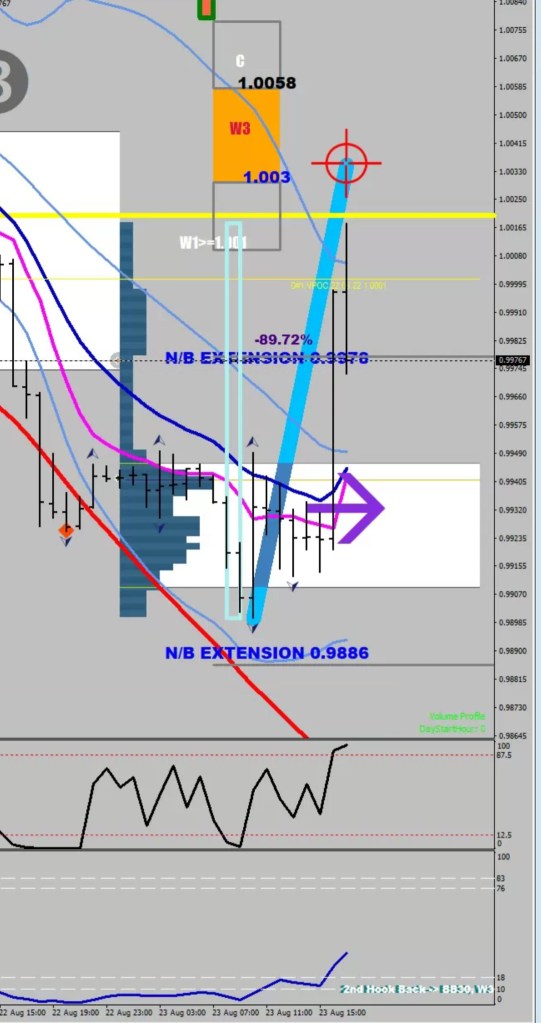
The yellow horizontal line below is the goldilocks level.

As you can see, it splits the gray box in half – halfway between what a typical Wave 1 can manage and what a Wave 3 is likely to achieve.

This is a qualified Wave 1. You can see the hook back up on the stochastic losing the embedding. If this does not get to 76 within 46 hours, you know what you must do. The undercut could be anything up to about 45 pips, so scale in. 10, 20, 30 etc.

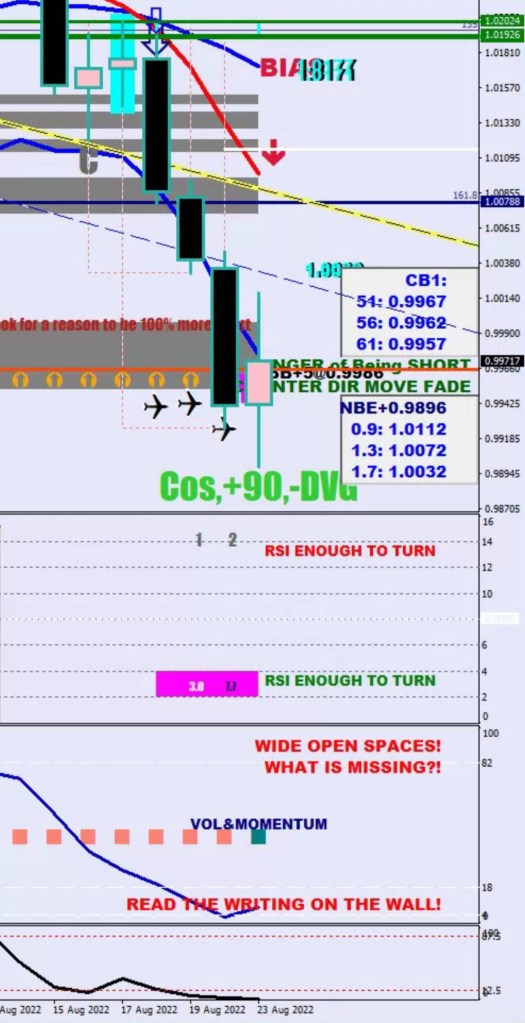
The optimal 18-sample stochastic reading for a successful turn is between 9.5 and 4.4. The previous day went too oversold, the number was plotted in white.

Why doesn’t this one say CAP for capsize attempt? I just told you, the previous day went deeply oversold. Today is a low, but not THE Low.

Too much acceleration. Have to re-balance with a divergence.

 if (st18[i]<9.5) { ObjectSetText("Bingo"+IntegerToString(i), "CAP", 26, "Impact", DarkGreen); momentum[i]=1;
            cap[i]=1;
            if (st18[ArrayMinimum(st18,10,i+1)]<4.4) {ObjectSetText("Bingo"+IntegerToString(i), "Cos,+90,-DVG", 26, "Impact", LimeGreen); c77[i]=true;

Here’s an example from earlier. From the CoverOverSold low to the swing high there was 113 pips.

The swing low printed 79 pips lower than the Cos low.

You always seem to get some additional move the next day. This one had 88 pips from the Cos low (this is why I chose 90).

This one had 2 more days up and 157 pips in total.

There would always be a lower low after a Cos +90.

I’ve shown you this before.

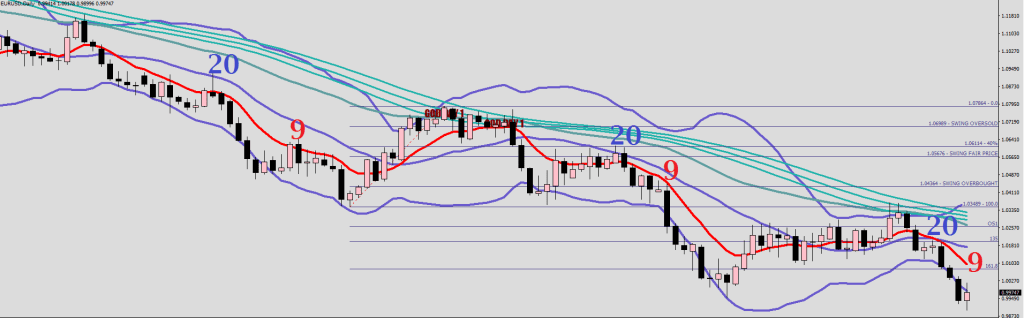
The market first fails at the 20SMA and later at the 9EMA before making the final wave down.

So if I had to guess, I would say there’d probably be a rendezvous with the 9 tomorrow or in the coming days. Yes, all new legs down started above the E-44.
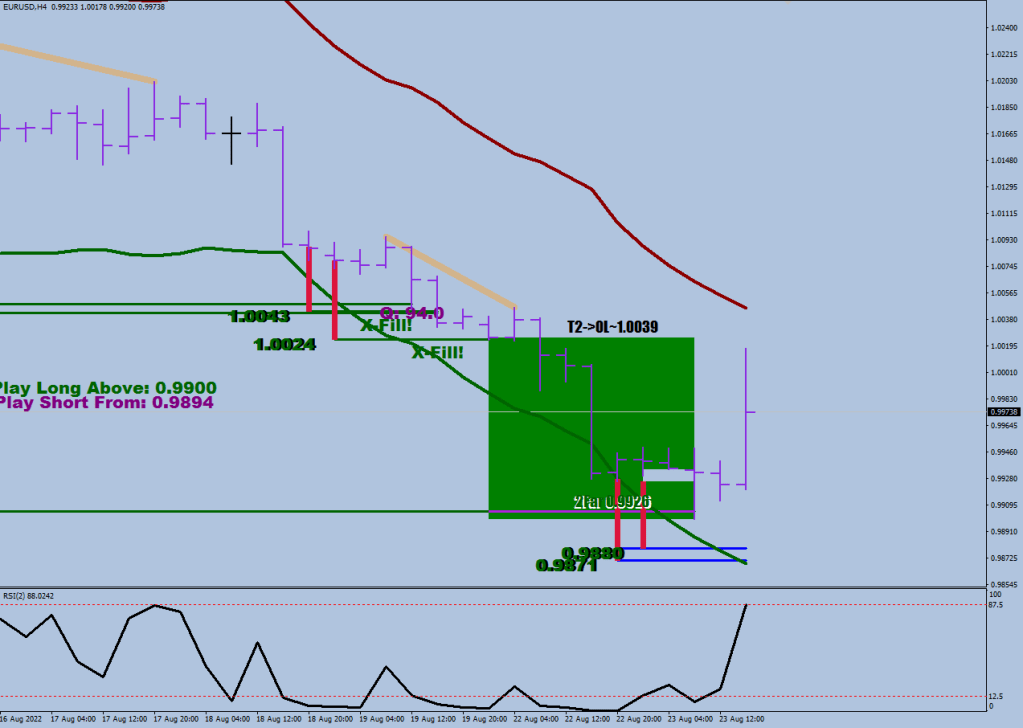
Projected distance numbers on the bottom. 4H RSI2 is going to print a continuation divergence at the high.

Grab The Cat

I could have chosen from a lot of titles.

Every Waking 48 hours, Dogging the Wag etc.

Gonna be a simple one to follow, this.

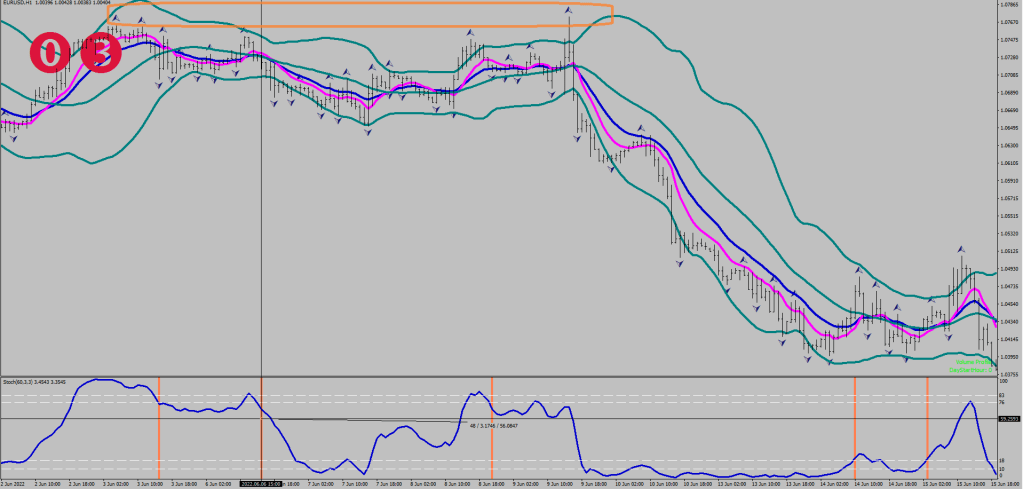
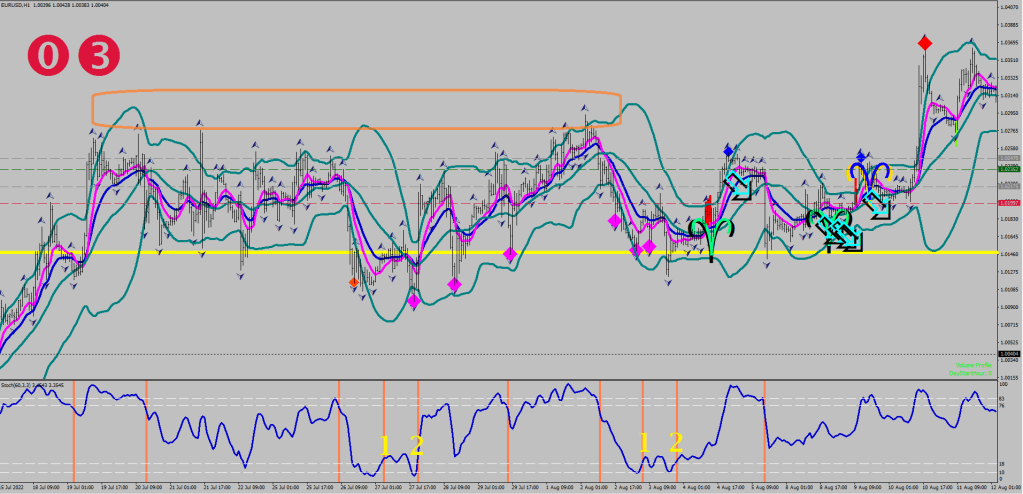
Stochastic K of 60 samples simple over medians, as the days are 60 hours long. If Brian Shannon can have 65-minute hours, I can have 60-hour days.

So the concept goes: you need one sidedness and at least two crossbacks through the plotted lines.

The lines are at 83, 76, 18 and 10.

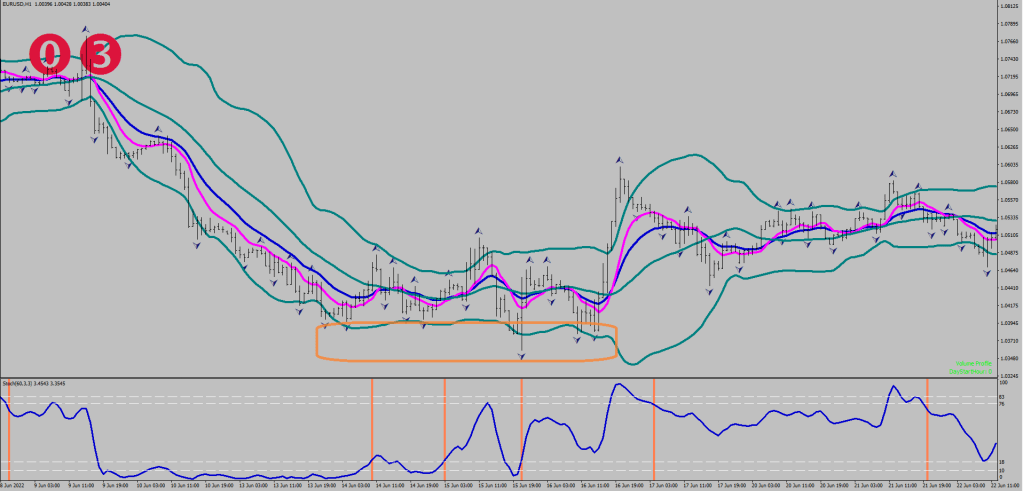
Once you had 2 crossbacks, you get a field beyond the furthest fractal that has a height of less than a no break extension which is around 36 pips on the Euro. This is where you need to act on the re-visit.

The hookback on the bottom I would count as 1 not 2, as the first attempt immediately failed back down. The point is that this was a pullback, not a new wave down.

The same concept in the mirror below:

The same concept in the other mirror above:

Now, let’s talk Danny Glover. In the prior examples the market managed to tag the other side within 48 horas. In the example below this did not happen.

This means that you cut the wrong wire, and you need to grab the cat. No moratorium to be drawn. Fresh coconuts, fresh count. Double cycle.

So, how does an ABC correction look like? How about 2 terminals made up of two hookbacks each?

What is the count currently?

An impulse wave would have at least 3 hook-backs, and turn upon printing a Blood Diamond. No moratorium whatsoever. A Blood Diamond is a fractal that is at least 35 pips away from the E-44 and had a pedal to the metal 5-hour RSI2 sequence.

 if (i>1 && iFractals(symbol,0,MODE_UPPER,i) && High[i]>iMA(symbol,0,44,0,MODE_EMA, PRICE_MEDIAN,i)+350*Point && RSI2[i+5]>96 && RSI2[i+4]>96 && RSI2[i+3]>96 && RSI2[i+1]>96 && RSI2[i+1]>96 && (RSI2[i-1]<90  || RSI2[i-2]<90 )) EU2[i]=High[i];

Into The Unknown

I have identified 3 kind of turns.

All 3 require price having moved outside the range.

The V-bottom at 0.995 belongs to the first group.

Second Color usually means price printing a high/low outside the range but closer than 25 pips, then a high/low in the 25/50 band and never going beyond this zone.

This left shoulder turn gets confirmed by price going back to the overbought level, then printing a Head at the zero level.
This is another Second Color example. More than 1/2 of the turns belong here.

The 3 of the same Color has two different variations.

Var A: The Taper

The taper reaches a signal depth, but fails to carry on with the trend: i.e. no more lower lows / higher highs. This example belongs here and not with the 2nd color ones due to price having a hard time coming back into the range at first. This is not a common one at all.

Var B: The Divergence

The last down move ended this way. It went green 3 times and after finishing with the measuring leg, printed a divergent leg that got really close to the oversold end of the range.
Another example. Price went magenta 3x. Copy and paste from above. After 3 colors of the same, this has the higher likelihood.

Practice questions:

Which category does this example fall under? Second Colour/Taper/Divergence?
3 examples at once. Which one was the Taper? What were the other two?
Have you seen a 2-color top? Could this be turned to 3 of the same taper / divergence? Why not?

Color understanding

The gray means close proximity to the E121 hourly. I don’t usually count it as a color, but it does play as a color change as a second color.

The magenta is 64-100 pips away outside the range.

   if (High[i]>NBEU[i]) {ObjectCreate("Zingende"+DoubleToStr(i), OBJ_TEXT, 1, Time[i], 58); ObjectSetText("Zingende"+DoubleToStr(i), CharToStr(110), 18, "Wingdings", clrTeal);
         if (High[i]>NBEU[i]+250*Point && High[i]<NBEU[i]+500*Point) ObjectSetText("Zingende"+DoubleToStr(i), CharToStr(110), 18, "Wingdings", clrRed);
         if (iHigh(symbol,0,iHighest(symbol,0,MODE_HIGH,25,i))>iHigh(symbol,0,iHighest(symbol,0,MODE_HIGH,60,i+26)) && High[i]-iMA(symbol,0,484,0,MODE_EMA,PRICE_MEDIAN,i)<640*Point) ObjectSetText("Zingende"+DoubleToStr(i), CharToStr(110), 18, "Wingdings", clrGray);
         if (High[i]>NBEU[i]+640*Point && High[i]<NBEU[i]+1000*Point) ObjectSetText("Zingende"+DoubleToStr(i), CharToStr(110), 18, "Wingdings", clrMagenta);
      }
   else if (Low[i]<NBED[i]) {ObjectCreate("Zingende"+DoubleToStr(i), OBJ_TEXT, 1, Time[i], 34); ObjectSetText("Zingende"+DoubleToStr(i), CharToStr(110), 18, "Wingdings", clrSalmon);
         if (Low[i]<NBED[i]-250*Point && Low[i]>NBED[i]-500*Point) ObjectSetText("Zingende"+DoubleToStr(i), CharToStr(110), 18, "Wingdings", clrGreen);
         if (Low[i]>iMA(symbol,0,484,0,MODE_EMA,PRICE_MEDIAN,i)) ObjectSetText("Zingende"+DoubleToStr(i), CharToStr(110), 18, "Wingdings", clrGray);
         if (Low[i]<NBED[i]-640*Point && Low[i]>NBED[i]-1000*Point ) ObjectSetText("Zingende"+DoubleToStr(i), CharToStr(110), 18, "Wingdings", clrMagenta);
        }

Zingende means singing

Draad means drót.

The first nuclear reaction is the deepest.

Just don’t forget the shape.

Into the well known

From oversold to the force field of the Lema

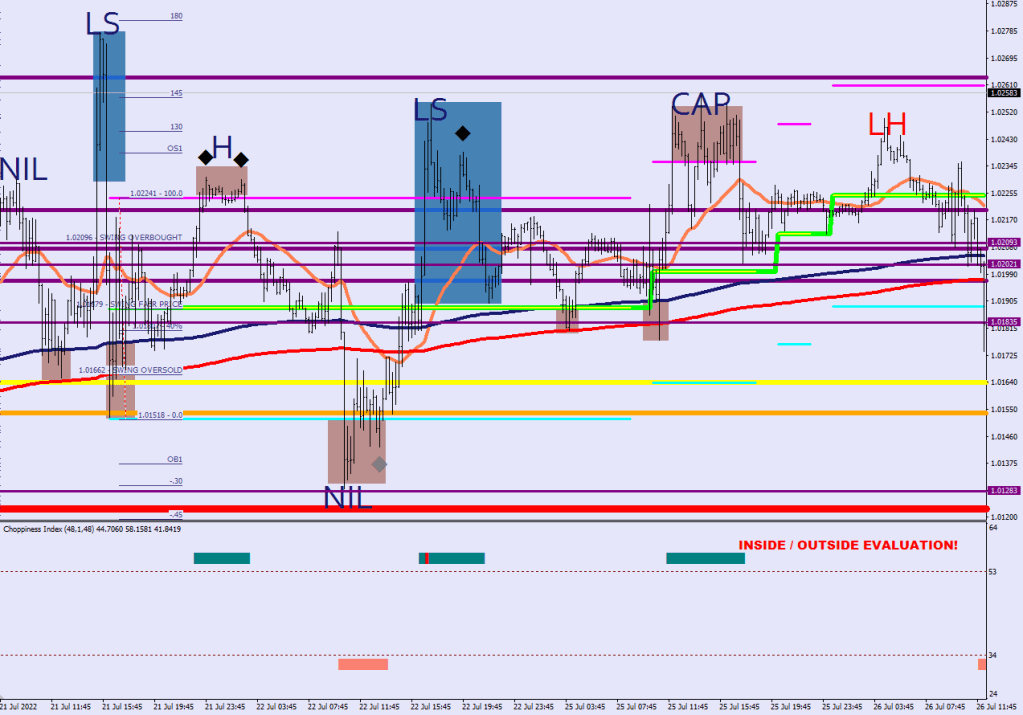
LS: 140, H: 100, LH: 80

Dangerous

That is the break of this imaginary channel.

To take the 1st blood concept a little bit further, here is some of my recent radio-activity.

The first blood is the first red print. The confirmation lines arrive a whole lot later, but the level is essentially the same.
  if (i<300 && iHigh(symbol,0,iHighest(symbol,0,MODE_HIGH,100,i+5))-Low[i]>480*Point){
       ObjectCreate("Rickytx"+IntegerToString(i), OBJ_TEXT, 1, Time[i], 50); 
       ObjectSetText("Rickytx"+IntegerToString(i), CharToStr(62), 38, "Wingdings", clrRed);
         ObjectSet("Rickytx"+IntegerToString(i),OBJPROP_BACK,1);
   }
   
      if (i<300 && High[i]-iLow(symbol,0,iLowest(symbol,0,MODE_LOW,100,i+5))>480*Point){
       ObjectCreate("Rickytx"+IntegerToString(i), OBJ_TEXT, 1, Time[i], 50); 
       ObjectSetText("Rickytx"+IntegerToString(i), CharToStr(62), 38, "Wingdings", clrGreen);
         ObjectSet("Rickytx"+IntegerToString(i),OBJPROP_BACK,1);
   }

Yes, I do understand the bias in the above code coming from the linear execution and the same plot of the the two halves. If the distance from the last 105-sample high to the current low is greater than 48 pips and the distance from the last 105-sample low to the current high is also greater than 48 pips, the print would be green, but I like it that way. Bias of the last word.

These two numbers in pips from now on have a real time plot.

 ObjectCreate("FUNNATURE"+8,OBJ_LABEL,1, 2,0);
      ObjectSetText("FUNNATURE"+8,DoubleToStr(NormalizeDouble((High[0]-iLow(symbol,0,iLowest(symbol,0,MODE_LOW,100,5)))*10000,1),1),11,"Arial Black");
  ObjectSet("FUNNATURE"+8,OBJPROP_CORNER,1);
    ObjectSet("FUNNATURE"+8,OBJPROP_XDISTANCE,35);
  ObjectSet("FUNNATURE"+8,OBJPROP_YDISTANCE,17);
  ObjectSet("FUNNATURE"+8,OBJPROP_COLOR,clrDarkGray);
 if (High[0]-iLow(symbol,0,iLowest(symbol,0,MODE_LOW,100,5))>480*Point) ObjectSet("FUNNATURE"+8,OBJPROP_COLOR,clrGreen);
 
 
  ObjectCreate("FUNNATURE"+9,OBJ_LABEL,1, 2,0);
      ObjectSetText("FUNNATURE"+9,DoubleToStr(NormalizeDouble((iHigh(symbol,0,iHighest(symbol,0,MODE_HIGH,100,5))-Low[0])*10000,1),1),11,"Arial Black");
  ObjectSet("FUNNATURE"+9,OBJPROP_CORNER,3);
    ObjectSet("FUNNATURE"+9,OBJPROP_XDISTANCE,35);
  ObjectSet("FUNNATURE"+9,OBJPROP_YDISTANCE,17);
 ObjectSet("FUNNATURE"+9,OBJPROP_COLOR,clrDarkGray);
 if (iHigh(symbol,0,iHighest(symbol,0,MODE_HIGH,100,5))-Low[0]>480*Point) ObjectSet("FUNNATURE"+9,OBJPROP_COLOR,clrRed);

Thirst Time

Catching a peak may not always be that easy. I for instance would question peaks that are too close to the 121-E hourly.

Let’s talk about shedding the first blood.

This new, vertical lines plot is a “confirmation” of a move being in place: must get in on the new direction now, and the sophistication is the scaling in size part. Say the 15-minute candle’s low was X when the red line printed. Now we should see very limited counter-directional volatility. Place a sell 10-pips above the low and add more at 15, 20 pips. Keep in mind, there may not be much beyond 10-pips, so the initial size should already be a full hedge if you have holdings.

     ///first cut down

   if (NBEU[i]!=EMPTY_VALUE && NBED[i]!=EMPTY_VALUE)
   if (iHigh(symbol,0,iHighest(symbol,0,MODE_HIGH,100,i))>NBEU[iHighest(symbol,0,MODE_HIGH,100,i)] && Low[i]<iHigh(symbol,0,iHighest(symbol,0,MODE_HIGH,100,i))-480*Point && High[i]>iHigh(symbol,0,iHighest(symbol,0,MODE_HIGH,100,i))-480*Point
      && Low[i]>taxi[i] && Low[i]<taxi[i]+200*Point
 && High[i]<iMA(symbol,0,32,0,MODE_EMA,PRICE_OPEN,i)+50*Point
      && iLow(symbol,0,iLowest(symbol,0,MODE_LOW,100,i))>iLow(symbol,0,iLowest(symbol,0,MODE_LOW,100,i+100))
   ){
            ObjectCreate("Rickyt"+IntegerToString(i),OBJ_VLINE,1, Time[i], 0);
         ObjectSet("Rickyt"+IntegerToString(i),OBJPROP_COLOR,clrRed );
            ObjectSet("Rickyt"+IntegerToString(i),OBJPROP_WIDTH,1);
            ObjectSet("Rickyt"+IntegerToString(i),OBJPROP_STYLE,STYLE_DOT);
          ObjectSet("Rickyt"+IntegerToString(i),OBJPROP_BACK,1);   
   }
   
   
      ///first cut up

   if (NBEU[i]!=EMPTY_VALUE && NBED[i]!=EMPTY_VALUE)
   if (iLow(symbol,0,iLowest(symbol,0,MODE_LOW,100,i))<NBED[iLowest(symbol,0,MODE_LOW,100,i)] && High[i]>iLow(symbol,0,iLowest(symbol,0,MODE_LOW,100,i))+480*Point && Low[i]<iLow(symbol,0,iLowest(symbol,0,MODE_LOW,100,i))+480*Point
      && High[i]<taxi[i] && High[i]>taxi[i]-500*Point
   ){
            ObjectCreate("Rickyt"+IntegerToString(i),OBJ_VLINE,1, Time[i], 0);
         ObjectSet("Rickyt"+IntegerToString(i),OBJPROP_COLOR,clrGreen );
            ObjectSet("Rickyt"+IntegerToString(i),OBJPROP_WIDTH,1);
            ObjectSet("Rickyt"+IntegerToString(i),OBJPROP_STYLE,STYLE_DOT);
          ObjectSet("Rickyt"+IntegerToString(i),OBJPROP_BACK,1);   
   }

The first red example shows a kick back of 46 pips. Just shy of the 48 mentioned on the last line.

The filters may not be final, but this is a start. Filters don’t have to symmetrical, and may change with the season / market type. Of course, after a head / cap / hat the logical move is back to the overbought for a Lower High.
These lines are great for confidence if you can’t make up your mind.

I used to know a girl, who had like 2 favorite jokes, and she kept on telling them to everyone and kept on cracking herself up.

One was: Doctor, I am so uncertain. Or maybe I am not?!

The other was:

– Doctor, I have a problem with my spiral!

– Sit down!

(showing heavy bouncing moves up and down)

I named my daughter after her.

You can also use Andreas Steno Larsen for when not to do something. He went long the Euro last week.

Dabadee Dabadaa

So there you have it. The most objective indicator in the world was born.

There is no left or right. There is inside of the range or outside.

There is 25+ and 50+ pips outside the range for a color change.

Let’s face it, you are looking for a color change for the most part.

Only a range bound market would turn between range sync ups or on an end of sequence prints (tip toe into the unknown and being scared off by no volume coming in).

These ideas have come a long way. The 15-min ATR Targets Continuous indicator has reached maturity.

There are no direct correlations between the colors and the actions they should trigger, but a change of color should make you want to change your stance / make an action.

The quality went from this…

To this.

if (NBEU[i]!=EMPTY_VALUE && NBED[i]!=EMPTY_VALUE && (High[i]>NBEU[i] || Low[i]<NBED[i]) ){
    
   if (High[i]>NBEU[i]) {ObjectCreate("Zingende"+DoubleToStr(i), OBJ_TEXT, 1, Time[i], 58); ObjectSetText("Zingende"+DoubleToStr(i), CharToStr(110), 18, "Wingdings", clrTeal);
         if (High[i]>NBEU[i]+250*Point && High[i]<NBEU[i]+500*Point) ObjectSetText("Zingende"+DoubleToStr(i), CharToStr(110), 18, "Wingdings", clrRed);
      }
   else if (Low[i]<NBED[i]) {ObjectCreate("Zingende"+DoubleToStr(i), OBJ_TEXT, 1, Time[i], 34); ObjectSetText("Zingende"+DoubleToStr(i), CharToStr(110), 18, "Wingdings", clrSalmon);
         if (Low[i]<NBED[i]-250*Point && Low[i]>NBED[i]-500*Point) ObjectSetText("Zingende"+DoubleToStr(i), CharToStr(110), 18, "Wingdings", clrGreen);
        }
        ObjectSet("Zingende"+DoubleToStr(i), OBJPROP_BACK, 1 );
   
}

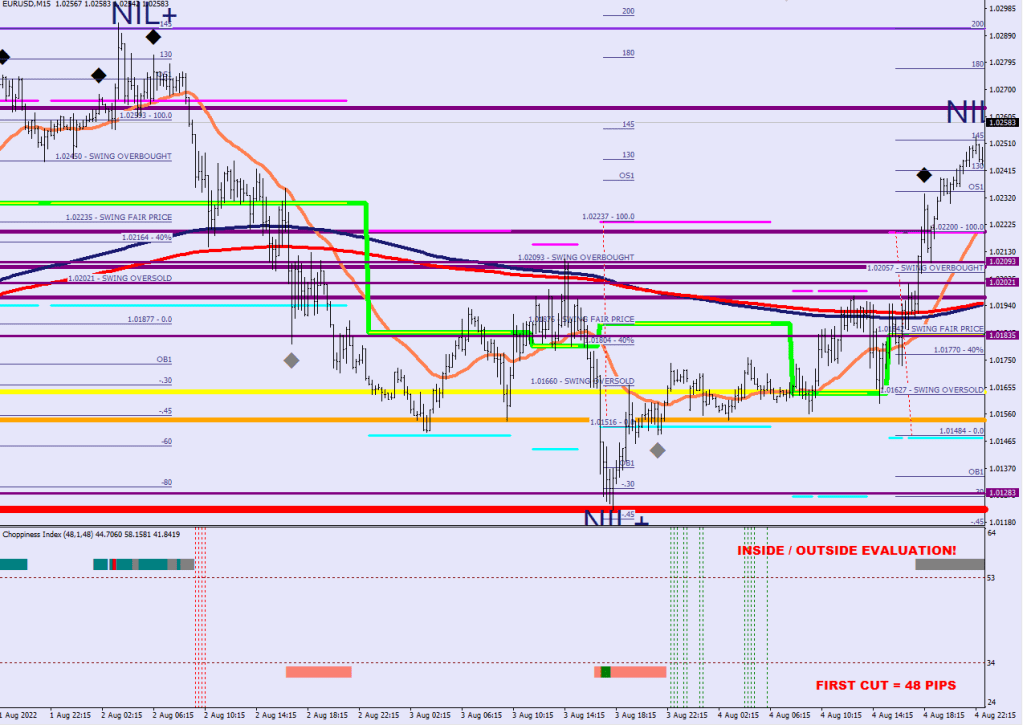
Inside Outside Evaluation

Let’s add to the difficulty level here.

We do not have the luxury of a market printing a Left Shoulder or even a Head to signal a pending turn.

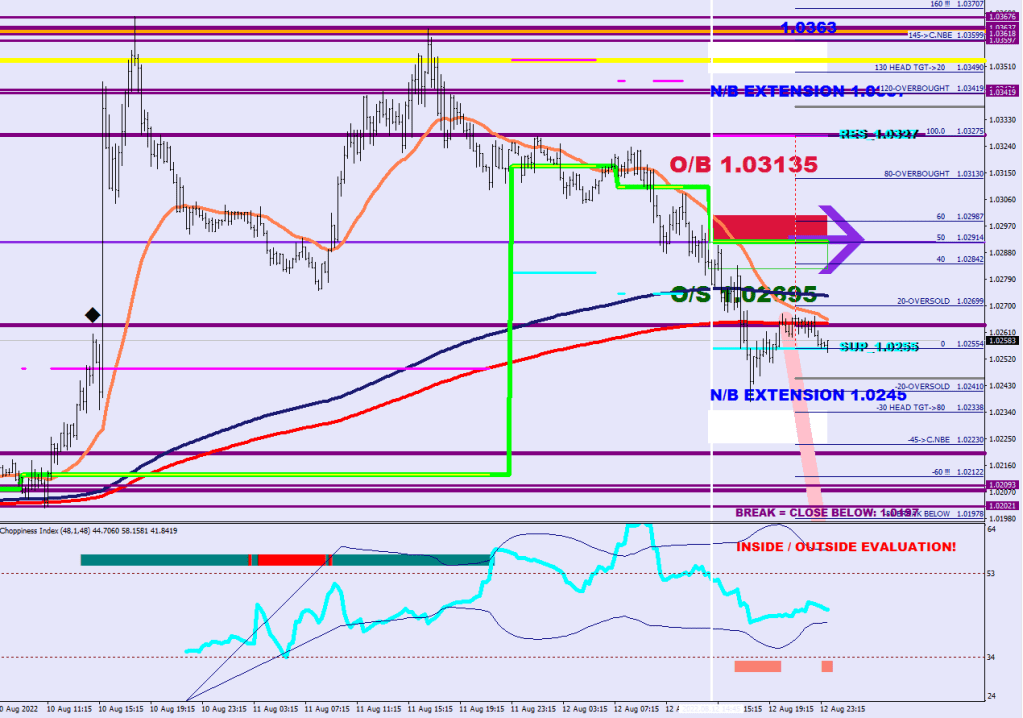
For instance the recent run up is already 7 days old, and without knowing the Range well enough it’s been hard to say what is happening exactly.

Yes, the broken head was a signal, but who would have guessed that this run could be a long one?

This is why we need to start paying attention to the difference of being inside the range vs being outside.

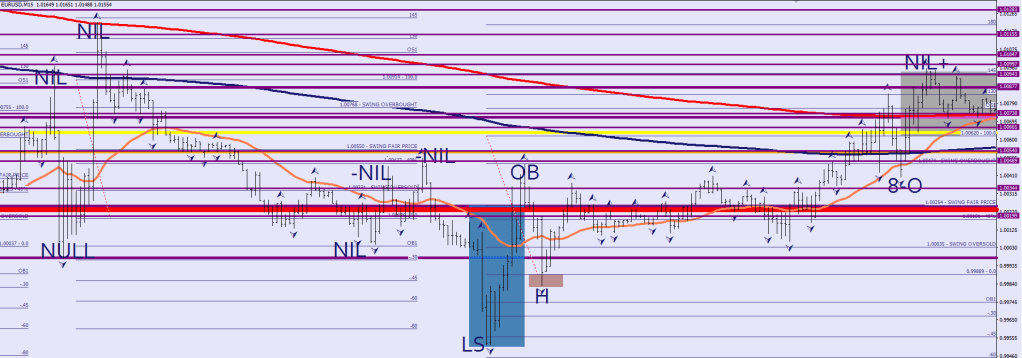
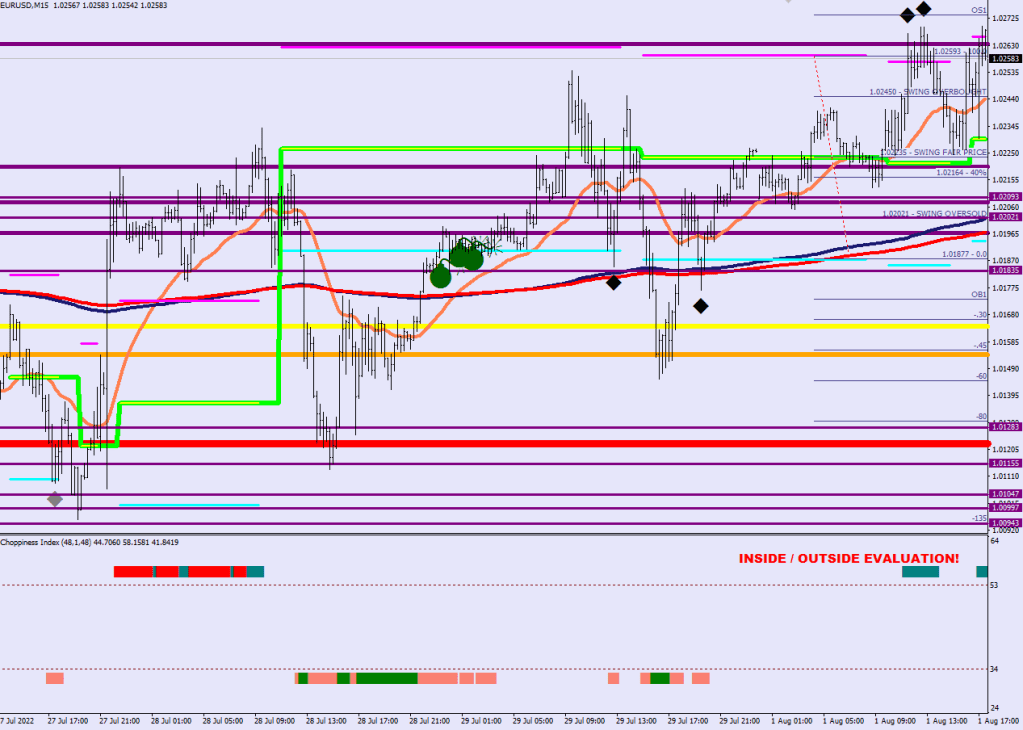
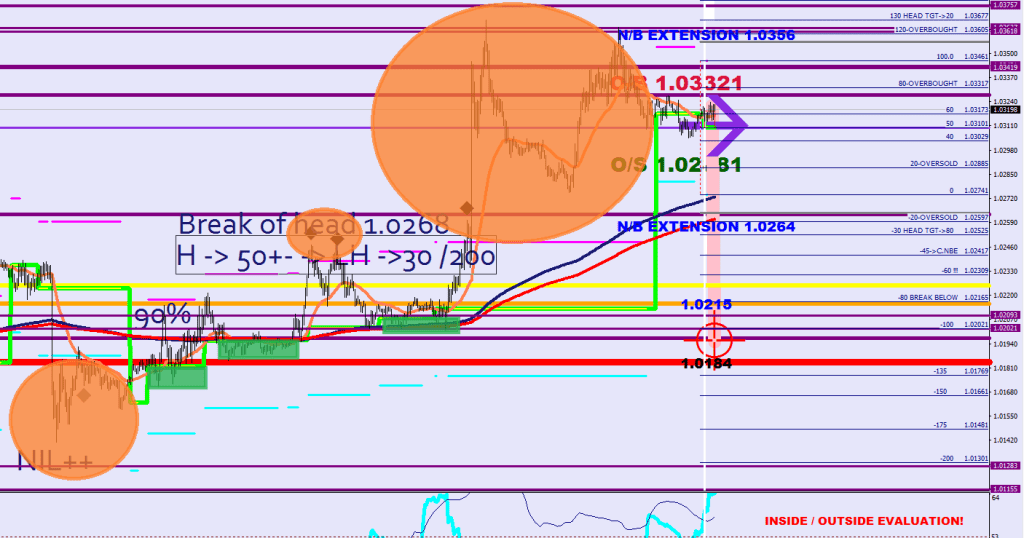
The first orange circle was the outside. Potential terminal, potential left shoulder.

The green boxes show how far the market dipped below the 50% line when inside the range. Clearly this market had a bid under it all along the way. The larger orange circle I had discussed in the previous article, it too only returned to just about the 40% mark only to be bought again. If you tried to buy a head after the LS suspect NIL++ well, that didn’t happen.

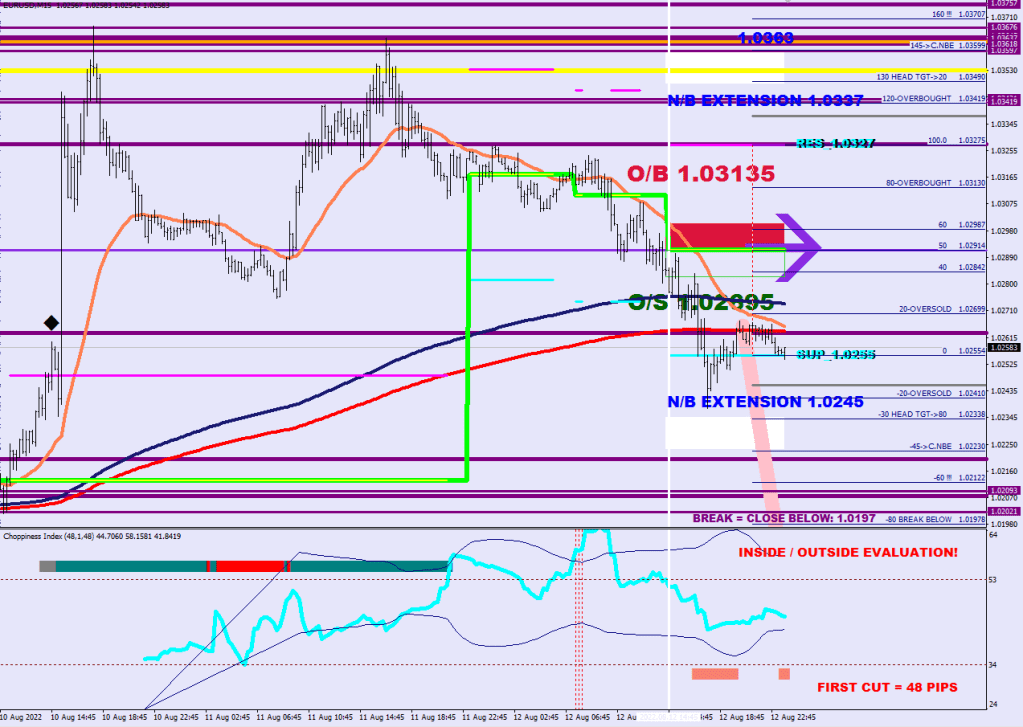
I added a red and a green rectangle around the consolidation weight 9-pips out and they get either filled or left empty showing if price has managed to get away from the recent range by 12 pips or more in either direction.

Would you be surprised to see a buying attempt in the green box below? From now on I wouldn’t be.

i=1;
while (i<lookback){
   if (taxi[i]!=taxi[0]) break;
   i++;
}

      ObjectDelete("Buick");               
      ObjectCreate("Buick", OBJ_RECTANGLE, 0, Time[i], taxi[0], Time[0],  taxi[0]-90*Point);
                      ObjectSetInteger(0,"Buick",OBJPROP_COLOR,clrLimeGreen);
                      if (iLow(symbol,0,iLowest(symbol,0,MODE_LOW,i,0))>taxi[0]-120*Point) ObjectSet("Buick",OBJPROP_BACK,1);
                      else ObjectSet("Buick",OBJPROP_BACK,0);
                      ObjectSet("Buick",OBJPROP_WIDTH,1);  
      
           ObjectDelete("Quick");               
      ObjectCreate("Quick", OBJ_RECTANGLE, 0, Time[i], taxi[0], Time[0],  taxi[0]+90*Point);
                      ObjectSetInteger(0,"Quick",OBJPROP_COLOR,clrCrimson);
                      if (iHigh(symbol,0,iHighest(symbol,0,MODE_HIGH,i,0))<taxi[0]+120*Point) ObjectSet("Quick",OBJPROP_BACK,1);
                      else ObjectSet("Quick",OBJPROP_BACK,0);
                      ObjectSet("Quick",OBJPROP_WIDTH,1);  

Since the first peak was a blood diamond, I personally would pass on this buying opportunity.

Neutralizacija

Mistakes have been made.

This reading suffered some curve fitting. I reached into the code to give further discount on the stochastic from 82 to 80, which was a mistake. Reverted it.

Some additional curve fitting was done by implementing the 9-count green with candle clearing the BB by 20 pips and closing back below it. I have to always go back in history to see if this change would throw something else off. I’m glad to say the gray/white block are performing very well for calling the important levels. Volume still shows amateur levels (yellow shading) with the exception of yesterday. It is good to see that the RSI2 is printing in the reversal zone today.


///fizzle out after 9 days in green closing below the BB by 20 pips
 if (cap[i+8]>0 && cap[i+7]>0 && cap[i+6]>0 && cap[i+5]>0 && cap[i+4]>0 && cap[i+3]>0 && cap[i+2]>0 && cap[i+1]>0 && cap[i+9]>0  && High[i]>iBands(symbol,0,20,2,0,PRICE_CLOSE,MODE_UPPER,i)+200*Point && Close[i]<iBands(symbol,0,20,2,0,PRICE_CLOSE,MODE_UPPER,i)) cap[i]=-1;  
 

The 20-pips becomes key again when we need to figure where the just printed head would get voided.

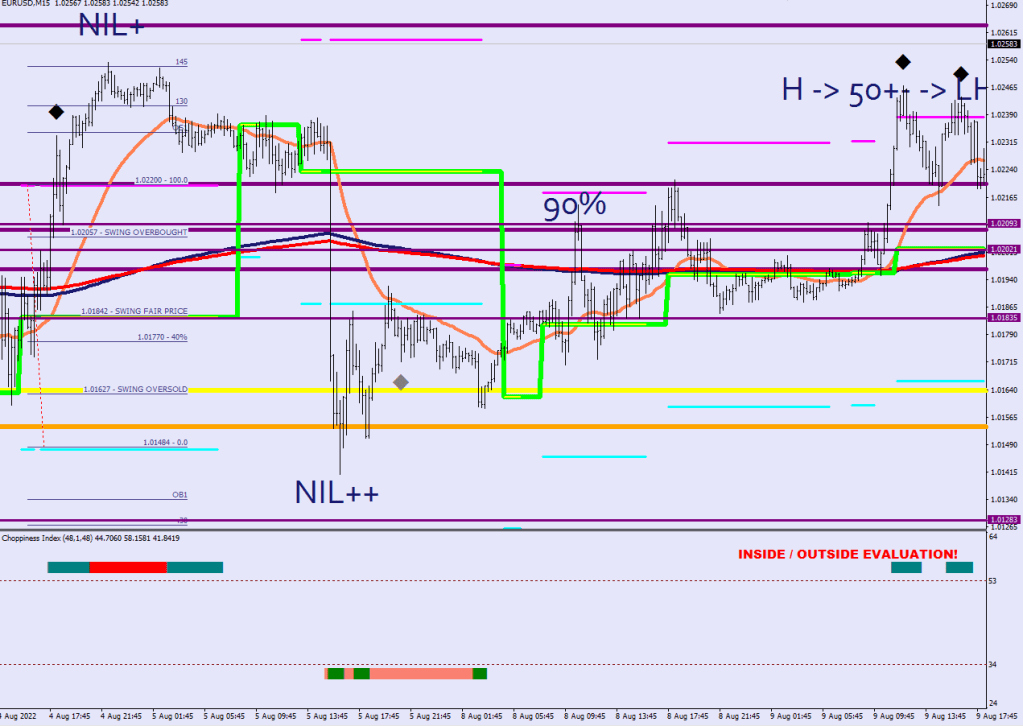
Price was supposed to stop at 80 – about matching the magenta line of the head, but there was a break out instead.

So price made it to 260.

Was 300 the aim? There are a lot of lines there, it does not seem very easy.

After the Head print there was the move to neutralization, back to the 50-line.

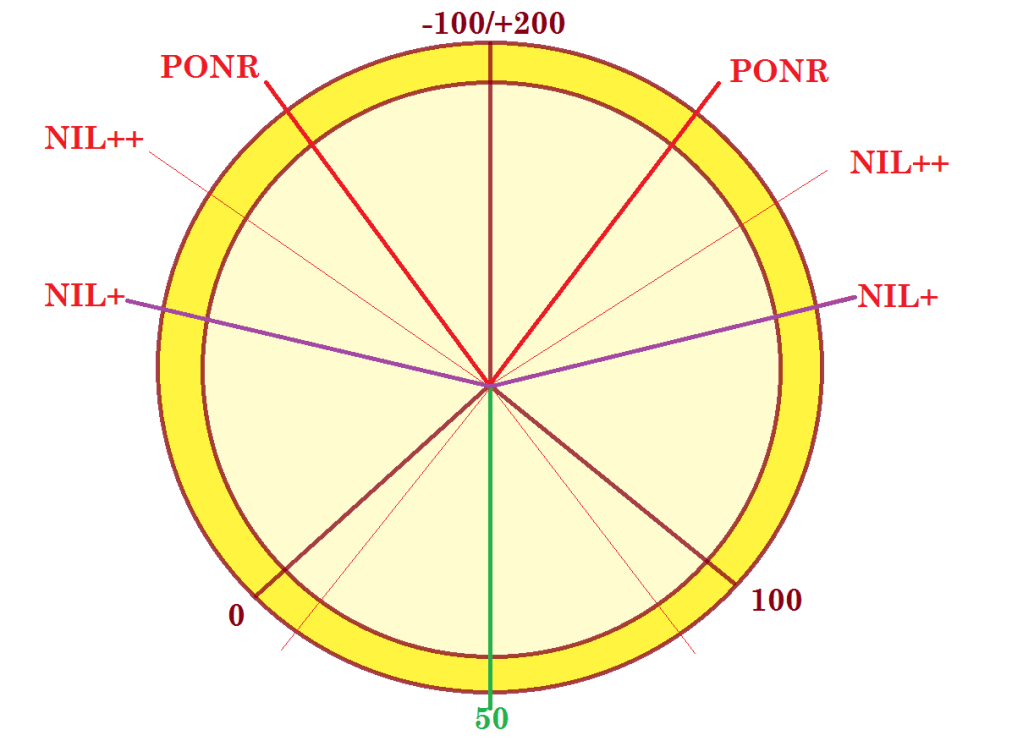
If you think back to the wheel, the neutral level is 50, to the left is the negative field, to the right is the positive. Now, if you put 260 to the current NIL++ mark on the right, then 150 would be neutral, and coming back below it would be neutralization. Price came back to 40 (140) approximately and we are in a swing back up to 100 (200). Rather appealing sequence for a left shoulder and a head.