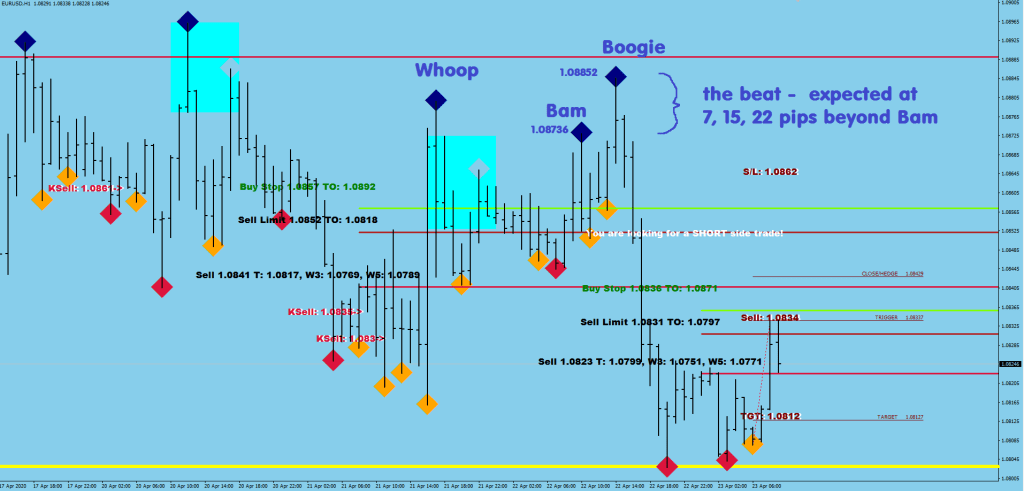
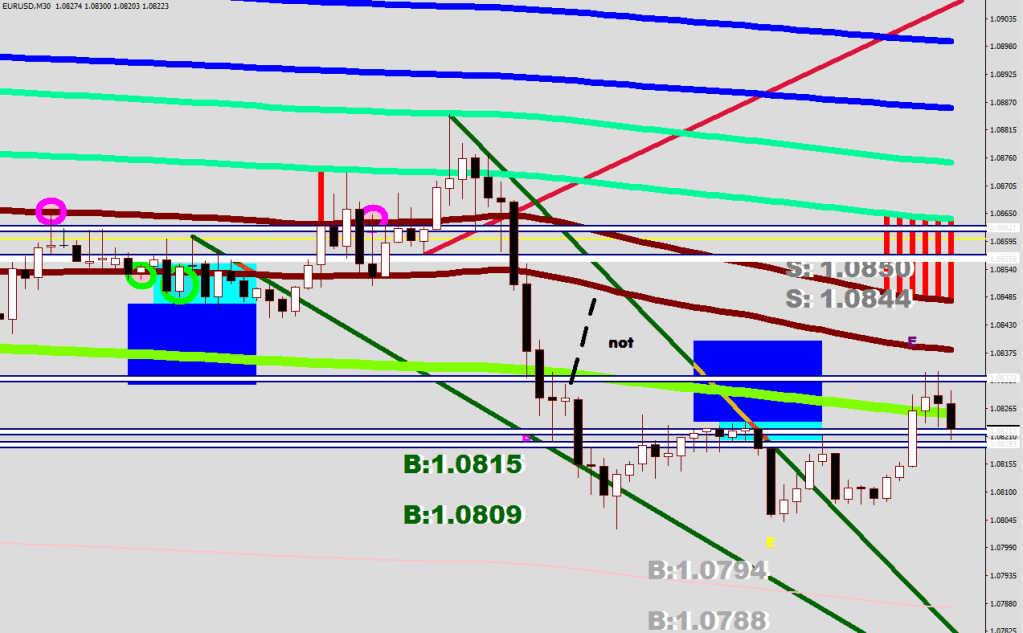
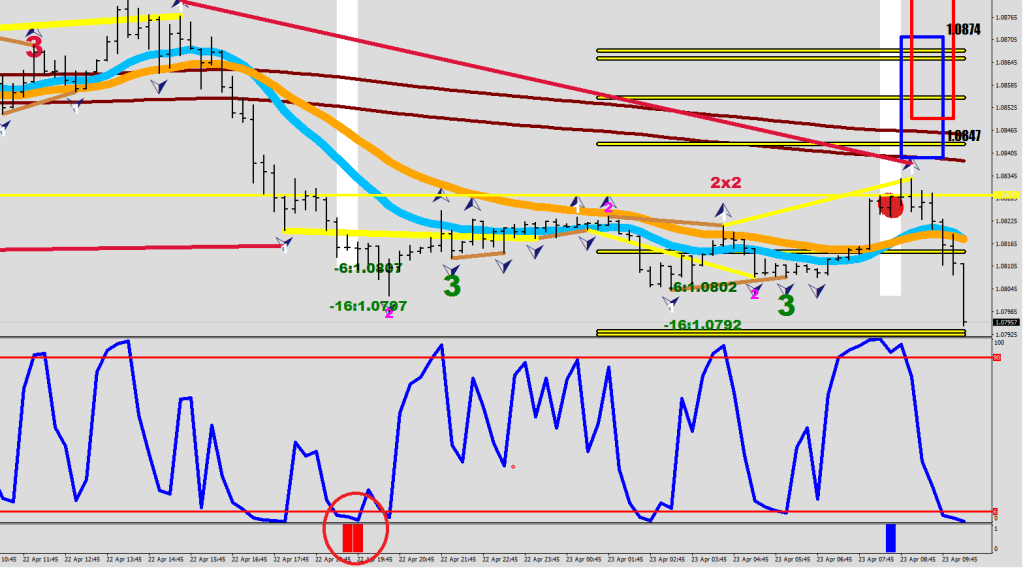
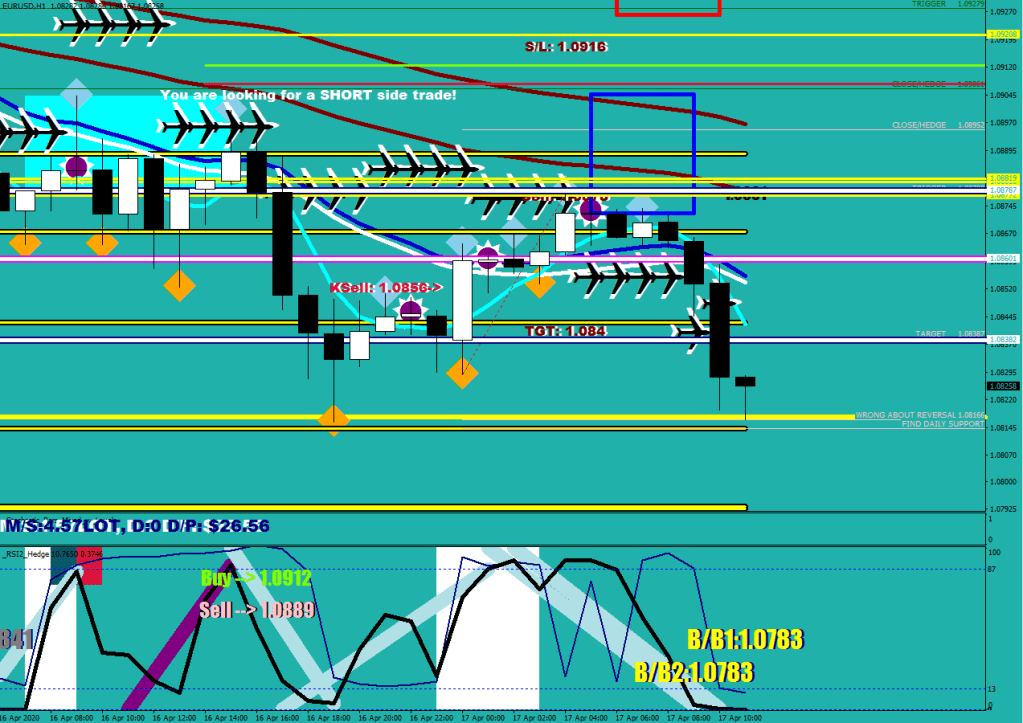
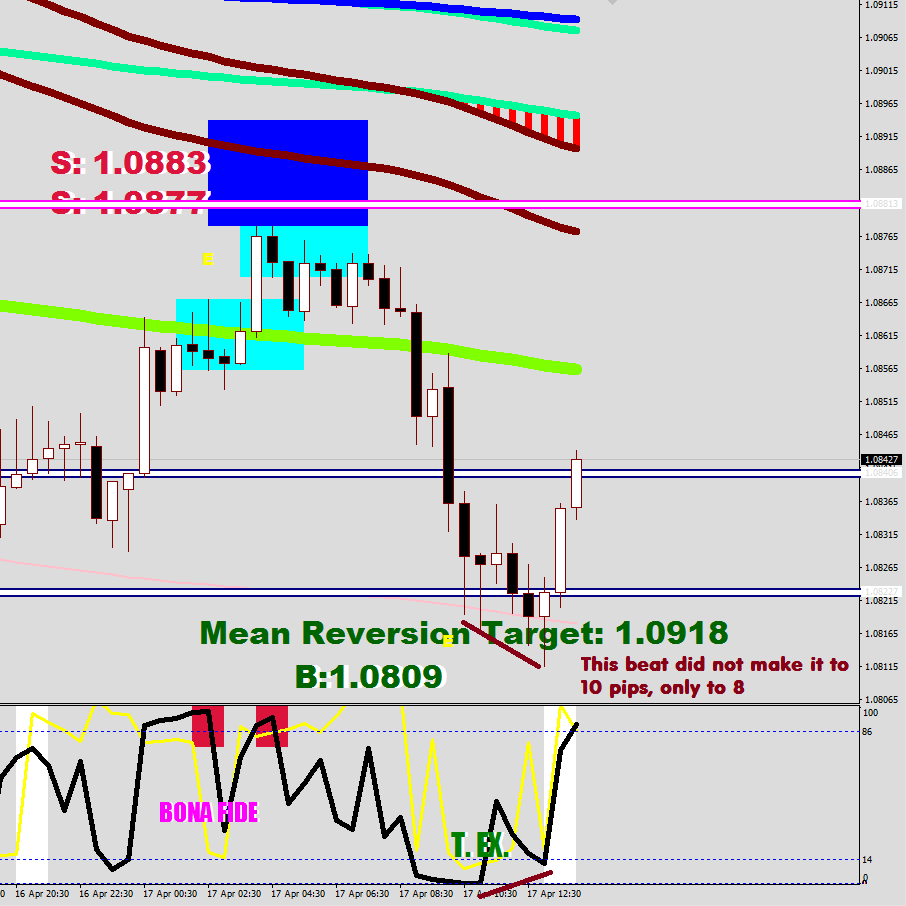
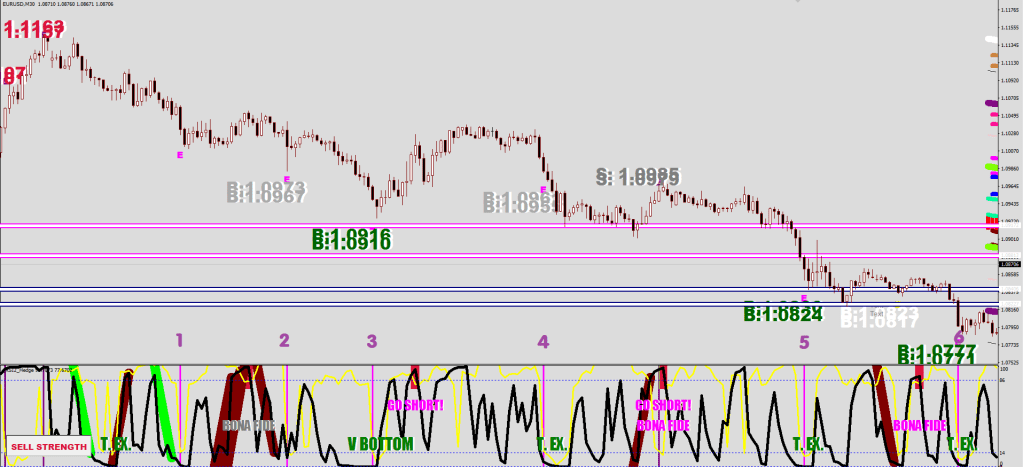
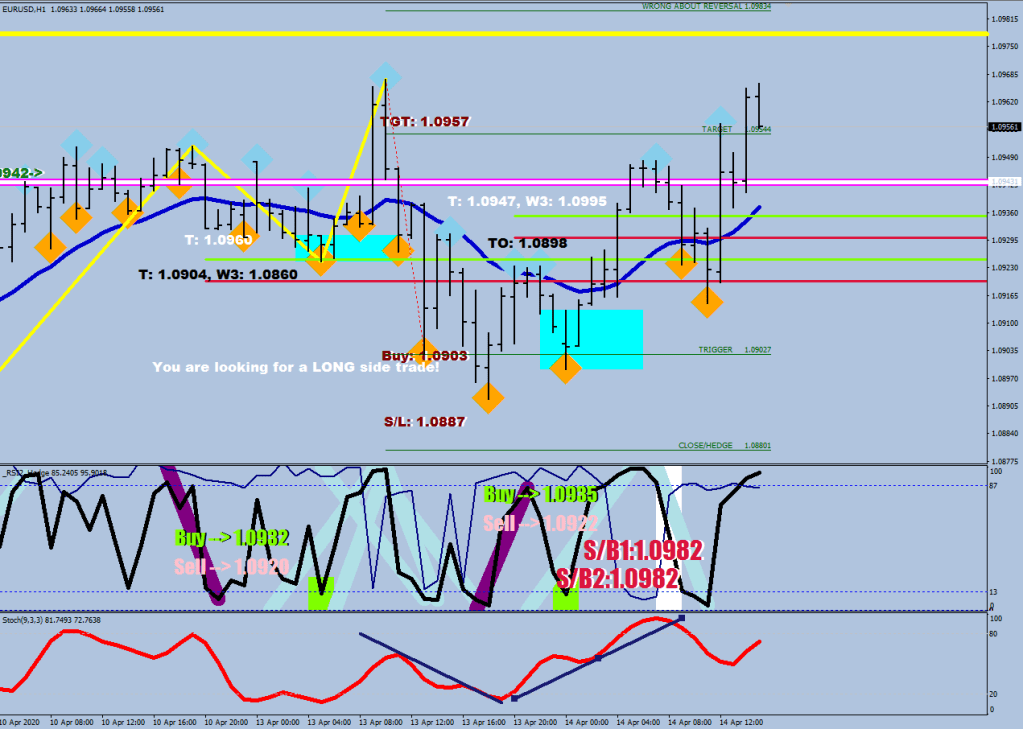
V-Bottom, CI-Divergences

This would be the most technical article to date. Sorry, but I’m doing this to remind myself to a few things.
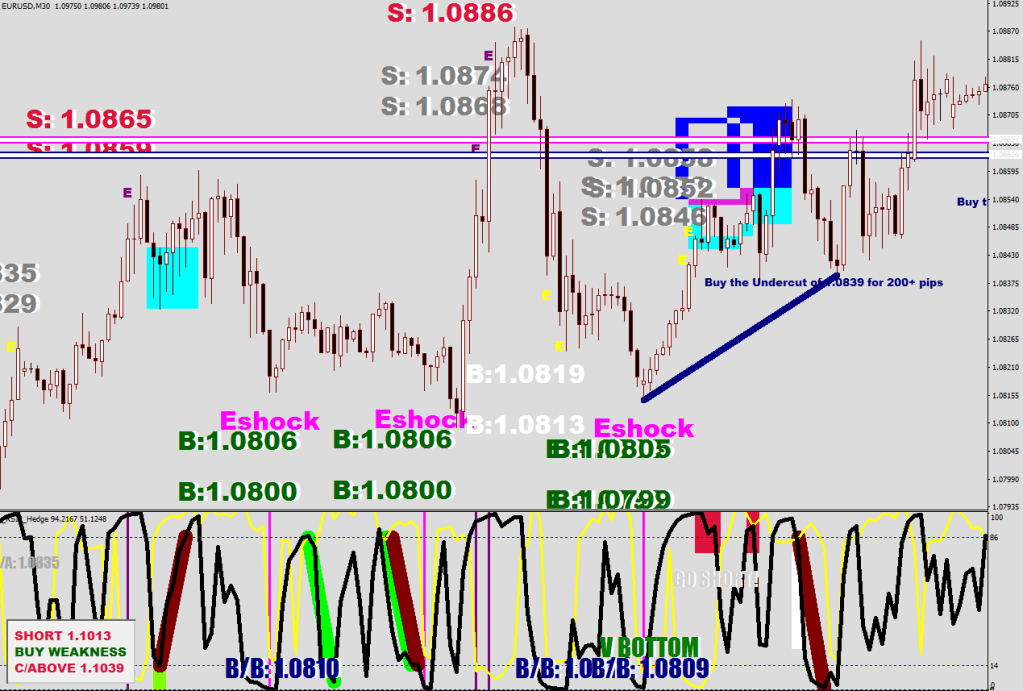
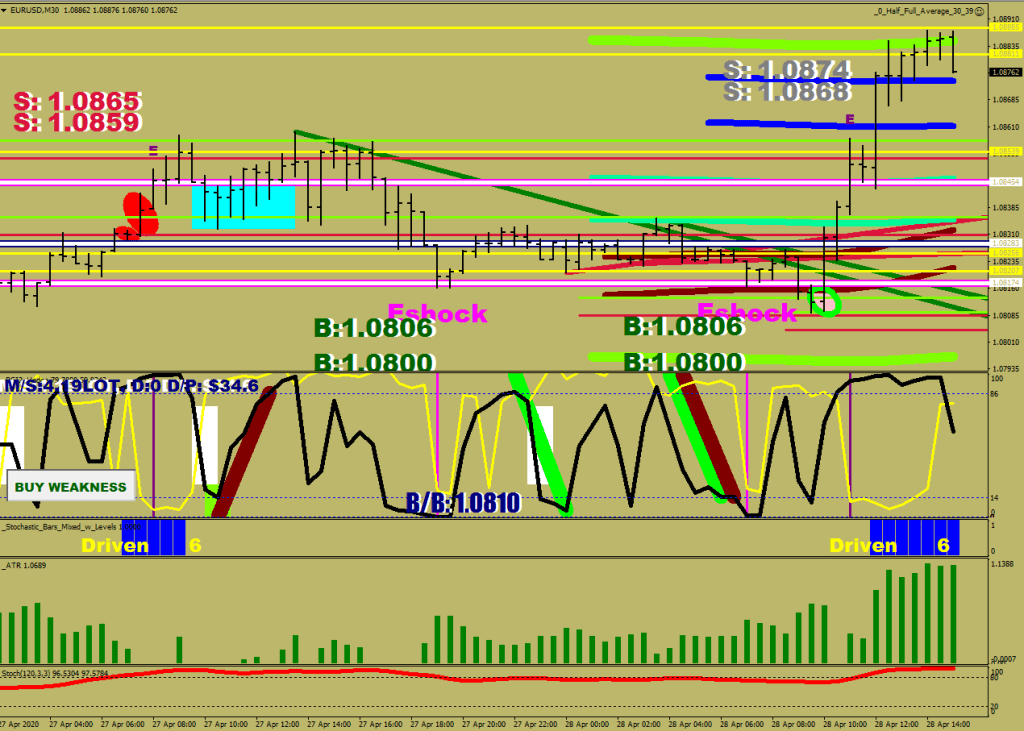
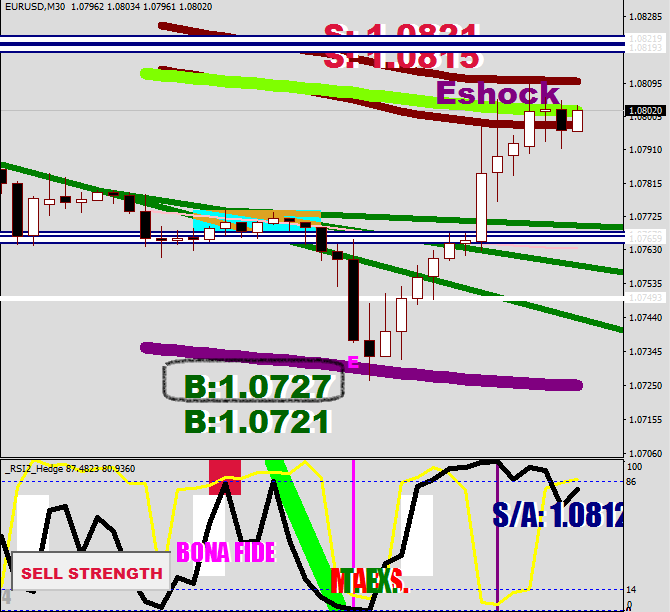
Eshock: Exhaustion counter the stochastic advised direction.

i.e. an Exhaustion with a Higher High

iHigh(symbol,0,iHighest(symbol,0,MODE_HIGH,8,i))>=iHigh(symbol,0,iHighest(symbol,0,MODE_HIGH,10,i+9)))

with a stochastic most recently being below the halfway mark

iStochastic(symbol,30,120,3,3,MODE_SMA,0,MODE_SIGNAL,i+3)<48

is an Eshock on the upside

V Bottom: an 8-sample CI sequence

ci[i+5]>14 && ci[i+4]>14 && ci[i+3]>14 && ci[i+2]>14 && ci[i+1]<14 && ci[i]<19 && (RSI2[i]<3 || RSI2[i+1]<3 ) &&

with a new, 10-sample lower low

iLow(symbol,0,iLowest(symbol,0,MODE_LOW,10,i))<= iLow(symbol,0,iLowest(symbol,0,MODE_LOW,20,i))

and an out of oversold current RSI2

RSI2[i]>27

CI Divergence: 7-sample CI peaks connected where the left side of the divergence is an exhaustion sharpie connected to to next, out-of-oversold sharpie low. This is done in order to point out an area of a likely strong opposition – i.e. “Buy the Beat”

i2=1;
   while (i2<300 ){
    i=i2+2; 
      if (Low[i2]<Low[i2+2] && Low[i2+2]<Low[i2+3] && CI[i2]<CI[i2+1] && CI[i2-1]>CI[i2] && CI[i2]<45) 
         while (i<i2+30){
               if (CI[i2]>CI[i] && CI[i]<CI[i-1] && CI[i]<CI[i+1] && CI[i]<33 && Low[i]<Low[i+1] && Low[i+1]<Low[i+2] && Low[i2]<Low[i2+2] && Low[i2+2]<Low[i2+3] && CI[i2]<CI[i2+1] && CI[i2-1]>CI[i2] && CI[i2]<45 ) break;
      i++;}
    if (CI[i2]>CI[i] && CI[i]<CI[i-1] && CI[i]<CI[i+1] && CI[i]<33 && Low[i]<Low[i+1] && Low[i+1]<Low[i+2] && Low[i2]<Low[i2+1] && Low[i2+2]<Low[i2+3] && CI[i2]<CI[i2+1] && CI[i2-1]>CI[i2] && CI[i2]<45 ) break;
     i2++;}  


LowFractalTime_2=iTime(symbol, 0,i2);    LowFractalTime_1=iTime(symbol, 0,i);    


 if (i<300 && i<i2+30)   {ObjectDelete(0,"cNNN3_2");
     ObjectCreate(0,"cNNNm3_2",OBJ_TREND,0,LowFractalTime_1,Low[i],LowFractalTime_2,Low[i2]);
    ObjectSetInteger(0,"cNNNm3_2",OBJPROP_RAY_RIGHT,false);
         ObjectSet("cNNNm3_2",OBJPROP_COLOR,indicator_color3);
         ObjectSet("cNNNm3_2",OBJPROP_WIDTH,8); 
         ObjectSet("cNNNm3_2",OBJPROP_BACK,1); 
         
         ObjectCreate("hisPITAL"+IntegerToString(i), OBJ_TEXT,0, Time[i2+2], Low[i2]);  
                ObjectSetText("hisPITAL"+IntegerToString(i), "Buy the Undercut of "+DoubleToStr(NormalizeDouble(Low[i2],4),4), 10, "Arial Black",  clrNavy);

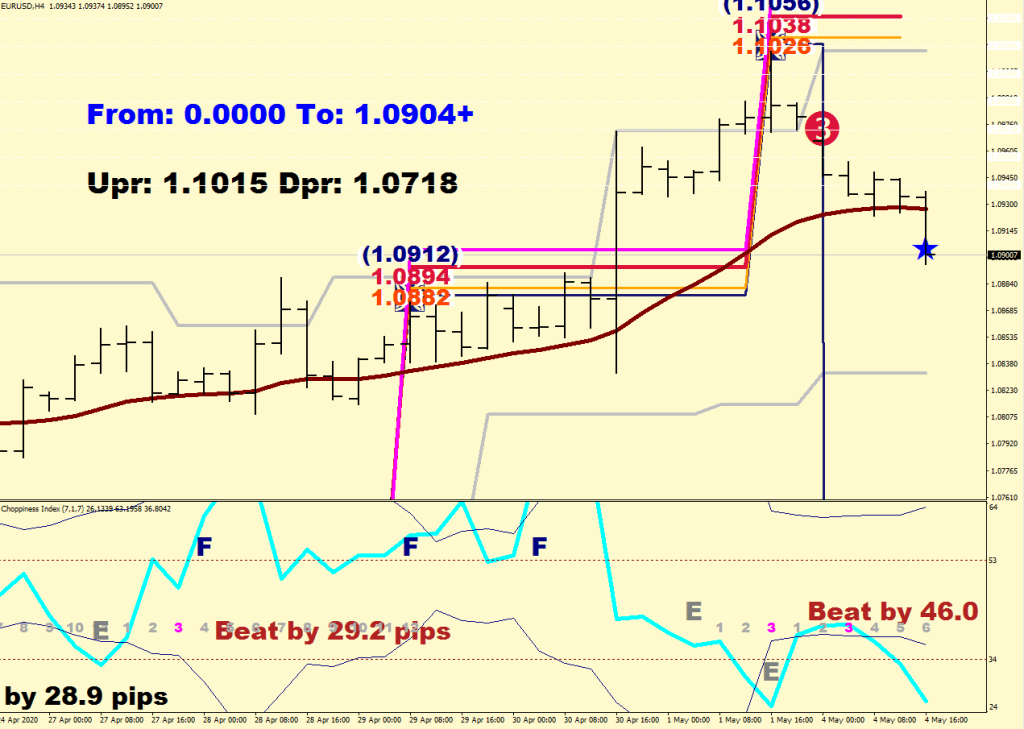
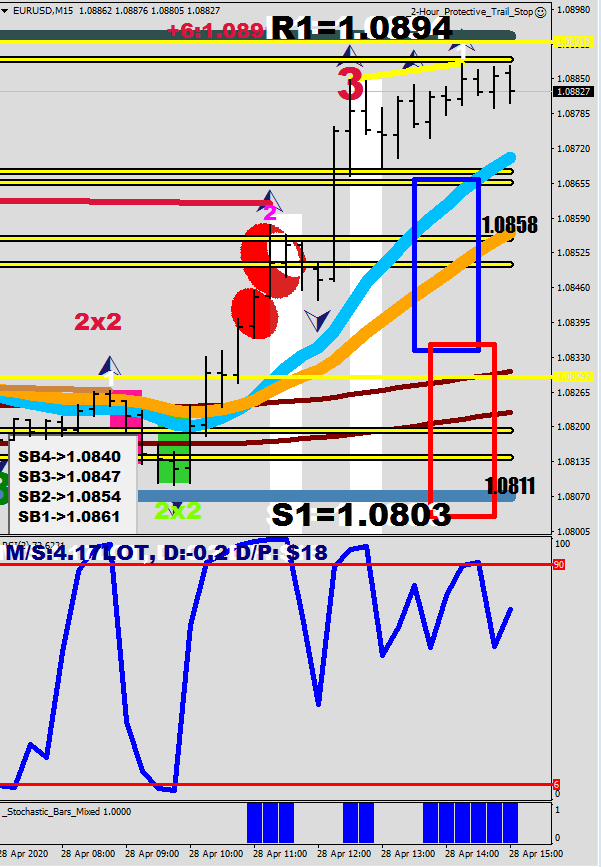
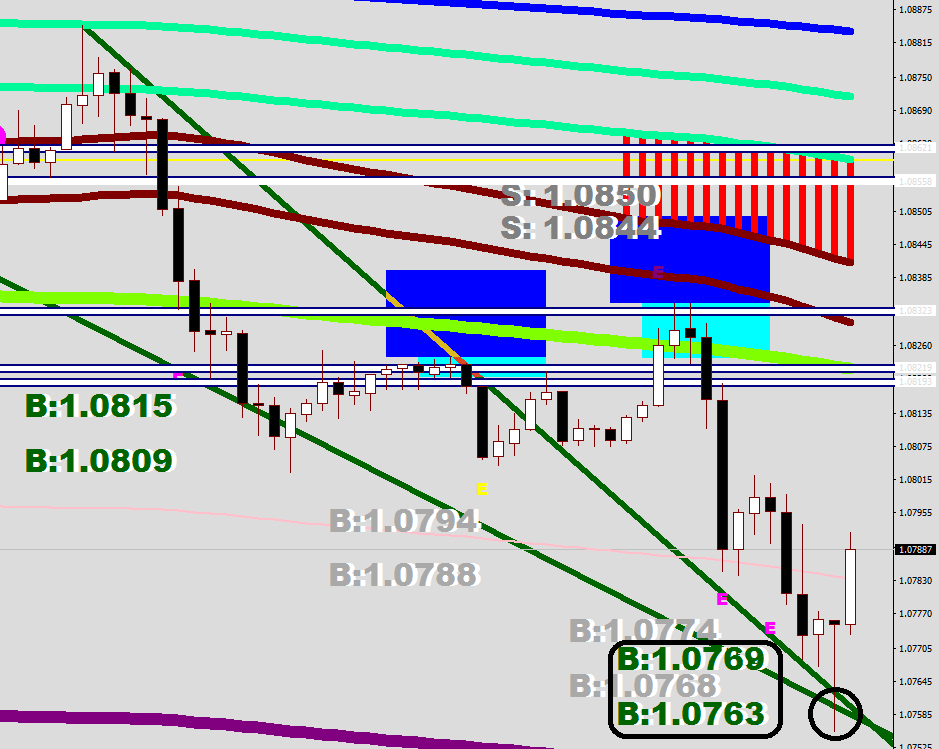
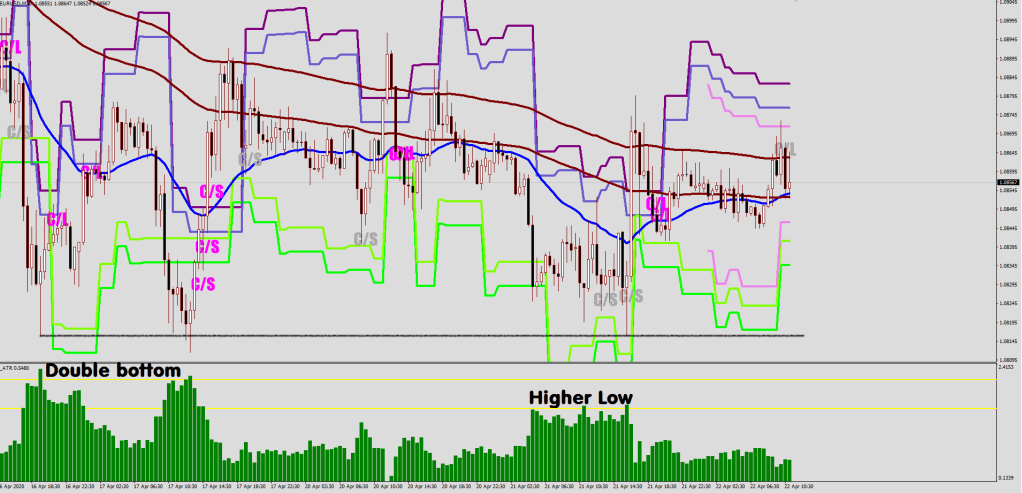
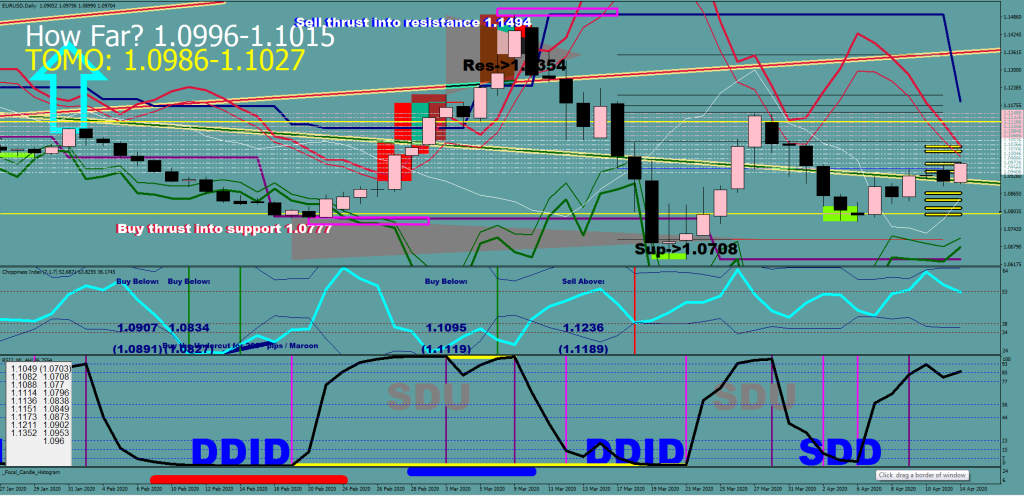
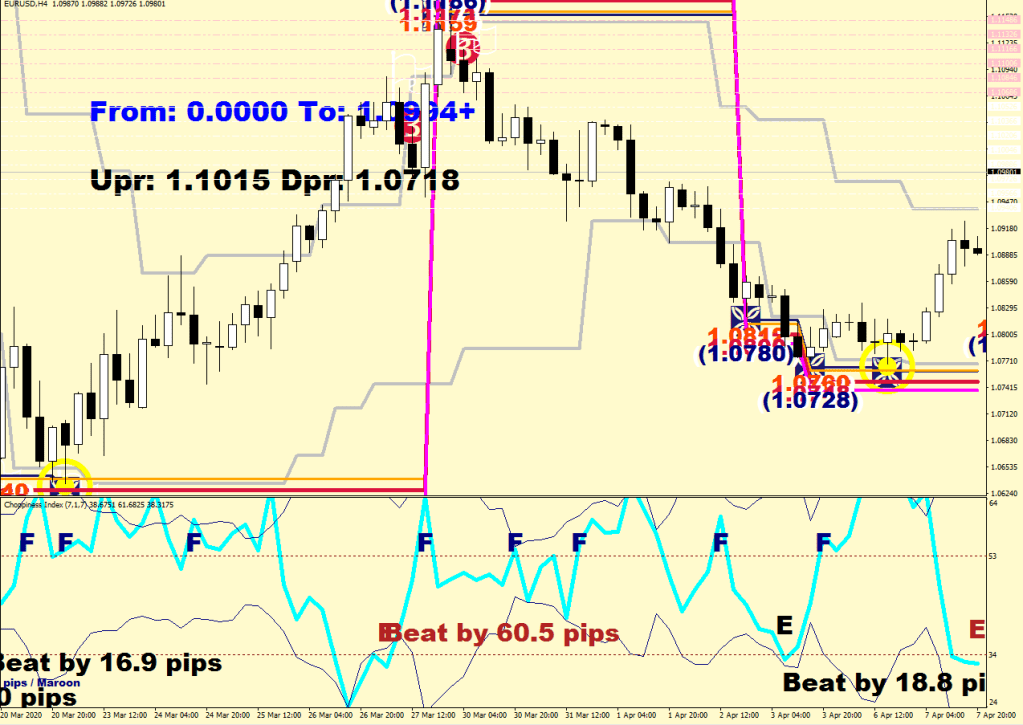
If you go back to the first image you would see, that the current, 200-pip rally came out of the undercut of the first deep pullback after the V bottom.

Definition of a range. A range is defined by heads. They are the butterflies on the image. How did I end up using the Money Flow index to find them, not clue, but that is what I went with. They get a 4-pip displacement. 4-hour for time frame.

 if ((iFractals(NULL,0,MODE_UPPER,i) && iMFI(NULL,0,12,i)>50 && iMFI(NULL,0,12,i)<77 && St[i]<96 && St[i]>60   )) HARD[i]=iHigh(NULL,0,i)+.0004; 
        
if ((iFractals(NULL,0,MODE_LOWER,i) && !iFractals(NULL,0,MODE_LOWER,i+3) && iMFI(NULL,0,12,i)<49.6   && St2[i]>5   && St2[i]<60 && St3[i]<60  )) HARD[i]=iLow(NULL,0,i)-.0004;

The lines are the beats, Hard2 merely holds out the last Hard value

four[i]=four[i+1];
   sixteen[i]=sixteen[i+1];
   twentysix[i]=twentysix[i+1];

      
    if (HARD2[i]!=HARD2[i+1] && HARD2[i]!=0 && MathAbs(HARD2[i]-HARD2[i+1])>190*Point) {
      if (Close[i+1]<HARD2[i] && Close[i+2]<HARD2[i]){
         four[i]=HARD2[i]+40*Point;
         sixteen[i]=HARD2[i]+160*Point;
         twentysix[i]=HARD2[i]+260*Point;
      }
      else if (Close[i+1]>HARD2[i] && Close[i+2]>HARD2[i] && HARD2[i]!=0 && MathAbs(HARD2[i]-HARD2[i+1])>190*Point){
         four[i]=HARD2[i]-40*Point;
         sixteen[i]=HARD2[i]-160*Point;
         twentysix[i]=HARD2[i]-260*Point;
      }
     else   {four[i]=four[i+1];
   sixteen[i]=sixteen[i+1];
   twentysix[i]=twentysix[i+1];} 
   }

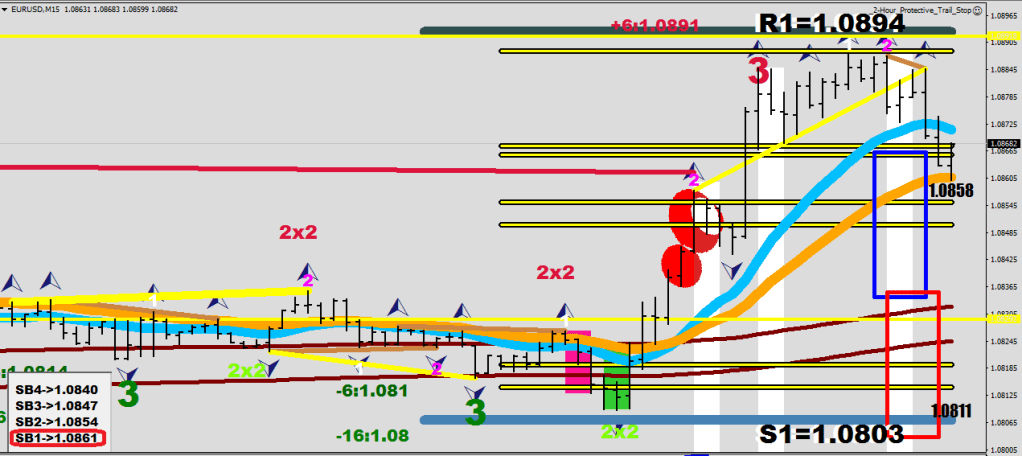
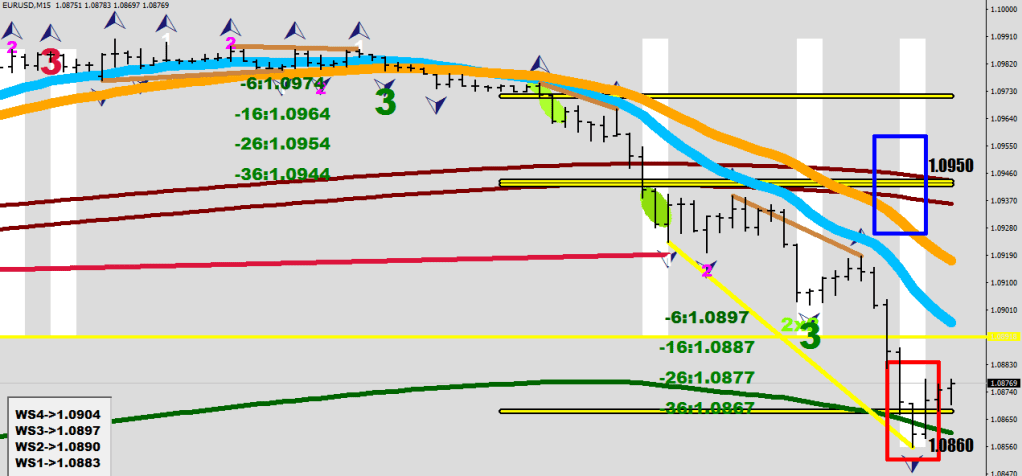
The blue, bracketed value has an additional 5-pips displacement beyond the last beat line of 26 pips (for a total of 35pips – does this remind you of something? How about the Fluctuation size of EUR/USD?)

If you ever need the value for where to participate in a break out, I have just given them to you in Navy Blue. Of course, there would be fake-outs, so you would need to use my smart trail stop with CODE “2” – meaning 0.2 for stop loss on a buy stop and “2” for stop loss on a sell stop, which would in return lock in 1-pip beyond the open once in 4+ pips in gains for protection.

An example where a break out was suggested at 1.0990, and the high was at 1.09902 – could had triggered you in with a nastier broker, so to be on the safe side, hold out for 3 pips more.

So, when would the upside end?

A daily exhaustion was set. A beat on the upside would be a sell. A beat usually occurs in the next 1-5 days. The most likely size of the beat is around 1/2 Fucltuation size = 16 pips, but it could be anything: 4 pips, 8 pips, 12 pips, 26 pips and even 36 pips sometimes (anything up to a Fluctuation Maximum). Trade accordingly.

3x volatility was breached (3.69 to be exact). The beat may go higher in price, but would not go further in terms of stretch from the mean. Barring an embedding, a volatility crush would take this back down to 1.0866 after the beat.

Watch out for the new fireflies!

Just noticed that the 50% comfort level is at 1.1065

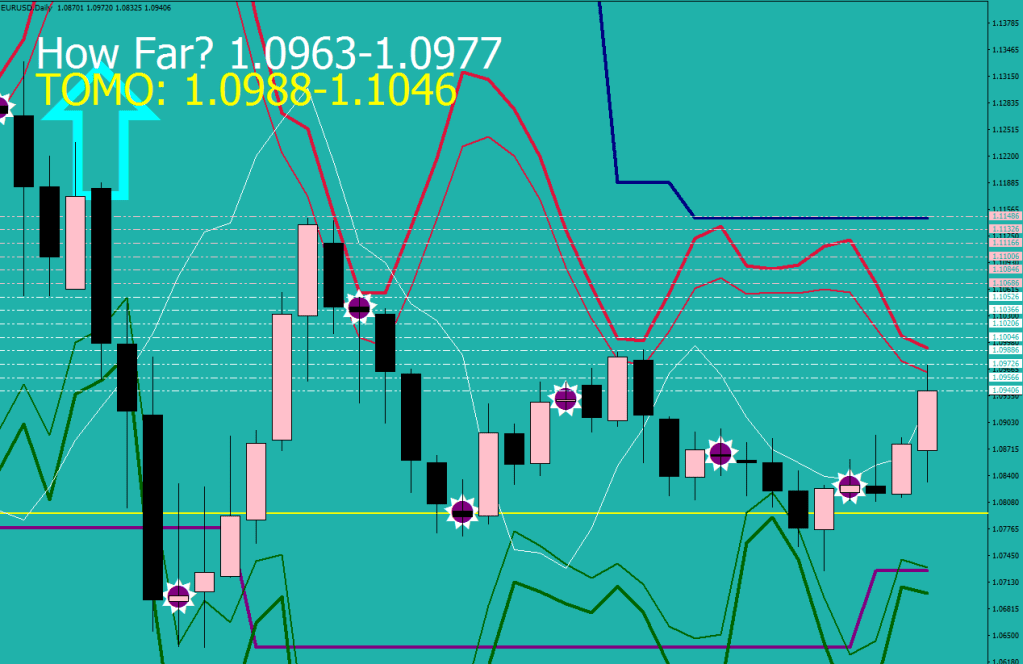
Daily Resistance (left) and Support levels (right)

The second blood function of the Stochastic Bars

The Beatnicks (Ettore Beats):

16.9 pips, 60.5 pips, 18.8 pips, 19.8 pips, 28.9 pips, 29.2 pips
There is 1 problem though – namely how much was the volatility bracket exceeded by the last spike
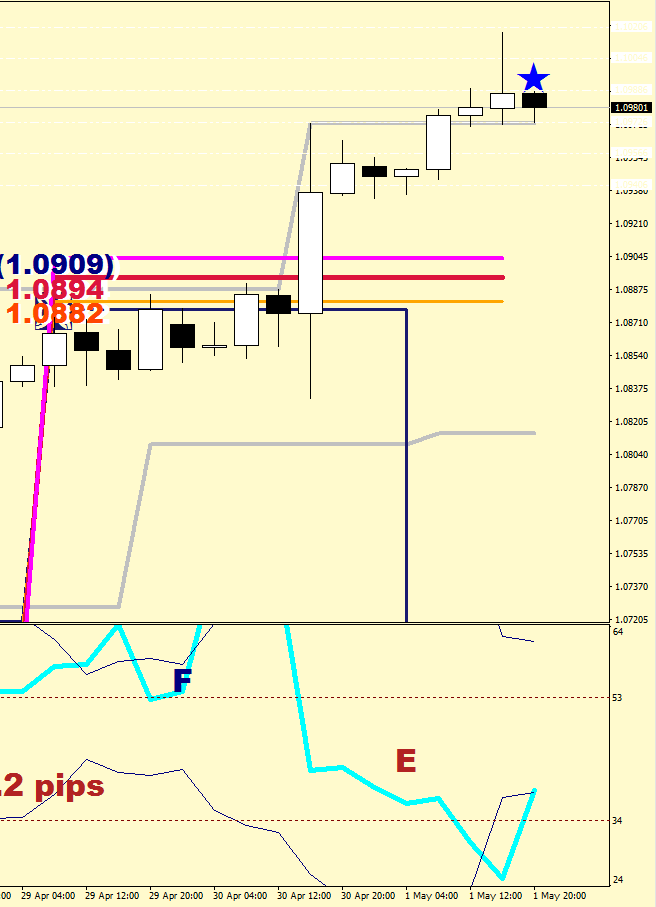
Based on this, the last spike was a 45-pip beat, and there is nothing more to look for on the upside currently.

46 rounded

(On The Same) Wave Length

Here’s a piece of code from God Awesome 1.71 with a filter added today.

The basis is the Stochastic Bars Hybrid, that was my tweak and I am certain, that I posted the source of it on these columns, so look it up, this part you should be able to plug in

deletetxt1("Utmost");

 for(i = 1000; i >= 0; i--)
   {  
           
      double St=iStochastic(NULL,0,K_Period,D_Period,Slowing,MAType,PriceType,MODE_MAIN,i);
      double St2=iStochastic(NULL,0,K_Period2,D_Period,Slowing,MAType,PriceType,MODE_MAIN,i);
      double St3=iStochastic(NULL,0,K_Period3,D_Period,Slowing,MAType,PriceType,MODE_MAIN,i);
      ExtMapBuffer2[i] = EMPTY_VALUE;
      ExtMapBuffer3[i] = EMPTY_VALUE;
         if (St2<BotBorder2 && (St<BotBorder || St3<BotBorder3)) ExtMapBuffer2[i] = 15;
         if (St>TopBorder && embeddedoversold) ExtMapBuffer3[i] = 85;
         
          if (plot_no_more_stars && ((ExtMapBuffer3[i+1]==85 && ExtMapBuffer3[i]!=85) || (ExtMapBuffer2[i+1]==15 && ExtMapBuffer2[i]!=15) )
          
          && (iLow(symbol,0,iLowest(symbol,0,MODE_LOW,2,i))<=iLow(symbol,0,iLowest(symbol,0,MODE_LOW,10,i+2)) ||  (iHigh(symbol,0,iHighest(symbol,0,MODE_HIGH,2,i))>=iHigh(symbol,0,iHighest(symbol,0,MODE_HIGH,10,i+2)) ) ) ){
   ObjectCreate("Utmost"+i, OBJ_RECTANGLE, 0,  Time[i+2], iHigh(Symbol(),0,iHighest(Symbol(),0,MODE_HIGH,262,i)), Time[i], iLow(Symbol(),0,iLowest(Symbol(),0,MODE_LOW,262,i) ));
  ObjectSetInteger(0,"Utmost"+i,OBJPROP_COLOR,clrWhite);
  ObjectSet("Utmost"+i,OBJPROP_BACK,1);
  ObjectSet("Utmost"+i,OBJPROP_WIDTH,5);
   }
         
}

Here’s the object eraser function that goes after the Return(0); at the very end

   void deletetxt1(string text){
   for(int iObj=ObjectsTotal()-1; iObj >= 0; iObj--){
      string   on = ObjectName(iObj);
      if(StringFind(on, text) == 0)  ObjectDelete(on);
}  }

What is this good for?

Remeber the volatility high tide that hit 10x stretch from the mean on the upside then on the downside?

Count with me.

after that the wave length got shorter, from size 4 to size 3 – these waves were not able to achieve anything further from the mean than 4-5x stretch, they were sort of echo waves

here we are now in the present, when the waves are unable to exceed 3x stretch from the mean

where was the bear market? nowhere

there was one big Volatility tide that has completely flattened out by now.

I do believe this is necessary for the market to be able to start trending in a direction, for until now all it did was make whips up and down.

The volatility is gone. For good.

In fact, I had to bring back the volatility multiplier on the energy bands to pre-high-tide values (from 1.5to 1.0) (“m”, not external also equals one at this point).

These are the values that the German folk was missing for making his version of my Energy Bands, that he keeps on returning to.

It is o.k. to talk to me, I don’t bite.

The fact that today’s CI Moat values point to the downside and tomorrow’s point to the up side just shows how smack dead in the middle price is right now at.

& that’s what happens…

Time to handle the situation intellectually…

Nick’s Lessons #7 – Edges

Now that you have all of my indicators and receiving all updates, it is time to rank the signals

#1 Volatility Crush – see previous article – Scale in up to max size, target comes with it.

#2 Wave count – use hourly chart to figure continuation divergences

God Awesome V1.71 can find many of these divergences.

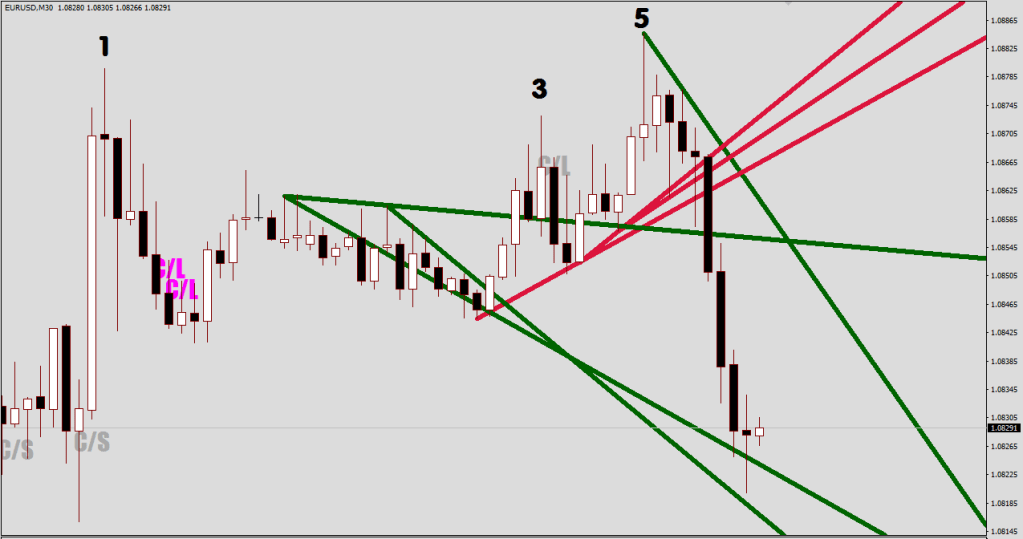
The end of Wave 2 sets up a continuation divergence (see the small blip prior to it)
Wave 4, the ambitious wave doubled down and set up a reversal divergence on top of the continuation divergence before disengaging. Look how Wave 4 penetrated into Wave 1 a bit – something that Elliott Wave does as not acknowledge the existence of.
Wave 5 tends to have a reversal divergence at its end, so the wave structure above does not look finished until a beat (the market seldom finishes a wave structure on a peak RSI).

Go down to 15 minute to see how the 3-wave structure of Wave 5 unfolds along with the RSI2 reversal divergence

#3 BB Gun (shallow beat) (S/A, B/B)

use maximum 2 orders 5 pips apart

size determined by 60 sample hourly stochastic D just out of overbought /

oversold up to regular size; in limbo – decreased size (1/2 of regular)

#4 Eshock (counter directional beat) any beat is a fade, use regular size, scale in in 2 steps

#4A Magenta/Purple E without Eshock – you are interested in the 2nd E in a sequence (B:, S:)

use regular size, maximum 3 orders 6 pips apart adding up to a regular size

or 1 order in regular size depending on terminal wave count

#5 Liquidity break signals (the purple strike outs on the hourly RSI2)

#5A break outs – limited continuation potential for price already had traveled 12 pips before triggering the stop order – use half of regular size, one order, do not go in again, there are W3, W5 targets listed, use the one most fits your Wave count

#5B failed break outs – when the market is not ready to make the break, and falls short 5-1 pip from the break out level, it can be faded – i.e. during a consolidation use half of regular size

#5C pull backs – they are to be played within the range, scale in with up to regular size before the break out level and use the target suggested

pay attention to the Buy Weakness / Sell Strength flags

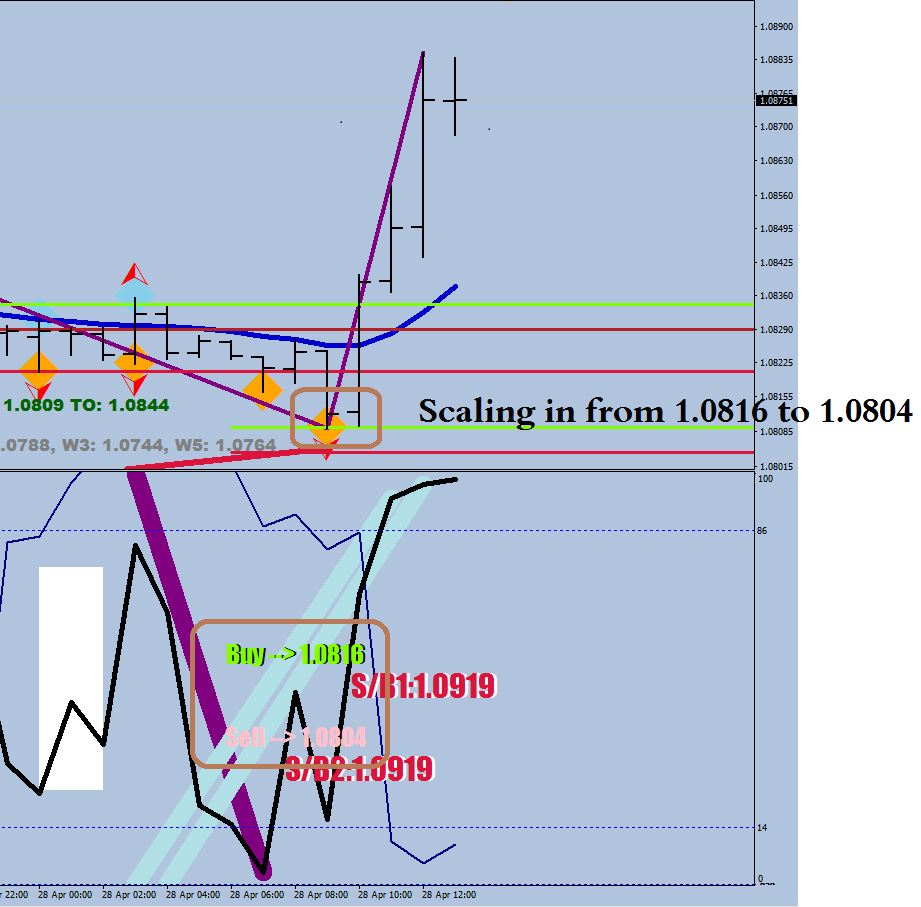
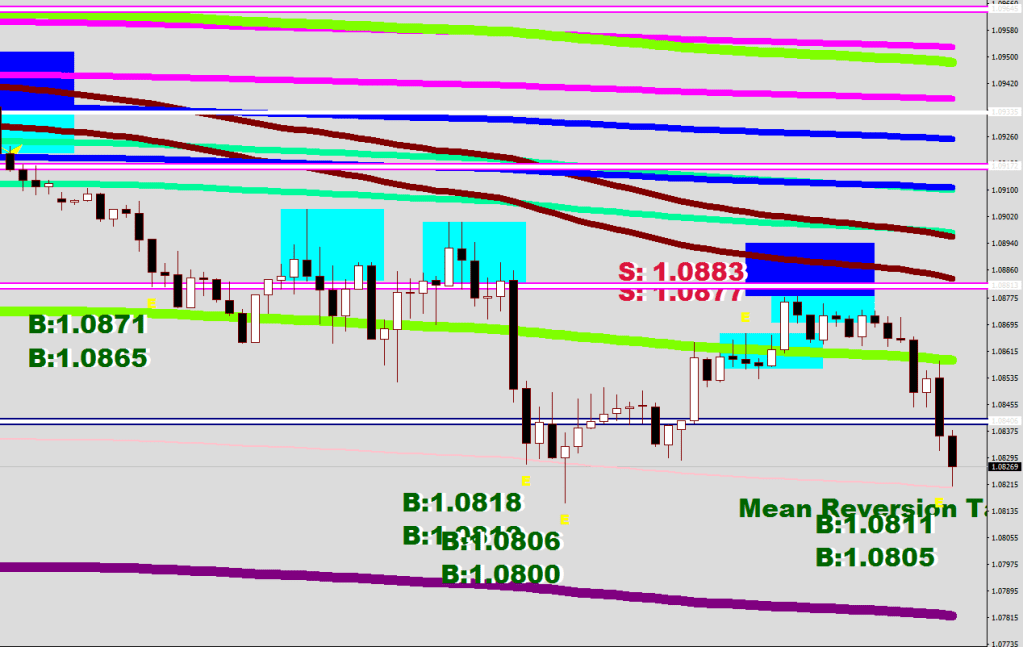
Forget buying below the last value. You can also think backwards: 1.0805 – 1st order, 1.0809 second order, 1.0812 3rd order, 1.0815 4th order -> Regular size in total

#6 Fractal Switch signals – these are Maroon re-visit signals, the Trigger Level can be exceeded, so get it with half of regular size as close as you can and you may add to it while price stays within

the use of a smart trail stop or a protective 1-pip stop loss when in gains is advisable

#6B use the Wrong about Reversal value to get in on a continuation

Regular size would do

#6C use the Close/Hedge level with discretion for a counter trade upon factoring in the potential (Wave Structure, Stretch from the Mean)

1/2 of regular size

My Maximum size is 4 Lots

My Regular Size is 1 Lot

My half of Regular size is 0.5 Lots

…why did I choose 1.0861 for targets for my shorts?

Because that was the closest Strength Buy level. But even that I could not wait out.

It took me 10 years to figure out the perfect entries. You already have that available.

In the next decade I need to start using the right size & stay in for an optimal length (this is the hardest thing for me).

RSI2 Hedge now can pick up on certain double exhaustion sequences

Volatility Crush Examples

Trading volatility has nothing to do with drawing trend lines on the VIX.

The next time somebody approaches you with “trading volatility”, ask them the question:

“Where is the Mean at?”

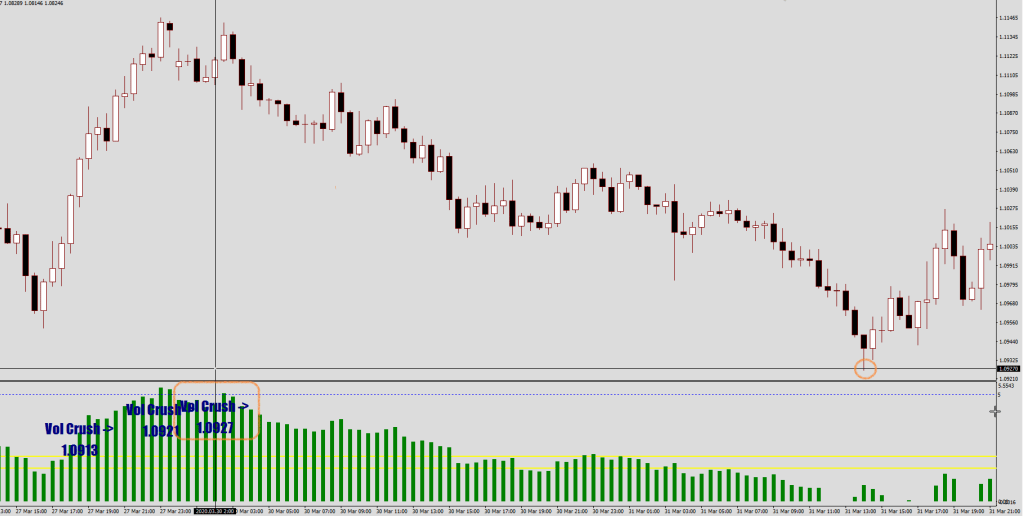
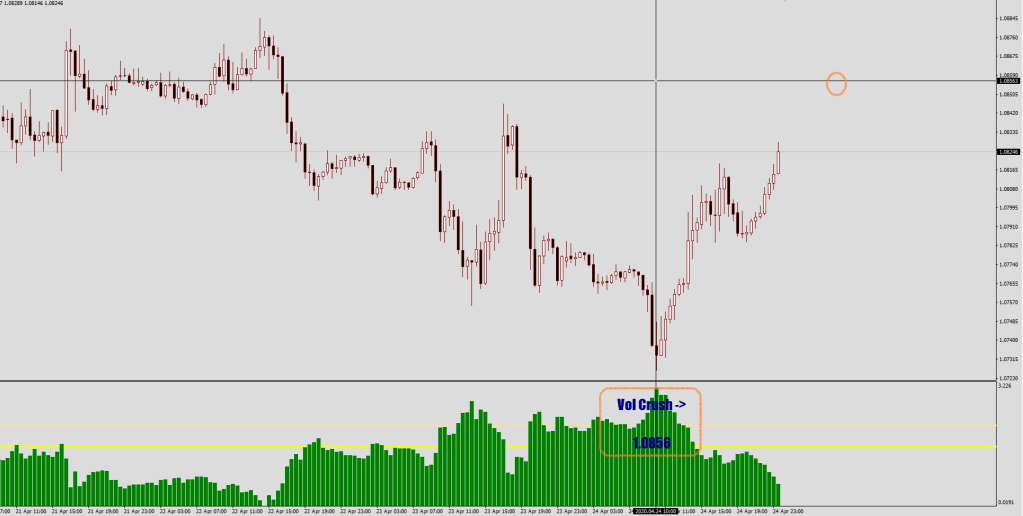
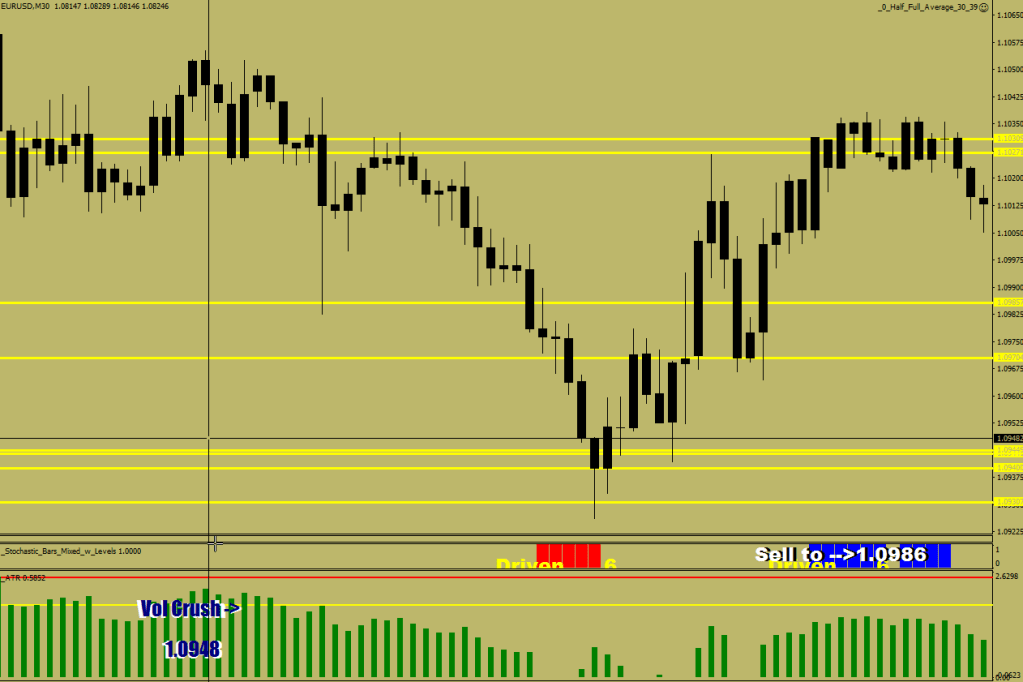
The following 3 examples are volatility crushes otherwise known as Mean Reversions. Let’s see if the mean itself can provide you with a clue for the target.

deletetxt1("Crush");  
  
for(i=1000; i>=0; i--){   
      if (((ExtATRBuffer[i+3]<3 && ExtATRBuffer[i+1]>3 && ExtATRBuffer[i]<3) ||  (ExtATRBuffer[i+3]<3.9 && ExtATRBuffer[i+1]>3.9 && ExtATRBuffer[i]<3.9) ||  (ExtATRBuffer[i+3]<4.5 && ExtATRBuffer[i+1]>4.5 && ExtATRBuffer[i]<4.5) ||  (ExtATRBuffer[i+3]<5 && ExtATRBuffer[i+1]>5 && ExtATRBuffer[i]<5)) && ExtATRBuffer[i]>2.5 ) {
            ObjectCreate("Crush"+i,OBJ_TEXT, indicator_window, Time[i+2], ExtATRBuffer[i]);
             ObjectCreate("Crush2"+i,OBJ_TEXT, indicator_window, Time[i+2], ExtATRBuffer[i]-1);
       
       if (Close[i]<iLo4[i])  {ObjectSetText("Crush"+i, " Vol Crush -> ", 19, "Impact", clrNavy); ObjectSetText("Crush2"+i, DoubleToStr(NormalizeDouble(iHi4[i],4),4), 19, "Impact", clrNavy);   }
       
       else if (Close[i]>iHi4[i]) { ObjectSetText("Crush"+i, " Vol Crush -> ", 19, "Impact", clrNavy); ObjectSetText("Crush2"+i, DoubleToStr(NormalizeDouble(iLo4[i],4),4), 19, "Impact", clrNavy);  }
         
      }      
}


Exit Corrections

Managing a Trade with the Perfect Entry

I missed the top. Wave 5 and Wave 3 were compacted into one single push with no visible continuation divergence in between to point out where Wave 4 ended. It all became an ABC.

To catch a top, you need to put out limit orders at the usual suspects.

Wave 1 ended up making a larger than usual break. I was waiting for the Wave 2 kick back to Mr. Maroon, but it was not happening yesterday.
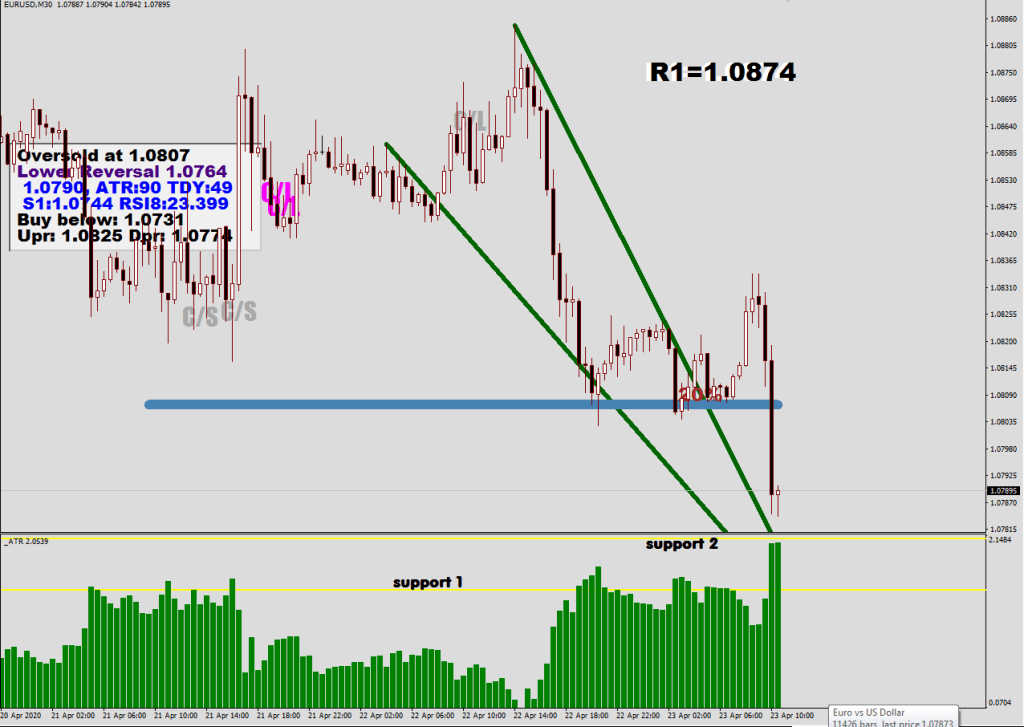
I wasn’t chasing it. The market went into sell strength by the 60-sample stochastic D slipping back below 50, and later went into sell weakness as well by registering stochastic bars on the 15 min.

Sell weakness – see the article

The subsequent low provided me with 4 levels to sell weakness at: 27 pips above (1.0831) and then at 1-3x 7 pips higher. Selling weakness aims to exploit shallow pullbacks regardless of how overbought / oversold price is and does this by starting to sell within less than a fluctuation size away from the swing low/high.
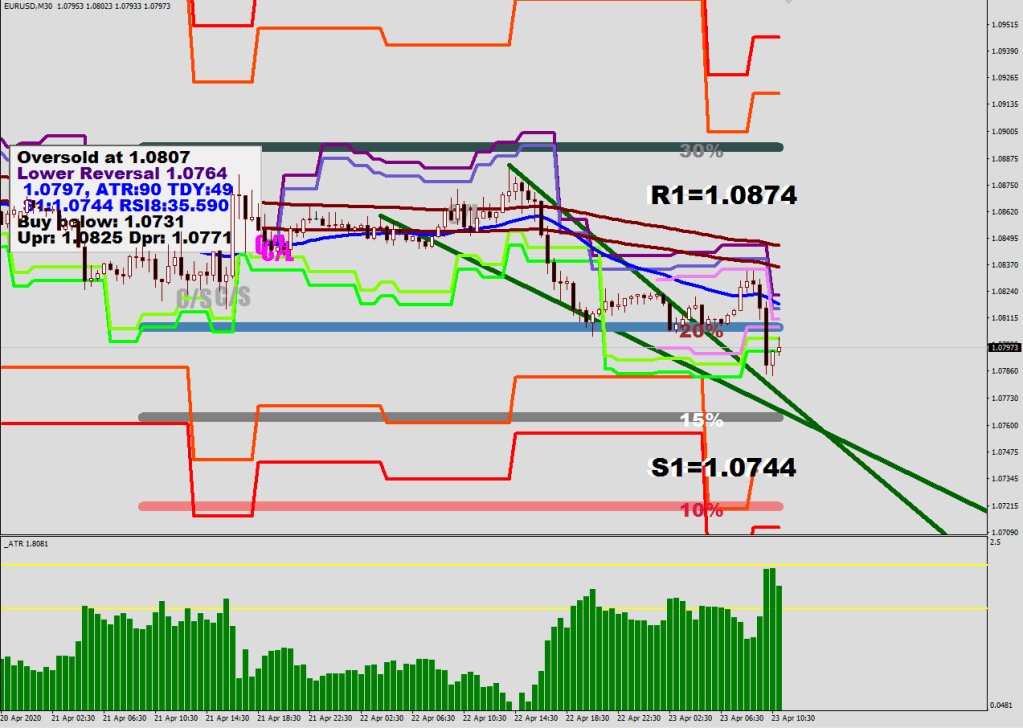
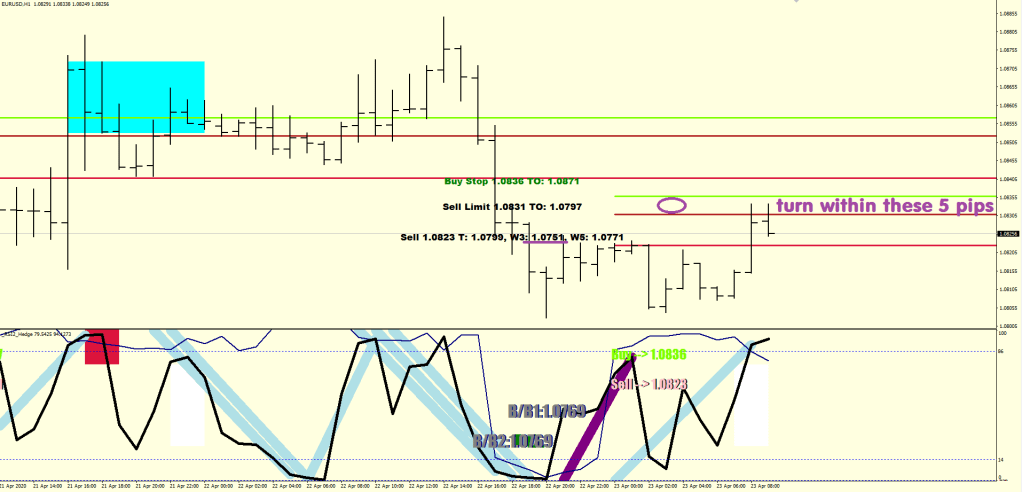
Fortunately, I have other top notch indicators up my sleeve (if I stuff them there) and the 1H liquidity break can give me the turning point within 5 pips.

The RSI2 Hedge did just that within 1.5 pips to be exact.

I got fills at 1.08302 and 1.08339

At this point I am aware that Wave 1 has transpired, and I am looking at Wave 2 back to Mr. Maroon.

To get an idea of where Wave 3 down could go to, the W3 value is underlined on the picture.
The 1-1.3x ATR calculation gives you a band where price would most likely land on after a Wave 3 (could exceed it, but would return in that case):

Refer to the South side values.

For the exact location I would have to monitor for a beat beyond the second 30-minute exhaustion (or one very deep exhaustion).

As for money management, I could had put on 20x the size that I did (but trading is a sport, ain’t it?). My hedge routine is currently set to 39 pips away for a full hedge (from average entry), but as you can see, the go long green line was never hit (see the turn within these 5 pips image), so I could had used it as a stop loss all along.

My smart trail stop could take over the management from here, but to stay in the positions you need to ride out the initial turbulence, so it should be only clicked on after being in 20+ pips gains and if the trade has been on for a while, i.e. for more than an hour.

Picture: the market approaching S2 distance relative to the mean

wave 3 of wave 3 shall commence after a bounce up.

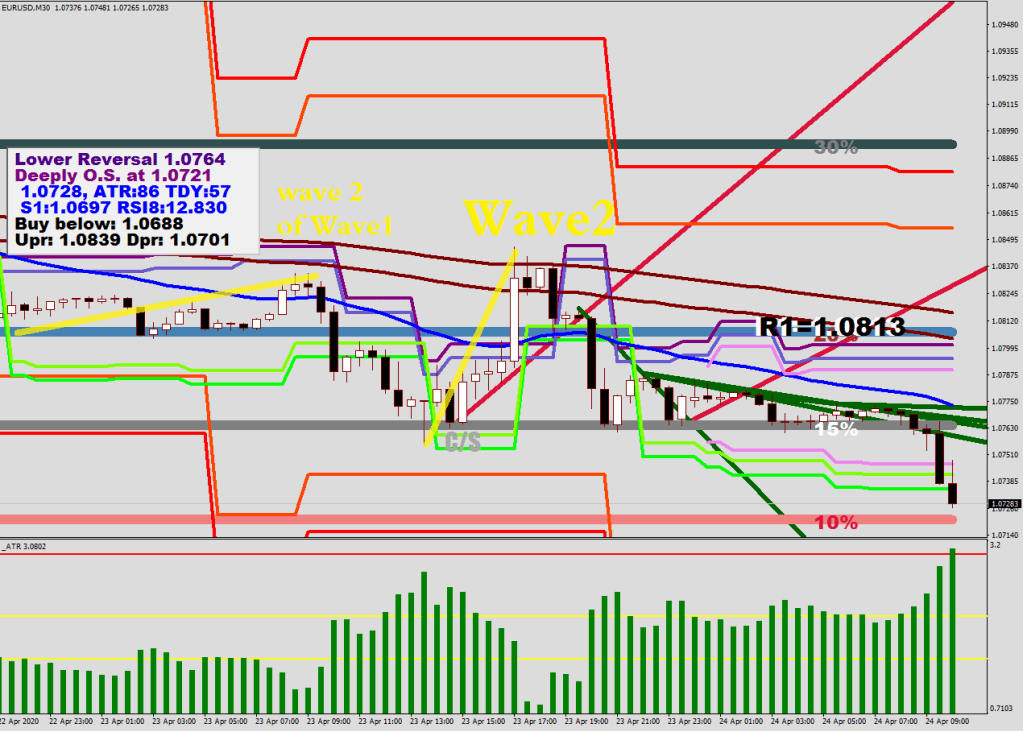
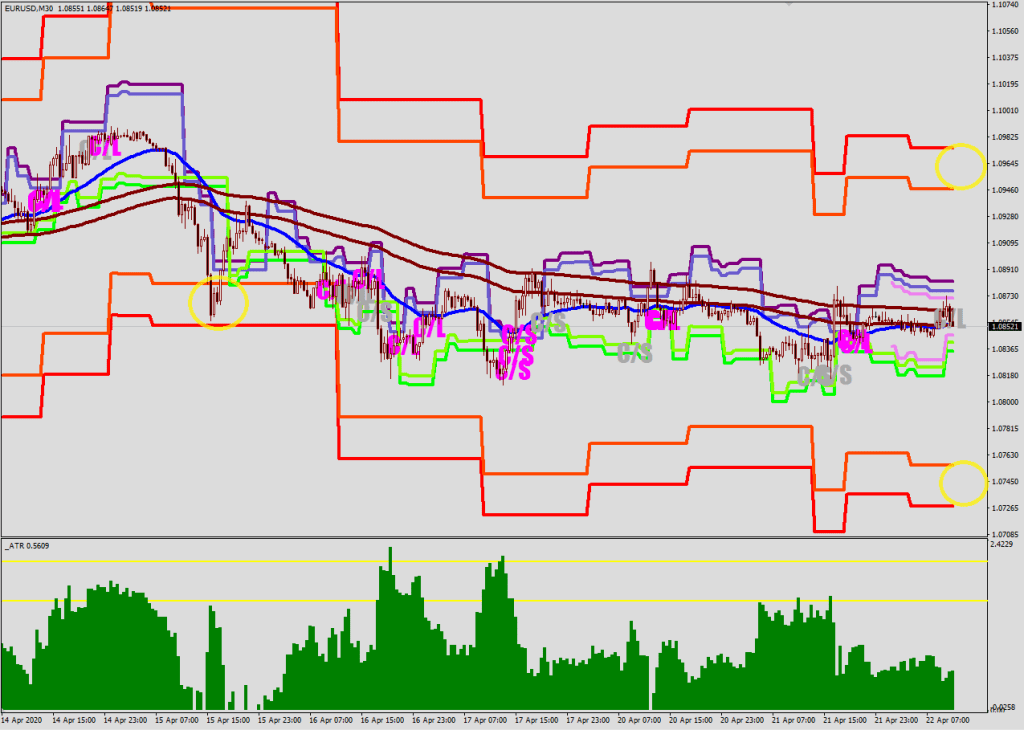
All in all I’m looking for some terminal action below 1.0744, near the 10% mark, just beyond 3x stretch (currently at 1.0748 and declining).

Wave 3’s 1st exhaustion was printed. I have increased my size. Don’t buy the beat!

Wrong about reversal.

Daily Support is at 1.0708-1.0703 there is a 4-hour support at 1.077-.10765. No more hourly supports.

We have missed the energy bands, stalling at the halfway level of the capitulation / doji, and daily energy is being called upon. The damage could be severe.

& the 4H support held, what can I do, my indicators are smarter than I

Even though I said I would be buying yesterday, I did not get on board. Gotta start taking double exhaustions more seriously.

The only thing I was wrong on was the wave count, everything else still stands

I need to stop overriding my own indcators. They are smarter than I, period. I’m sitting on the sidelines instead of going in at 1.0727 like I was told to do so.

Trading plan sketch

Fade Magenta Exhaustions

Denomination: 0.25

Counter side: limit orders, aim for 30 pip (or close to Maoon or other side of Maroon after 3 diamonds), use trail stop “2”.
Entries: up to 3, adjusted to last magenta exhaustion

Directional side: at market then every 10 pips, aim for 60 pipa, use trail stop “2”.
Entries: up to 4

Edge 1:
Exhaustion / Ehaustion+Beat
Edge 2:
Sell Above / Buy Below
Edge 3:
Hourly oversold/overbought fractals x3

Zero Volatility

The title is in reference to my previous entry, the Disappearing Volatility

The picture below shows how my RSI2 Hedge routine can help figuring wave structure.

The purple thick shaded line is a liquidity break that was the cobra head lift before the last bite of wave 5 of Wave 5 down.

The slim purple 5 legs down were Wave 5 down followed by the Volatility Whip in yellow, and as you can see price is in Wave 3 to the upside (see the full lambda highlights in cyan), yet the price isn’t going anywhere. What is happening?

Is this a calm before a storm? Sure, but the magnitude of the next storm is a big question.

Please look at the following pictures to understand the severity of the volatility collapse.

The straight line and the 3 touches on it is actually a double bottom and a closer low relative to the mean.

There hasn’t been a single day adding to the Average Daily True Range in weeks, and the last one that even came close to the rapidly dropping ATR was a week ago today, so it is no wonder that the ATR made its way back from 195 to 95, which is quite close to the all time average of about 85 pips, and would had been a normal read before Corona Time and even BrExit.

Indicators: Fluctuator X & Stretch Marker

The bias based on these images is certainly up.

I am not a fundamental trader, but it is worth mentioning that the current break in volatility is due to the absence of unknown factors.

Yes, the ECB is printing money like crazy, but so does the FED, and if I had to guess, the FED would be outperforming in terms of weakening their currency.

Back to the charts. Recently every second downside exhaustion resulted in a reversion to the Mean.

Indicators: RSI2 hedge, LEMA 30N2, Fau Wee (auto trendlines)

This is again the opposite of what happens in a Bear Market when price seldom returns to the mean, and by then it would had made it to a 5-10x stretch from the mean. Currently price can’t seem to get away by more than 2x and bear zone 1 (from 1-3x stretch) is a buy for a mean reversion.

What would be the next event that would initiate the next volatility burst out? Who knows. It would have to be something that is unexpected, unknown, something that is not factored in. One more dip below the doji on the left, out of the blue, scoring in the energy band to kick start some volatility? Well, not before a Wave 5 is printed on the upside.

Indicator: CI Moat Dynamic

I know I’ll be buying. (To be able to milk volatility they would have to first get people on the wrong side, i.e. the first (big) move would be a fake out.)

Going out to be tested for Corona soon.

Slipping into oversold now & breaching support on a relative basis

Indicator: Comfort Levels 4H

Exhaustion / Beat

You know it from me: Exhaustion + Beat = Reversal

You do want to ignore exhaustions in the kill zone i.e. 80% of the Upper Guard Rail to Lower Guard Rail (both in Chartreuse) zone – this is where price may get a kick from the Market Makers, and the commute may be quick for there is zero stretch from the Mean.

The grayed out numbers kind of mean the opposite of what they say (at least until back to the Mean that is (in Lime)) – sorry for the double bracket, it’s a programmer’s handicap

A lot of these exhaustions are happening in the direction of the progression, thus although the locations are great, the potential may be limited. 25 pips – 34 any time, 60 pips to back to the Green River – sometimes.

The exhaustions counter the direction of the progression can give you a lot more, you can aim for 60, 80, 120 and sometimes even more.

I have switched to 8-sample CI silently. These plots are now incorporated in the RSI2 Hedge routine.

The ink would be dried on this current exhaustion prompt in another 15 minutes, for I am looking for 1 hour’s worth of it.

It has 15 more minutes to push out the values for capturing the beat.

Chronometer is what you need for trading, plus this RSI2 Hedge routine (besides the LEMA 30N).

The Hourly Buy/Beat and Sell/Beat values? They are still there

No fill is better than a bad fill

The new consolidation printed the new navy+white line

If you left the order on the left out, that one could had been the ticket to participation (1.0812)

played around with the filters a bit, for this is what I thrive on: logical expressions

found something interesting

the previous correction had 6 downside exhaustions with 20-sample lower lows


& so did the recent one.

Frankly, I’m not expecting any more downside here until a full consolidation.

3-Wave Structure

If you wanted to make 50 pips today with whatever size you would wager, all you had to have was a plot from my Fractal Switch indicator (the Fibonacci looking thing in green).

This would had meant depending on the time of the purchase with 1 lot size $100 maximum draw down or $39 and $500 net booked upon going to target.

Why does not worth this to you a donation of your choice is beyond me. (There are 2 more trades with the same plot: a long stop at the Wrong About Reversal level and a Sell Stop at the Close/Hedge level).

But this is not what I want to talk about here.

Plotting a bar chart may prevent you form seeing the 3 waves that happened downwards.

The DJ Culture 3 Wave Structure would only become visible with 2-colored candles at times, for they played out faster than you could follow on the given time frame with the help of an RSI2 (see the down leg, that we now can call Wave 4).

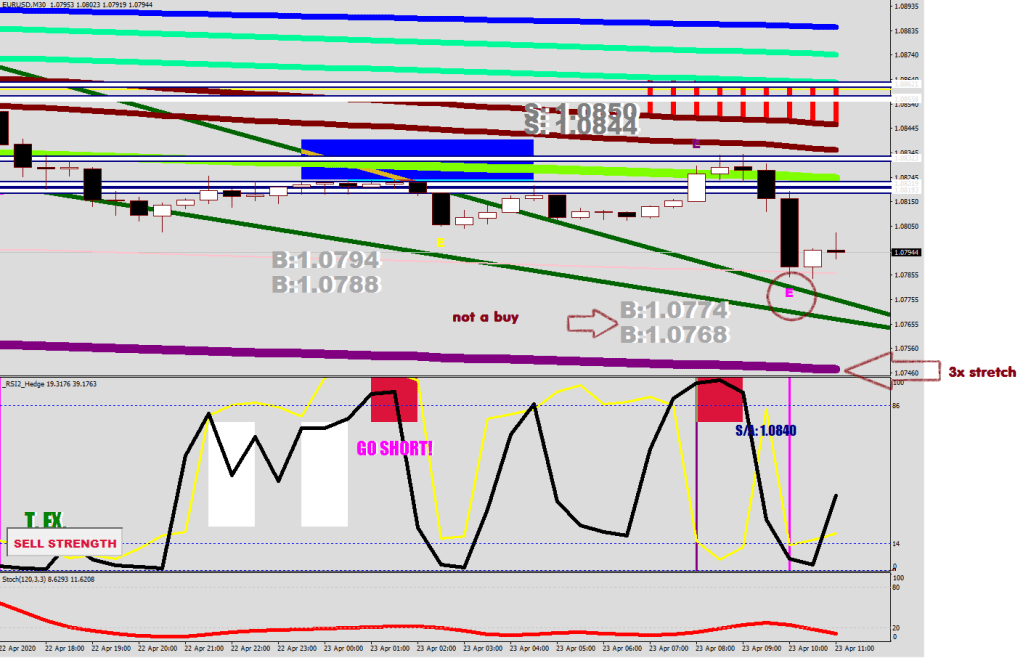
S/B stands for Sell Beat with an approximate value (indicator: RSI2 Hedge)

The only way to spot the structure was finding the two white candles up in the black candle sequence that separated the impulse legs.

On the histogram above (code was published for free in my Disappearing Volatility entry) you can see that the Wave 5 made a beat over the Wave 3 even on the relative to mean basis (red line).

wave 3 of Wave 5 managed to achieve trending before turning on itself.

The Market Makers bought again (at Mr. Maroon) supposedly to sell out their longs on the way up into this leg.

Price is now awfully close to the energy bands that would be even lower tomorrow. The Risk/Reward favors the downside as well as the wave count.

indicator: CI Moat; daily support and resistance levels listed bottom left

…and just remember when I said that when you do not know what is happening, chances are that you are in a Wave B or a Wave 5.

B/B is of course Buy the Beat

Good old 15 min ATR, has the volatility right once again.
Overdrive-cover in green. Indicators: 2 Fractals, 4 H Doji Lines & God Awesome V1.71

CI Moat Dynamic

I made an effort to make the energy bands more dynamic to accommodate the volatility waves.

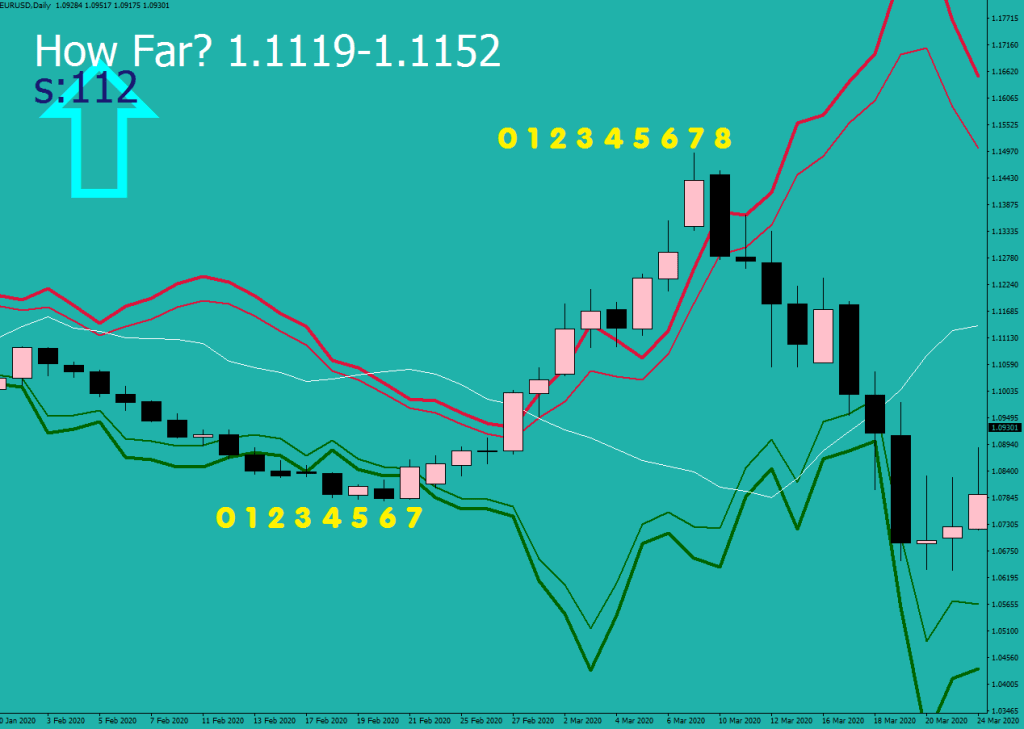
The following day counts show the wave being whipped up by first 7 days outside the bands on the downside followed by 8 days outside on the upside.

Then there was a move lower that did not manage to stay outside the bands.

The recent doji at just below 1.08 is about halfway the largest daily candle in recent times. Until the closes remain above this level, this market is bullish.

This is all I can add to what I said in my email on the 6th of April when I suggested someone to buy Euros until 1.0950 and then be in 1/2 Dollars & 1/2 Euros subsequently for the call from there was unclear.

I can’t plot the bands beyond the 0 value, but I can make an estimate about where the location of the far half of the Moat would fall tomorrow.

if (Close[0]>(c1[0]+c2[0])/2){
 ObjectSetText("signal21"," TOMO: "+DoubleToStr((iHigh(NULL,0,7)+iHigh(NULL,0,6)+iHigh(NULL,0,4)+iHigh(NULL,0,5))/4+cval[0]*.55*m*(iHigh(symbol,0,iHighest(symbol,0,MODE_HIGH,3,0))-iLow(symbol,0,iLowest(symbol,0,MODE_LOW,2,0)))*65*volatility
+(VOLA-50)/10000*m,4)+"-"+DoubleToStr((iHigh(NULL,0,7)+iHigh(NULL,0,6)+iHigh(NULL,0,4)+iHigh(NULL,0,5))/4+cval[0]*.93*m*(iHigh(symbol,0,iHighest(symbol,0,MODE_HIGH,3,0))-iLow(symbol,0,iLowest(symbol,0,MODE_LOW,2,0)))*65*volatility
+(VOLA-50)/10000*m,4),40,"Tahoma",Red);
 }
 else {
 ObjectSetText("signal21"," TOMO: "+DoubleToStr((iLow(NULL,0,7)+iLow(NULL,0,6)+iLow(NULL,0,4))/3-cval[0]*1.28*m*(iHigh(symbol,0,iHighest(symbol,0,MODE_HIGH,3,0))-iLow(symbol,0,iLowest(symbol,0,MODE_LOW,2,0)))*65*volatility
+(VOLA-50)/10000*m,4)+"-"+DoubleToStr((iLow(NULL,0,7)+iLow(NULL,0,6)+iLow(NULL,0,4))/3-cval[0]*1.62*m*(iHigh(symbol,0,iHighest(symbol,0,MODE_HIGH,3,0))-iLow(symbol,0,iLowest(symbol,0,MODE_LOW,2,0)))*65*volatility
+(VOLA-50)/10000*m,4),40,"Tahoma",DarkGreen);
 }

Using the RSI2 Hedge System

The RSI2 Hedge.ex4 has gone through quite a bit of evolution.

The previous RSI2 Hedge article discusses some of its plots appearing on 30 minutes for directional guidance. There has been changes since, but this article would be concentrating on the new hourly signals.

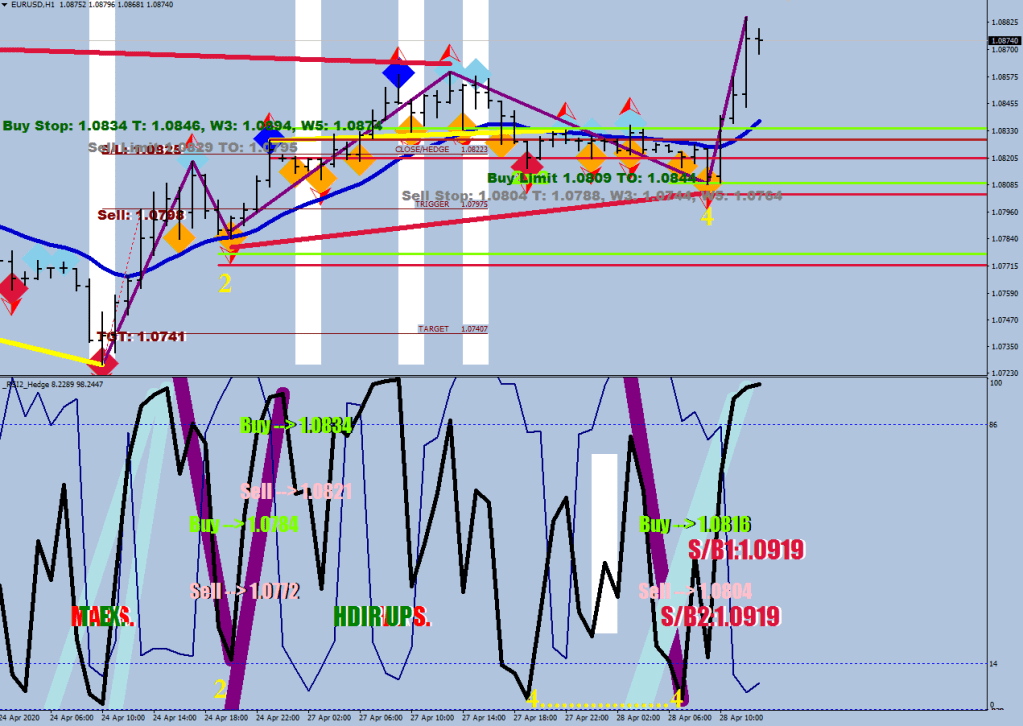
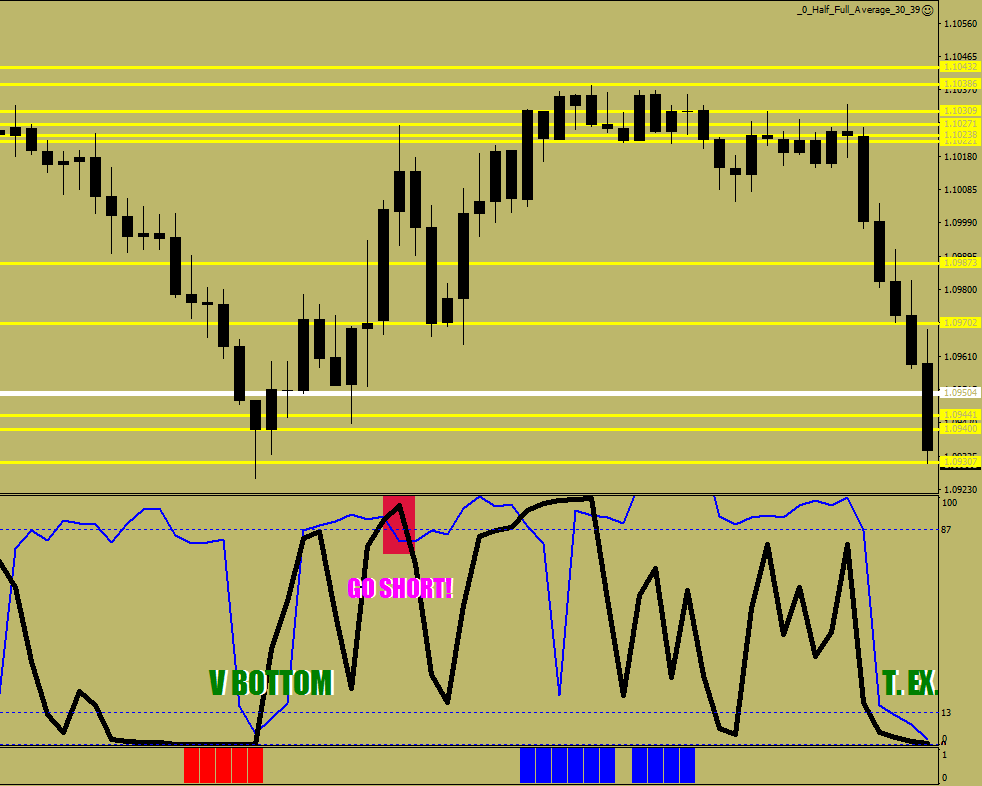
This is more or less what you would see for plots. Going into the day you can see that the suggested side has shadow contour. Buys go hand in hand with oversold RSI2s. The white stripe means full charge as per usual.

All the other trades were valid as well if they got a fill, just keep in mind that they are counter-directional ones and would need monitoring / protective stop once in gains.

The new signals revolve around the liquidity break purple diagonals.

You can see clearly that on the way down the suggested trades were on the downside.

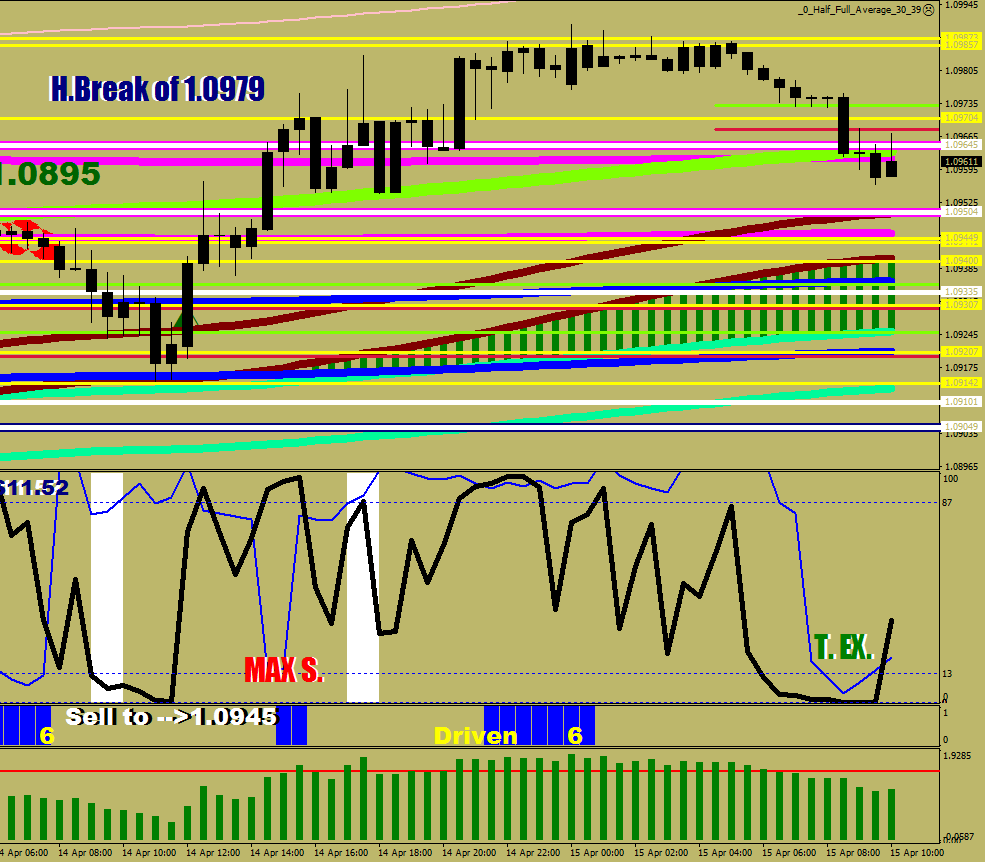
T. EX. means total exhaustion.

The highlights correspond to the red/green shadings below.

When you have the right side figured for you by the program, my Stochastic Bars Mixed w Levels can give you all the levels on 30-minute.

Its basic function was to show overdrive readings with blue/red bars, it has a Maximum Size figured for 1:500 leverage, the D is a directional risk (positive/negative) exposure lot size, the D/P is the P/L for the day.

The lines are figured from the overdrive values.

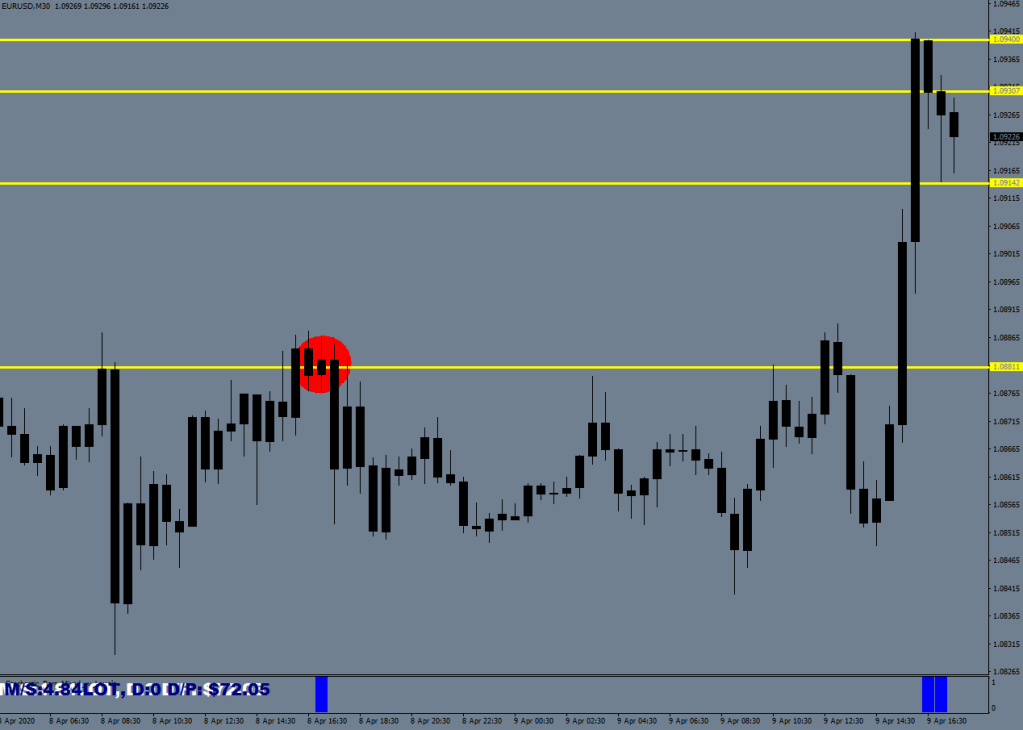
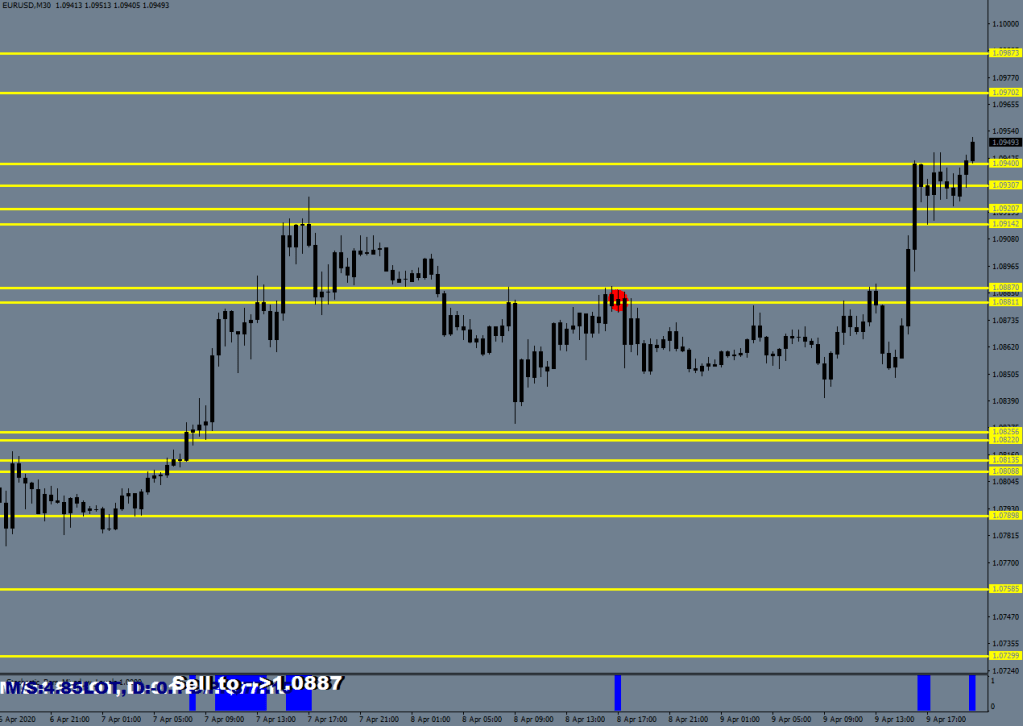
If you go back to the first screen, you can now understand that your pullback buys would have a target 1 at the nearest resistance line, which was 1.0881 and the suggested break-out trades would be good for the second resistance area out. The default look back of 500 can be changed – in fact I normally have it on 1000.

The 2nd resistance out was at 1.0940 – perfect hit. New levels were made since, but these two were in place from before.

(count 2 lines within 10 pips as 1)

Stochastic bars mixed also provides with some counter directional trades that I dubbed “2nd Blood”. It arranges the levels into a sorted array and gives you the value for the 1st line that is more than 25 pips away. Usually can make around 40 pips from your entry.

I can’t make trading any easier for you.

These two programs can be yours in exchange for a donation.

macdulio@yahoo.com

The next 2 levels:

There should be a second blood call coming up soon.

additional signals

B/B = Buy Beat

S/B = Sell Beat

HDIR = Holding Direction

V Bottom = V Bottom

Can you see the undercut here?


Extended time remarks from here

I now have S/B1 and S/B2 listed. Not getting a fill on the one further out is relative weakness. Surpassing the further value talks of relative strength in the direction.

With the following call I gave the turn around within 12 pips of tolerance:

1.0838 was supposed to be the break-down short level. The low was made at 1.0840.

Yesterday someone approached me who was trying to make business out of selling calls for $70 a month. I saw one of those. It was suggesting to buy Cable with 160 pips of stop loss! Compare that with my calls.

Now look at the second call. The 1.0892 call for the break-out was just missed by about 3 pips. If the order displacement was less by these 3 pips, you would have had to endure a 40-pip pullback before the breakout taking place, and with large size this could had gotten particularly painful.

So, I called the turn with the break-out values within 2 and 3 pips, one after the other. The displacement was chosen carefully.