The Vostroff-Accumulation

Sponsored by Craig &

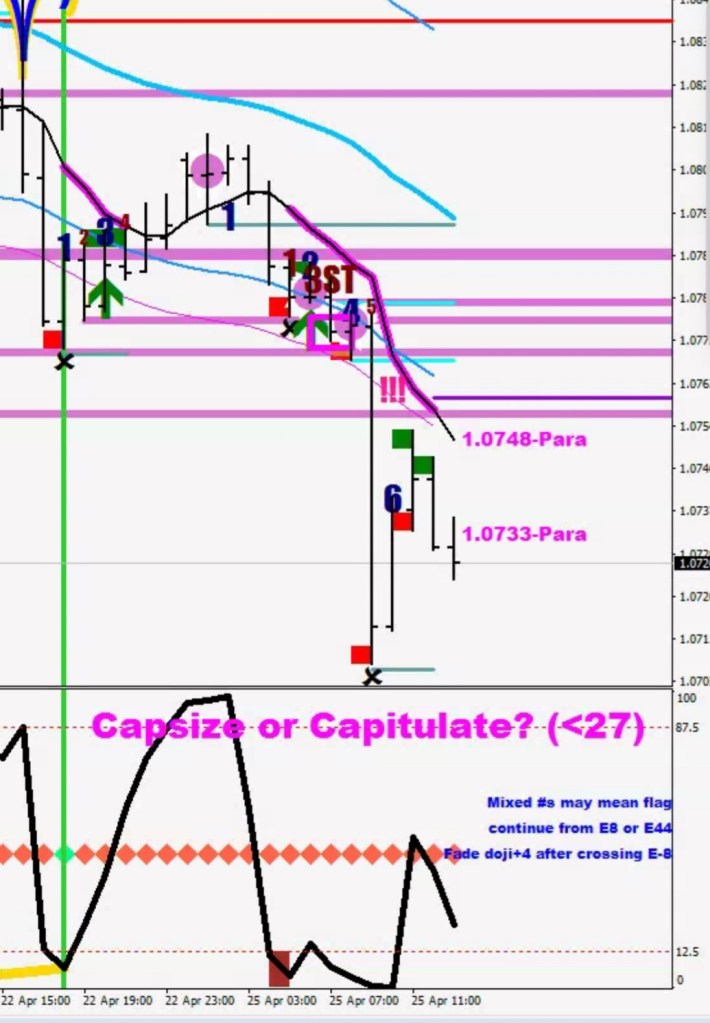
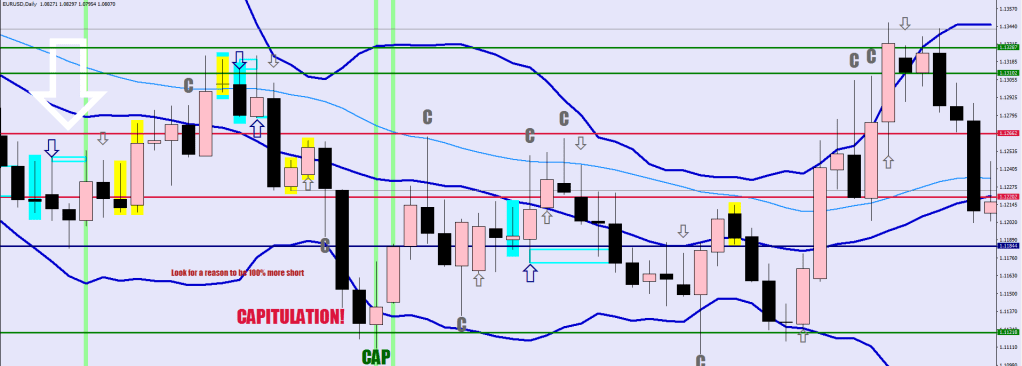
An impulse bottom is formed with a breach of the Hourly 216-sample 2.5 std HL2 Hourly Bollinger Band and with a fractal print that is a 216-sample lower low that does not get closed under by more than 2 pips in the coming 14 hours despite of being challenged and briefly surpassed.
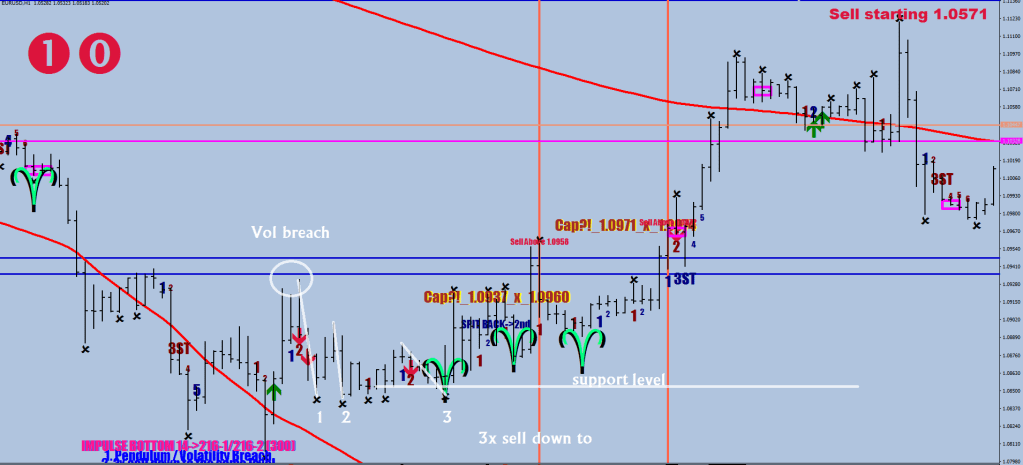
The middle of the text lines up with the trigger low.

The Vostroff-Accumulation starts with a volatility breach (i.e. price going above the 30-sample 2 std HL2 Upper Bollinger Band).

A crucial make or break point is the 13th hour’s close relative to the trigger low: the fire serpent cannot be get further away than 50 pips, otherwise the whole pattern would get invalidated (bogus with techno jargon).

After the volatility breach there are 3 selling legs to a support level. After the second leg down this level would become more apparent as some of the closes would start marking this level up quite clearly.

The third sell off would be a little shorter than the previous ones, making a higher low above the second low and it would merely touch it before receiving a stronger rejection.

The pattern may take 4 days to play out and would rake up 300+ pips from the low.

The bird signals? Left in from previous ventures. I now refer to them as E44 fountain switches and can’t quite remember why I did what I did with them, but they are sort of a confirmation of the new direction.

   ///E44 fountain switch
    
    if (i>0 && iFractals(symbol,0,MODE_LOWER,i) && (iHigh(symbol,0,iHighest(symbol,0,MODE_HIGH,5,i))-Low[i])>240*Point && Low[i]<iMA(NULL,0,44,0,MODE_EMA, PRICE_MEDIAN,i)+30*Point
          && RSI2[i]>5.5 && RSI2[i-1]>5.5 && Low[i]<(Low[i+3]-30*Point)
          && (Low[i]-iLow(symbol,0,iLowest(symbol,0,MODE_LOW,11,i)))<360*Point 
          ){
         j=i+3;
         while (iFractals(symbol,0,MODE_LOWER,j)==false)
         j++;
         if (Low[j]<Low[i]+30*Point){   
          ObjectCreate("VALIy"+IntegerToString(i), OBJ_TEXT, 0, Time[i], High[i]-50*Point); 
            ObjectSetText("VALIy"+IntegerToString(i), CharToStr(94), 66, "Wingdings", Black); 
            ObjectCreate("VALIx"+IntegerToString(i), OBJ_TEXT, 0, Time[i], High[i]-50*Point); 
            ObjectSetText("VALIx"+IntegerToString(i), CharToStr(94), 56, "Wingdings", SpringGreen); 
         }
      }

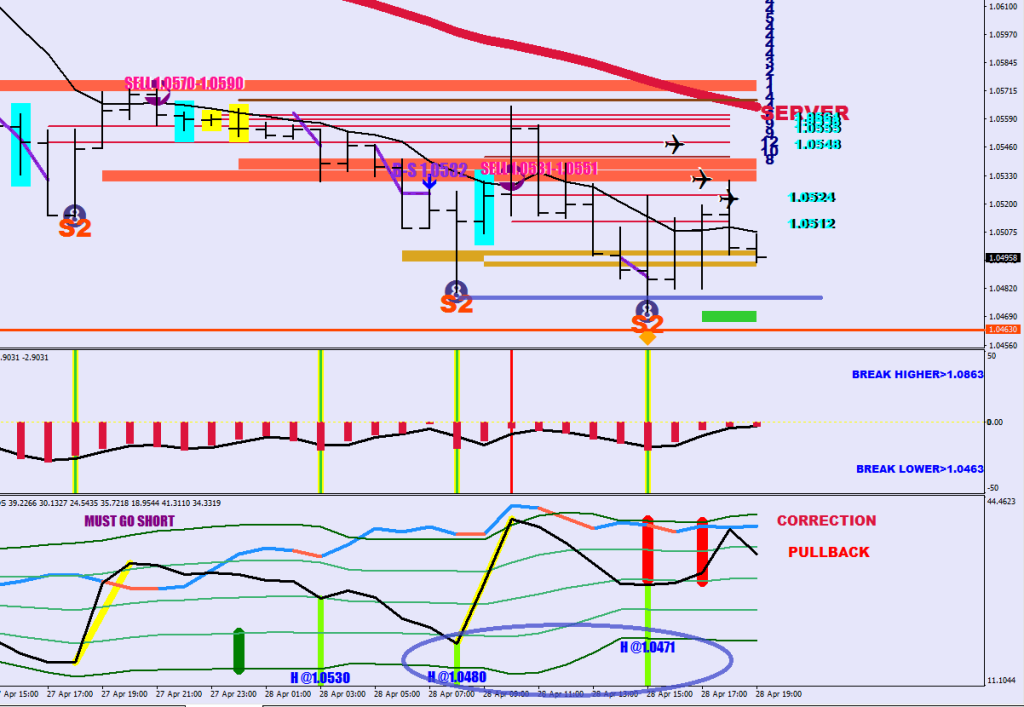
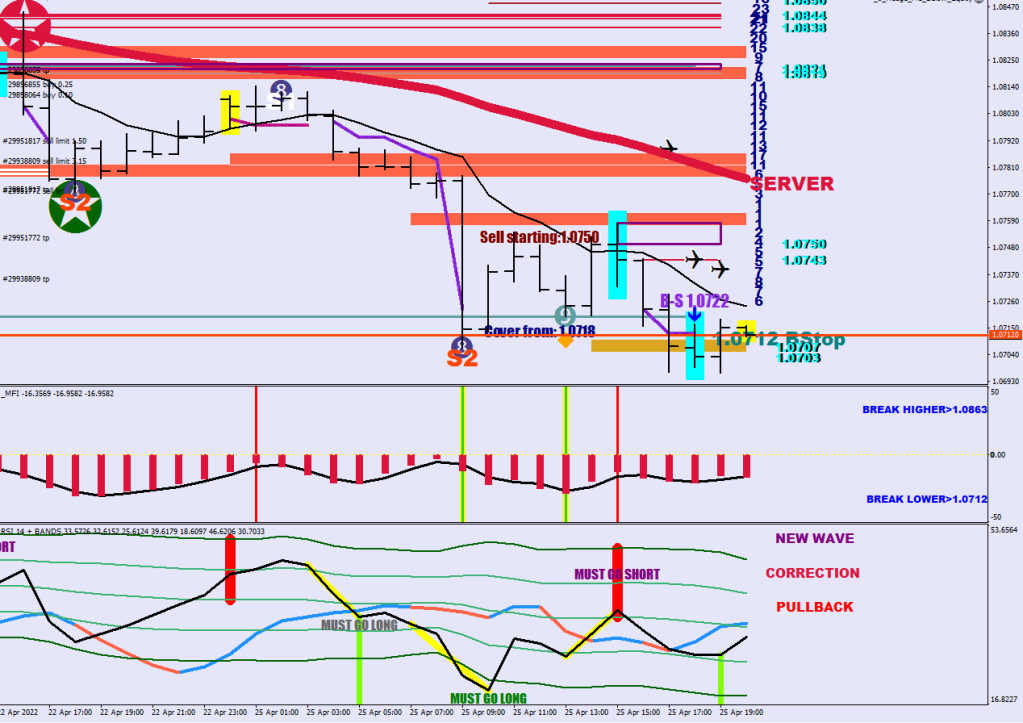
I believe this pattern to be a Vostroff-Accumulation suspect:
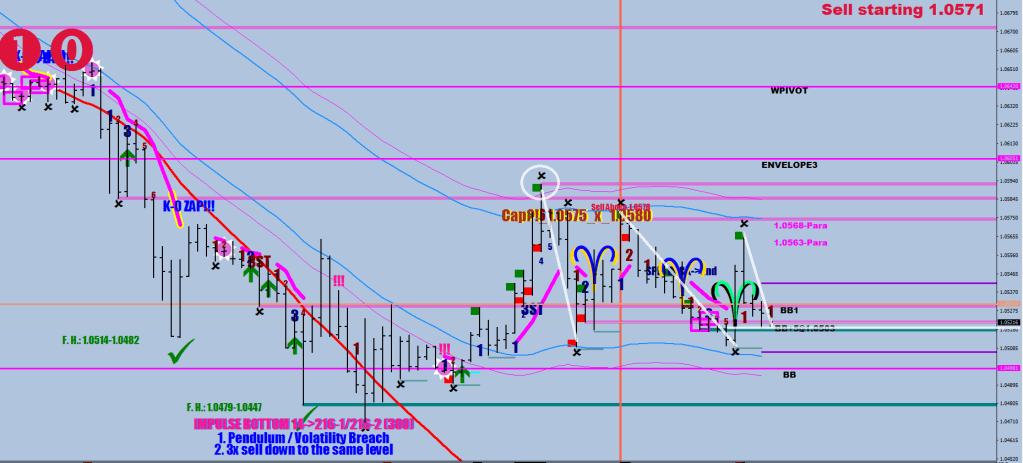
The level seems to be 1.0520

This time siphoning got carried on until the US close.
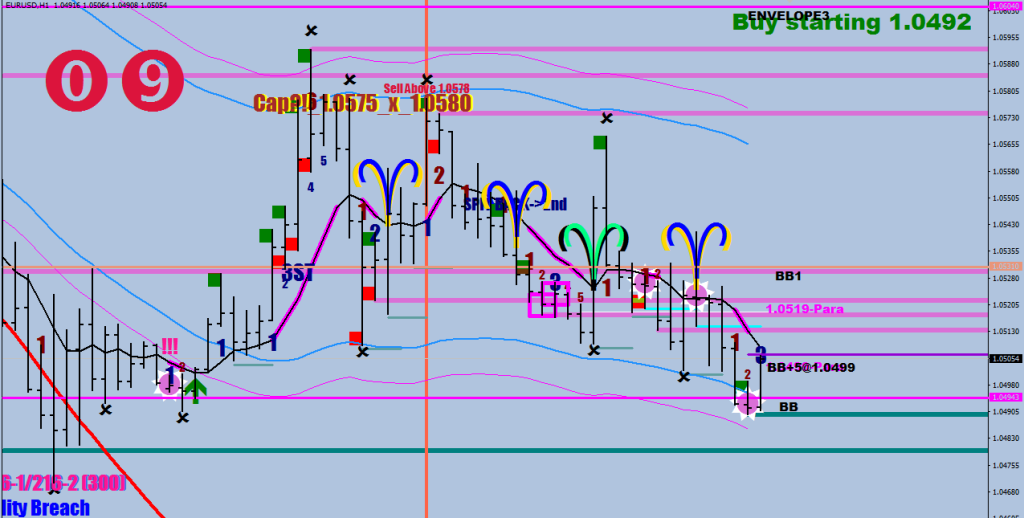
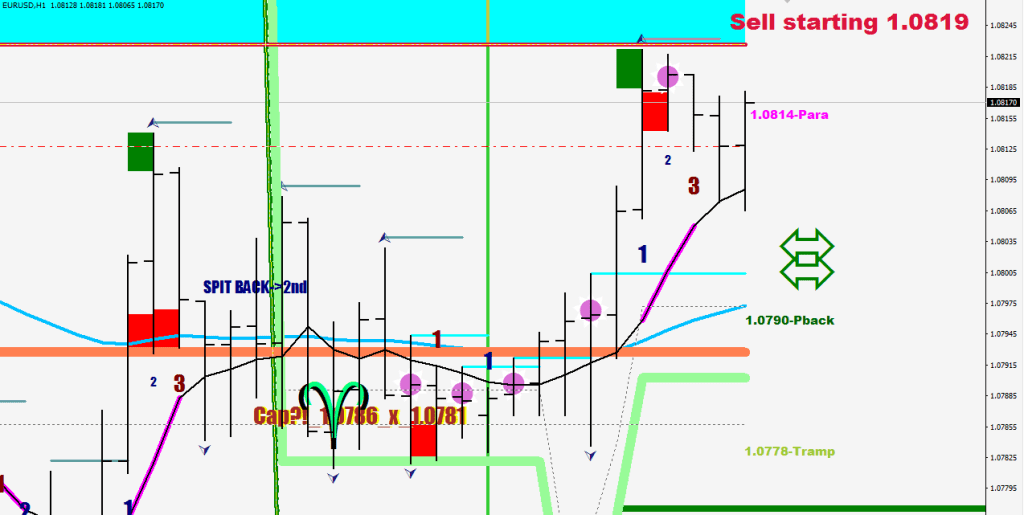
You can see the higher support level that was made with the last 2 hours of selling right into the daily Bollinger Band. Things are happening slower this time, but this does not mean that they are not happening.

Fondant

Some newer plays.

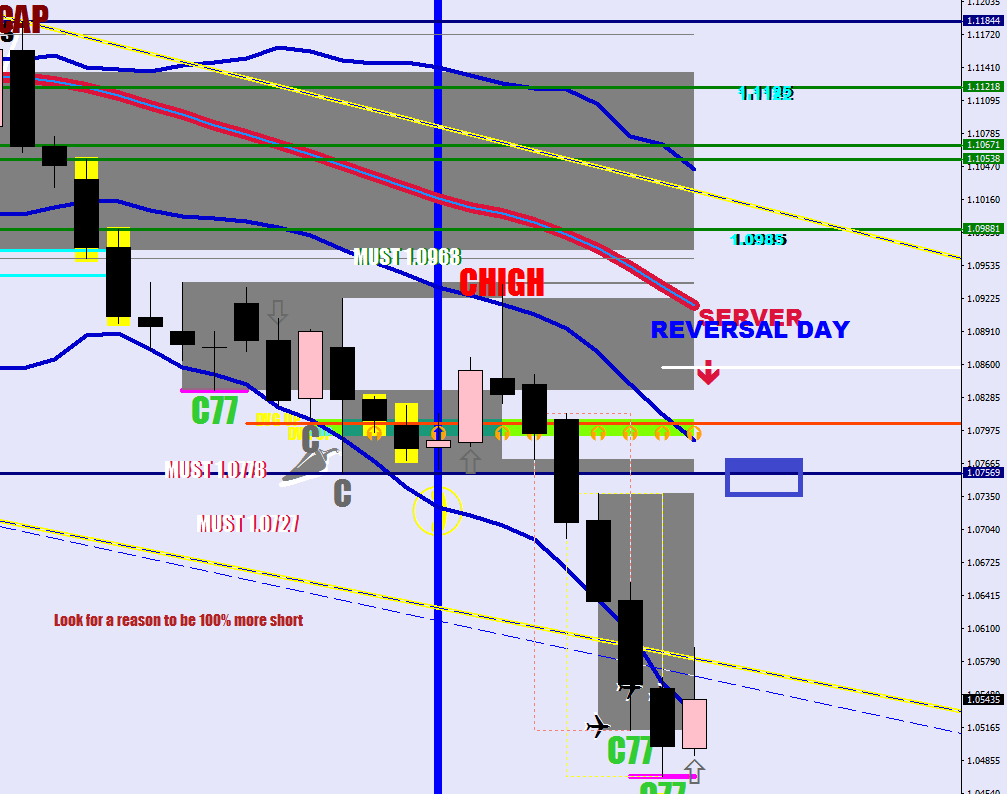
A fondant is one or two candles with a total length of a 1000 points with wicks both on top and bottom in excess of 24 pips. A fondant defines a trading range. A look above / below and fail would be targeting the other side of the range.

The circled areas are look above / look below and fails. There was only one instance out of the 4 where the next candle took out the terminal point and drew a new fondant. Where was this exactly?

I realize I have not covered all possible sequences just yet, but this is where this starts.

   ////szaloncukor
 
   if (High[i]-Low[i]>1000*Point && High[i]-Open[i]>270*Point && Close[i]-Low[i]>270*Point && i<30){
   ObjectCreate(0,"Bing;"+IntegerToString(i),OBJ_RECTANGLE,0,Time[i],iHigh(symbol,0,iHighest(symbol,0,MODE_HIGH,1,i)),Time[0],iLow(symbol,0,iLowest(symbol,0,MODE_LOW,1,i)));
ObjectSet("Bing;"+IntegerToString(i),OBJPROP_COLOR,clrGray);
ObjectSet("Bing;"+IntegerToString(i),OBJPROP_BACK,1); 
ObjectSet("Bing;"+IntegerToString(i),OBJPROP_STYLE,2); 
ObjectSet("Bing;"+IntegerToString(i),OBJPROP_WIDTH,2); 
   }
   
      ////szaloncukor kombo
 
   if (High[i+1]-Low[i]>1000*Point && High[i+1]-Open[i+1]>240*Point && Close[i]-Low[i]>240*Point && i<30){
   ObjectCreate(0,"Bing;"+IntegerToString(i),OBJ_RECTANGLE,0,Time[i+1],iHigh(symbol,0,iHighest(symbol,0,MODE_HIGH,2,i)),Time[0],iLow(symbol,0,iLowest(symbol,0,MODE_LOW,2,i)));
ObjectSet("Bing;"+IntegerToString(i),OBJPROP_COLOR,clrGray);
ObjectSet("Bing;"+IntegerToString(i),OBJPROP_BACK,1); 
ObjectSet("Bing;"+IntegerToString(i),OBJPROP_STYLE,2); 
ObjectSet("Bing;"+IntegerToString(i),OBJPROP_WIDTH,2); 
   }

The CHIGH is a Continuation Divergence High. The explanation has to do with the fact of stochastic embedding.

If the market makes a Cover high inside the oversold field, that is the start of a divergent leg down.
///////4-candle high closing back down 27-pips cover
if (iStochastic(symbol,0,18,3,3,MODE_SMA,0,MODE_MAIN,i)<18)   ObjectSetText("Bingi"+IntegerToString(i), "CHIGH", 26, "Impact", Red); 

Let’s toy around with the new boxes a little more for the remaining time.

Where would be price headed and where could it potentially fail in doing so?

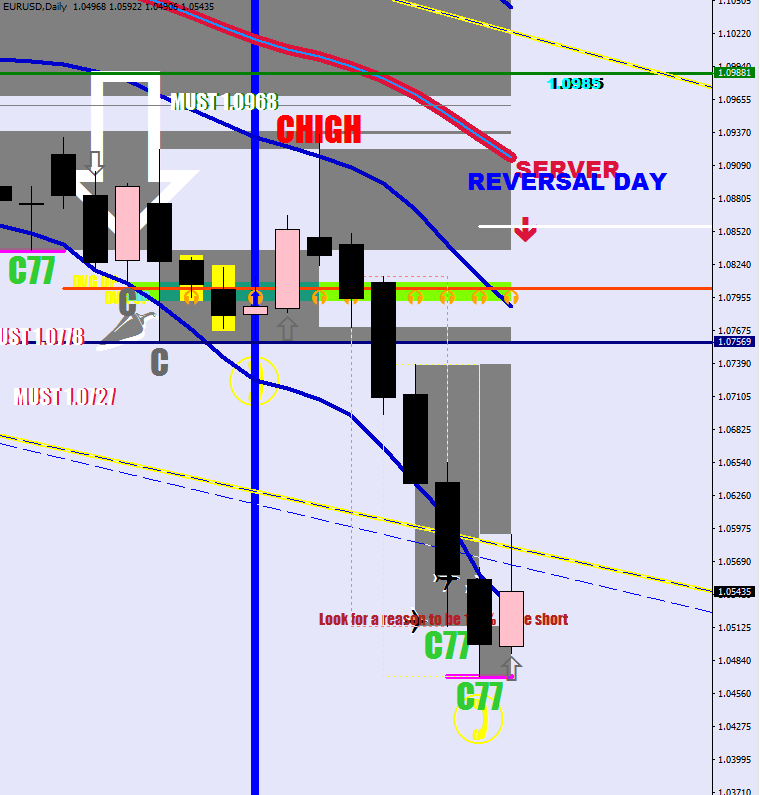
Making it into the bottom half of blue box and reversing would mean failing to leave this last gray field. Making it into the upper half would make the failure even more severe: that would be a failed break out as well a failed re-entry. If you look left, you would see a cover low “C” at the same area, that wick is where I would expect the aggression to set in.

This of course if the the last C77 low does not get taken out – remember the exception shown above

or a new 2-candle combo does not come up with a new range of their own on the way up.

If you want your mind to be blown, plot some Bollingers on the hourly with 216 sample and 2.5 std dev over HL2.

Just look at how far this could go with the BB mount opening wide.

Homework: How do you grab an impulse bottom?

   if (iFractals(symbol,0,MODE_LOWER,i) && iLow(symbol,0,iLowest(symbol,0,MODE_LOW,120,i))==Low[i] && i>0){
      j=i-1;
      lowerlows=0;
      while (j>0){
            if (Low[j]<Low[i]) lowerlows++;
            if (Low[j]<Low[i] && Close[j]+20*Point<Low[i]) break;
            j--;
      }
      if (j==0 && lowerlows>0){
            ObjectCreate("DELIxx"+IntegerToString(i), OBJ_TEXT, 0, Time[i], Low[i]-50*Point); 
            ObjectSetText("DELIxx"+IntegerToString(i), "IMPULSE BOTTOM", 19, "Impact", Crimson);
      }      
    }

Hello, ooh-oh, Vienna Calling

Lift up the yellow receiver, I’ll make you a believer. The vertigenta plot was courtesy of Nick Rhodes.

 ////////lower vertigenta
      if (((score[i]==0 && score[i+1]==-3 && (score[i+2]==-2 || score[i+2]==-1))  || (score[i]==0 && score[i+1]==-3 && score[i+2]==-3 && (score[i+3]==-2 || score[i+3]==-1)))
         && Low[i+1]<iMA(symbol,0,207,0,MODE_EMA,PRICE_HIGH,i+1)

End of M leg – same plot, just on the lower indicator

Participation & Progress

What is that you’re always looking at? – someone asked me today.

My response was: this is hell, you are keep on confusing knowledge with being lucky.

No, I am not a promoter of trading.

But if you are damaged goods and happen to be here, let’s make it memorable. It will feel like walking on Strepsils.

Daily chart, candlestücks, in the middle of the boring rain.

One by one.

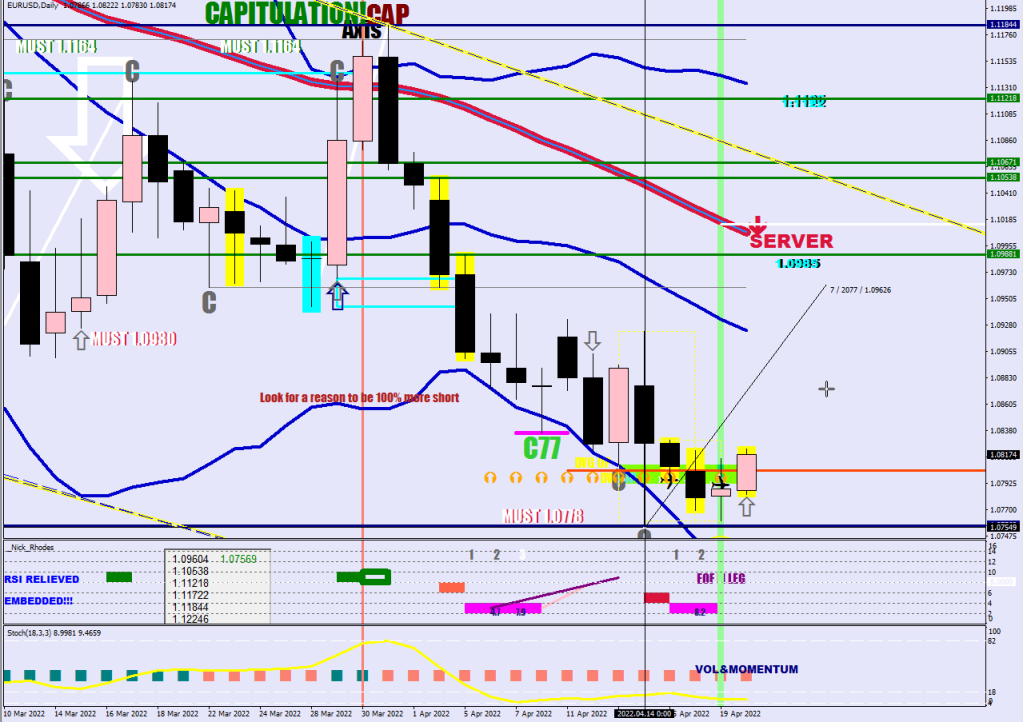
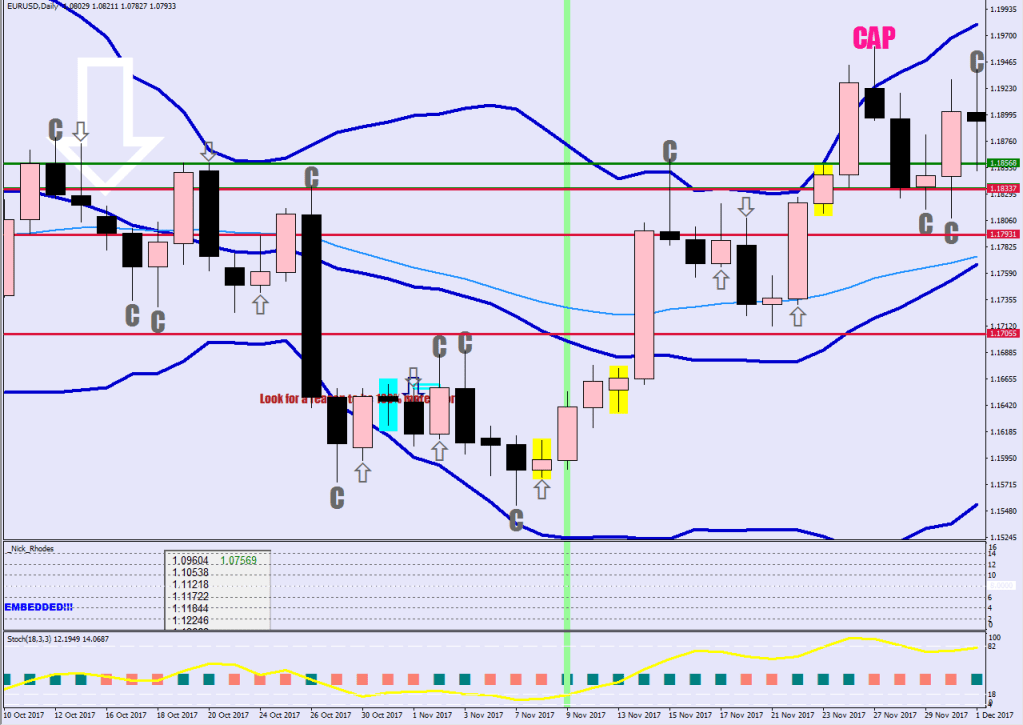
Candelloni #1: Rejection at the 20 SMA. Long wick on the top for strong selling pressure, much less buying pressure by the close, the body shows progress made by the bears. Suspect of a new leg down (the divergent leg that kicks off with a continuation divergence).

Candelloni #2: Follow through. More daily progress made by the bears, the wick on the bottom shows a bit of increased selling pressure, but less than 27 pips (not an official cover low). Volatility is on the rise.

Candelloni #3: Increasing selling pressure. Much more daily progress made by the bears, we are on our way to the Bollinger Band. Buying pressure wick is getting shorter.

Candelloni #4: Increasing selling pressure. More daily progress made by the bears, the wick on the top shows growing bear aggression (and they show for it too), the wick on the bottom is virtually non-existent at the Bollinger Band, foreshadowing the upcoming push against the Band on the outside.

Candelloni #5: Selling pressure, volatility maintains, even more ground gets covered. There is 27+ pips cover at the end of the day with the 4-sample lower low outside the Bollinger Band. Now the bears are pushing it (borrowed time), price can only stay outside the bands less than 5% of the time.

Candelloni #6: They are making a push yet again from the Bollinger Band, bears are fearless and possibly topless too at this point. Being drunk on success does not help. You better cover with this lower low.

You’ve been candlestruck.

A doji is like a small black hole. Somebody diverted every order into their pocket in that hour.

How does a “the low is in” show up on a chart? Perhaps in a form of a hedge-level break that the market does not manage to get too far from and cannot seem to be able to close below on the hourly.

Two examples:

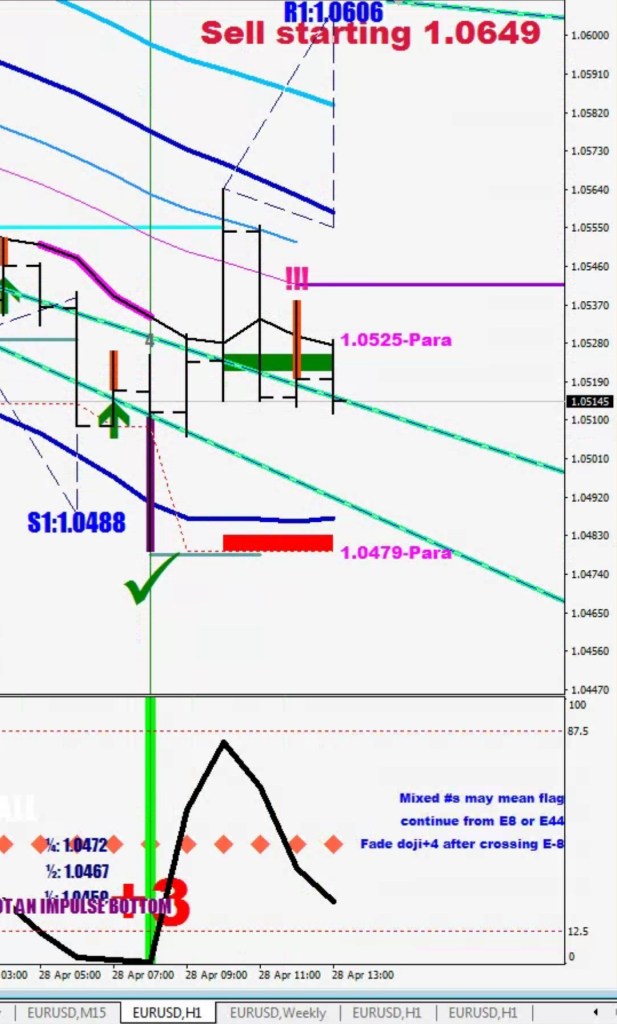
Notice the 9 pips progress that was made.

Notice the 9 pips progress that was made.
They sold the Bollinger Band. It happened to line up with the last doji. Support and resistance are made by separation (from the 8-EMA of opens) and time, 2-4 hours allotted. If the count goes higher, the touch-and-go lows would represent a poor low (one example on the left with the check mark) that is not going to hold up and is likely going to get challenged in the not too distant future.

You say you don’t believe in separation and counting? What is your religion? Do you feel lucky, cyberpunk?

All that’s left is for me to put on my velvet shoes and show you to the exit.

Some bonus Urban Cookie Digestive for you.

No Audience Special

A confession to make. I had to bend the daily filter to form-fit the latest turn up that made it to the middle BB to be picked up by my pale green highlight. So now here’s the half a step back to the benefit of the few whom kept on coming.

Seriously, there is no point in keeping this up for 6 total visits on an article.

The half a step back is the new blue shading as a reminder for the run-up to be to the middle of the Bollinger – with the same color, but not a final low – too oversold.

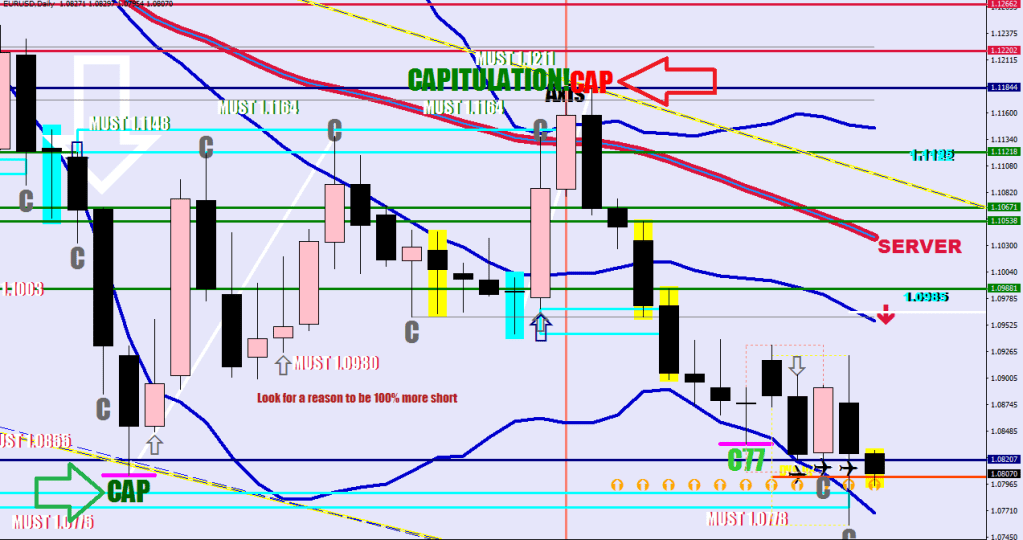
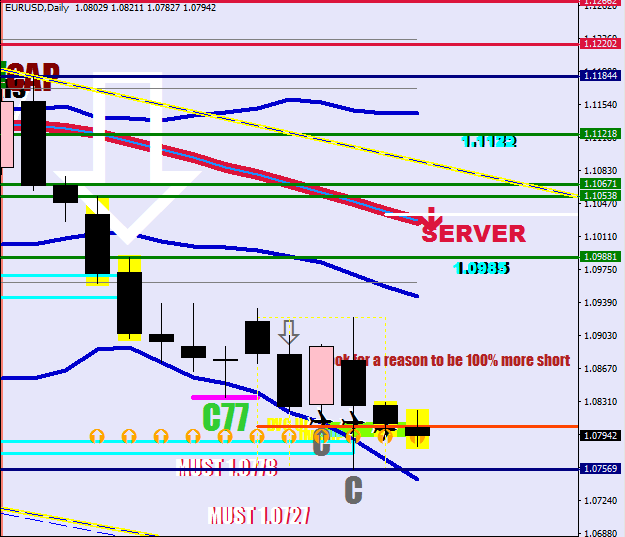
There was one example earlier where the C77 low was undercut two folds (130 pips in total). This one went to 140 pips in contrast. What followed the last time was a 560-pip rally.

This one barely missed the BB middle.
/// 3-sample low with stoch reading below 4.5 or 9.5 to 18
   if (i>0 
   && (!(c77[i+1] && Low[i+1]<iBands(symbol,0,20,2,0,PRICE_CLOSE,MODE_LOWER,i+1)))
   
   && iLow(symbol,0,iLowest(symbol,0,MODE_LOW,5,i-1))<=iLow(symbol,0,iLowest(symbol,0,MODE_LOW,6,i-1)) 
   && iLow(symbol,0,i)==iLow(symbol,0,iLowest(symbol,0,MODE_LOW,2,i-1)) 
   && (st18[i]<4.5 || (st18[i]>9.5 && st18[i]<21.5) || (st18[i+1]>9.5 && st18[i+1]<18.5))  
  
    && Low[i]-Low[i+1]<430*Point 
   && (Low[i]-Low[i+2]<430*Point ||  Low[i]-Low[i+2]>1000*Point)
 
   && (High[i]>High[i+1]-80*Point  || (Open[i]<iBands(symbol,0,20,2,0,PRICE_CLOSE,MODE_LOWER,i)+50*Point && Close[i]>iBands(symbol,0,20,2,0,PRICE_CLOSE,MODE_LOWER,i) ) )
       && Open[i]<Close[i] 
     && High[i]<iMA(symbol,0,44,0,MODE_EMA, PRICE_MEDIAN,i)
      && High[i]<iBands(symbol,0,20,2,0,PRICE_CLOSE,MODE_MAIN,i)-290*Point 
      && (MathAbs(iBands(symbol,0,20,2,0,PRICE_CLOSE,MODE_MAIN,i)-iMA(symbol,0,44,0,MODE_EMA, PRICE_MEDIAN,i))>380*Point  ||  High[i]>High[i+1] )
      && Low[i+1]>iBands(symbol,0,20,2,0,PRICE_CLOSE,MODE_LOWER,i+1)-700*Point  
      && Low[i+2]>iBands(symbol,0,20,2,0,PRICE_CLOSE,MODE_LOWER,i+2)-700*Point
 ){
   //&& (st18[i]<4.5 || (st18[i]>9.5 && st18[i]<18))  
   
         ObjectCreate("Bingt"+IntegerToString(i),OBJ_VLINE,0, Time[i], 0);
         ObjectSet("Bingt"+IntegerToString(i),OBJPROP_COLOR,clrBlue);
         if (st18[i]>9) ObjectSet("Bingt"+IntegerToString(i),OBJPROP_COLOR,clrPaleGreen);
The trendline that was started by the double C77 was hit today.

Radiocaptivity

So yeah, I grew up with some extra background radiation at the mountain of Mecsek. We lived in a place that was called Uranium City (Uránváros). My mom used to work for the Uranium mine. The highlight of her life was handing over the flowers to Juríj Gagarin when he came to visit.

Guess whom we were exporting to. Of course they had to load the uranium onto a different train in Záhony, at the Hungarian-Ukranian border. They were always afraid of Russia pushing into Europe on a train, thus the incompatible rail span was invented. Some things don’t seem to change.

After Chernobyl the basic communist joke was about “radiant smiles”.

Oh yes, you came here to learn something about trading, so let’s proceed with that.

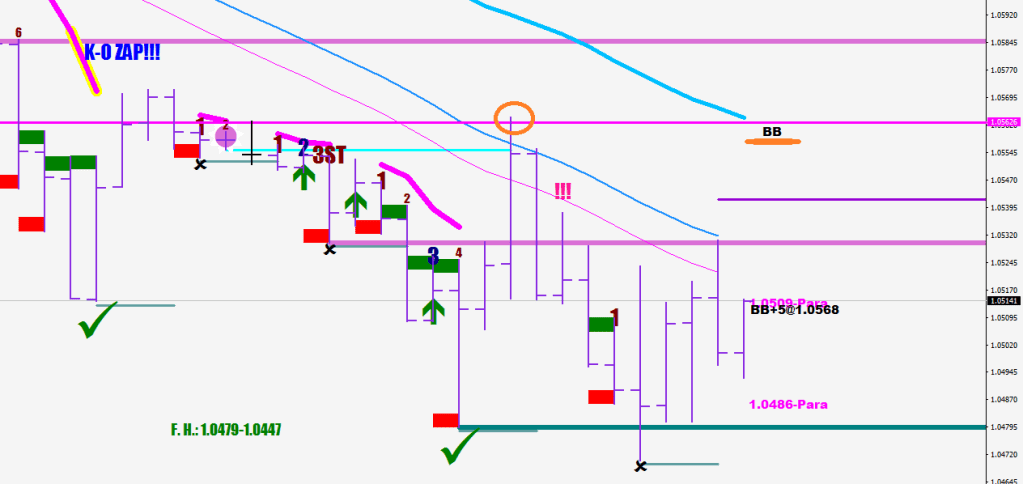
3 exclamation marks mark the spot

The exclamation level is where price steps outside the pendulum for a space walk (5 pips extra). This is where an effort to keep the price out is going to be expected on the return.

if (i<50 && Close[i]<E44l2[i]-50*Point && Close[i+1]<E44l2[i+1] && Close[i+2]>E44l2[i+2]-50*Point)
where E44l2 is the lower bottom pendulum band

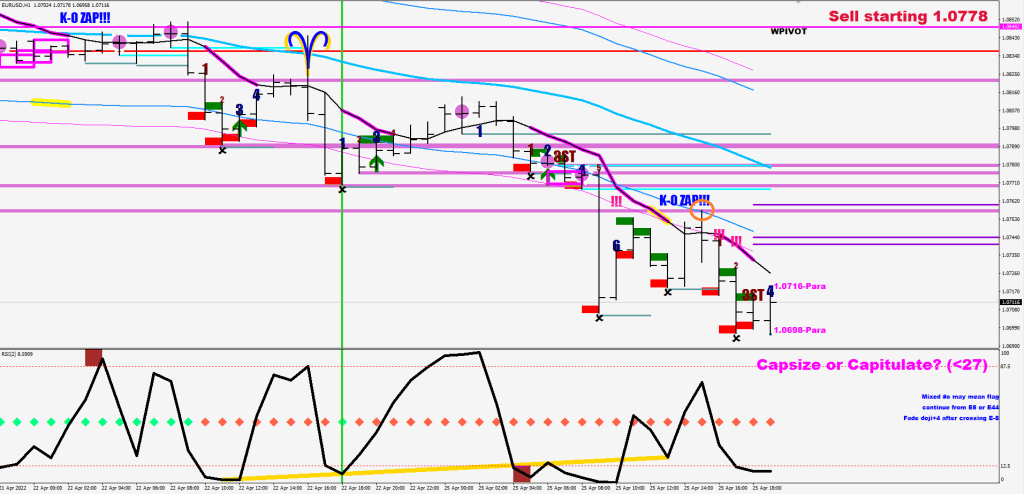
They actually sold the previous low for a lower low (orange circle).

continuation divergence spanked

There was gonna be selling, regardless of the outcome of the French presidential elections.

There was 33% chance of price making it to the orange line yapering to 16% by the redish line without having to recharge.
There was 0% chance that an impulse wave would end on strength.

The brown box is the highlight of the continuation divergence – busted in this case.

i>0 && RSI2[i-1]>RSI2[i] && RSI2[i+1]>RSI2[i] && RSI2[i+2]>RSI2[i+1] && RSI2[i+2]>10 && RSI2[i]<RSI2[ArrayMinimum(RSI2,13,i+1)]  && RSI2[i]<19 && RSI2[ArrayMaximum(RSI2,18,i+1)]>93.3
Once that low gets undercut, the divergence gets eliminated.

This is where we need to get a bit deeper into the separation numbers.

When a support / resistance level is made during 2-4 hours of separation, an immediate bounce (I call it touch and go) is initiated if the furthest six pips get touched by the upcoming hour (often right at the open).

These, reflex counter moves start right outside the pendulum bands and result in a counter move that gets capped either by the hourly E-44 or a slight beat of a new born doji (i.e. 4 pips).

To fail in a proper manner you need 5+ hours of separation or the back test of a recently printed support, but not within the next couple of hours and the current RSI2 leg cannot hit the floor (<4), otherwise the impulse leg has not ended.

Another numbers remark is that a mixed bag of different colors usually means a flag.

Support / resistance blocks are MFI steps.

Philantropicana

Cilantro Fist, the philantrophist philatrosits by your side.

– I only have subsidies for you – he says.

Silly, doesn’t he know that the Philantropicana drinks are free?

Let’s change the climate. Ooh-ooh, I change the world.

This one is gonna be a new foundation course. The tab is gonna get picked up by my new company, cheers.

Presents: the two parts of a terminal move.

Forget the idealistic world of Elliott Wave.

Every terminal move can be divided into two parts, the measuring leg and the divergent leg.

These two are separated by a Zero aka a continuation divergence. To find these divergences between the legs, we need to remember two things. One is that the measuring leg comes with a cross over of the hourly E-44 and that the best things in life such as the RSI2 are free.

Let’s try to appreciate what we are talking about here.

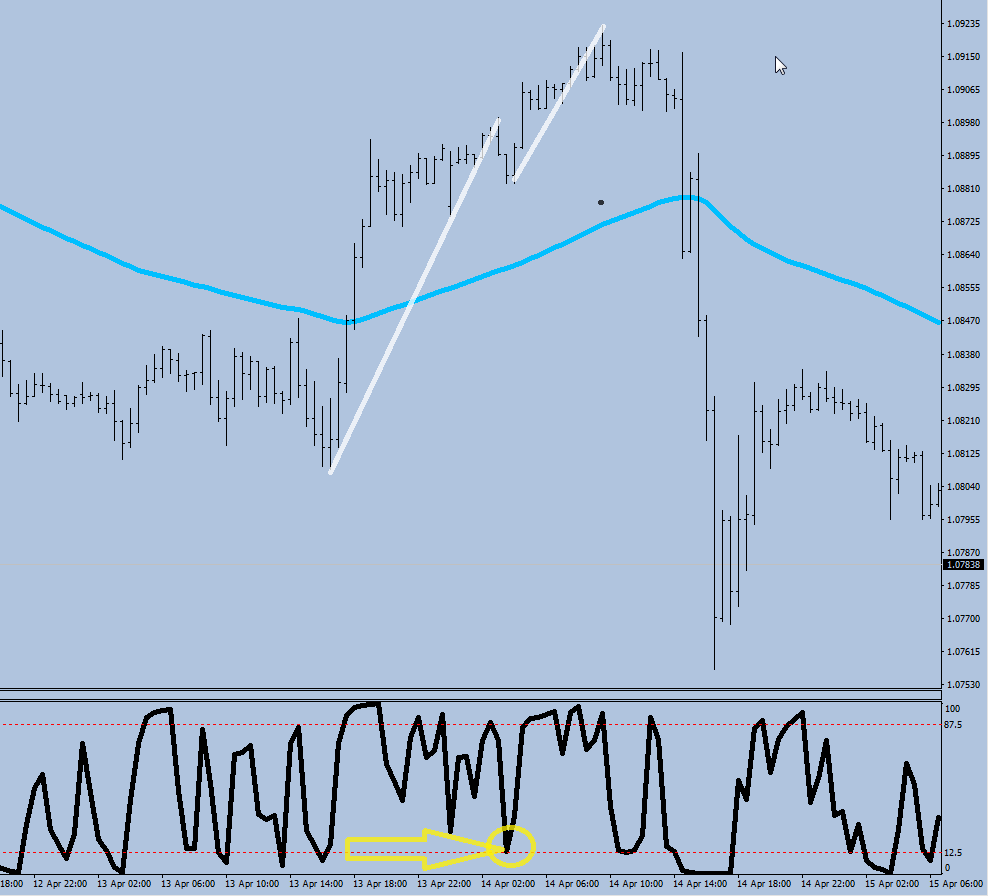
A 4H example of a continuation divergence (circled) separating the two legs.

Here’s an hourly example to the downside.

…and one to the upside.

The measuring leg crosses over the E-44.

When a leg becomes too parabolic, you may have to go down a time frame to sync up with the speed better.

On 30Min the E44 is E88, duh.

The first point I’m trying to make here is that it does not matter if you want to see 3 or 5 waves.

What matters is that there would be the divergent leg starting from the continuation divergence.

The second point is the fractal nature.

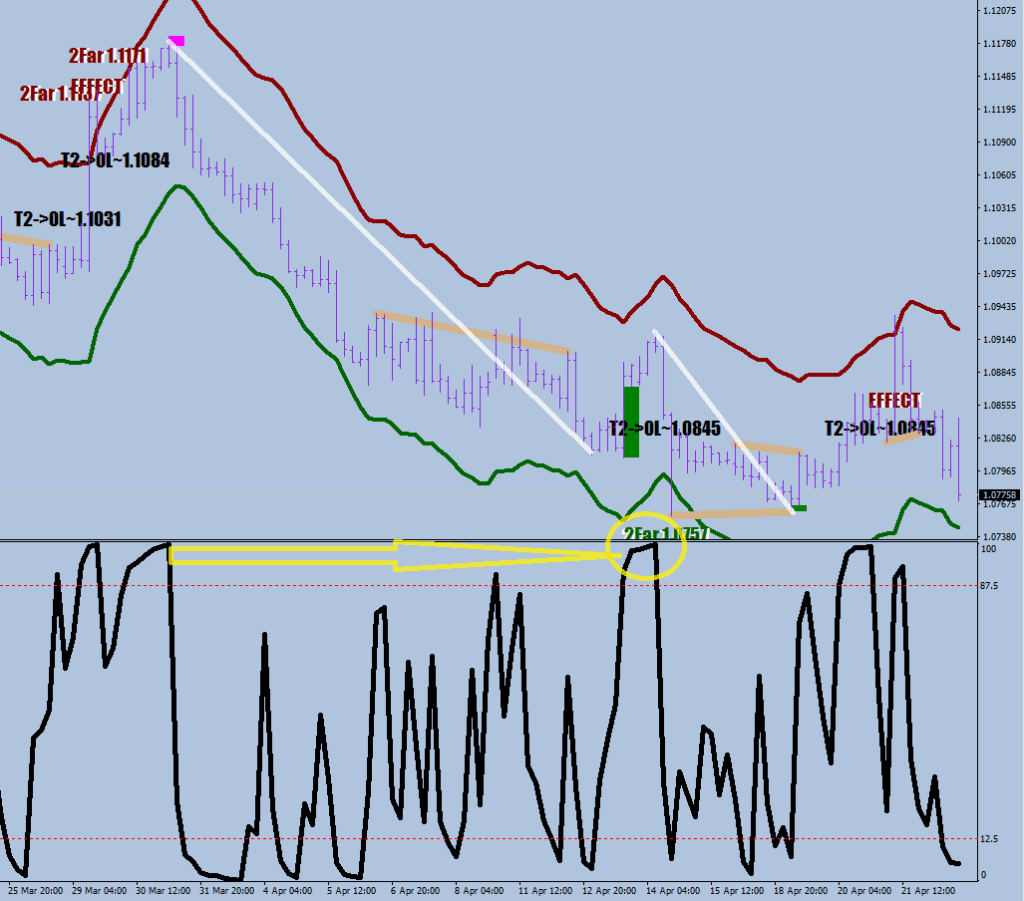
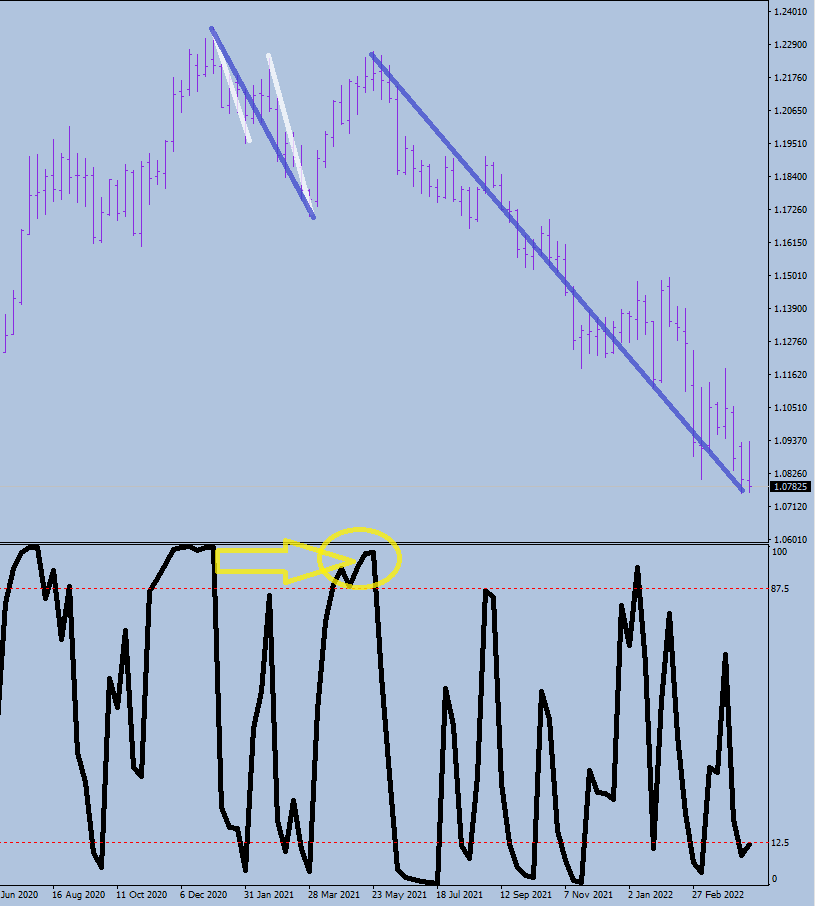
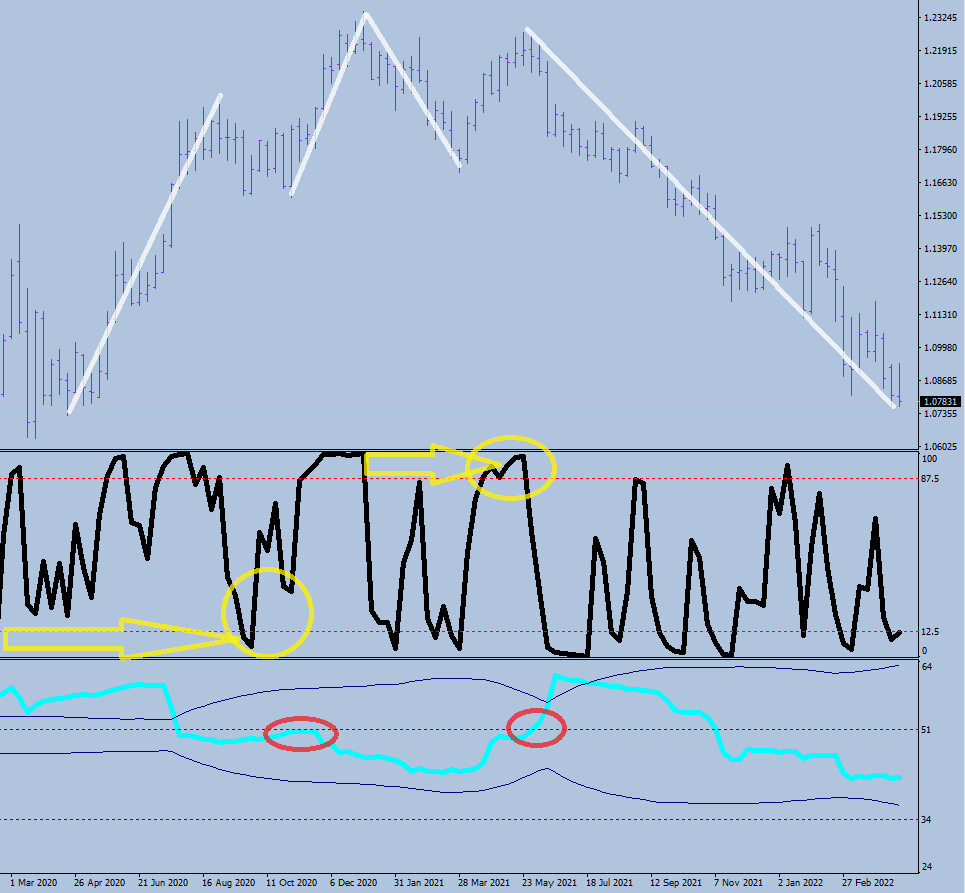
A measuring leg + divergent leg terminal sequence may be simply the Measuring Leg of a larger time frame move. The to white lines on the daily chart above are the same two lines (also as the first leg) on the weekly chart below.

Also, the continuation divergence makes the fractal energy consolidate in a rapid manner, at least tagging the full charge level.

On the upside the trend reversed at a 45 reading. The current CI is about 42, for the 3rd time.
The two examples that made it to 38 and below were pushing on the StdDev band. Other times a dip below 45 was enough to make a full reversal.

Sweet, isn’t it?

Zucchero = Szacharóz

Success Or Failure?

in full:

What are you consolidating, success or failure?

– a lesson that has not much use for anyone without proper plots –

Let’s scare you off first with an example of how you could have known that the gap up was a sell on both accounts.

Image without explanation.

If you take nothing else away from this one, at least remember the importance of the top of the hour.

Also it does not hurt to learn the concept of separation from the 8EMA of opens. Most moves would fail within 2.5 hours, meaning on the second bar away from home.

Here’s your quick warm up exercise. Was there ever any reason after the blue #1 separation on the upside to go short?

Of course not. #1 scored by taking out one SuperTramp line. #2 and #3 both held this line by the close. There was a quick re-visit to the 8EMA and thus success was consolidated. The short side was not a high probability trade, and was capped by the 8EMA.
The pendulum bands are 35 and 45 pips displacements of the E-44 HL2.

  E44h[i]=iMA(NULL,0,44,0,MODE_EMA, PRICE_MEDIAN,i)+350*Point;
  E44h2[i]=iMA(NULL,0,44,0,MODE_EMA, PRICE_MEDIAN,i)+450*Point;
       
  E44l[i]=iMA(NULL,0,44,0,MODE_EMA, PRICE_MEDIAN,i)-350*Point;
  E44l2[i]=iMA(NULL,0,44,0,MODE_EMA, PRICE_MEDIAN,i)-450*Point;

The SuperTramp lines are 25, 32, 52 and 62-pip displacements (all the King’s four horsemen) of 6-sample hourly lows and highs tied to a directional logic.

  if (NewDir[i]>0 && greenhigh[i]!=greenhigh[i+1]){
         u25[i]=iHigh(symbol,0,iHighest(symbol,0,MODE_HIGH,6,i))-250*Point;
         u32[i]=iHigh(symbol,0,iHighest(symbol,0,MODE_HIGH,6,i))-320*Point;
         u55[i]=iHigh(symbol,0,iHighest(symbol,0,MODE_HIGH,6,i))-520*Point;
         u64[i]=iHigh(symbol,0,iHighest(symbol,0,MODE_HIGH,6,i))-620*Point;
      }
      
      
      if (NewDir[i]<0 && redlow[i]!=redlow[i+1]){
           d25[i]=iLow(symbol,0,iLowest(symbol,0,MODE_LOW,6,i))+250*Point;
           d32[i]=iLow(symbol,0,iLowest(symbol,0,MODE_LOW,6,i))+320*Point;
           d55[i]=iLow(symbol,0,iLowest(symbol,0,MODE_LOW,6,i))+520*Point;
           d64[i]=iLow(symbol,0,iLowest(symbol,0,MODE_LOW,6,i))+620*Point;        
      }

the directional logic makes a switch after 5 consecutive hours of the SuperTramp (with the settings I mentioned earlier) comes up with a royal flush

  if (NewDir[i]>0 && NewDir[i+1]<0) greenhigh[i] =  iHigh(symbol,0,iHighest(symbol,0,MODE_HIGH,1,i));
   
      if (NewDir[i]>0 && NewDir[i+1]>0 && High[i]> iHigh(symbol,0,iHighest(symbol,0,MODE_HIGH,6,i+1))) greenhigh[i] = High[i];  
  
      if (NewDir[i]<0 && NewDir[i+1]>0) redlow[i] = iLow(symbol,0,iLowest(symbol,0,MODE_LOW,1,i));

      if (NewDir[i]<0 && NewDir[i+1]<0 && Low[i]< iLow(symbol,0,iLowest(symbol,0,MODE_LOW,6,i+1))) redlow[i] = Low[i];  

Mlanden coded most of this, which you can tell by the variable names and syntax used.

 int y = iBarShift(NULL,0,Time[i]);
         double atr    = iATR(NULL,0,period,y);
         double cprice = iMA(NULL,0,1,0,MODE_SMA,appliedPrice,y);
         double mprice = (iHigh(NULL,0,y)+iLow(NULL,0,y))/2;
                Up[i]  = mprice+multiplier*atr;
                Dn[i]  = mprice-multiplier*atr;
  
         Direction[i] = Direction[i+1];
         NewDir[i]=NewDir[i+1];
            if (cprice > Up[i+1]) Direction[i] =  1;
            if (cprice < Dn[i+1]) Direction[i] = -1;
         TrendDoA[i] = EMPTY_VALUE;
         TrendDoB[i] = EMPTY_VALUE;
            if (Direction[i] > 0) { Dn[i] = MathMax(Dn[i],Dn[i+1]); Trend[i] = Dn[i]; }
            else                  { Up[i] = MathMin(Up[i],Up[i+1]); Trend[i] = Up[i]; }
            if (Direction[i] == 1)  TrendDoA[i] = 1; 
            if (Direction[i] ==-1)  TrendDoB[i] = 1; 
            
        if (Direction[i]==1 && Direction[i+1]==1 && Direction[i+2]==1 && Direction[i+3]==1 && Direction[i+4]==1 && Direction[i+5]==1 && Direction[i+6]!=1)
         NewDir[i]=1;
        if (Direction[i]==-1 && Direction[i+1]==-1 && Direction[i+2]==-1 && Direction[i+3]==-1 && Direction[i+4]==-1 && Direction[i+5]==-1 && Direction[i+6]!=-1  )
         NewDir[i]=-1;

Just imagine trying to get the levels, the displacements right with other instruments. Do you know what all Fibonacci numbers are? Numbers.

Alles Klar, Kommissar?

I totally did not see the Gregorian version of Voyage Voyage coming, I swear.

Impulse Wave Filtering Workshop

The problem with every trader is that they think that they can trade everything.

The problem with Elliott Wave traders is that they aren’t able to write an algorithm for their ideas.

I have been trying to show you what the difference was between Impulse and Corrective waves from the aspect of a programmer on this blog for some time.

Grabbing an end to a Corrective wave can be as easy as

  • getting the oscillator setting right
  • monitoring for an exact stochastic range
  • having a definition made for a cover low / cover high
Getting the end of a corrective daily wave right within the context of having to wait for the stochastic settled print and therefore you can only act bravely right around the close of the CAPping day is not a major challenge for a good algorithm coder.
i.e.
 ///////4-candle low closing back up 27-pips cover
   if ( iLow(symbol,0,iLowest(symbol,0,MODE_LOW,1,i))==iLow(symbol,0,iLowest(symbol,0,MODE_LOW,4,i)) && Close[i]>iLow(symbol,0,iLowest(symbol,0,MODE_LOW,2,i))+270*Point
         && !gr[i] ){
        //if (i>0 && Low[i-1]>Low[i]) momentum[i]=1;
      ObjectCreate("Bingo"+IntegerToString(i), OBJ_TEXT, 0, Time[i], Low[i]+20*Point); 
       ObjectSetText("Bingo"+IntegerToString(i), "C", 26, "Impact", DimGray); 
       if (st18[i]<9.5) { ObjectSetText("Bingo"+IntegerToString(i), "CAP", 26, "Impact", DarkGreen); momentum[i]=1;
         if (st18[ArrayMinimum(st18,10,i)]<4) ObjectSetText("Bingo"+IntegerToString(i), "C77", 26, "Impact", LimeGreen);

As for an end of an Impulsive wave, where the initial capping gets exceeded and divergences start clocking for the miles, that is a ranking challenge.

You need to write in your head the things you are looking for in a descriptive language before you can turn to start coding it for real.

Say it after me:

I am looking for a settled candle

i>0

I want a new low to be made within the last 5 candles.

iLow(symbol,0,iLowest(symbol,0,MODE_LOW,4,i-1))<=iLow(symbol,0,iLowest(symbol,0,MODE_LOW,5,i-1)) 

I don’t want the turning candle’s low to be violated by the next candle

iLow(symbol,0,i)==iLow(symbol,0,iLowest(symbol,0,MODE_LOW,2,i-1)) 

I want the stochastic to be oversold, but not in an optimal manner, as that is only the luxury of the corrective wave

(st18[i]<4.5 || (st18[i]>9.5 && st18[i]<18.5) || (st18[i+1]>9.5 && st18[i+1]<18.5))

I want the turning candle’s low to be within 43 pips of the previous 2 candles’ lows

Low[i]-Low[i+1]<430*Point 
Low[i]-Low[i+2]<430*Point 

I want the turning candle’s high to approach the previous candle’s high by at least 6 pips

High[i]>High[i+1]-60*Point

I want the turning candle to be a green candle

Open[i]<Close[i] 

I want the high of the turning candle not to touch the E-44

High[i]<iMA(symbol,0,44,0,MODE_EMA, PRICE_MEDIAN,i)

I want the Turing candle to stay clear of he Bollinger middle band

High[i]<iBands(symbol,0,20,2,0,PRICE_CLOSE,MODE_MAIN,i) 

I want the distance between the Bollinger middle band and the E-44 to be larger than 45 pips as a proof of current volatility

(MathAbs(iBands(symbol,0,20,2,0,PRICE_CLOSE,MODE_MAIN,i)-iMA(symbol,0,44,0,MODE_EMA, PRICE_MEDIAN,i))>450*Point

I don’t want to see the last candle’s low too far below the lower Bollinger band (possibly a start of a move)

Low[i+1]>iBands(symbol,0,20,2,0,PRICE_CLOSE,MODE_LOWER,i+1)-500*Point

…and the back test is making the plots, i.e. thick pale green highlights.

Nothing’s ever gonna be perfect in the world of trading, but this is as close as you can get to an accurate binary decision around an impulse wave.

It is very rare to see a black candle making the ultimate low of the impulse wave, I found only 1 example in the last 5 years, and even that was not a rolling pin.

There’s a very good chance that the current low is going to be undercut by a candle that is closing up.

The moratorium is all the way down to 1.0727, but I think a handful of pips would do it.

Moved By A Higher Love

Just a quick reminder of price is going to be headed when the impulsive wave caps out.

Price would be moved, lifted higher by a higher love. Why? Because sometimes it feels like a motherless child a long way from home.

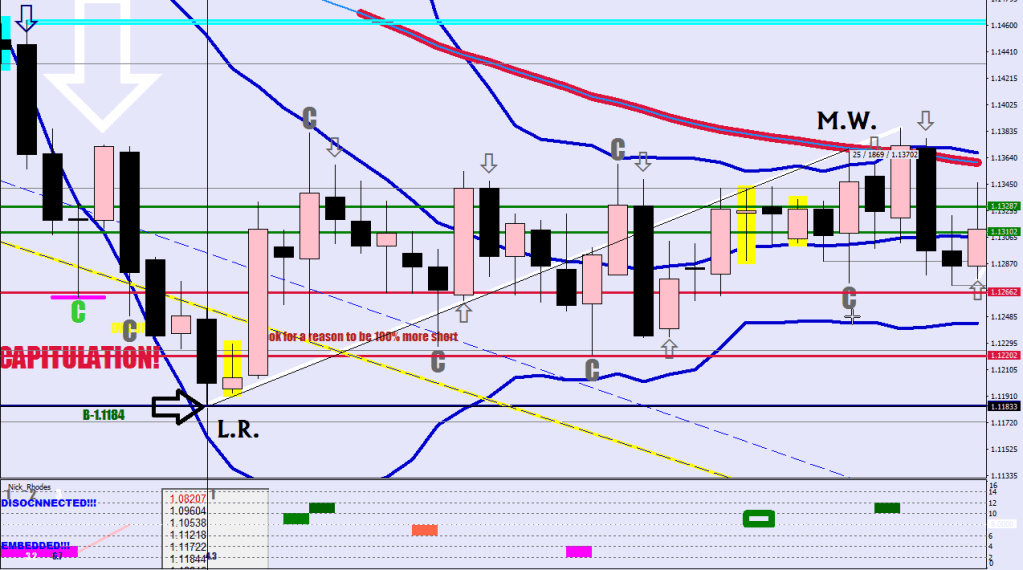
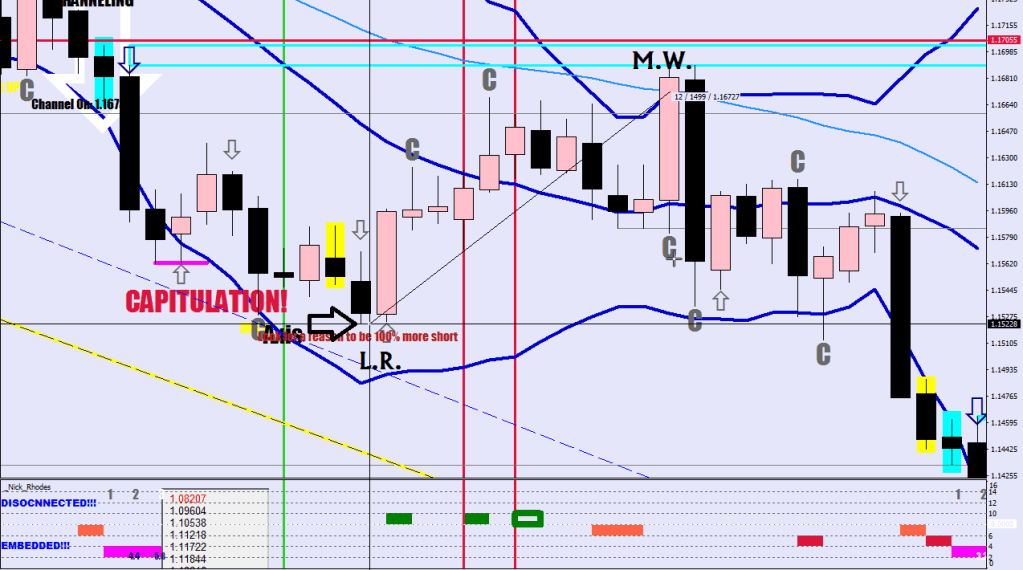
After the rigo mortis of the impulse wave sets in, L.R. (Losing Religion) finds his way back home to M.W. (Murena Williams – E44). Why? Because this is a razor act.

25 trading days, travel distance 189 pips. What followed this one was a 97-pip reaction from the M.W. and another 210-pip leg up before the reversal. From the point of encounter price ultimately managed to travel higher by another 113 pips.
12 trading days, travel distance 149 pips.
7 trading days, travel distance 152 pips. This is the only example of Murena Williams letting the ball slide by by 94 pips.
7 trading days, travel distance 151 pips.
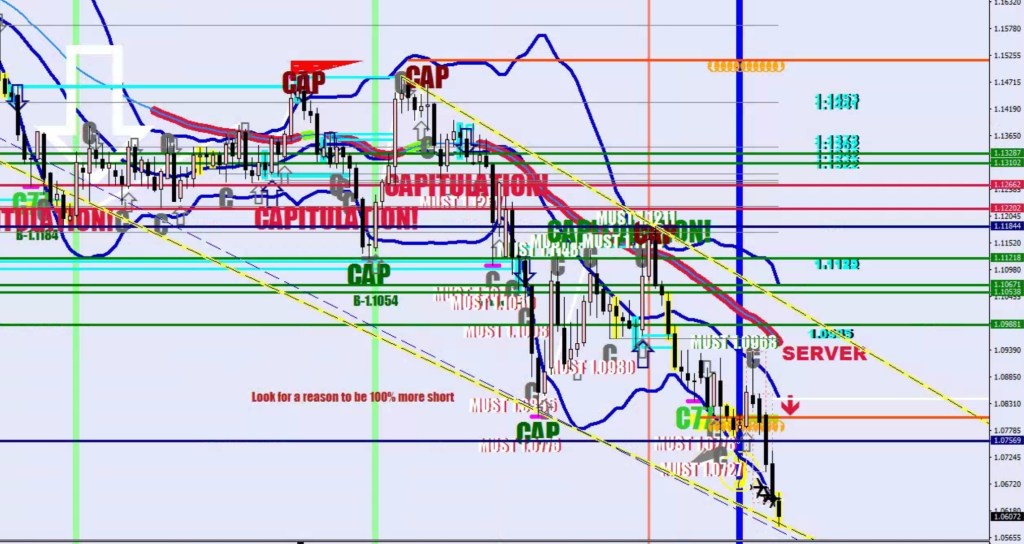
? trading days, travel distance ? pips. Server = Mama Murena.
Racketeeling.

This was an actual English class at school. We had to translate the lyrics of this song. Also there was a British teacher who was hooked on Tracy Chapman and Suzanne Vega songs. What was his name? Luka? Was he living on the second floor? Did he have a fast car? Can’t remember. I certainly wasn’t kidding when I said I grew up with MTV.

That’s me in the corner.
I want my MTV.

Der rücklauf die zukunft

Back in the swaddling clothes & back to the drawing board.

When others have option chains pricing in a probable move for the near future, I have a CI chain.

See, I was still wet behind the ears when I was already fascinated with fractal energies, as it goes.

I used to get so grumpy when we ran out of consolidation that I could spread evenly on my bread.

There was nothing besides MTV and Optionslinebacker that I could subscribe to, so did that.

Full charge, discharge, choppiness, Loch Ness, the regular miserable childhood that everyone’s going through but I don’t want to spare you the details.

While Doc Severson was using his 13-sample CI for Iron Condors mainly…

I came up with the concept of the Energy Bands instead.

Here I can be seen pondering on my tricycle about how to make the CI Moat instrument independent.

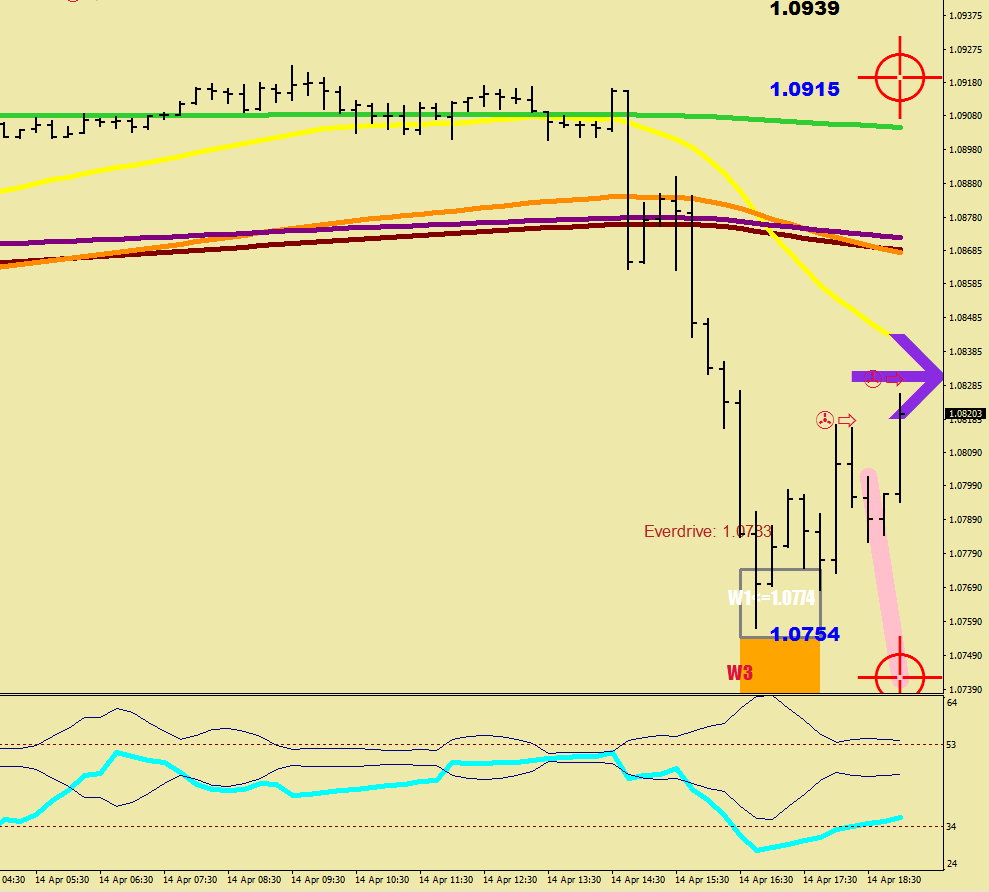
Now, fast forward 44 years and first take a look at the 48-sample 15-minute CI not being able to cross over 53 for a full consolidation.

Now, if I cropped the whole label yesterday – looks the same still, you may start to get some ideas about why I have been living in the world of pendulums quasi from the beginning.

The purple arrow above is the consolidation mean or the axis of the pendulum. I spare you flipping the image on its side this time.

 while (!(ChoppinessIndex(12*4,i+1)<53 && ChoppinessIndex(12*4,i)>53))    
   i++;   
   weight=(iHigh(NULL,15,i)+iLow(NULL,15,i))/2;

I went with the 15-minute for precision.

With this 3-day ATR based tool I practically invented my own Implied Volatility tool. Reaching 1 ATR distance from the weight in either direction has the probability of 66%, reaching 30% more drops to 33%.

   ATRA = 0;
   for (i=1; i<=3; i++){ 
     ATRA = ATRA+iATR(NULL,1440,14,i);}
   
   for (i=0; i<=160; i++){ 
     ATRAVG[i] = ATRA/3; }   

BowBuffer=(iClose(NULL,15,i))-ATRAVG[i]*1.30;
   BighBuffer=iClose(NULL,15,i)-ATRAVG[i]; 
   BowBuffer2=iClose(NULL,15,i)+ATRAVG[i];
   BighBuffer2=iClose(NULL,15,i)+ATRAVG[i]*1.30; 

Yesterday I posted 3 examples of undercutting the magenta overdrive / lime C, and even spelled out 77 pips as the largest of those three.

77. I was 4 years old, see the image earlier.

Yes, I probably had a yellow toy plane as well…

The new “Implied Choppiness” projections as of Friday.